Signs Your Furnace Needs Attention
Most furnace trouble shows up as something you feel or hear before the system quits for good. No heat, weak or cold airflow, uneven temperatures from room to room, short cycling that clicks on and off every few minutes, delayed or repeated ignition, banging or rattling at startup, or a burning or sulfur smell are all signs a furnace is going out.
The symptom rarely points to one part. A furnace that will not stay lit can be a dirty flame sensor, a failing pressure switch, or a venting problem, and cold air can run from a stuck blower motor to a thermostat fault. Knowing the common furnace problems helps, but we diagnose the actual cause before replacing anything. If your furnace is not working right now, we prioritize no-heat calls by offering emergency services.
What Can Cause Furnace Problems?
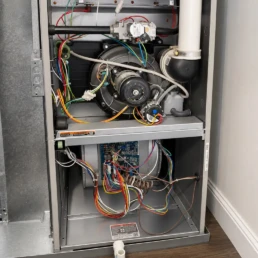
Similar symptoms often trace back to very different failures, which is why guessing at parts wastes money. No heat can be a bad igniter, a tripped high-limit switch, a closed gas valve, or an empty oil tank. A furnace blowing cold air can be a stuck blower motor or a flame that keeps dropping out. Short cycling can be a dirty flame sensor, a clogged filter choking airflow, or an oversized system. Beyond the furnace itself, thermostats and heating controls can stop a system from starting or cycling correctly, and restricted airflow or damaged air ducts can leave whole rooms cold even when the furnace runs. We find the cause first, then repair it.
Professional Furnace Diagnosis and Repair
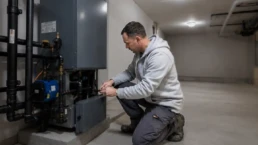
Good furnace repair starts with finding the source of the failure, not swapping the part nearest the symptom. Our technicians check thermostat operation, electrical power, fuel supply, ignition, safety controls, burners or heating elements, blower operation, airflow, venting, and the full startup sequence, so the fix holds instead of failing again in a week. The work itself differs by system: gas furnace repair, oil furnace repair, and electric furnace repair each involve different components and diagnostics. When a furnace quits in cold weather, contact us for emergency furnace assistance.
When Furnace Repair Becomes Replacement
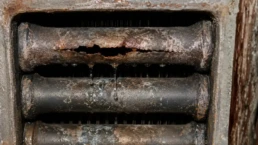
Not every furnace problem means you need a new system, and we will tell you when a repair is the smarter money. Replacement earns its keep when an older furnace needs repeated repairs, has a cracked heat exchanger or other major component damage, runs so inefficiently your gas or oil bills climb every winter, or simply can no longer hold the house at temperature. The rule of thumb we use on site: if the furnace is past 15 years or a repair runs more than a third of a new system, replacement usually wins. A heating installation evaluation weighs the condition of your current furnace against the cost and payback of a new one, and we price both so you decide with real numbers.
Choosing and Installing the Right Furnace
A new furnace should be sized to the home, not just swapped in at whatever capacity the old one happened to be. An oversized furnace short cycles and wears out early; an undersized one never keeps up on the coldest nights. We size on heating load, then account for airflow, ductwork, venting, fuel supply, and electrical needs so the whole system works together. Air duct design and airflow matter as much as the furnace itself, since a strong unit on weak ducts still leaves rooms cold and efficiency on the table.
Furnace Maintenance, Tune-Ups and Service Plans
Furnace Tune-Up and Inspection
A furnace tune-up catches the small failures that turn into no-heat calls in January. We run the furnace through a full heating cycle and check ignition, the flame sensor, the heat exchanger for cracks, gas pressure or oil burner operation, safety controls, the blower, airflow, and venting. Most breakdowns we get called out for trace back to something a fall furnace tune-up and inspection would have flagged, and it keeps most manufacturer warranties valid.
Cleaning and Preventive Furnace Maintenance
Cleaning depends on the system, not a checklist run the same way on every furnace. Dust and combustion deposits foul burners and heat exchangers, a clogged filter starves airflow and overheats the unit, and debris around the blower drags down efficiency. On combustion systems especially, this is where gas furnace maintenance pays off, since a dirty burner burns more fuel and risks a cracked heat exchanger. Oil systems need their own burner and nozzle service on a tighter schedule.
Heating Maintenance and Service Plans
The easiest way to stay ahead of a breakdown is to schedule the tune-up before the cold hits, not after the furnace quits. A plan puts your seasonal service on a set schedule, tracks the condition of your equipment year to year, and flags recurring issues before they strand you. Our HVAC maintenance and service plans cover that ongoing care for homeowners who would rather prevent a furnace problem than react to one.
Gas, Oil and Electric Furnace Systems
Gas Furnace Service
A gas furnace makes heat by burning fuel, so service centers on combustion: burners, the igniter and flame sensor, the gas valve and pressure switches, the heat exchanger, venting, and the blower that moves the heat into the house. When one of those fails you see no heat, an ignition that will not catch, a furnace that lights then shuts down seconds later, or a burner flame that rolls or burns yellow instead of blue. We troubleshoot the combustion sequence, repair the failed part, and confirm the heat exchanger is intact, since a crack is both an efficiency and a safety problem. When a system is past saving, gas furnace installation is sized to the home and set up for correct airflow, combustion air, and venting.
Oil Furnace Service
Oil furnaces run harder and dirtier than gas, so they need their own service rhythm. The burner, nozzle, electrodes, oil filter, and pump all wear on a schedule, and combustion has to be tuned and tested to keep the unit efficient and clean-burning. Most oil no-heat calls come down to a fouled nozzle, a worn pump, weak ignition, or a system starved for fuel, and a furnace that locks out on reset is a classic sign. A regular oil furnace tune-up catches those before they leave you cold, which is why oil systems reward a tighter maintenance schedule than gas. We service, repair, and replace oil furnaces, and we handle the burner tuning most gas-only shops would rather not touch.
Electric Furnace Service
Electric furnaces have no burner or combustion, but they still fail. The usual culprits are burned-out heating elements, bad sequencers or relays, a tripped limit switch, or a blower and airflow problem. Because it is all electrical, diagnosis is about testing the elements and controls to find what actually failed before anything gets replaced. We repair electric furnaces and handle electric furnace replacement when the unit is past its service life.
Emergency Furnace Repair
When a furnace quits in cold weather, it stops being an inconvenience fast. A total loss of heat, a furnace that lights and shuts down over and over, an ignition that will not catch, or a system that trips out and will not stay running all call for urgent repair. Our emergency furnace repair starts by finding the actual cause of the failure, not throwing parts at it, so the heat comes back and stays on. We offer same-day furnace repair and fast emergency service any time the temperature drops and your furnace is not working.
Why Choose EMCO Tech for Furnace Service?
EMCO Tech Heating and Cooling has been family-owned and operated since 2006, and furnace work is where that experience shows. We treat a furnace problem as a whole-system diagnosis, not a chance to sell parts you do not need, which is why plenty of our calls end in a repair rather than a replacement. You get a straight read on the equipment and a clear recommendation to repair, maintain, or replace, with the numbers to back it. Furnaces are one piece of our full heating services, alongside heat pumps, boilers, water heaters, and controls, so the whole comfort system gets considered when it matters.