


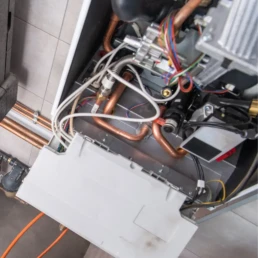
Electric Furnace Replacement
Most electric furnaces wear out slowly. Heating elements burn out one by one, sequencers and relays stick, and the blower motor wears. When the furnace is 15 or more years old, or one repair costs more than a third of a new unit, replacement usually makes more sense than another fix.
A replacement starts with a look at your breaker, wire size, and ductwork, because a new furnace on old wiring is where most problems begin. We match the kW size to your home, connect it to your ducts and thermostat, test every heating stage, and haul the old unit away. If your furnace only needs a part, our electric furnace repair team can fix it instead.
Electric Furnace Installation Cost
Every home is different, so we price each job after a free in-home estimate. These are the things that move the price:
- Size (kW): a larger or draftier home needs more heating capacity.
- Electrical work: a bigger furnace may need a new breaker, heavier wire, or a panel upgrade.
- Ductwork: undersized or leaky ducts may need sealing or a new return.
- Heat pump pairing: adding a heat pump costs more up front and less every month after.
- Thermostat: a new one if the old thermostat can’t run the new unit.
You get one written price that covers all of it, with nothing added after the job starts. Ask about financing and our $500 off a new system.
The Benefits of a New Electric Furnace
An electric furnace is the simplest way to heat a home that has ducts and no gas line. Here’s what you get, plus one honest trade-off.
Key Advantages of Electric Furnaces
- Lower install cost: no gas line, flue, or chimney liner needed.
- No combustion: no carbon monoxide, no gas leaks, no flame to light.
- Simple and long-lasting: few moving parts, often 20 years or more with yearly care.
- Quiet: no burner noise, just the blower.
- Works without gas: a good fit for homes with no gas service.
- Pairs with a heat pump: it can serve as the indoor unit and backup heat.
The trade-off: electric heat costs more per hour to run than gas or a heat pump in a Pennsylvania winter. That’s why many homeowners pair the furnace with a heat pump, covered below.
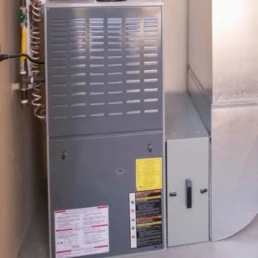
When to Replace Your Electric Furnace
It Keeps Breaking Down
Element, sequencer, and relay repairs every season add up fast. When one repair costs more than a third of a new furnace, replacement is usually the better spend.
It’s 15 Years or Older
After about 15 years, the wiring, elements, and blower wear out together, and fixing one part tends to expose the next weak spot.
Your Bills Keep Climbing
Burned-out elements and a worn blower make the furnace run longer for the same heat. If winter bills keep rising without a rate change, the furnace may be the reason.
Some Rooms Never Warm Up
Uneven heat can mean an undersized furnace, a dead heating element, or ducts that need work. We check all three before recommending a new unit.
Electric Furnace With a Heat Pump
Your electric furnace can become the indoor half of a heat pump system. The heat pump does most of the heating by moving heat in from the outdoor air, and the furnace’s electric heat strips only switch on during the coldest hours or a defrost cycle. That pairing usually costs much less to run than the furnace alone, and it adds central air for summer.
If your furnace is due for replacement, we’ll price both options side by side. See our heat pump installation service, or read why emergency heat (AUX) turns on.
Book a Free Electric Furnace Estimate
Tell us about your home and your current furnace, and we’ll set up a free in-home estimate. We measure, check your panel and ducts, and give you a written price for a new electric furnace and, when it makes sense, a heat pump option next to it.
Thinking about other fuels? Gas, oil, and heat pump systems are all covered on our heating installation page. We serve Philadelphia, Montgomery, Bucks, Chester, and Delaware counties.
Why Choose EMCO Tech
Family-owned since 2006. Our installers handle the furnace, the electrical hookup, and the ductwork, so one company stands behind the whole job. We keep the work area clean and walk you through the new system before we leave.
Electric Furnace Installation FAQ
For most homes in our area, a heat pump costs less to run because it moves heat instead of making it, and it cools in summer too. An electric furnace costs less to install, has fewer parts to wear out, and heats steadily no matter how cold it gets. Many homeowners get both: a heat pump for everyday heating, with the electric furnace as the indoor unit and backup on the coldest nights. We’ll price an electric furnace alone and a heat pump pairing side by side, so you can weigh the upfront cost against the monthly savings.
We install electric, gas, and oil furnaces, plus heat pumps and boilers. This page covers electric furnaces. For gas, see gas furnace installation; for oil, see our oil furnace services; and for help choosing between them, start with heating installation. If you’re switching fuels, for example from oil to electric or from an electric furnace to a heat pump, we remove the old system and handle the new connections in the same project, so you deal with one company from start to finish.
Most straight replacements take one day. We remove the old furnace, set the new one, connect power, ducts, and thermostat, test each heating stage, and clean up, so on a standard replacement you’ll usually have heat the same day. Plan on a second day if the job needs a panel upgrade, a new circuit, or duct changes, or if we’re adding a heat pump outside. We confirm the schedule after the in-home estimate, so you know exactly when we’ll arrive and how long your heat will be off.
Every electric furnace installation follows the same steps:
- Sizing: we pick the kW from your home’s size, insulation, and how the old furnace kept up, not just the label on the old unit.
- Electrical check: breaker, wire size, and panel capacity, before anything is ordered.
- Removal: the old furnace comes out and leaves with us.
- Set and connect: the new furnace is secured, then connected to power, ducts, and thermostat with sealed joints.
- Testing: we run every heating stage and the blower and check temperatures at the registers.
- Walkthrough: we show you the thermostat, the filter, and what to watch for, and leave the warranty paperwork.
The work area is cleaned before we leave, and the price is the one you approved at the estimate.
We install and replace electric furnaces in Philadelphia and across Bucks County, Montgomery County, Delaware County, and Chester County. Our crews work out of Willow Grove and Northeast Philadelphia, so most of the region is a short drive away. See the full list of towns on our areas we serve page.
It depends on the furnace size (kW), whether your panel and wiring can carry it, the condition of your ductwork, and whether you add a heat pump or a new thermostat. A same-size swap on good wiring sits at the low end. A larger unit that needs a new circuit or panel work costs more. We don’t quote blind over the phone: after a free in-home estimate you get one written price with nothing added later. Ask about financing and our $500 off on new systems when you book.
For most homes, sizing is straightforward. We look at square footage, insulation, windows, and how well the old furnace kept up on the coldest nights. Many homes in our area land somewhere between 10 and 20 kW, and in a typical row home or single that leaves one or two sensible choices. Too small and the house won’t keep up on cold nights. Too large and you pay for wiring and capacity you don’t need. For additions, major renovations, or new builds, a full room-by-room load calculation (Manual J) is worth doing, and we’ll tell you when it is.
Sometimes. Electric furnaces draw a lot of current, and larger units often need a dedicated 60 to 100 amp circuit. If your panel is near capacity or your service is undersized, we’ll tell you at the estimate and coordinate licensed electrical work so the furnace runs safely. Replacing a furnace with one of the same size usually reuses the existing circuit, once we’ve checked that the breaker and wire are in good shape and correctly sized.
Usually, yes. At the estimate we check duct sizes, the return, and air leaks. Small fixes like sealing joints or adding a return often make a big difference in comfort and noise. If the ducts are too small for the new furnace or for a future heat pump, we’ll show you what needs to change and price it separately, so you can decide what to do now and what can wait.
Electric furnaces on their own rarely qualify. Most utility rebates go to high-efficiency heat pumps and home weatherization, which is one more reason to price a heat pump pairing. Programs change often, so we check what’s current for your utility when we quote and point out any equipment that qualifies.
Most programmable and smart thermostats work, as long as they are set up for electric heat so the blower starts right away. With a heat pump pairing, you need a thermostat that controls auxiliary heat, so the electric strips only run when the heat pump can’t keep up. We match the thermostat to your system, handle the wiring and setup, and show you how to use it. See our thermostat services for options.
Electric furnace installation and replacement for homes across Philadelphia, Montgomery County, Bucks County, Chester County, and Delaware County. EMCO Tech installs new electric furnaces sized to the home, upgrades breakers and wiring when needed, reuses or improves existing ductwork, and pairs electric furnaces with heat pumps as air handlers with heat strips. Every new furnace is tested stage by stage before we leave, and every job starts with a written price.

Heating, Cooling, and IAQ Tips & News
$500 Off New HVAC + 10yr Warranty
Looking to get the best deal on a new Carrier high-efficiency heating and cooling system for your home, which meets your needs and budget? Book your…

Best Heating System for Your Home: Furnace vs Heat Pump vs Boiler
How to choose the best heating system for your home: gas furnace, heat pump, dual fuel, or boiler, compared side by side on comfort, running cost,…

Alternative Heat Sources to Gas Furnaces for Winter Heating
Furnaces are one of the most common methods of heating homes. However, it’s not wise to assume that using a gas furnace is the optimal or safest…
To Repair or Replace? Are Boilers Worth Fixing?
Are boilers worth fixing? Dealing with a broken boiler is stressful, especially in the middle of winter. The good news is you don't have to guess.…

Why Does My Furnace Keep Shutting Off?
Why does your furnace keep shutting off? Learn what it means when a furnace turns off after a few seconds, runs a few minutes then stops, or short…

Why Is My Furnace Making Noise?
Why is your furnace making noise? Learn what banging, booming, squealing, rattling, humming, clicking, grinding, and whistling furnace sounds mean,…