



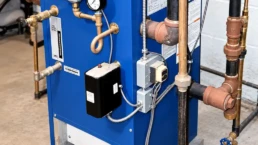


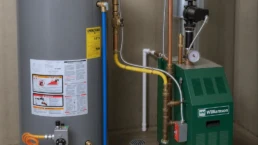
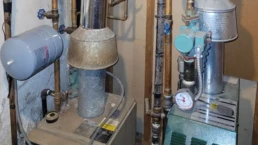
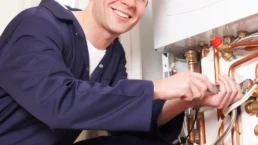
How Hydronic Heating Works
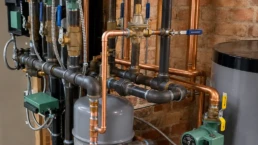
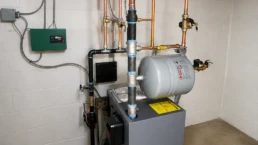
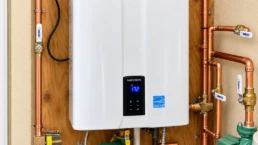
A hydronic system heats your home with water instead of air. Four parts do the work, and when one of them fails, the whole house feels it.
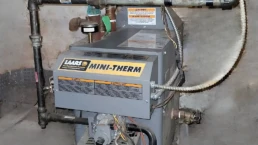
The Boiler
Burns gas or oil to heat water, or makes steam in older homes.
Circulators & Zone Valves
Move the hot water and send it to each zone that calls for heat.
Radiators & Baseboards
Release the heat into each room, quietly and evenly.
Expansion Tank & Controls
Keep pressure and temperature safe while the system runs.
Radiator and Baseboard Heat Repair
Radiators and baseboard are where you feel the heat, so when a room stays cold, that is where you notice it. Our technicians repair cast-iron radiators, radiator valves and vents, hot-water baseboard, and the piping that feeds them, in rowhomes, twins, and singles across the Philadelphia area. If the problem is the boiler itself, see boiler repair.
When one radiator or one floor stays cold, the cause is usually air trapped in the system, a stuck zone valve, or a failed circulator. On steam, it is often a clogged radiator vent or a main vent that can’t let air out. We find which one it is, fix it, and balance the system so heat reaches every room. For the usual causes in more detail, read our guide to no heat from radiators.
Old radiator valves seize, drip at the stem, or won’t shut off. Steam vents stick open and hiss, or stick closed and leave the radiator cold. We replace radiator valves and vents, repack leaking valve stems, and fix leaking connections, so each radiator heats when it should and stays dry. If a cast-iron radiator itself is cracked, we’ll tell you honestly whether it can be repaired or should be replaced.
Hot-water baseboard that gurgles, ticks, or stays lukewarm usually has air in the loop, low system pressure, or a circulation problem. We purge air from the loop, check pressure and the expansion tank, repair leaking baseboard and fittings, and replace damaged covers and fins so the heat comes through quietly and evenly.
Renovating? We add, move, and remove radiators and baseboard, extend piping into finished basements and additions, and make sure the boiler can carry the new load. On steam systems we keep pipe pitch and venting right, so the new layout heats without banging. You get a written price before any work begins.

Own a Commercial Building?
Churches across Greater Philadelphia count on us to keep their boilers running, along with offices, stores, and apartment buildings. Our commercial boiler team handles repairs, maintenance, and replacements, scheduled around services, tenants, and business hours.
Smell Gas Near Your Boiler?
Get everyone out and call PGW (Philadelphia) or PECO (most suburbs) from outside. Once the utility makes it safe, we find and repair the leak and pressure-test the line to code. Switching from oil to gas or moving a boiler? We run new gas lines too.
Boilers and Hydronic Heating FAQs
Hydronic heating uses water, or steam in many older homes, to carry heat from a boiler to radiators, baseboard, or tubing under the floor. Instead of blowing hot air through ducts, it warms each room evenly and quietly. Most Philadelphia homes built before the 1960s heat this way, and many newer homes use it for radiant floors. A hydronic system has a boiler, circulator pumps or steam piping, zone valves, an expansion tank, and the radiators or baseboard in each room. Our technicians repair, maintain, and install every part of it, so one call covers the whole system.
It depends on what you value. Hydronic heat is quieter, doesn’t blow dust around, and holds rooms at a steadier temperature, and a well-kept boiler often outlasts a furnace. Forced air heats up faster and can share ductwork with central air. Many homes with boilers add ductless mini-splits for cooling instead of installing ducts. If you already have a boiler and radiators, keeping hydronic heat is usually better value than tearing it out. We’ll walk you through the options for your house, with a written price for each.
Yes. Adding a zone lets a second floor, an addition, or a finished basement run on its own thermostat. We add zone valves or circulators, run new piping, and add radiators, baseboard, or radiant tubing where you need heat. Before adding anything, we check that the boiler has enough capacity and that the expansion tank and piping can handle the extra load, so the new zone heats well without shortchanging the rest of the house. You get a written price before any work starts, and we schedule around your renovation.
Sometimes, but it is a much bigger job than swapping the boiler. Steam radiators and piping are sized and pitched for steam, and many older pipes and radiators can’t hold the pressure of a hot-water system without leaking. A conversion usually means a new boiler plus new or rebuilt piping, and sometimes new radiators. For most homes, keeping steam and having it repaired and tuned properly is the better value. Our steam boiler team will tell you honestly which makes sense for your house.
Yes. Radiant floor heating runs warm water through tubing under the floor, usually fed by a boiler or a combi boiler. We find and fix cold spots and leaks, replace mixing valves, circulators, and manifold parts, and service the boiler that feeds the system so the floors heat evenly again. Older radiant systems in Philadelphia-area homes sometimes need their tubing checked for leaks and sludge before anything else. See our radiant heating repair page for the details.
Boiler Related News and Advice:

Best Heating System for Your Home: Furnace vs Heat Pump vs Boiler
How to choose the best heating system for your home: gas furnace, heat pump, dual fuel, or boiler, compared side by side on comfort, running cost,…

Alternative Heat Sources to Gas Furnaces for Winter Heating
Furnaces are one of the most common methods of heating homes. However, it’s not wise to assume that using a gas furnace is the optimal or safest…
To Repair or Replace? Are Boilers Worth Fixing?
Are boilers worth fixing? Dealing with a broken boiler is stressful, especially in the middle of winter. The good news is you don't have to guess.…
Cracked Heat Exchanger: Signs, Inspection, Cost, and When Replacement Is Real
Were you just told your furnace has a cracked heat exchanger? It is a real failure, not a myth, but it is also one of the most misdiagnosed problems…

Is It Time for a New Heating System?
Is your furnace acting like a cranky old roommate, leaving you chilly in your Philly home? Upgrade to a 2025 smart heating system and slash bills by…
Oil Heater Maintenance Checklist: Fix These Now or Freeze Later
Oil furnaces and oil boilers need yearly service to burn clean and start reliably. This oil heater maintenance checklist covers what a professional…