


Furnace Not Working? Start With These Safe Checks
When your furnace stops working, the cause is often simple: a thermostat setting, a tripped switch, a clogged filter, or a blocked vent. This guide walks you through the checks any homeowner can safely make, explains what blinking lights and common symptoms mean, and shows you exactly when to call a furnace repair technician. If you smell gas, leave the house and call your gas utility from outside first.
Why Is My Furnace Not Working? The Quick Answer
Most furnaces that stop working fall into one of six groups: the thermostat isn’t calling for heat, the furnace has lost power, airflow is blocked, a vent or drain problem has triggered a safety shutdown, the fuel supply is interrupted, or an ignition part like the ignitor or flame sensor has failed. The first four you can check yourself in a few minutes. The last two usually need a licensed technician with the right test equipment.
Work through the checks below in order. If your furnace still won’t turn on, write down any blinking light code and call for same-day heating repair. Those details help the technician show up with the right parts on the truck.
Safe Furnace Troubleshooting Checks to Do First
1. Check the Thermostat Settings and Batteries
Make sure the thermostat is set to Heat, not Cool or Off, and that the set temperature is a few degrees above the current room temperature. Replace the batteries if the screen is blank or dim, and check that a programmable or smart schedule isn’t holding the temperature down. Smart thermostats can also lose Wi-Fi or power after an update. If the screen is on and set correctly but the furnace never responds, the problem may be thermostat wiring or the furnace itself, and our thermostat services team can test both.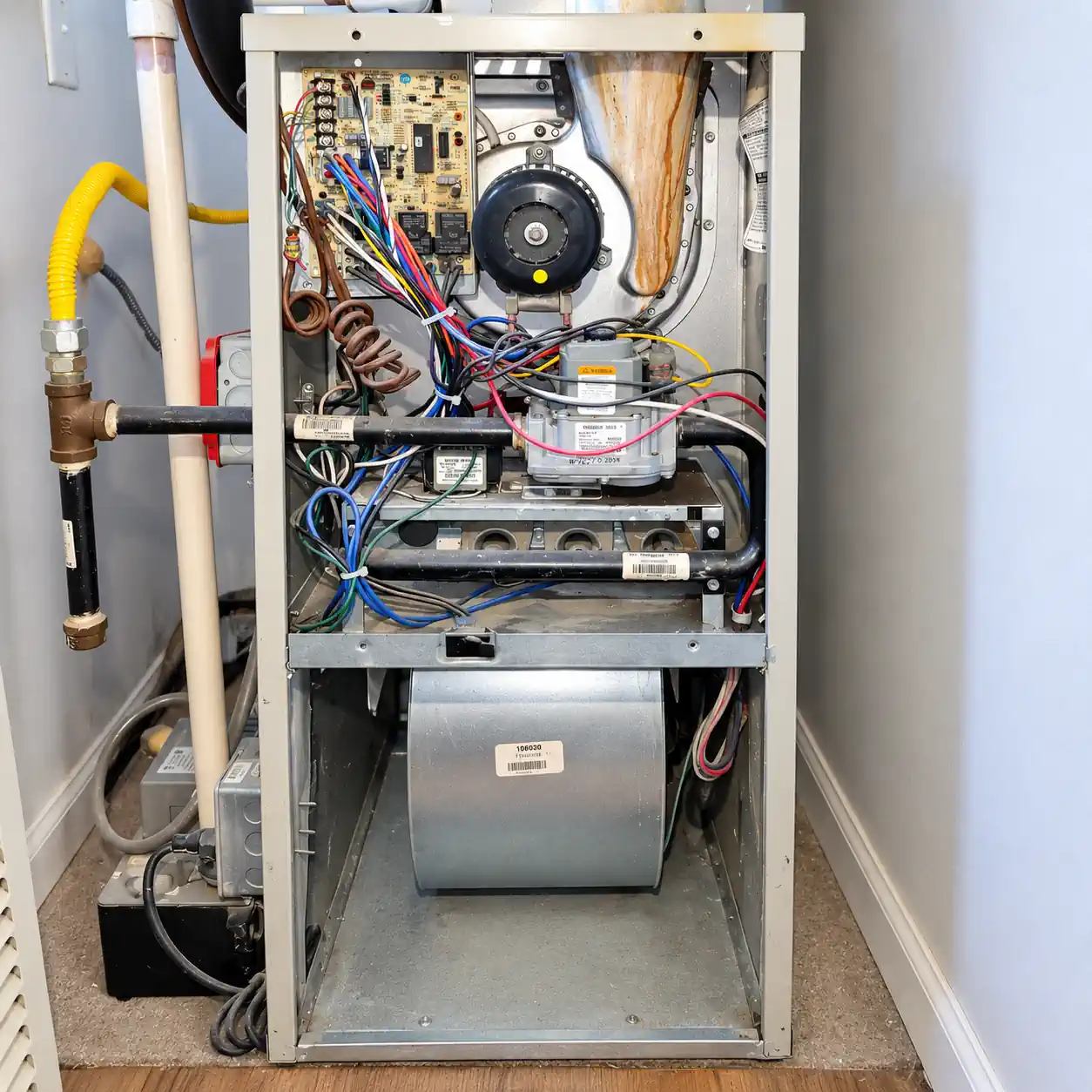
2. Check the Breaker and the Furnace Power Switch
Every furnace has a service switch that looks like a regular light switch, usually on the wall near the furnace or on the unit itself. It gets flipped off by accident more often than you would think, especially in finished basements. Make sure it is on, then check your electrical panel for a tripped furnace breaker. If the breaker trips again after one reset, leave it off and call a technician, because a repeat trip points to an electrical fault.
3. Check the Air Filter
A badly clogged filter starves the furnace of airflow. The heat exchanger overheats, the high-limit switch shuts the burners off, and the furnace may run in short bursts or stop heating altogether. Pull the filter and hold it up to a light. If you can’t see through it, replace it. Most homes need a new 1-inch filter every one to three months during heating season.
4. Make Sure the Furnace Door Is Closed
Furnaces have a door safety switch that cuts power when the blower compartment panel is off or not seated properly. If someone recently changed the filter or looked inside, make sure the front panel is pushed fully closed and latched.
5. Clear the Registers and Outside Vent Pipes
Closed or blocked supply registers and return grilles restrict airflow and can trip safety limits. If you have a high-efficiency furnace with white PVC pipes running out the side of the house or through the roof, check that snow, ice, leaves, or a bird’s nest is not blocking them. A blocked intake or exhaust pipe trips the pressure switch, and the furnace refuses to light. It is a common no-heat call in the Philadelphia area right after a snowstorm.
6. Look at the Condensate Drain
High-efficiency furnaces produce water that drains through a small tube or a condensate pump. If the drain line clogs or freezes, or the pump fills up without draining, a safety switch stops the furnace. Water around the base of the furnace or a full pump reservoir means the condensate system needs service.
7. Read the Blinking Status Light
Most modern furnaces from Carrier, Bryant, Trane, Lennox, Goodman, Rheem, and other brands have a small LED on the control board, visible through a window in the lower door. The number of blinks is a diagnostic code, and the chart that explains it is usually printed on the inside of the furnace door. Write the pattern down before you turn off power, because cutting power can clear the code. That one detail can shorten your repair visit.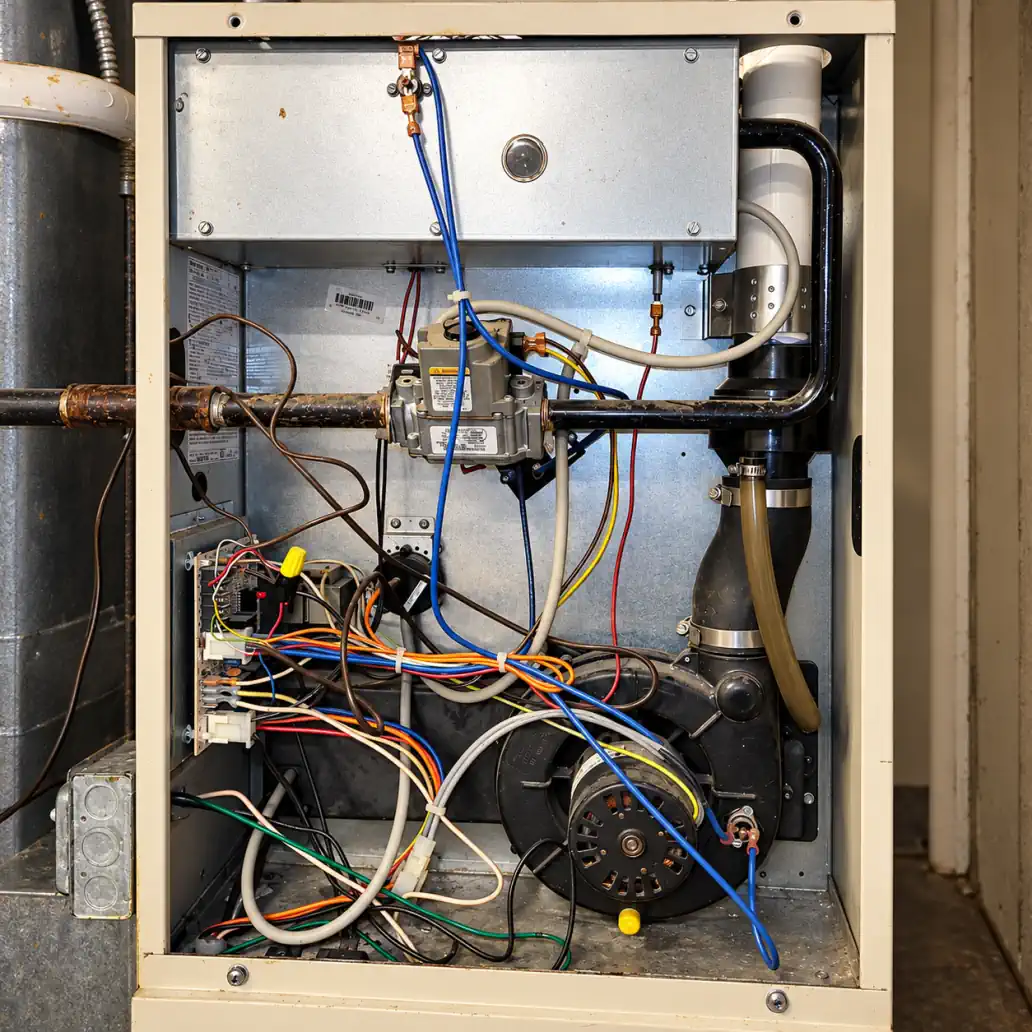
8. Confirm the Fuel Supply
On a gas furnace, check whether other gas appliances like the stove or water heater are working, which tells you gas is reaching the house. On an oil furnace, check the tank gauge. Running out of oil is a common cause of no heat in suburban homes, and refilling the tank often is not enough on its own, because the burner usually has to be bled of air before it will fire again.
When to Stop Troubleshooting and Call a Furnace Repair Technician
If the checks above didn’t bring the heat back, the problem is almost certainly inside the furnace, and that is where homeowner troubleshooting should stop. Ignitors, flame sensors, pressure switches, inducer motors, gas valves, and control boards sit inside the burner compartment, next to gas lines and high-voltage wiring. Removing or adjusting them without training and test equipment can create a gas leak or carbon monoxide risk, damage expensive parts, or put your manufacturer warranty at risk.
Call a furnace repair technician right away if:
- The furnace lights for a few seconds, shuts off, and keeps repeating.
- You hear the inducer motor run but the burners never light.
- A breaker trips again after you reset it once.
- The status light is flashing a fault code.
- The red reset button on your oil burner has popped out.
Oil furnace warning: never press the oil burner reset button more than once. Each press can pump more oil into the combustion chamber, and repeated resets can cause a dangerous puffback or fire. If one press doesn’t start the burner, call for service.
Gas smell or CO alarm: if you smell gas or rotten eggs, leave the house immediately and call your gas utility from outside, PGW in Philadelphia or PECO in most of the suburbs. If your carbon monoxide alarm sounds, get everyone out and call 911. Our guide on furnace gas smells explains the warning signs.
Furnace Still Not Working After These Checks?
Our licensed technicians diagnose and fix gas, oil, and electric furnaces across Philadelphia and the suburbs, with same-day heating repair for no-heat calls and the price before any work starts.
Furnace Troubleshooting Chart: Symptoms and Likely Causes
Use this chart to understand what your furnace is telling you and to describe the problem clearly when you call. The fixes in the right column are jobs for a licensed technician.
| Symptom | Likely Cause | What the Technician Does |
|---|---|---|
| No lights, no sounds, nothing happens | Power switch off, tripped breaker, open door switch, blown control board fuse | Tests power, door switch, transformer, and board fuse |
| Inducer runs but burners never light | Blocked vent pipe, failed pressure switch, cracked ignitor | Checks venting and pressure switch, tests and replaces the ignitor |
| Burners light, then shut off in seconds | Dirty or failed flame sensor, poor ground, low gas pressure | Services or replaces the flame sensor and checks gas pressure |
| Fan runs but air is cold | Ignition failure, overheating limit, thermostat fan set to On | Diagnoses ignition and airflow (see heater blowing cold air) |
| Starts and stops over and over | Clogged filter, overheating, faulty limit or flame sensor | Restores airflow and tests safety controls (see furnace keeps shutting off) |
| Water around the furnace | Clogged or frozen condensate line, failed pump | Clears the drain and replaces the pump or float switch |
| Oil burner won’t fire | Empty tank, clogged oil filter or nozzle, air in the line, failed cad cell | Bleeds the line, replaces filter and nozzle, tests burner controls |
Gas, Oil, and Electric Furnaces Fail Differently
Gas furnaces most often stop working because of ignition problems: a cracked hot surface ignitor, a dirty flame sensor, a stuck pressure switch, or a failing gas valve. These are the most common no-heat repairs in Philadelphia rowhomes and twins. See our gas furnace repair service for details.
Oil furnaces usually quit from fuel delivery problems: an empty tank, a clogged oil filter or nozzle, air in the line, or a failed cad cell sensor that shuts the burner down for safety. Oil systems also need yearly cleaning to keep soot from building up. Learn more about oil furnace repair.
Electric furnaces have no flame, so the failures are electrical: tripped breakers, burned-out heating elements, bad sequencers, or blower motor problems. Learn more about electric furnace repair.
Related Furnace Problems
If your furnace runs but the house still isn’t warm, start with our guide to a heater blowing cold air. Banging, squealing, or rattling sounds are covered in furnace making noise. Boiler homes with cold radiators should read no heat from radiators, and if your furnace runs nonstop but can’t keep up on the coldest nights, see furnace can’t keep up in extreme cold. Older systems with several of these symptoms may be showing the signs your furnace is failing.
Furnace Not Working in the Philadelphia Area? Get Same-Day Repair
If your furnace still isn’t working after these checks, EMCO Tech can help. Our licensed technicians repair gas, oil, and electric furnaces from all major brands across Philadelphia, Montgomery, Bucks, Chester, and Delaware counties, with same-day service for no-heat calls and stocked trucks that finish most furnace repairs in a single visit. We find the actual cause first and give you the price before any work begins. Call 215-366-1001 or book online.
To keep this from happening next winter, a winter heater tune-up catches weak ignitors, dirty flame sensors, and clogged drains before they leave you cold.
Furnace Not Working FAQs
The most common reasons a furnace won’t turn on are a thermostat that isn’t calling for heat, a tripped breaker or furnace power switch, a clogged air filter, an open furnace door, or a blocked vent pipe that trips a safety switch. Inside the furnace, a failed hot surface ignitor, dirty flame sensor, stuck pressure switch, bad control board, or gas valve problem can also keep it from starting. Check the thermostat, power, filter, and vents first. If the furnace still won’t start, write down any blinking light code and call a furnace repair technician, because the remaining causes are inside the burner compartment.
For most gas furnaces, a reset simply means turning the power switch or breaker off for about 30 seconds and back on, which restarts the control board and clears a temporary lockout. Many modern furnaces don’t have a red reset button at all. If yours restarts but locks out again, the safety system is shutting it down for a reason, like a dirty flame sensor or blocked vent, and more resets won’t fix it. Oil furnaces are different: press the oil burner reset button only once. Pressing it repeatedly can flood the combustion chamber with oil and cause a dangerous puffback.
The blinking LED on the furnace control board is a diagnostic code. A steady or slow, regular blink usually means normal operation, while a set number of flashes points to a specific problem such as a pressure switch fault, flame sensing failure, ignition lockout, open limit switch, or reversed polarity. The code chart is usually printed on the inside of the furnace door, and the codes vary by brand, including Carrier, Bryant, Trane, Lennox, Goodman, and Rheem. Write the code down before turning the power off, since cutting power can clear it, and share it with your technician to speed up the repair.
You can safely handle the basics: setting the thermostat, replacing its batteries, resetting a tripped breaker once, turning the furnace power switch back on, changing the filter, closing the furnace door, and clearing snow or debris from outside vent pipes. Repairs inside the furnace are a different story. Ignitors, flame sensors, gas valves, pressure switches, and control boards sit next to gas lines and high-voltage wiring, and a mistake can cause a gas leak, carbon monoxide exposure, or a much bigger repair bill. Improper repairs can also put your manufacturer warranty at risk. For anything inside the cabinet, call a licensed furnace technician.
The cost to fix a furnace depends on what failed. Common no-heat repairs like replacing an ignitor, flame sensor, pressure switch, capacitor, or thermostat usually run a few hundred dollars, while bigger parts such as an inducer motor, blower motor, control board, or gas valve cost more. Older or discontinued furnaces can take longer to source parts. A diagnostic visit pinpoints the exact cause, and at EMCO Tech you get the repair price before any work starts. If your furnace is 15 or more years old and the repair costs more than a third of a new system, it is worth comparing repair against replacement.
It depends on the outside temperature and how well the house holds heat, but once the furnace stops in freezing weather, indoor temperatures drop steadily, and the biggest risk is frozen pipes. Pipes along exterior walls, in crawl spaces, and in unheated basements freeze first, especially when outdoor temperatures fall into the teens. While you wait for a repair, open the cabinet doors under sinks so warm air reaches the pipes, let faucets on exterior walls drip, and use space heaters only as their safety instructions direct. Call early for same-day heating repair so a cold night doesn’t turn into a plumbing problem.
Yes. Our technicians repair gas, oil, and electric furnaces from all major brands, including Carrier, Bryant, Trane, American Standard, Lennox, Goodman, Amana, Rheem, Ruud, and York, plus older Westinghouse and Dayton units still running in many Philadelphia-area basements. Our service trucks carry common parts like ignitors, flame sensors, pressure switches, capacitors, and universal control boards, so many furnace repairs are finished in a single visit. For newer high-efficiency furnaces, we read the manufacturer’s diagnostic codes and follow factory procedures, which protects your warranty and gets the repair right the first time.
Explore Our Furnace & Heating Repair Services
Heating Repair
Same-day heater repair for furnaces, boilers, and heat pumps across Greater Philadelphia.
Gas Furnace Repair
Ignitor, flame sensor, pressure switch, and gas valve repairs done right the first time.
Oil Furnace Repair
Oil burner lockouts, nozzle and filter problems, and no-heat calls on oil systems.
Electric Furnace Repair
Heating element, sequencer, breaker, and blower motor repairs for electric heat.
Boiler Repair
Steam and hot water boiler repair for cold radiators, leaks, and pressure problems.
Winter Heater Tune-Up
Catch weak ignitors, dirty sensors, and clogged drains before the first cold night.
Latest Updates – Keep Cool, Feel Warm, Breathe Clean Air with EMCO Tech
Emergency Heat (AUX) Won’t Turn Off? Here’s Which Heat Pump Fixes It
If AUX or emergency heat runs all winter, the heat pump has handed your house to electric backup strips, and the PECO bill shows it. See how…
Planning a Heat Pump Replacement: Upgrade Before It Fails
The worst time to replace a heat pump is the morning it dies. A planned swap lets you choose the equipment, lock in better pricing, and stay warm on…