


How Do I Know if My Boiler Needs Repairing?
Strange noises like banging or whistling, low water pressure, a leak, or a lack of hot water or heat all mean the same thing, your boiler is telling you something. Catching these early usually means a smaller repair bill. Call us for a diagnosis before it turns into a no-heat emergency.
Can a Boiler Be Repaired?
Yes — in most cases, boilers are worth repairing, at least for a while. With regular maintenance and timely fixes, you can extend your boiler’s life and save money over the years. However, always weigh the repair costs against the price of a new boiler, especially considering your unit’s age and model. Sometimes putting money into an old, inefficient boiler isn’t the best move if that money could go toward a newer, more efficient replacement.
“Repair or Replace? The Ultimate Dilemma!” – Making the Right Choice
Deciding on boiler repair or replacement comes down to a few key factors. Age is one of the biggest considerations. If your boiler is more than 15 years old, it’s likely less efficient and more prone to problems than newer models. In that case, investing in a replacement could save you money on energy and reduce breakdowns. (In fact, Energy Star recommends considering a new boiler after about 15 years.) Likewise, a unit that’s constantly breaking down or requiring expensive fixes is probably ready to retire.
On the other hand, if your boiler is under, say, 10 years old and has been running without major issues, repairing it might be the smarter move financially. A relatively newer boiler often has plenty of life left, especially with proper maintenance. Always compare the repair bill to the cost of a new boiler before deciding. In many situations, a repair that costs a few hundred dollars is well worth it when a new boiler would be several thousand.
Boiler Acting Up? Decide Whether to Repair or Replace.
If your boiler is leaking, making strange noises, or struggling to heat your home, it may be time to evaluate whether a repair will solve the problem or if replacement is the smarter investment. Our experienced technicians provide honest recommendations and reliable solutions for homes across the Philadelphia area.
 What Is the Life Expectancy of a Boiler?
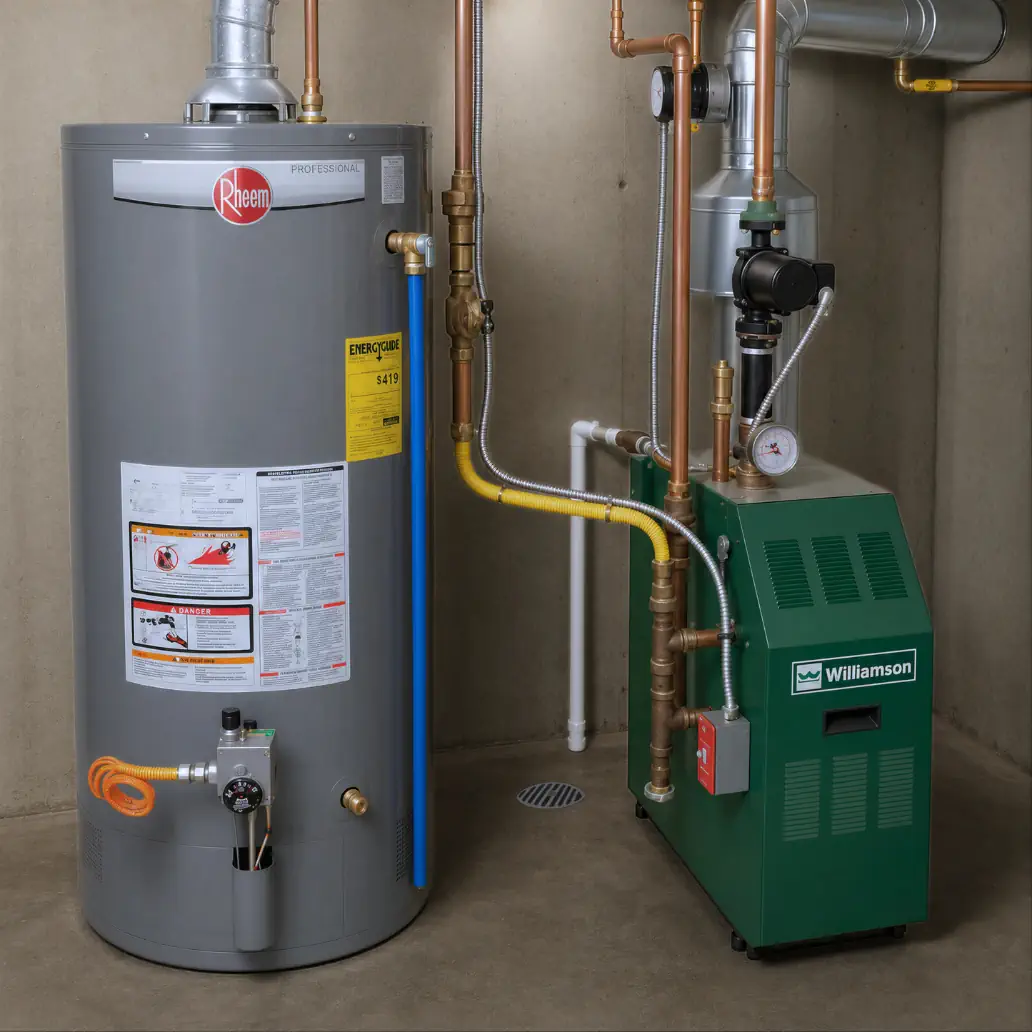
Life expectancy depends heavily on the type. Cast iron steam and hot water boilers, the kind most common in older Philadelphia homes, often run 20 to 30 years with regular maintenance. Steel and condensing boilers typically run 15 to 20 years before efficiency drops and issues start piling up. Either way, as a boiler ages its efficiency declines, so a unit that’s still running isn’t necessarily running well. Curious what your specific noise or symptom usually means? We break it down further below.
What Are the Most Common Boiler Problems?
Boilers can run into a variety of issues over time. Some of the most common problems include low water pressure, thermostat malfunctions, limescale buildup (mineral deposits in the system), leaks, and strange banging or whistling noises. It’s important to address these symptoms as soon as possible to prevent a minor issue from turning into a major breakdown. Regular servicing by a professional can help catch and fix these problems early.
Prolonging the Life of Your Boiler: Regular Maintenance and Repairs
One way to ensure your boiler lasts as long as possible is to keep up with regular maintenance and needed repairs. Flushing the system, checking pressure, and tuning the burner annually can prevent many issues that shorten a boiler’s lifespan. Also, consider the type of boiler you have. For example, combination boilers (combi boilers) tend to be pricey to replace, so it might be worth fixing a high-end combi unit rather than buying a new one right away. In general, if your system is older, inefficient, and still breaking down often even with maintenance, it’s probably time to think about a replacement. But if it’s relatively new and has been well maintained, a repair will likely get it back on track for much less money than a new boiler.
Explore More Heating System Advice
Still researching your heating options? These guides explain how different heating systems work, what warning signs to watch for, and when repairs or upgrades may be the smarter choice for long-term comfort and efficiency.
 Guide for Choosing the Perfect Heating System for Your Home
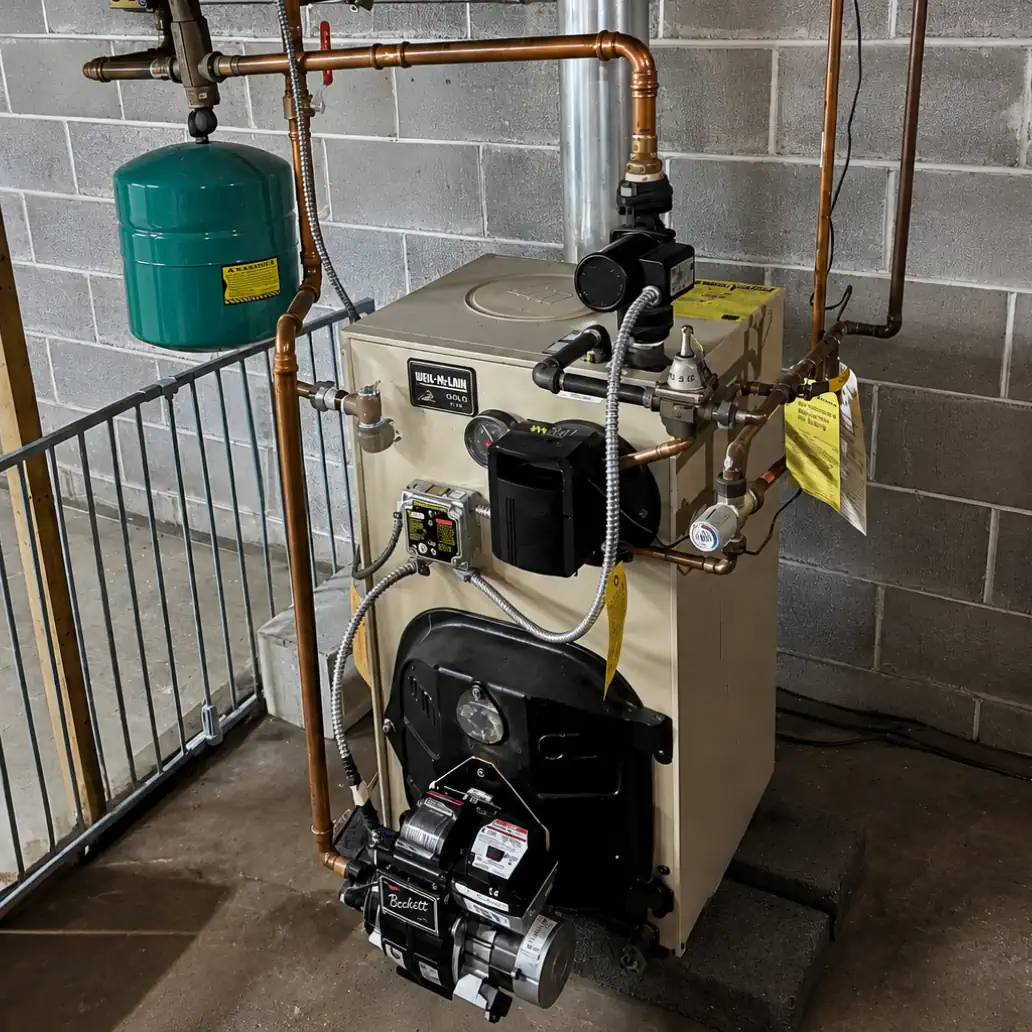
Choosing the ideal heating solution for your home isn’t always straightforward. When weighing the decision to repair or replace your boiler, base it on clear factors like age, efficiency, and the type of unit. As mentioned, consistent maintenance can stretch a boiler’s lifespan and reduce long-term costs. If you’re still unsure which way to go, don’t hesitate to consult a professional heating expert. An experienced HVAC technician can inspect your boiler and give you personalized advice, so you can feel confident about your choice.
Get Help from EMCO Tech Heating & Cooling for Your Home Heating Needs
Making informed decisions about your boiler starts with knowing your options before you spend a dollar. Regular tune-ups and prompt repairs can extend a boiler’s life and save you money, and whichever way this decision goes, a second honest opinion never hurts. Our licensed HVAC technicians at EMCO Tech Heating & Cooling give you straight answers based on what’s actually happening with your system, not a sales pitch.
Still on the fence about whether your boiler is worth fixing or due for a replacement? We’ll give you an unbiased assessment and a free estimate either way.
We proudly serve boiler repair and replacement across Philadelphia (Northeast Philadelphia, Chestnut Hill, Fishtown), Montgomery County (Abington, Horsham), Bucks County (Southampton, Doylestown), Chester County (West Chester), and Delaware County (Wayne, Newtown Square), so you can count on prompt, reliable service.
If you want to learn more about home heating options or need a free estimate for a boiler repair or a new boiler installation, contact us today at 215-366-1001 to schedule an appointment or get straight answers to your heating questions.
Boiler Repair or Replacement FAQs
Some plumbers can handle basic boiler issues, but most homeowners are better off hiring an HVAC contractor who specializes in boiler repair and replacement.
If your boiler is under 10 years old and the repair cost is modest, fixing it usually makes sense. However, if it’s older than 15 years, inefficient, or breaking down often, replacement is the smarter long-term option.
The cost to repair a boiler depends on the issue. Minor fixes might only run a few hundred dollars, while major repairs can be so expensive that replacing the unit becomes more sensible. Always compare the repair quote with replacement costs before deciding.
It depends on the type. Cast iron steam and hot water boilers, common in older Philadelphia homes, often run 20 to 30 years with proper maintenance. Steel and condensing boilers typically run 15 to 20 years before efficiency drops.
Frequent breakdowns, rising energy bills, uneven heating, strange noises, or leaks are all warning signs. If those problems keep coming back and repair bills are piling up, then replacing the boiler is usually more cost-effective.
Often, constantly repairing an old boiler ends up costing more in the long run. While you might squeeze a bit more life out of it with fixes, a newer system will likely be more efficient and save money on fuel and future service calls.
Common boiler issues include leaks, thermostat failures, low water pressure, strange banging noises, and limescale buildup. Getting regular service helps prevent these problems from turning into costly emergencies.
Boiler replacement cost depends more on your home’s setup than the brand. Fuel type, steam versus hot water, the efficiency tier, and how much of the existing piping needs correcting all move the number more than the equipment does. See our boiler replacement page for what actually drives the cost, or call for a free written estimate.
That’s usually kettling, sediment or scale built up near the heat exchanger creating hot spots that make the water pop and bang as it boils against them. It won’t fix itself and it accelerates wear. Worth a look before it turns into a bigger repair.
Usually a weak or dirty thermocouple, a draft problem, or a gas supply issue. It’s not something to keep relighting on your own, especially on a gas appliance. Have it diagnosed properly.
Most often a failed circulator pump, a stuck zone valve, or air trapped in the system. The boiler itself can be working fine while heat never makes it to the radiators. This is usually a straightforward repair.
Check the cheap causes first, a waterlogged expansion tank or a weeping pressure relief valve cause the same symptoms as a real leak and cost a fraction to fix. If those check out and pressure still drops, see our guide to cracked boiler sections for what else it could be.
Explore Our Boiler & Heating Services
Gas Boilers
Efficient heating solutions for homes with reliable gas boiler systems.
Oil Boilers
Stay warm with dependable oil boiler installation, service, and repair.
Steam Boilers
Classic steam heat systems serviced and installed by local experts.
Tankless Boilers
Modern, space-saving boilers with hot water on demand.
Gas Line Services
Safe gas line installation for boiler upgrades and conversions.
Boiler Repair vs. Replacement: A Deeper Look
Age, cost, and system type, worked through in more detail below.
The foundation of any repair-or-replace decision starts with knowing your boiler’s expected lifespan and the broader financial implications. On average, residential boilers last 15 to 25 years, though well-maintained cast-iron models can push toward 30 years. Steel boilers, however, may only reach 15-20 years before efficiency wanes and issues mount. If your unit is over 15 years old, it’s wise to monitor it closely, as repair frequency and costs tend to rise.
Older boilers lose efficiency over time, forcing them to consume more fuel to maintain warmth, which drives up your heating bills. A typical 20-year-old boiler might operate at 60-70% efficiency, while modern condensing models achieve 90-98% or higher. Upgrading can cut your annual heating costs by 20-40%, potentially recouping the investment through savings in just a few years, especially with Philadelphia’s variable winters and fluctuating natural gas prices.
Not every noise or leak means the same thing. Here’s what we’re usually looking at once we get on site.
Boiler Leaking Water From the Bottom. On a cast iron boiler this is either a failed gasket or push nipple between sections, which is a repair, or a cracked section, which usually isn’t. The two look similar from the outside but cost very differently to fix. See our full breakdown on telling a gasket leak from a cracked section.
Loud Banging or Rumbling (Kettling). Sediment and scale build up near the flame and create hot spots. Water flashes against them and you hear it as banging or rumbling during a heating cycle. It’s a sign of scale, not structural damage, but left alone it does eventually contribute to cracked sections.
Pilot Light Keeps Going Out. Usually a weak or dirty thermocouple, a draft issue at the flue, or a gas supply problem. Not something to keep relighting yourself, especially on a gas appliance. Have it diagnosed.
Boiler Turns On But No Heat. The boiler can be firing fine while heat never reaches the radiators. Usual causes are a failed circulator pump, a stuck zone valve, or trapped air in the system. This is typically a straightforward, inexpensive repair, not a sign the boiler itself is failing.
Low Pressure or the Boiler Shuts Off. Rule out the cheap causes first, a waterlogged expansion tank or a weeping pressure relief valve both mimic a real leak and cost a fraction to fix. If those check out and pressure keeps dropping, you’re likely looking at a section leak.
Steam Boiler Shaking, Clicking, or Banging. Steam systems have their own quirks. Water hammer from improperly pitched pipes, a clogged air vent, or the wrong water level all sound alarming but are often simple fixes. See our dedicated steam boiler page for steam-specific troubleshooting.
Weil-McLain, Burnham, Peerless, and H.B. Smith are the cast iron brands we see most across Philadelphia’s older housing stock, and parts are generally still available for all four. If yours is an older or less common brand, ask us to check before assuming you’re stuck replacing it.
Cost is often the deciding factor, and it’s also the hardest one to pin down from an article, because no two boiler jobs are quite the same. A simple part swap might run a few hundred dollars. A bigger repair, a circulator or a control board, can run into four figures. Full replacement is typically several thousand dollars installed, and where it lands depends on fuel type, whether it’s steam or hot water, the efficiency tier, and what the last installer left behind. Code upgrades, accessories, and radiator or piping issues all move that number in ways a phone quote can’t account for.
Two rules of thumb hold regardless of the exact number. If a repair costs more than half of what a new boiler would run installed, replace. And if you multiply the boiler’s age by the repair cost and it clears 5,000 dollars, that also points toward replacement. We give a firm written number after we’ve actually looked at the system, not a guess over the phone.
Ultimately, the equation boils down to age, efficiency losses, and total ownership costs. Let’s explore specific scenarios next.
Repairing your boiler is a smart move if the system is still relatively young and the issue is isolated and affordable. Here are key situations where fixing makes sense:
- Boiler Age Under 10-15 Years: Newer units with solid maintenance records respond well to repairs. Parts are readily available and efficiency remains high, so a modest fix can add years of reliable service without a full overhaul.
- Low-Cost, Targeted Repairs: For minor problems like a faulty igniter, valve, or circulation pump, the bill stays well under what a new boiler would cost. These fixes restore functionality quickly and economically, ideal if your boiler has no prior major issues.
- Reliable Track Record: If this is your first big breakdown and the boiler has been dependable, a professional repair can address it without signaling deeper problems. Annual maintenance helps here, as it prevents small issues from escalating.
- Budget Limitations: A new boiler is a major expense, so if funds are tight, a safe, affordable repair can bridge the gap for 1-2 more seasons while you save for an upgrade. Just avoid repeated patches on units over 20 years old.
In these cases, repair extends your boiler’s life cost-effectively. Prioritize licensed technicians for safety, particularly with gas or oil systems.
Pro Tip: Consistent maintenance, annual inspections and cleanings, maximizes repair value by keeping efficiency optimal and catching issues early.
Sometimes, repairs just delay the inevitable. Replacement shines when your boiler shows signs of advanced age or chronic problems. Consider these indicators:
- Age 15+ Years: At this stage, even functional boilers are inefficient and prone to failure. A new unit offers 15-25 more years of service, plus features like smart controls and better zoning for even heating in your Philly home.
- Frequent or Expensive Repairs: Multiple service calls in recent years, or a single fix that starts approaching what a new boiler would cost, signal it’s time to replace. The 50% rule applies here, if repairs hit half a new boiler’s price, the math favors starting fresh to avoid ongoing disruptions.
- Rising Energy Bills and Poor Performance: If bills are climbing despite stable fuel costs, or your home feels unevenly heated, inefficiency is likely the cause. Modern high-efficiency boilers can slash fuel use by 30% or more, providing quicker ROI amid Pennsylvania’s energy landscape.
- Safety Issues: Cracked heat exchangers, gas leaks, or carbon monoxide risks demand immediate action, often replacement over repair for household safety. Visible corrosion, leaks, or unusual odors are red flags.
- Obsolete Parts or Technology: For units over 10-15 years, sourcing parts becomes challenging and costly. New boilers ensure easy maintenance, warranties (often 5-10 years), and compatibility with rebates for energy-efficient models.
- Long-Term Home Plans: If you’re staying put, a replacement boosts comfort and home value, appealing to buyers in areas like Horsham or Southampton who prioritize modern HVAC during inspections.
Replacement isn’t just about fixing, it’s an investment in reliability and savings.
Spotting trouble early can prevent winter emergencies. Watch for these common red flags:
- Age Exceeding 15-20 Years: Lifespan limits mean breakdowns are imminent.
- Frequent Repairs: Repeated calls indicate systemic wear.
- Increasing Utility Bills: Unexplained spikes suggest efficiency loss.
- Inconsistent Heating: Cold spots or struggling to warm up point to circulation or capacity issues.
- Noises Like Banging or Whistling: These signal sediment buildup, valve problems, or overheating, common in aging units.
- Leaks, Rust, or Corrosion: Water around the base or visible damage risks floods or inefficiency.
- Discolored Flame or Soot: Yellow flames on gas/oil boilers indicate combustion issues, potentially unsafe.
- Outdated or Hard-to-Find Parts: If repairs involve rare components, obsolescence is near.
Multiple signs? It’s likely time for replacement to avoid costly surprises.
To decide, assess your specifics:
- Opt for Repair: Young boiler (under 15 years), a single low-cost fix, good history, e.g., an 8-year-old unit needing a routine pump replacement.
- Opt for Replacement: Old unit (over 15 years), repeated or high-cost issues, safety concerns, e.g., a 22-year-old boiler needing a major heat exchanger repair.
Timing matters: in peak winter, repair for immediate relief; off-season, plan a replacement. Calculate long-term: new boilers offer warranties, and it’s worth asking about current PECO or state rebate programs for high-efficiency models, plus meaningful fuel savings that offset the upfront cost.
Consult a pro for an unbiased evaluation, we’ll inspect and quote both options.
Unsure? A local HVAC expert can diagnose your boiler, estimate repair viability, and compare replacement benefits, factoring in Philly-area fuel costs and incentives. In neighborhoods from Manayunk to Bustleton, our harsh winters make dependable heat non-negotiable.
For tailored advice on whether to repair or replace your boiler, contact the heating specialists at EMCO Tech. We provide thorough diagnostics and straightforward recommendations to match your needs, be it a targeted repair or efficient new installation. Visit our boilers and radiant heating services for more on keeping your home cozy, explore boiler repair options, or learn about professional boiler installation. With EMCO Tech, you get peace of mind and optimal comfort.
Post updated: September 2026
Latest Updates – Keep Cool, Feel Warm, Breathe Clean Air with EMCO Tech
Emergency Heat (AUX) Won’t Turn Off? Here’s Which Heat Pump Fixes It
If AUX or emergency heat runs all winter, the heat pump has handed your house to electric backup strips, and the PECO bill shows it. See how…
Planning a Heat Pump Replacement: Upgrade Before It Fails
The worst time to replace a heat pump is the morning it dies. A planned swap lets you choose the equipment, lock in better pricing, and stay warm on…
Informative guide. I’ve been trying to understand when boiler repair is worth it and when replacement makes more sense, and this article explains it clearly. For homeowners dealing with unreliable radiators, uneven heat, or repeated boiler problems, having a trained technician inspect the system first is the smart move. Regular boiler service can make a big difference before small issues turn into expensive repairs.
Thank you, Kristeen. We’re glad the article helped. A boiler does not always need to be replaced right away, but repeated breakdowns, pressure issues, leaks, or uneven heating should be inspected by an experienced technician. You can also visit our boiler repair services page for more information.