


No Heat in Your House? Start Here
When the whole house goes cold, the cause is usually one of a few things: the thermostat isn’t calling for heat, the system has lost power, the fuel supply is interrupted, a safety switch has locked the system out, or an ignition part has failed. If you heat with a boiler and radiators, low water pressure, a failed circulator pump, or air trapped in the pipes can also leave you with no heat. The first step is knowing which system you have, because the checks are different for each.
Work through the steps below. If the house is still cold, call for same-day heating repair and tell us what kind of system you have and what it’s doing. That helps us send the right technician with the right parts.
Which Heating System Do You Have?
- Air blows out of floor or wall vents: you have a furnace (gas, oil, or electric) or a heat pump.
- Cast iron radiators or baseboard heaters: you have a boiler. If the radiators hiss and clank, it’s a steam system. If they’re filled with water and stay warm longer, it’s a hot water system.
- An outdoor unit that runs in winter: you have a heat pump, often with electric or gas backup heat.
Many Philadelphia rowhomes and twins still heat with steam or hot water radiators, while newer homes and renovations usually have forced air. Some homes have both.
Check These First, Whatever System You Have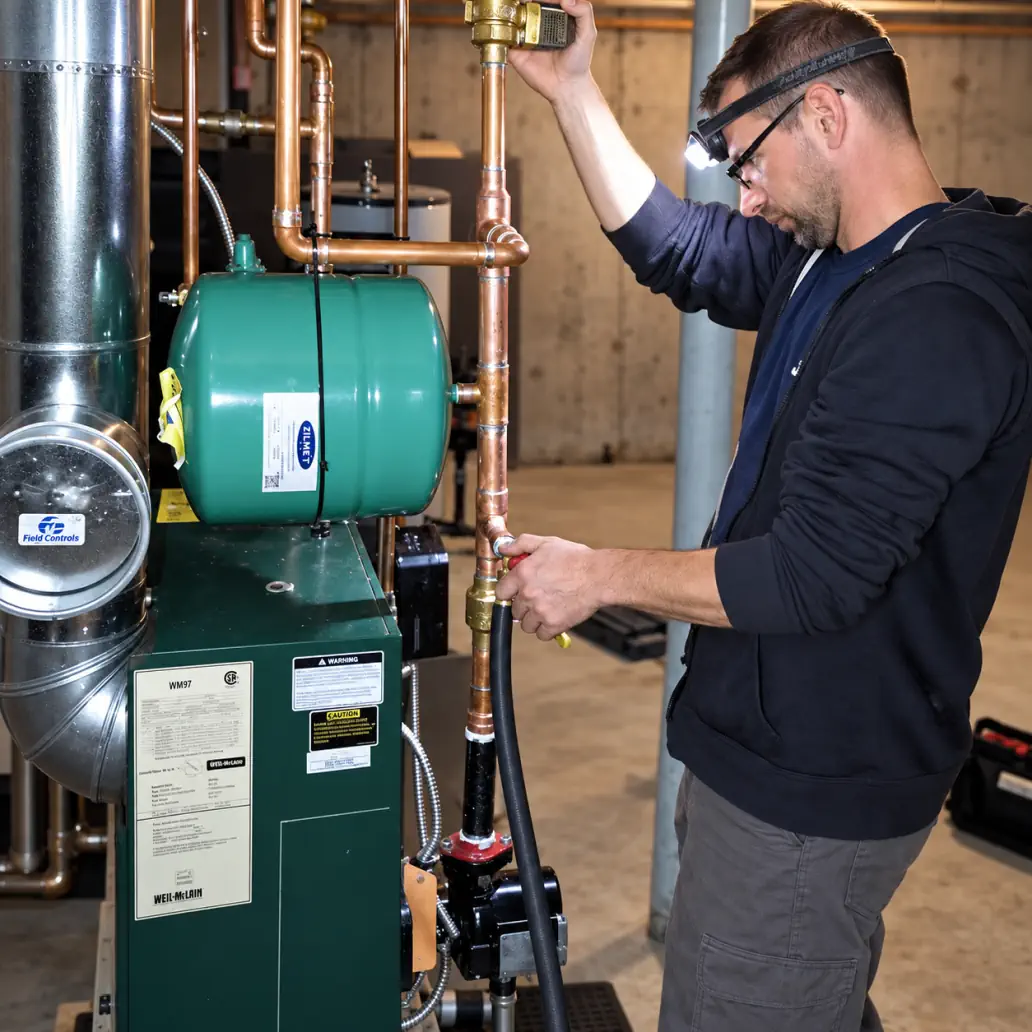
Thermostat
Make sure it’s set to Heat, a few degrees above room temperature, with fresh batteries. Check that a smart thermostat schedule or a lost Wi-Fi connection isn’t holding the temperature down.
Power
Furnaces, boilers, and heat pumps all need electricity, even gas and oil systems. Check for a tripped breaker and make sure the service switch near the equipment, which looks like a regular light switch, hasn’t been turned off by accident.
Fuel
If your gas stove or water heater is working, gas is reaching the house. If you heat with oil, check the tank gauge. An empty tank is one of the most common no-heat calls in the suburbs, and refilling it often isn’t enough on its own, because the burner has to be bled of air before it will fire again.
Status Lights and Reset Buttons
Many furnaces and boilers have a blinking light that shows a fault code. Write it down before turning anything off. On an oil burner, press the red reset button only once. Pressing it repeatedly can flood the chamber with oil and cause a dangerous puffback.
No Heat From a Furnace
If air is blowing but it’s cold, see our guide to a heater blowing cold air. If the furnace won’t start at all, see furnace not working. If it starts and then stops, see furnace keeps shutting off.
No Heat From Radiators
Boiler systems fail differently from furnaces, and the pattern of which radiators are cold tells you a lot.
All Radiators Are Cold
If none of the radiators are warming up, the boiler is either not firing or not moving heat through the house. Common causes include an ignition or burner failure, a safety lockout, a low-water cutoff that has shut down a steam boiler, water pressure that’s too low in a hot water boiler, or a failed circulator pump that keeps hot water from leaving the boiler. On a hot water system, if you can hear the boiler running and the pipes right next to it are hot but the radiators stay cold, a stuck circulator or zone valve is the usual suspect.
Some Radiators Hot, Others Cold
In a hot water system, cold radiators next to warm ones usually mean air is trapped inside them. Air pockets block hot water from filling the radiator, so the top stays cold. Bleeding the air out fixes it, and our technicians do it on every boiler visit. A stuck zone valve can also leave one area of the house cold. In a steam system, a radiator that won’t heat usually has a clogged or painted-over air vent, a valve that’s partly closed, or a pipe that has lost its pitch and is trapping water.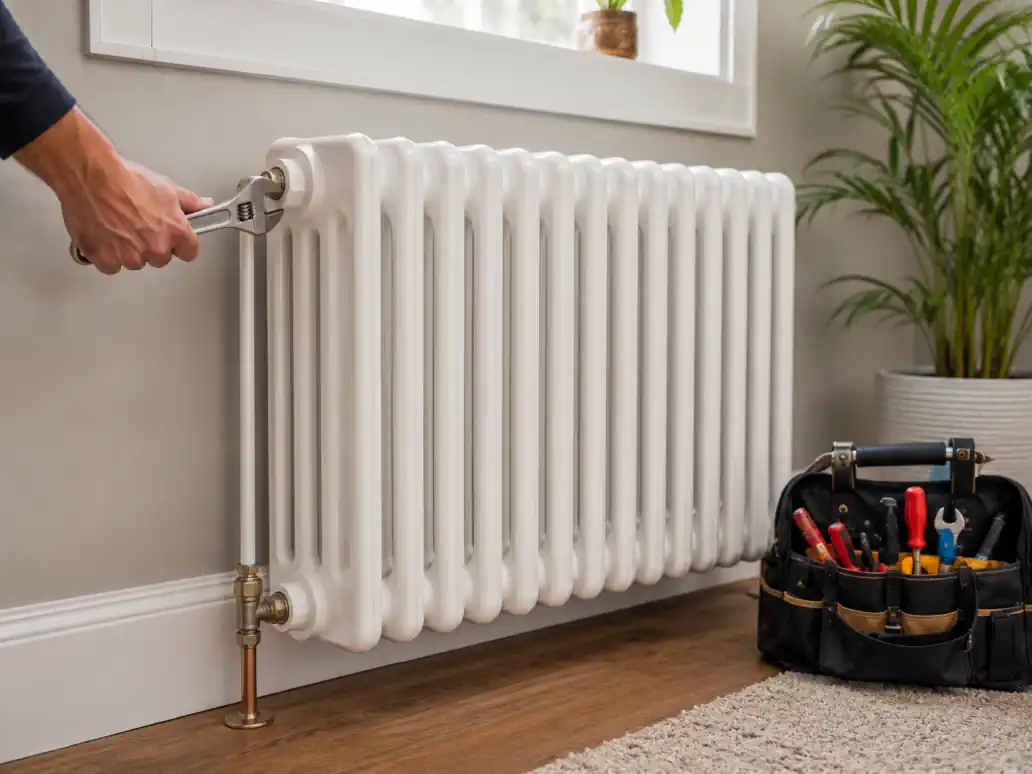
Upstairs Radiators Are Cold
When the first floor is warm but the second or third floor isn’t, a hot water system often doesn’t have enough pressure to push water all the way to the top of the house, or air has collected in the highest radiators. In steam systems, cold upper floors usually point to clogged main vents in the basement or an unbalanced system. This is very common in tall Philadelphia rowhomes.
Reading Your Boiler’s Pressure Gauge
Most hot water boilers have a pressure gauge on the front. In a typical two-story home, it reads about 12 to 15 psi when the boiler is cold and rises to roughly 20 to 25 psi when it’s hot. A reading well below that can starve upper floors of heat, and a reading near 30 psi can open the relief valve. You can read it, but leave refilling and pressure adjustments to a technician. On a steam boiler, never add water to a boiler that has run low while it’s hot. Turn it off and call us, because cold water in a hot, dry boiler can crack it.
Our boiler repair team handles both hot water and steam boiler systems. If your radiators bang and knock, see the boiler section of our guide to heating noises.
No Heat From a Heat Pump
If the outdoor unit is running but the house is cold, the heat pump may be stuck in cooling mode, low on refrigerant, iced over, or relying on backup heat that isn’t turning on. Our heat pump repair team diagnoses ducted and ductless systems, and our guide to aux heat and cold-climate heat pumps explains how backup heat should work.
Still No Heat?
Furnace, boiler, radiators, or heat pump, our technicians find the cause and get the heat back on, with same-day heating repair across Philadelphia and the suburbs.
Quick Guide: No Heat by Symptom
| What You Notice | Likely Cause | Who Fixes It |
|---|---|---|
| Nothing runs at all | Thermostat, breaker, service switch | You, then a technician if it stays off |
| Oil system won’t fire | Empty tank, air in the line, burner lockout | Fuel delivery, then oil burner service |
| Furnace runs, air is cold | Ignition failure, overheating, lockout | Furnace technician |
| Boiler runs, all radiators cold | Circulator pump, zone valve, low pressure | Boiler technician |
| Some radiators cold | Trapped air, stuck valve, steam air vent | Boiler technician |
| Upstairs radiators cold | Low system pressure, air at the top, main vents | Boiler technician |
| Heat pump runs, house cold | Refrigerant, reversing valve, backup heat | Heat pump technician |
While You Wait for Heat
Once the heat goes out in freezing weather, the biggest risk is frozen pipes. Open the cabinet doors under sinks on outside walls, let those faucets drip, and close off rooms you aren’t using to hold heat where you need it. Use space heaters only as the manufacturer directs, keep them away from curtains and bedding, and plug them straight into the wall. Never heat the house with a gas oven, stove, or grill, because they can fill the home with carbon monoxide.
When No Heat Is an Emergency
Leave the house and call your gas utility from outside if you smell gas or rotten eggs: PGW in Philadelphia, or PECO in most of the suburbs. If your carbon monoxide alarm sounds, get everyone out and call 911. Call for service right away if a boiler is leaking, a steam boiler’s water glass is empty, the relief valve is spraying, or an oil burner won’t fire after one reset. For heating breakdowns that can’t wait, our emergency HVAC service responds fast.
No Heat in Your Philadelphia-Area Home? We Can Help Today
EMCO Tech restores heat to homes across Philadelphia, Montgomery, Bucks, Chester, and Delaware counties every winter, from steam and hot water boilers in city rowhomes to furnaces and heat pumps in the suburbs. Our technicians find the actual cause, give you the price before any work starts, and carry common parts so most no-heat calls are fixed in one visit. Call 215-366-1001 or book online. A winter heater tune-up catches most of these problems before the first cold night.
No Heat FAQs
No heat in the house usually comes down to a thermostat that isn’t calling for heat, a tripped breaker or service switch, an interrupted fuel supply, a safety lockout, or a failed ignition part. With a boiler and radiators, low water pressure, a failed circulator pump, or air trapped in the pipes can also stop heat from reaching your rooms. Heat pumps can lose heat from a refrigerant problem, a reversing valve stuck in cooling mode, or backup heat that won’t turn on. Check the thermostat, power, and fuel first. If the house is still cold, a technician can find the actual cause, usually in a single visit.
First, check the thermostat setting and batteries, the breaker and the service switch near the equipment, and your fuel supply. Write down any blinking fault code. If the system still won’t run, call for heating repair and tell the dispatcher what type of system you have and what it’s doing. While you wait, protect your pipes by opening sink cabinets on outside walls and letting those faucets drip. Use space heaters only as directed and never heat the house with a gas oven or stove. If you smell gas, leave the house and call your gas utility from outside before doing anything else.
If none of your radiators are getting hot, the boiler is either not firing or not moving heat through the system. Common causes are an ignition or burner failure, a safety lockout, a low-water cutoff on a steam boiler, low pressure in a hot water boiler, or a failed circulator pump. If only some radiators stay cold, the cause is usually trapped air in a hot water system or a clogged air vent, partly closed valve, or poorly pitched pipe in a steam system. A boiler technician can test the burner, pressure, circulator, and valves, bleed trapped air, and get heat flowing to every radiator again.
Cold upstairs radiators with a warm first floor are very common in tall Philadelphia rowhomes and twins. In a hot water system, the usual causes are pressure that’s too low to push water to the top floor and air that collects in the highest radiators. Bleeding the air and bringing the system back to proper pressure usually fixes it. In a steam system, cold upper floors usually come from clogged main air vents in the basement, undersized or failing radiator vents upstairs, or an unbalanced system. A technician can check the boiler pressure or steam settings, replace vents, and balance the system so every floor heats evenly.
When some radiators heat up and others stay cold, the boiler is working and the problem is in the distribution. In hot water systems, trapped air is the most common cause, because air pockets keep hot water from filling the radiator. A stuck zone valve can also leave an entire area cold. In steam systems, a radiator that won’t heat usually has a clogged or painted-over air vent, a valve that isn’t fully open, or a pipe that has lost its slope and trapped water, which often comes with banging. A boiler technician can bleed the system, free or replace valves and vents, and correct pipe pitch where needed.
For most residential hot water boilers in a two-story home, the pressure gauge reads about 12 to 15 psi when the boiler is cold and roughly 20 to 25 psi when it’s hot. Taller homes may need slightly higher fill pressure to reach the top floor. Pressure that’s too low can leave upstairs radiators cold, and pressure near 30 psi can trigger the relief valve and leak water. Steam boilers run at very low pressure and use a water level glass instead, which should show water about halfway up. You can read the gauge, but leave refilling and adjustments to a technician, and never add water to a hot steam boiler that has run low.
Yes, for most rentals. During Philadelphia’s heat season, October 1 through April 30, the heating system in two-family homes, multi-family buildings, and rooming houses must be able to heat all habitable rooms, bathrooms, and toilet rooms to at least 68 degrees. Tenants without adequate heat should call 311 to report it. Landlords and property managers can call EMCO Tech directly for same-day heating repair on rental properties, including steam and hot water boilers in older city buildings. Check the City of Philadelphia’s heat rules for the latest details, since requirements can change.
It depends on what failed. Some no-heat calls are quick fixes, like a tripped safety switch, a thermostat problem, or trapped air in a radiator system. Common repairs such as an ignitor, flame sensor, pressure switch, or zone valve usually land in the range of a few hundred dollars. Bigger repairs like a circulator pump, inducer or blower motor, control board, or gas valve cost more, and an oil burner that ran dry may need the line bled and a new filter and nozzle. EMCO Tech diagnoses the system first and gives you the repair price before any work starts, so there are no surprises.
Get Your Heat Back On
Heating Repair
Same-day repair for furnaces, boilers, and heat pumps across Greater Philadelphia.
Boiler Repair
Cold radiators, circulator pumps, zone valves, and pressure problems fixed.
Steam Boiler Service
Water level, vents, banging pipes, and uneven heat in steam systems.
Gas Furnace Repair
Ignition, flame sensor, and safety lockout repairs for gas furnaces.
Oil Heat Repair
Burner lockouts and run-out-of-oil restarts for oil furnaces and boilers.
Heat Pump Repair
Defrost, refrigerant, reversing valve, and backup heat problems.
Post Updated: October 2026
Latest Updates – Keep Cool, Feel Warm, Breathe Clean Air with EMCO Tech
Emergency Heat (AUX) Won’t Turn Off? Here’s Which Heat Pump Fixes It
If AUX or emergency heat runs all winter, the heat pump has handed your house to electric backup strips, and the PECO bill shows it. See how…
Planning a Heat Pump Replacement: Upgrade Before It Fails
The worst time to replace a heat pump is the morning it dies. A planned swap lets you choose the equipment, lock in better pricing, and stay warm on…