


Why Plan a Heat Pump Replacement Instead of Waiting
A heat pump does not politely fail in May. It fails on a 12-degree Tuesday when every contractor in the Philadelphia suburbs is already booked, parts are on a truck headed somewhere else, and “emergency heat” on the thermostat is quietly burning through your electric bill.
Emergency replacement is possible. We do it. It is just a worse way to buy a 15-year system.
What you lose when you wait for the breakdown:
- The equipment choice, you take whatever the distributor has on the floor that night.
- Any leverage on price, peak-season demand sets the number.
- Rebate and financing options, no time to file the forms or compare terms.
- A comfortable house while you decide, you are choosing a system cold and in a hurry.
That is the whole hook. You are not replacing a heat pump because it is fashionable. You are replacing it so the next failure is not the one that picks the equipment for you.
Signs Your Heat Pump Is Nearing the End
Heat pumps in this climate usually last about 12 to 15 years when they are maintained. Pennsylvania weather works them harder than a mild-climate unit, they heat all winter and cool all summer, so the planning window often opens around year 10.
- Age: 10 to 15 years. Past 10, start collecting quotes. Past 14 or 15 with a major part failure, replacement usually wins.
- Bills creeping up with the same thermostat. Worn compressors and weak coils move less heat per kilowatt. You feel it first on the PECO statement.
- It lives on backup or emergency heat. Auxiliary strips or a dual-fuel furnace should kick in on the coldest nights, not every evening in November. If EM Heat is becoming a habit, the outdoor unit is losing the fight.
- Older refrigerant. R-22 systems are already expensive to recharge. R-410A equipment can still be serviced, but new equipment has moved to R-32 and R-454B. A leak on an aging R-410A unit is often the moment the math flips toward replacement.
- The repair pile keeps growing. Reversing valve last spring, capacitor this fall, compressor quote next. Clustered repairs are how old heat pumps spend their last two winters.
If the unit is still the right size and the problem is isolated, start with a diagnosis, not a sales pitch. Our technicians walk that line every week on heat pump repair.
Is This a Repair Year or a Replacement Year?
Tell us the age of your outdoor unit and whether it has been living on emergency heat, and we will give you a straight answer, no pressure. Planned heat pump evaluations across Greater Philadelphia.
Why Homeowners Are Upgrading to Modern Heat Pumps
A lot of the heat pumps still running around Willow Grove, Abington, Northeast Philadelphia, Doylestown, West Chester, and Media were designed for a different decade. They work. They just work like 2012.
The upgrade conversation is not “get a heat pump because the internet said so.” It is “your current one-system heating-and-cooling machine can be a much better version of itself.”
- One system, both seasons. A heat pump already heats and cools. Replacing it with another heat pump, or a dual-fuel pair with your gas furnace, keeps that simplicity and raises efficiency on both sides of the year.
- Real HSPF2 and SEER2 gains. A 10-year-old unit might sit around older 14 SEER, 8.5 HSPF territory. Current cold-climate models push well past that, and the heating number is the one that pays the bills in this region.
- Quieter, steadier comfort. Inverter and variable-speed compressors ramp instead of slamming on and off. Fewer hot-cold swings, better humidity control in July, less outdoor-unit roar on the patio.
- Incentives still exist, they just moved. The federal 25C heat pump tax credit ended after 2025. Utility rebates like PECO Smart Ideas, manufacturer promotions, and income-qualified state programs still come and go. We check what is live when we quote.
If you already know the product family you want, start on our Carrier residential systems page or our ductless mini-split lineup for homes that need zoning without new ductwork.
Cold-Climate Heat Pumps Handle Pennsylvania Winters
This is the question we still get on almost every estimate visit: do heat pumps actually work here? The old ones struggled below freezing. The current cold-climate models do not.
Southeast Pennsylvania sits in a mixed climate, cold snaps, wet snow, then a 50-degree Thursday. Design temperatures around Philadelphia and Montgomery County are typically in the teens, not sub-zero. Modern cold-climate heat pumps hold capacity down toward 5°F and keep producing heat below that, using inverter compressors, better vapor injection, and defrost cycles that do not dump the house into a cold draft every time the coil ices. On the coldest nights, two honest setups work well here:
- A properly sized cold-climate heat pump with electric backup for the handful of hours a year the outdoor unit cannot keep up alone.
- A dual-fuel system, heat pump for most of the winter and your existing gas or oil furnace below a set balance point. Many Horsham, Dresher, Bala Cynwyd, and Newtown homes already have the furnace, so keeping it as backup is often the least dramatic upgrade path.
Planned Replacement Saves Money
This is not a vague “you will save in the long run” speech. Planning changes the invoice you sign and the bill you get after.
- Off-season pricing and calendar control. Spring and fall are when crews can do the job right, line-set work, pad, electrical, startup, and a clean pull of the old unit, without a no-heat emergency in the next ZIP code pulling the same techs off your job.
- Financing on your terms. A planned project can go through HVAC financing instead of a same-week card swipe. Decide with a number in hand.
- The equipment you actually wanted. Variable-speed vs single-stage. Ducted vs ductless. Dual-fuel vs all-electric. Those choices disappear when the only unit available is whatever is on the floor Friday night.
- Rebate timing. Utility programs have purchase windows, AHRI match requirements, and application deadlines. A planned install is the only way those forms get filled out before the equipment is on the truck.
Once the new system is in, protect the warranty and the efficiency with a service agreement. Heat pumps that get two visits a year last longer. That is not marketing copy, that is how you stay out of this article for another decade.
Repair or Replace? When Each Makes Sense
Not every tired heat pump needs a funeral. A seven-year-old unit with a bad capacitor should be repaired. A fourteen-year-old unit with a dead compressor and a history of refrigerant top-offs should not get another expensive organ transplant.
Use a simple filter:
- Under 8 years, first major repair, single common part, repair it.
- Over 10 years with a second or third repair, or a failed compressor or reversing valve, plan the replacement.
- Any age, if the repair runs more than about half the cost of new, the math favors replacing.
For the full decision framework, age, the 50 percent rule, major-component failures, and efficiency math, use our companion guide, Should You Repair or Replace Your HVAC System? That page is the deep dive. This one is the heat-pump-specific plan so you are not making that call at 6 a.m. with no heat.
How a Planned Heat Pump Replacement Works with EMCO Tech
We work from two offices, 2424 Wyandotte Rd in Willow Grove and 7934 State Rd in Philadelphia. The process is the same whether you are in Glenside, Fishtown, Warminster, Phoenixville, or Wayne.
- An in-home look at the existing unit, ducts or line sets, electrical, and how the house actually lives, not just the nameplate.
- A load-based recommendation: cold-climate ducted heat pump, dual-fuel with your furnace, or ductless if the house needs zoning.
- A clear quote with equipment options, warranty, current incentives we can document, and a schedule that does not require you to freeze first.
- Install, startup, and a walkthrough so you know when emergency heat should stay off.
We are Carrier Heating and Cooling dealers, and we also install and service Trane, York, Lennox, Fujitsu, Goodman, and the other common brands already in this market. If your current outdoor unit is not a Carrier, you are not starting over with a stranger’s system.
A Quiet Next Step
If your heat pump is more than a decade old, you do not need to replace it this week. You need a number and a plan so January does not get to vote. Call 215-366-1001, book online, or use the contact form. Tell us the age of the outdoor unit and whether it has been living on emergency heat, and we will tell you, straight, whether this is a repair year or a replacement year.
Serving Montgomery County, Philadelphia, Bucks County, Chester County, and Delaware County, from Willow Grove to West Chester and everywhere in between.
Heat Pump Replacement, Quick Answers
Most air-source units run 12 to 15 years here. Year-round use in a mixed climate wears them faster than a cooling-only AC. Maintenance can stretch the top of that range, and neglect shortens it.
Yes, if they are cold-climate models, sized correctly, and paired with backup heat for the worst nights. That is the standard we spec, not the 1998 reputation heat pumps still drag around.
If it is over 12 years old, bills are up, and backup heat is frequent, planning the replacement while it still turns on is the whole point. Waiting until it does not turn on is how you pay peak-season prices for leftover inventory.
Often yes. Dual-fuel is one of the cleanest upgrades in gas-heated homes across Montgomery and Bucks Counties. The heat pump handles most of the year, and the furnace covers the deep cold.
Keep Reading: Heat Pumps and Replacement
Latest Updates – Keep Cool, Feel Warm, Breathe Clean Air with EMCO Tech
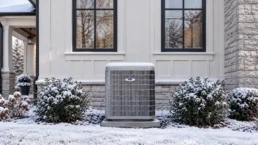
Emergency Heat (AUX) Won’t Turn Off? Here’s Which Heat Pump Fixes It
If AUX or emergency heat runs all winter, the heat pump has handed your house to electric backup strips, and the PECO bill shows it. See how…
Weatherizing Your Home Before Winter (The Cheap Fixes That Make Your Furnace’s Job Easier)
Before you blame the furnace for a cold house, check the holes it is fighting. Most homes leak a surprising amount of heat through gaps you never…