


How Tank and Tankless Water Heaters Work
A tank water heater stores and continuously reheats 30 to 80 gallons of water, keeping a ready supply on hand at all times. This is the traditional setup most homes already have, available in both gas and electric models. A tankless water heater skips the storage tank entirely and heats water on demand as it passes through the unit, so it only uses energy when a faucet or appliance actually calls for hot water.
No Hot Water in Your Philadelphia Area Home?
Don't go another day with cold showers. EMCO Tech Heating & Cooling provides fast professional water heater repair across Montgomery County, Philadelphia, Bucks County, Chester County, and Delaware County. Same-day service available.
Upfront Cost and Installation
Tank water heaters typically cost less to purchase and install, with most Philadelphia-area installations running in the $1,200–$3,000* range depending on fuel type and tank size. Tankless units cost more upfront, often in the $3,000–$6,500* range, since many installations call for upgraded gas lines, venting, or electrical service. Homeowners planning a full water heater installation or replacement should weigh this higher initial cost against the long-term savings tankless units can offer.
Energy Efficiency and Operating Costs
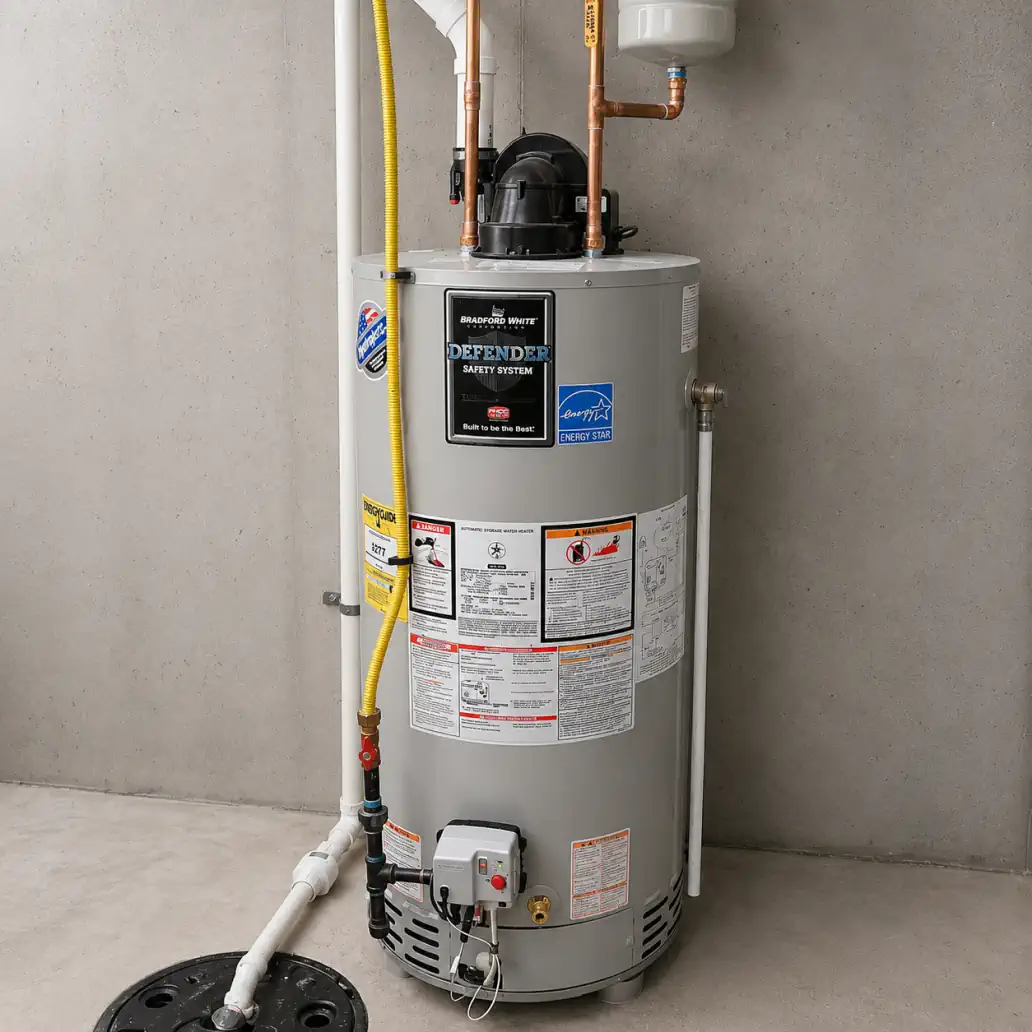 Because tankless units heat water only when needed, they avoid the standby heat loss that tank models produce from keeping a full tank hot around the clock. That difference typically translates into lower monthly energy bills for tankless owners, though the exact savings depend on household hot water usage, local utility rates, and fuel type.
Lifespan and Maintenance
A well-maintained tank water heater generally lasts 10 to 12 years, while tankless units often run 18 to 20 years with proper care. Both styles benefit from routine water heater maintenance, including flushing sediment and checking components, which helps either type reach its full expected lifespan.
Space and Installation Requirements
Tank water heaters need a dedicated closet, basement corner, or utility space large enough for the tank itself plus clearance for servicing. Tankless units mount directly to a wall and take up a fraction of that footprint, which makes them a practical option for homes with limited mechanical space.
Repair Considerations
Tank water heaters have simpler components and are generally quicker and less expensive to repair. Tankless systems have more electronic parts and can be pricier to fix, though they break down less often overall. Either way, catching problems early through water heater repair service keeps small issues from turning into full system failures.
| Feature | Tank Water Heater | Tankless Water Heater |
|---|---|---|
| Upfront Cost* | $1,200–$3,000* | $3,000–$6,500* |
| Average Lifespan | 10–12 years | 18–20 years |
| Energy Efficiency | Lower — standby heat loss from keeping a full tank hot | Higher — heats only on demand |
| Hot Water Supply | Limited to tank capacity | Continuous, but limited by unit sizing |
| Space Needed | Dedicated closet or utility space | Compact wall-mounted unit |
| Repair Complexity | Simpler components, generally lower repair cost | More electronic parts, can cost more to repair |
| Best For | Smaller households, lower upfront budget | Larger households with heavy simultaneous use |
*Pricing varies based on equipment type, fuel source, and installation complexity. Contact EMCO for an exact quote for your home.
Which Option Is Right for Your Home?
Larger households with heavy simultaneous hot water use, such as running a shower and a dishwasher at once, tend to benefit most from a tankless system’s continuous supply. Smaller households or anyone prioritizing a lower upfront cost often do just as well with a standard tank unit. If you’re replacing an aging water heater already, it’s worth checking our current water heater installation special before deciding which system fits your home and budget best.
*Pricing varies based on equipment type, fuel source, and installation complexity. Contact EMCO for an exact quote for your home.
Frequently Asked Questions About Tank vs Tankless Water Heaters
Tankless water heaters typically last 18 to 20 years, while tank water heaters generally last 10 to 12 years. Actual lifespan depends heavily on water quality and how consistently the unit is maintained.
For households with high or frequent hot water demand, the lower operating costs and longer lifespan often offset the higher upfront price over time. For lighter usage, a tank unit may deliver a better return on the initial investment.
Yes, most homes can switch from tank to tankless, though the changeover often requires updated gas lines, venting, or electrical service depending on the model chosen.
Tankless units don’t run out the way a tank does, but a single unit can be maxed out if too many fixtures draw hot water at the same time. Proper sizing during installation prevents this.
Installation typically runs $3,000–$6,500*, depending on whether existing gas, venting, or electrical service needs to be upgraded to support the new unit.
Larger households that use hot water from multiple fixtures at once, such as showers and laundry running together, usually do better with a tankless system or a larger-capacity tank sized for that demand.
Latest Updates – Keep Cool, Feel Warm, Breathe Clean Air with EMCO Tech
Emergency Heat (AUX) Won’t Turn Off? Here’s Which Heat Pump Fixes It
If AUX or emergency heat runs all winter, the heat pump has handed your house to electric backup strips, and the PECO bill shows it. See how…
Planning a Heat Pump Replacement: Upgrade Before It Fails
The worst time to replace a heat pump is the morning it dies. A planned swap lets you choose the equipment, lock in better pricing, and stay warm on…