


Why Your HVAC Filter Alone Might Not Keep Your Philadelphia Home’s Air Clean
Many Philadelphia homeowners wonder about whole house air purifiers vs HVAC filters and which truly keeps indoor air clean. While a good filter can protect your HVAC system from dust and debris, it’s not designed to capture the smallest allergy-triggering particles or neutralize airborne bacteria. In Philadelphia’s mix of city pollution, seasonal pollen, and humid summers, a standard filter can leave gaps in protection—especially for households with pets, smokers, or family members with asthma or allergies.
Want cleaner air without guessing?
Our indoor air quality specialists help Philadelphia-area homeowners choose the right purification or filtration system for their home and budget. No pressure, just honest advice.
HVAC Filter vs Air Purifier – What’s the Difference?
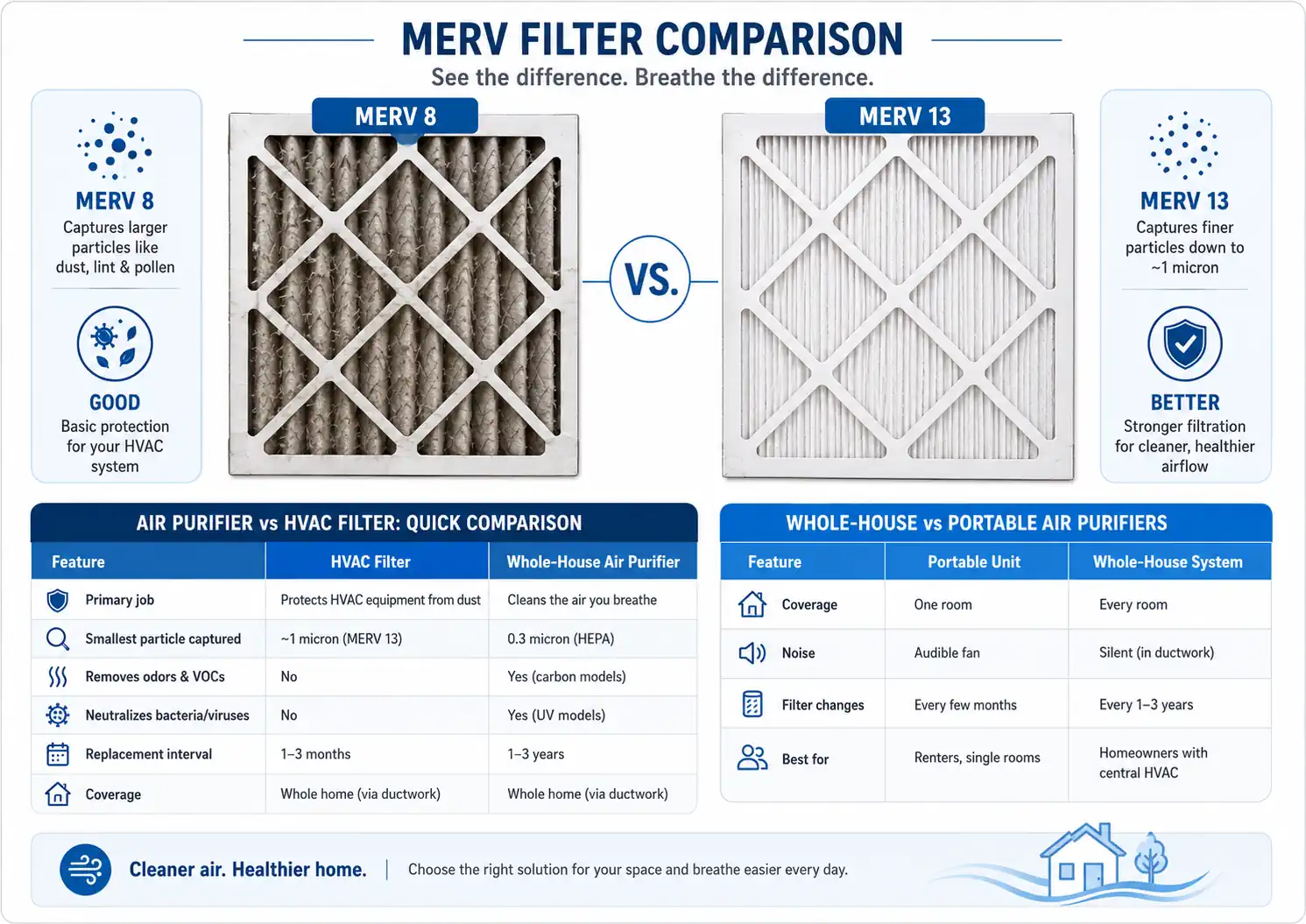
When comparing whole house air purifiers vs HVAC filters, it’s important to know that each has unique benefits. While a central air purifier integrates with your HVAC for full-home coverage, a standard filter mainly protects equipment. An HVAC filter—whether basic or a high-MERV HEPA air filter—mainly protects your system from dust buildup. An air purifier, especially a central whole-house model, actively removes microscopic allergens, odors, and even airborne germs from your air. This makes them complementary, not interchangeable. For the best results, many homeowners use both a properly rated HVAC filter and a dedicated whole-house air purifier with HEPA and carbon filtration.
How Whole House Air Purifiers Work with Your HVAC System
Many homeowners wonder about the difference between a HEPA air filter vs air purifier. While HEPA filters trap tiny particles, air purifiers often combine filtration with UV or activated carbon for a more complete clean. A whole-house air purifier is installed directly into your home’s HVAC system, so every time your heating or cooling runs, it cleans the air in every room. These systems go beyond what standard HVAC filters can do—most use HEPA filtration to capture particles as small as 0.3 microns, including dust, pollen, pet dander, and mold spores. Many Philadelphia homeowners choose models with activated carbon filters to remove odors and volatile organic compounds (VOCs), and some upgrade to include UV-C light technology—often called the best air purifier for an HVAC system with UV light—that neutralizes bacteria, viruses, and other airborne pathogens before they circulate through your ductwork.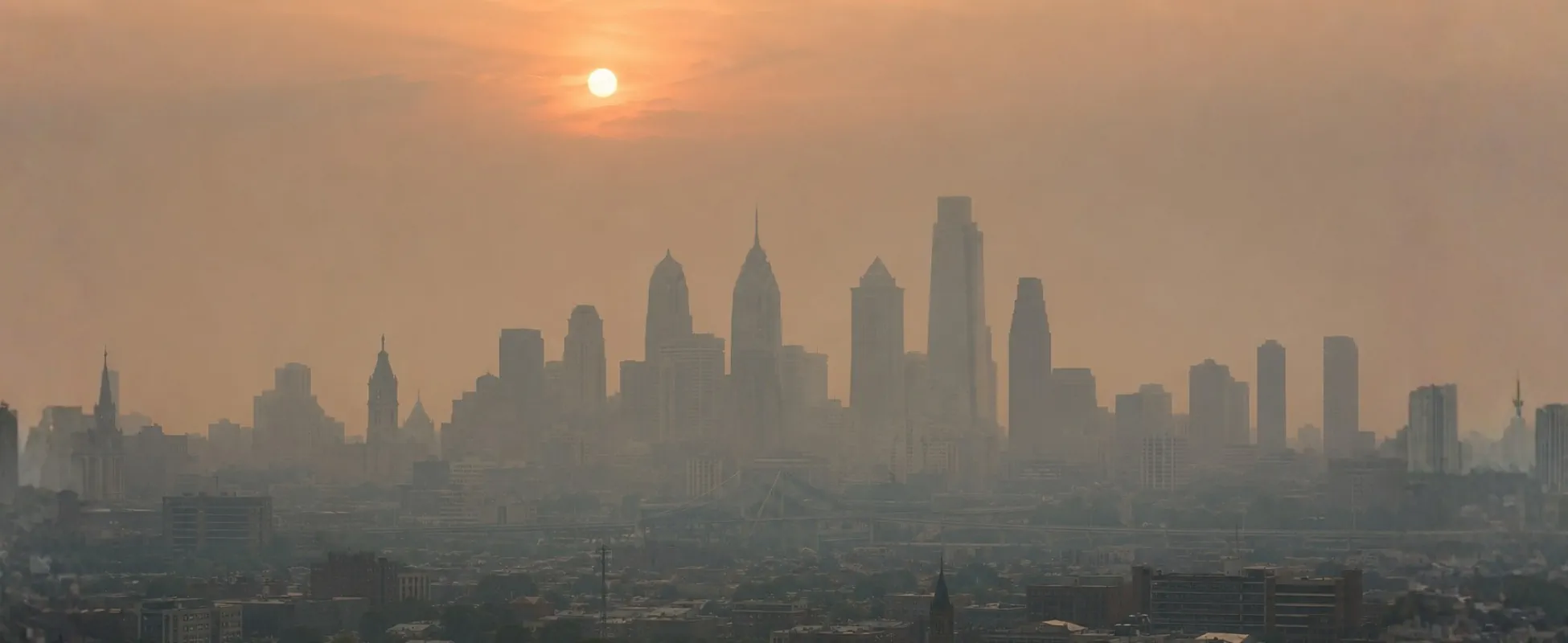
Wildfire Smoke and Philadelphia Air Quality in 2026
Two summers of Canadian wildfire smoke changed the indoor-air conversation for Philadelphia homeowners. Wildfire smoke carries PM2.5 — fine particles about 30 times smaller than a human hair — that slip straight through the 1-inch fiberglass filters (MERV 1–4) most homes still run. The EPA recommends upgrading to a MERV 13 filter during smoke events and running your HVAC fan continuously — that combination can cut indoor PM2.5 by roughly half.
But filters have a hard limit: they trap particles, not gases. Wildfire smoke also carries VOCs and carbon monoxide that pass through any filter regardless of MERV rating. That’s the real filter-vs-purifier line — a MERV 13 filter is the smart baseline, but only a whole-house air purifier with activated carbon and UV can address the gases and germs a filter physically cannot.
Air Purifier vs HVAC Filter: Which Cleans Better
Not sure which system your home needs?
Our technicians assess your air quality and HVAC setup, then recommend the right air purification solution. No upsell.
Benefits of Whole-House Air Purifiers for Your Philadelphia Home
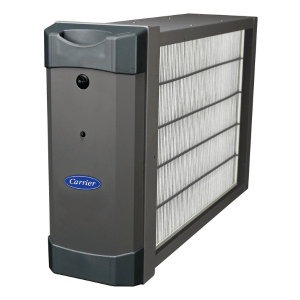
If you’re seeking the best air purifier for an HVAC system with UV light, Carrier’s Performance™ UV Germicidal models combine ultraviolet disinfection with advanced filtration to target both airborne pathogens and odors. At EMCO Tech Heating & Cooling, we offer two main types of Carrier whole-home air purification systems, each with unique advantages:
- Air purifiers with HEPA and carbon filters – Capture up to 99.97% of particles as small as 0.3 microns, including dust, pollen, and pet dander. Models like the Infinity® Air Purifier (DGAPA) and RMAP-ST deliver hospital-grade filtration and odor removal.
- UV Air Purifiers – Use ultraviolet light to neutralize airborne bacteria, mold spores, and viruses before they circulate. The Performance™ UV Germicidal Light also helps reduce odors and VOCs when paired with advanced filtration.
Why Philadelphia Homeowners Choose Whole-House Purifiers
For the most complete solution, an air purifier with HEPA and carbon filtration can capture allergens, neutralize odors, and reduce VOCs all in one system.
- Fewer Allergy & Asthma Symptoms — Capture tiny airborne irritants before they circulate.
- Odor & VOC Reduction — Eliminate lingering smells and harmful compounds.
- Low Maintenance — Filters last 1–3 years; smart models like the RMAP-SST and RMAP-SXL send service alerts.
- Quiet, Hidden Operation — Integrates into your HVAC for silent, out-of-sight purification.
- Energy-Efficient Performance — Cleans air without raising energy bills.
Are Whole-House Air Purifiers Worth It?
For most Philadelphia homes, yes — if someone has allergies, asthma, or pets, or if wildfire-smoke season leaves you closing windows and still smelling smoke. Filters last 1–3 years, run silent through your existing ductwork, and don’t restrict airflow the way an over-tight MERV filter can. If nobody in your home has air-quality complaints and you’re not smoke-sensitive, a properly rated MERV 13 filter is enough — we’ll tell you honestly which side you’re on.
Carrier Whole-Home Air Purifiers We Install
As a Carrier factory-authorized installer, we size, install, and service every unit for your home.
Infinity Air Purifier
Captures and kills pathogens down to the smallest particles. Carrier's top-tier whole-home purification.
See this unitPerformance Carbon with UV
Carbon filtration plus UV to cut odors, VOCs, and biological growth on the coil.
See this unitComfort EZ Flex Filter
High-capacity cabinet filter that traps more than a standard 1-inch filter, with fewer changes.
See this unitWhen to Upgrade from a Filter to a Whole-House Purifier
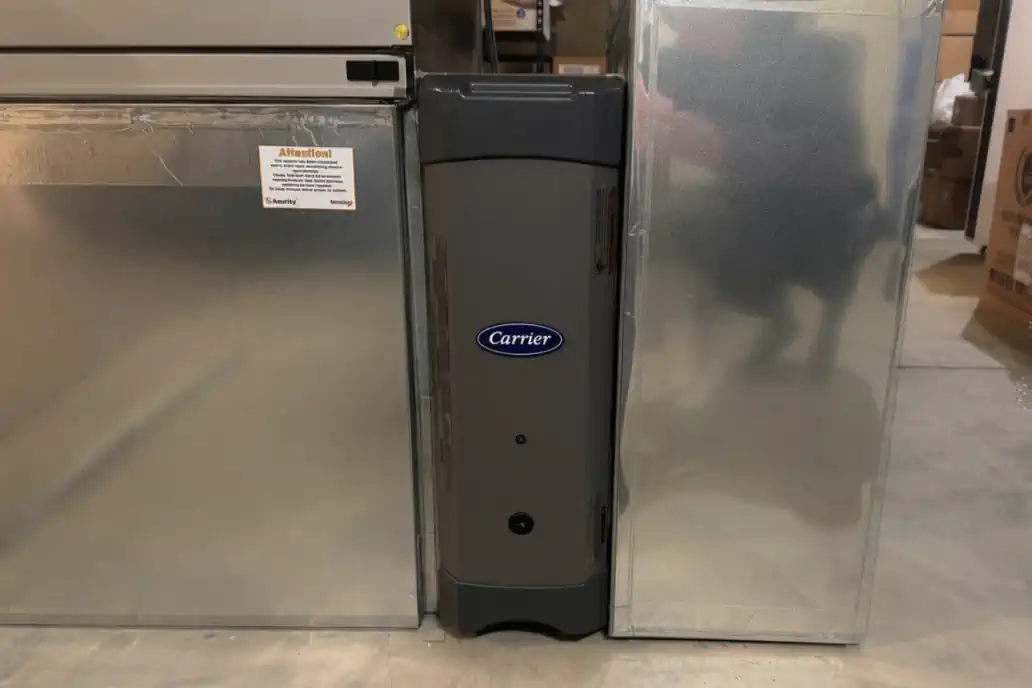 Upgrading to one of the best whole house air purifiers can make a dramatic difference for households with pets, allergy sufferers, or anyone sensitive to indoor pollutants. If your home still has dust buildup, lingering odors, or recurring allergy symptoms despite using high-quality HVAC filters, it may be time to consider a whole-home air purifier. These systems are especially beneficial for households with pets, smokers, or family members who have asthma or other respiratory conditions.
Other signs you might need an upgrade include frequent HVAC filter changes, musty smells from ductwork, or visible dust returning shortly after cleaning. A professionally installed central air purifier delivers cleaner, fresher air to every room—something portable units and standard filters can’t match.
Get Expert Advice Before You Buy
Still debating HVAC filter vs air purifier? Not all air purifiers are created equal — choosing the wrong type can waste energy, raise maintenance costs, or restrict HVAC airflow. We install air purification and filtration systems in Philadelphia homes year-round, and our Carrier-certified technicians assess your home’s air quality before recommending anything.
Whether you’re battling seasonal allergies, wildfire smoke, or household odors, we match you with a system that works year-round. All installations follow manufacturer specifications to protect your warranty.
Air Filter vs. Air Purifier: Common Questions
Premium HVAC filters often use higher MERV ratings to capture smaller particles like pollen, mold spores, and even some bacteria. While they can improve air quality, they may also restrict airflow if your system isn’t designed for them. This can cause your HVAC to work harder, reducing efficiency and lifespan. Always follow the MERV rating recommended by your manufacturer or consult a technician before upgrading.
Yes, if you want advanced air cleaning. A standard furnace filter mainly protects your HVAC equipment from dust buildup, but it won’t remove microscopic allergens, VOCs, or airborne germs. A whole-house air purifier can capture particles as small as 0.3 microns, while UV germicidal lights neutralize bacteria and viruses for cleaner, healthier air.
To a degree, yes. A clean, properly rated filter removes dust, pet hair, and larger airborne particles. However, it won’t address odors, volatile organic compounds (VOCs), or very fine allergens. That’s why many Philadelphia homeowners add whole-home purification systems for more complete indoor air quality protection.
They serve different purposes and often work best together. An HVAC filter is essential for system protection and basic particle removal, while an air purifier—especially a HEPA or UV model—targets pollutants your filter can’t catch. Combining both offers the most effective defense against indoor air pollution.
Some high-MERV filters can restrict airflow if your HVAC system isn’t sized or designed for them. Restricted airflow can cause temperature imbalances, longer run times, and even system damage. If you want finer filtration without risking your system, consider a whole-house air purifier instead of over-restrictive filters.
Yes, but with limits. A MERV 13 filter captures much of the fine particulate (PM2.5) in wildfire smoke, while a whole-house air purifier with activated carbon also removes the smoke odors and VOCs that pass straight through any filter. For Philadelphia’s recent smoke seasons, pairing both gives the most complete protection.
Explore Our Indoor Air Quality Services
Indoor Air Quality
Whole-home solutions for cleaner, healthier air year-round.
Air Purification & Filtration
HEPA, carbon, and UV systems installed to Carrier spec.
Humidifiers & Dehumidifiers
Balance humidity for comfort and cleaner air.
Air Duct Repair
Seal leaks that pull dust and allergens into your air.
Carrier Systems
Explore Carrier purifiers, filters, and UV options.
Latest Updates – Keep Cool, Feel Warm, Breathe Clean Air with EMCO Tech
Emergency Heat (AUX) Won’t Turn Off? Here’s Which Heat Pump Fixes It
If AUX or emergency heat runs all winter, the heat pump has handed your house to electric backup strips, and the PECO bill shows it. See how…
Planning a Heat Pump Replacement: Upgrade Before It Fails
The worst time to replace a heat pump is the morning it dies. A planned swap lets you choose the equipment, lock in better pricing, and stay warm on…