


Your air conditioner has one part that does the heavy lifting: the compressor. It pressurizes refrigerant and drives the entire cooling cycle, so when it weakens or fails, the whole system goes down with it. It is also the single most expensive component to replace, which is why catching trouble early matters so much. Below, we break down the warning signs of a failing compressor, what wears one out, and how to think through your repair-versus-replacement options.
What the AC Compressor Actually Does
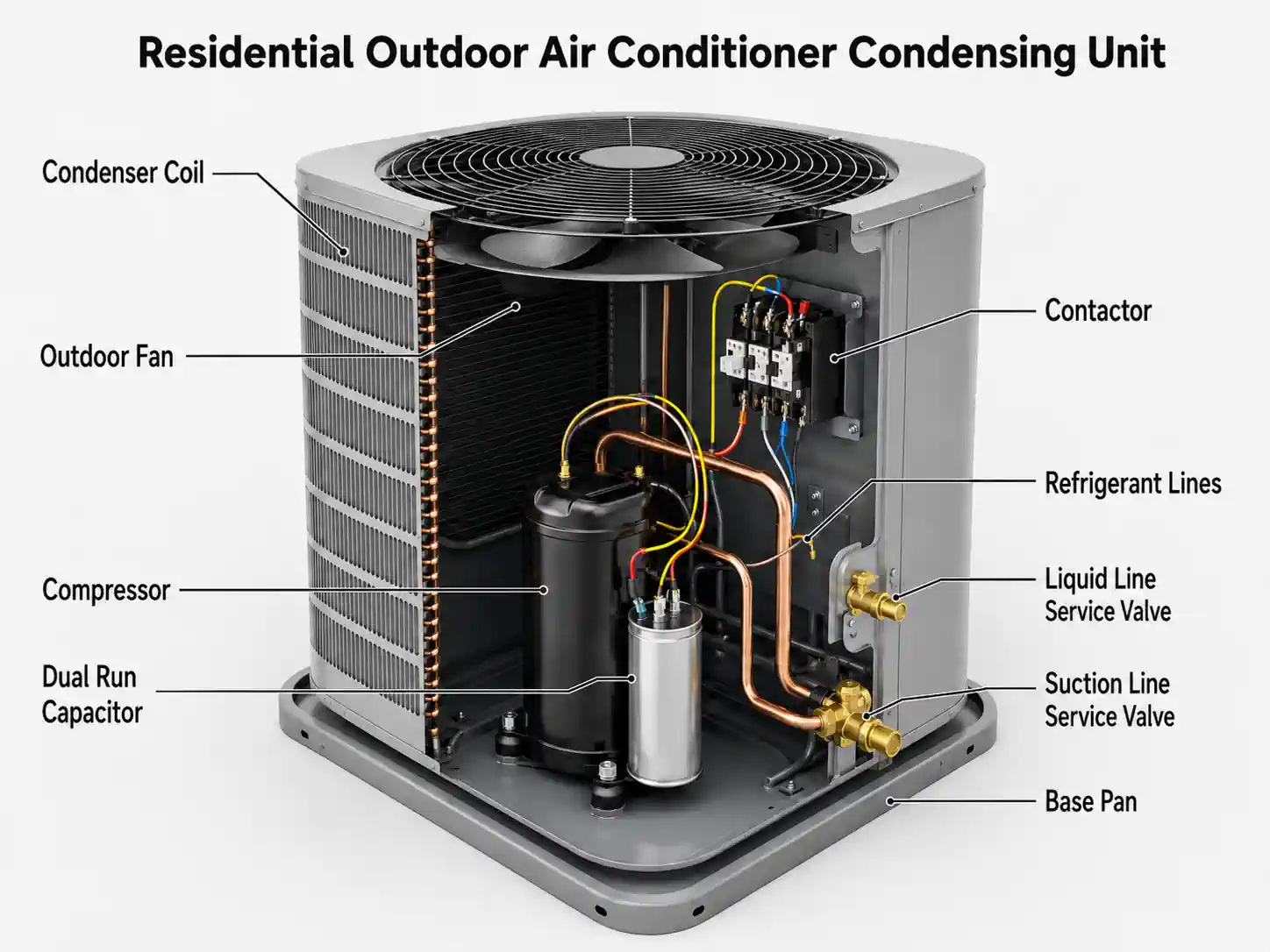
The compressor lives in your outdoor unit and works like a pump for refrigerant. It raises the pressure and temperature of the refrigerant so it can release heat outside and then absorb heat from inside your home. Without a healthy compressor, refrigerant cannot circulate properly, and your AC simply cannot move heat out of the house, no matter how long it runs.
Because it runs under high pressure and heat all season, the compressor takes more wear than almost any other part. That is also why protecting it is the smartest money you can spend on AC care.
How Long Does an AC Compressor Last?
Typical lifespan of an AC compressor
A compressor installed and maintained correctly usually runs 10 to 15 years, in line with the rest of the system around it. Some go 20 years in a mild climate with light use and a filter that always gets changed on time. Others struggle to make it past year 5 because of something that went wrong at install or a filter that never got touched.
The compressor is almost never the weak link on a healthy system. It is a sealed, factory-built unit designed to run for decades. What actually shortens its life is everything around it: airflow, refrigerant charge, electrical supply, and how consistently the system gets serviced. A 12 year old compressor working inside a system that gets a yearly tune-up and clean coils will usually outlast a 3 year old compressor sitting inside a system nobody has looked at since installation day.
Philadelphia area summers push the compressor hard for months at a stretch. A system that runs constantly through July and August needs its airflow and refrigerant charge in spec more than a system in a milder climate does, because there is less margin for error when the compressor rarely gets a break.
Is it common for an AC compressor to go bad?
Compressor failure on its own, meaning a healthy system where the compressor simply wears out from age, is not that common before year 10. What is common, and what drives most of the compressor calls we get, is failure caused by something else: a refrigerant leak that ran the compressor low on charge for months, a dirty coil that made it overheat, an electrical fault that damaged the motor windings, or an install issue that showed up two or three years later.
In other words, a bad compressor is usually a symptom, not a random event. Something in the system created the condition that killed it. That is why fixing the compressor without figuring out what caused the failure is a partial repair. The replacement compressor is sitting inside the same conditions that killed the last one.
Warning Signs of a Failing AC Compressor
A compressor rarely dies without warning. These are the symptoms that most often point to compressor trouble specifically, rather than a simple thermostat or filter issue.
Warm air from the vents while the outdoor unit runs
If the outdoor unit is running but the air inside stays warm, the compressor may not be pressurizing refrigerant the way it should.
Loud or unusual noises from the outdoor unit
Grinding, rattling, or a harsh metallic clatter from the outside unit can signal worn internal compressor parts or loose components.
The outdoor unit vibrates hard when it starts
A strong shudder on startup, sometimes called hard starting, often points to a compressor straining to turn over. If your unit hums, dims the lights, or trips the breaker on startup, see our guide to AC hard starting and how to prevent compressor failure.
The circuit breaker trips repeatedly
A compressor pulling too much current as it degrades can keep tripping the breaker. Never keep resetting it, as that only adds stress.
Higher energy bills with weaker cooling
A struggling compressor runs longer and harder to deliver less comfort, which shows up as a climbing electric bill.
What Causes an AC Compressor to Go Bad
Compressors usually fail because of stress that built up over time. The most common causes include:
Low or leaking refrigerant
Running low on refrigerant forces the compressor to work harder and run hotter, which is one of the fastest ways to burn it out. If you suspect a charge problem, read our breakdown of low refrigerant signs and symptoms before it reaches the compressor.
Electrical problems
Failing capacitors, worn contactors, and wiring faults can starve or overload the compressor motor until it gives out.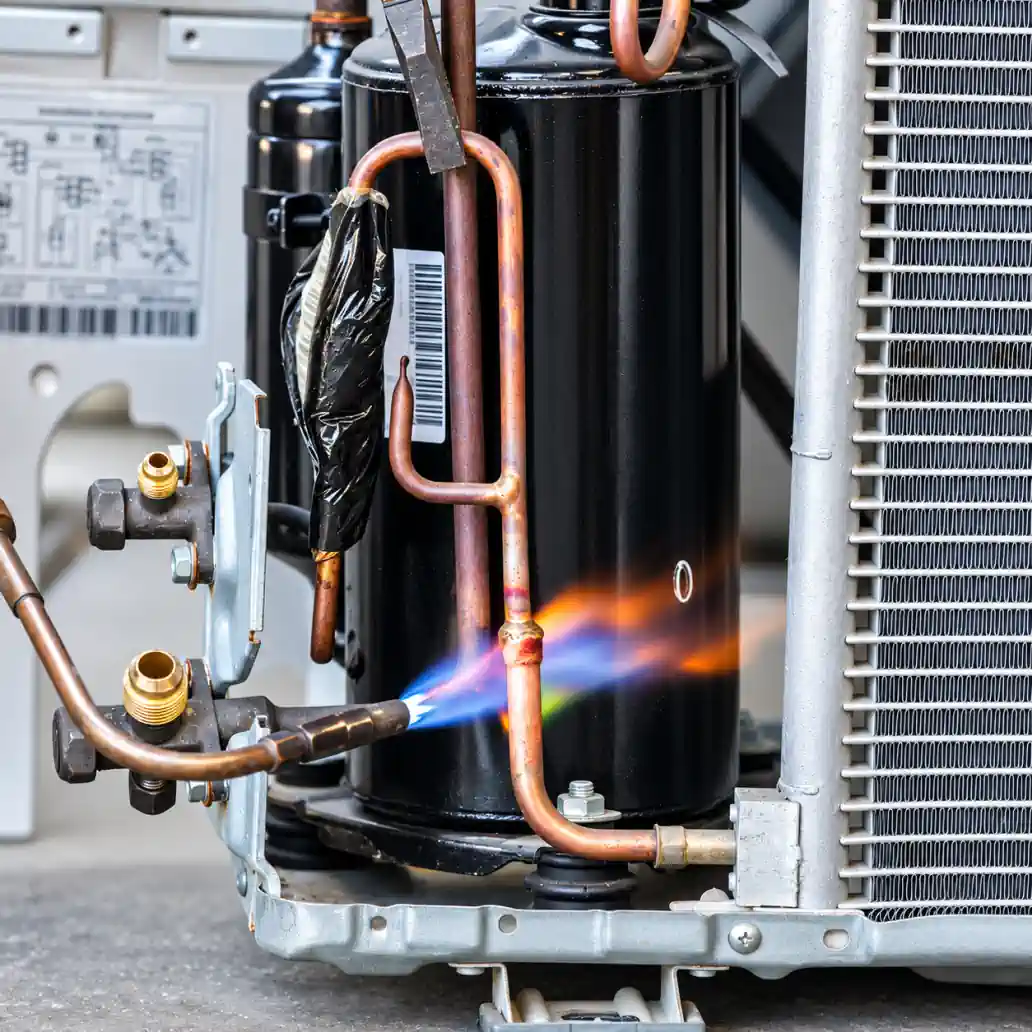
Dirty coils and poor airflow
Clogged condenser coils and blocked airflow trap heat around the unit, pushing the compressor past its safe operating temperature.
Lack of maintenance and age
Skipped tune-ups let small issues snowball, and most compressors simply wear out toward the end of a system’s typical lifespan.
Why a compressor can fail on a system that is still under warranty
This is the question we hear the most. A 2 or 3 year old system fails, the parts are still covered, and the homeowner wants to know how a new compressor breaks at all. Warranty coverage tells you who pays for the part. It does not tell you why the part died.
Most early compressor failures trace back to how the system was installed, not a flaw in the equipment itself.
Moisture left in the line set. If the system was not properly evacuated before it was charged, trapped moisture mixes with refrigerant oil and forms an acidic sludge. That sludge slowly eats through the motor windings from the inside. It can take a year or two to finish the job, which is exactly why the failure shows up on a system that looked fine at startup.
Refrigerant charge set wrong from day one. A compressor depends on refrigerant gas returning to cool its motor. Too little charge starves that cooling. Too much charge spikes pressure the motor was never built to run against. Either mistake, made once at install, shortens the compressor’s life on a clock that runs whether anyone notices or not.
A damaged or poorly sealed line set connection. A slow leak from a bad flare joint drains the charge gradually. The system keeps running, cooling gets a little weaker every month, and the compressor works harder until it gives out.
An actual manufacturer defect. This does happen, and it is the one case where the part simply failed on its own. It is also the least common cause of the four.
Parts warranty covers the replacement compressor. It typically does not cover the labor to install it, and it will not fix whatever caused the first one to fail, so the same problem can take out a second compressor if the root cause is never addressed. That is why a proper compressor replacement includes finding out why the last one died, not just swapping the part.
AC Compressor Repair and Replacement Cost
Pricing depends on your unit’s size, refrigerant type, warranty status, and how accessible the part is. As a rough guide, a minor electrical fix that protects the compressor, such as a capacitor or contactor, tends to land in the lower hundreds of dollars*. Replacing the compressor itself is far more involved and typically runs from the mid hundreds into the low thousands of dollars or higher*, since it involves labor, refrigerant handling, and often a long warranty claim.
Here is the part many homeowners miss: on an older system, a new compressor can cost a large share of what a brand-new outdoor unit would. When that happens, replacement often makes more financial sense than sinking money into aging equipment. Our full repair or replace your HVAC system guide walks through the math.
Should You Repair the Compressor or Replace the System?
A compressor failure is one of the few repairs big enough to tip the scale toward a new system. If your AC is still young and under warranty, a compressor repair is usually worth it. If the unit is older, out of warranty, and already needing other fixes, replacing the whole system is often the smarter long-term move.
Not sure which way to go? Our team can diagnose the compressor, confirm whether it is repairable, and give you honest numbers before you commit. Explore our air conditioning repair services or schedule an appointment and we will help you decide with no pressure.
Is it cheaper to replace just the compressor or the whole unit?
Replacing only the compressor is cheaper up front. A compressor swap runs roughly $1,200 to $2,800 or more depending on the tonnage, accessibility, miscellaneous parts or job complications, and whether the unit is still under parts warranty. Replacing the whole outdoor unit, or the full system including the indoor coil, costs significantly more.
Cheaper up front does not always mean cheaper overall. A compressor-only repair makes sense when the system is young, the rest of the equipment is in good shape, and the failure has a clear, fixable cause. It stops making sense once the system is old enough that other parts are approaching the end of their life too, or once the refrigerant type in an older system is being phased out and becoming harder and more expensive to source.
A rough guide we use in the field: if the system is under 10 years old and the failure has an identifiable, correctable cause, repairing the compressor is usually the better value. If the system is past 12 to 15 years, or this is not the first major repair, replacing the full unit is usually the better long-term move, because a new compressor bolted onto an aging system is still surrounded by aging parts.
*Pricing is shown as a general range only. Depending on supply, demand, and the availability of refrigerant types that are being phased out, prices may vary dramatically, and refrigerant costs can change without prior notice. Contact us for a current estimate specific to your system.
FAQ
Common signs include warm air from the vents while the outdoor unit runs, loud or unusual noises from the outside unit, hard shaking on startup, a breaker that keeps tripping, and rising energy bills with weaker cooling. Several of these together strongly point to the compressor.
It depends on the age and warranty of your system. On a newer unit still under warranty, replacing the compressor is usually worth it. On an older, out-of-warranty system, a new compressor can cost a large share of a full replacement, so a new system often makes more sense.
Costs vary with unit size, refrigerant type, warranty, and labor. Replacing the compressor typically runs from the mid hundreds into the low thousands of dollars or higher*. Because pricing and refrigerant availability change, we recommend getting a current estimate for your specific system.
Warranty covers the cost of the part, not the reason it failed. Most compressor failures on a young system trace back to how it was installed, usually moisture left in the line set during charging, or the refrigerant charge being off from day one. A true manufacturer defect happens too, but it is the least common cause. Warranty labor is usually not included, and if the underlying cause is not fixed, a new compressor can fail the same way.
A straightforward compressor swap on a residential system typically takes 3 to 6 hours, including recovering the old refrigerant, replacing the compressor, pulling a proper vacuum on the line set, and recharging the system by weight. It can run longer if the failure damaged other components, if the line set needs to be flushed to clear debris from the old compressor, or if the refrigerant type is harder to source. Same-day completion is common when parts and refrigerant are on hand.
No. Compressor replacement involves recovering and handling refrigerant, which by federal law requires EPA Section 608 certification. It also requires pulling a deep vacuum to remove all moisture from the system and charging it precisely by weight, steps that determine whether the new compressor lasts 15 years or fails again in two. A compressor swap done without the right equipment and certification is also how a warranty claim gets denied, since most manufacturers require a licensed technician’s documentation to honor the parts coverage.
No. If the compressor has failed completely, the system will run the indoor blower without producing any cooling, which wastes electricity for no benefit. If the compressor is failing rather than fully dead, meaning it is hard-starting, overheating, or tripping the breaker, continuing to run it can cause more damage and turn a compressor repair into a full system replacement. If the outdoor unit is tripping a breaker or making unusual noises, shut the system off at the thermostat until it has been looked at.
Latest Updates – Keep Cool, Feel Warm, Breathe Clean Air with EMCO Tech
Emergency Heat (AUX) Won’t Turn Off? Here’s Which Heat Pump Fixes It
If AUX or emergency heat runs all winter, the heat pump has handed your house to electric backup strips, and the PECO bill shows it. See how…

Planning a Heat Pump Replacement: Upgrade Before It Fails
The worst time to replace a heat pump is the morning it dies. A planned swap lets you choose the equipment, lock in better pricing, and stay warm on…