


Post Updated: June 2026
What Is AC Hard Starting?
Hard starting is when your air conditioner struggles every time it tries to switch on. You’ll hear it try: a hum, a click, sometimes a brief surge. Then, it either stalls out or finally lurches into operation a few seconds late. Each attempt pulls an abnormally high inrush of current, strains the compressor windings, and shaves life off the most expensive component in your AC system.
A healthy central AC fires up cleanly within about half a second. If yours hesitates, hums, dims the lights, or trips the breaker before it kicks in, you’re watching hard starting in real time.
Signs Your AC Has a Hard Start Problem
Humming but no startup
The outdoor unit buzzes for several seconds without the fan spinning. That’s the compressor trying — and failing — to overcome internal pressure. Almost always a weak start capacitor.
The breaker trips when the AC tries to start
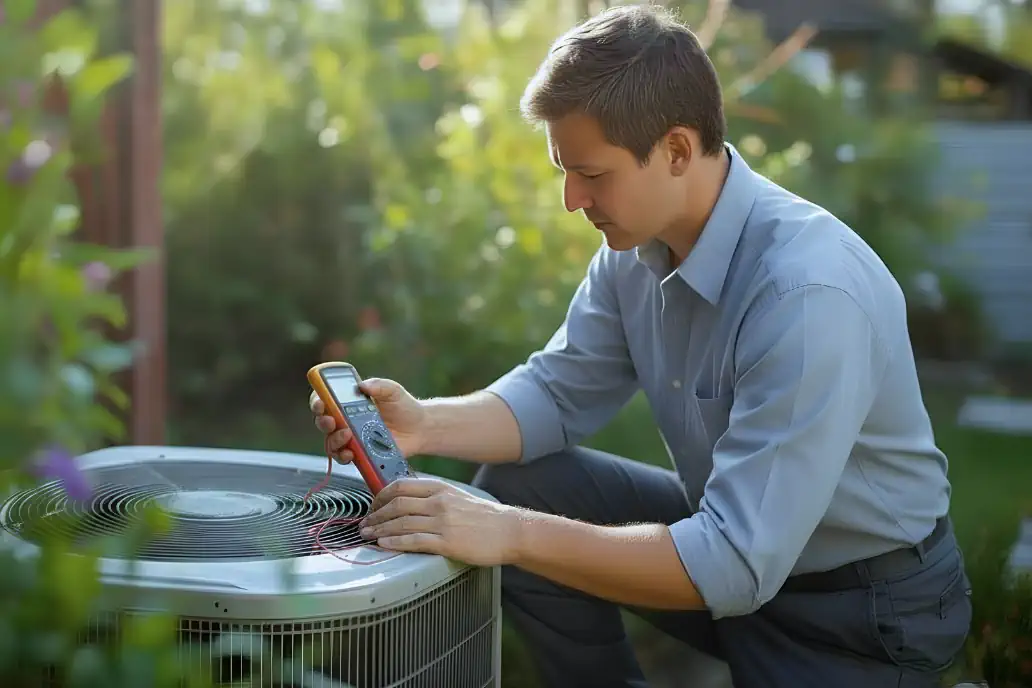 A hard-starting compressor pulls several times its normal running amperage during the startup attempt. If a breaker trips immediately on start, you’ve got either a failing capacitor, a degraded compressor, or both.
Lights dim or flicker the moment the AC kicks on
Brief dim is normal. If the lights drop noticeably every cycle, the compressor is drawing far more startup current than it should — a classic hard-start fingerprint.
The system starts, then shuts off seconds later
Known as short cycling on startup. The internal overload protector is sensing the abnormal current and cutting power to protect the compressor. It’s doing exactly what it’s designed to do.
Clicking from the outdoor unit followed by silence
The contactor is closing, but the compressor isn’t catching. Often a dead capacitor or a stuck rotor.
If any of these match what you’re hearing, schedule AC repair before the next heat wave. Continuing to run a hard-starting system is the fastest way to convert a minor repair into a major compressor replacement.
AC Humming, Clicking, or Tripping the Breaker?
Do not keep forcing the system to start. AC hard starting can damage the compressor and turn a smaller repair into a major replacement.
EMCO Tech Heating & Cooling provides AC startup diagnostics, capacitor testing, hard start kit evaluation, and air conditioning repair across the Philadelphia metro area.
What Causes Hard Starting?
Weak or failed run capacitor
The most common cause by a wide margin. The capacitor stores the electrical jolt that gets the compressor and fan motor moving. Capacitors degrade with heat and age — most fail between years 5 and 10. When capacitance drops below spec, the compressor doesn’t get enough kick to spin up cleanly.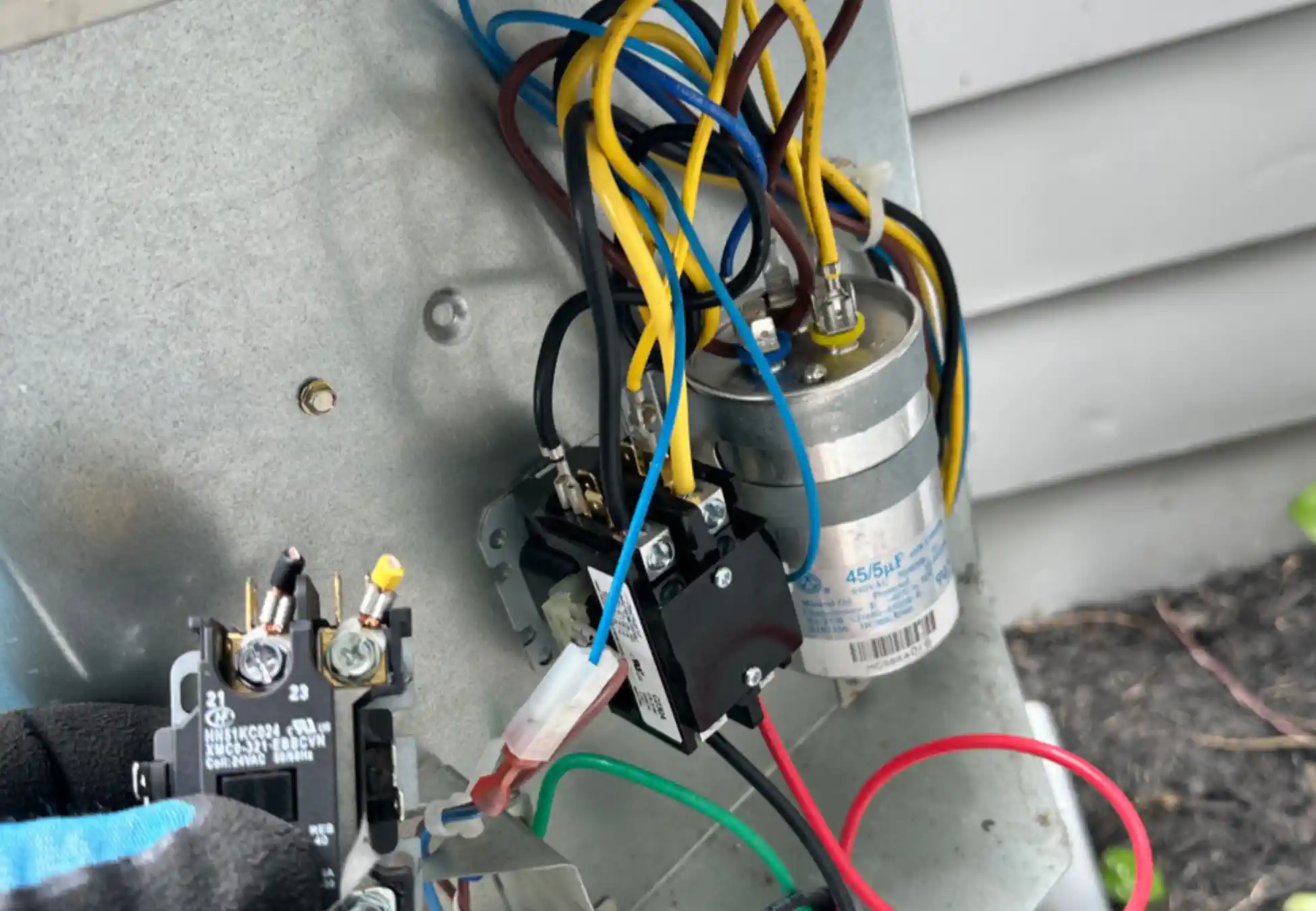
Aging compressor
After 10–12 years, internal compressor bearings and windings start to wear. A compressor that started fine for years can begin hard starting as mechanical resistance increases. At this stage, a hard start kit can buy time, but it isn’t a permanent fix.
Low incoming voltage
Brownouts, undersized service wiring, or long electrical runs can deliver less than the voltage the compressor expects. The compressor still tries to start, but without enough voltage to overcome rotor inertia.
Worn contactor or relay
The contactor is the electrical switch that powers the outdoor unit. Pitted or corroded contacts cause intermittent power delivery, which mimics hard starting.
Refrigerant pressure imbalance
If the system shuts off and tries to restart before equalizing pressure (usually within a few minutes), the compressor has to fight residual high-side pressure. This is why short cycling and hard starting tend to show up together.
Why Does My AC Unit Start So Hard?
An AC usually starts hard when the compressor needs more electrical force than normal to begin running. That can happen because the capacitor is weak, the compressor is aging, voltage is low, the contactor is worn, or the system is trying to restart before refrigerant pressure has equalized.
The important part is simple: hard starting is not just a noise problem. It is an electrical and mechanical stress problem. Every rough startup sends extra heat through the compressor windings and shortens the life of the system.
Is a hard start bad for AC?
Yes. One hard start does not automatically destroy an air conditioner, but repeated hard starts are bad for the compressor. If the outdoor unit hums, clicks, struggles, or trips the breaker more than once, stop cycling the system and schedule AC diagnostics.
Can a hard start damage a compressor?
Yes. A hard-starting compressor pulls high startup amperage. That heat can weaken the winding insulation, stress the internal overload, and turn a small capacitor problem into a compressor failure. This is why hard starting should be handled early, not after the unit stops completely.
How do you fix AC hard starting?
The fix depends on the test results. If the run capacitor is weak, replace the capacitor. If the capacitor tests good but the compressor still struggles, a hard start kit may help. If the compressor windings or mechanical parts are failing, a hard start kit will not solve the real problem.
What Is a Hard Start Kit?
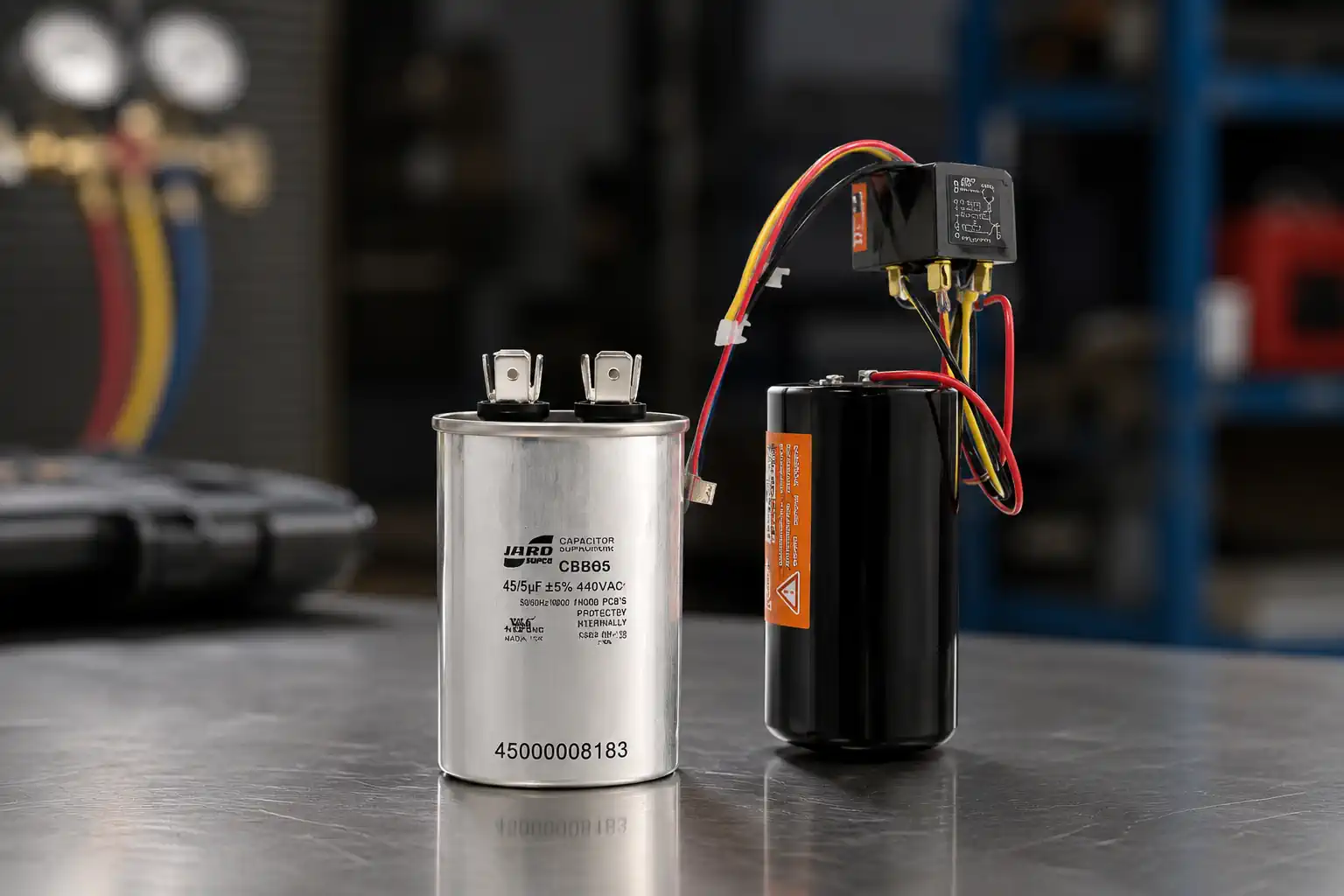
A hard start kit is a small auxiliary capacitor (sometimes paired with a relay) wired into your AC’s start circuit. It delivers an extra burst of current at the exact moment the compressor needs it, helping the motor overcome the initial mechanical and electrical load.
Think of it as a jump-start for your compressor: it doesn’t fix what’s actually worn out, but it gives the system enough boost to get over the hump.
How a hard start kit works
When the thermostat calls for cooling, the contactor closes and power reaches the compressor. The hard start kit’s capacitor discharges a high-amperage pulse for a fraction of a second, then a built-in relay disconnects it once the motor reaches running speed. The run capacitor takes over from there.
When a hard start kit is the right fix
- The compressor is starting to hesitate but still running fine once it’s up
- The system is around 8–12 years old and otherwise healthy
- The run capacitor was just replaced and you want extra startup margin
- The home has known voltage issues
- You’re trying to extend the life of an aging system until planned replacement
When a hard start kit is just a band-aid
- The compressor is 15+ years old and showing other failure signs
- The system was hard starting from day one (sizing or wiring problem)
- The breaker is tripping every cycle
- The refrigerant charge is wrong (no kit will fix a charge problem)
Typical hard start kit cost
Parts alone are inexpensive — the kit itself is one of the lower-cost capacitor-based components on an AC system. Installed by a licensed HVAC technician with proper diagnostic testing, the total visit cost generally falls in a modest service-call range that varies by region, system access, and what else is found during diagnostics. We provide a flat-rate quote before any work begins, so you’ll know the number before you approve.
Hard Start Kit vs. Capacitor Replacement vs. New Compressor
A weak run capacitor needs to be replaced, not boosted. A hard start kit added to a failing capacitor is a temporary patch that will fail again within months. A proper diagnosis distinguishes between the three paths:
- Capacitor replacement — the run capacitor itself tests out of spec on a meter. Replace it and the hard start usually disappears.
- Hard start kit add-on — the capacitor tests good but the compressor still struggles. The kit gives it the extra startup torque it needs.
- Compressor replacement — the compressor windings or bearings are failing. No kit will save it; at this price point, AC replacement is often the smarter call.
The only way to know which path you’re on is a meter test on the capacitor, an amp-draw test on the compressor at startup, and a voltage check at the disconnect. That’s a short diagnostic visit, not a guessing game.
How to Tell If the AC Compressor Is Blown
A blown or failing compressor may hum without starting, trip the breaker immediately, pull locked-rotor amperage, overheat, or fail electrical winding tests. Sometimes the fan runs but the compressor stays silent. Other times the outdoor unit clicks, buzzes, and shuts down.
The only honest way to confirm compressor condition is testing. A technician should check capacitor rating, startup amperage, winding resistance, voltage at the disconnect, contactor condition, and refrigerant pressures. Guessing from sound alone is not enough.
Will a hard start kit fix a bad compressor?
No. A hard start kit can help a compressor that is healthy but struggling to start. It cannot repair damaged windings, worn bearings, internal mechanical failure, or a locked compressor. If the compressor is already failing, the kit may only delay replacement for a short time.
When is AC replacement smarter than compressor repair?
If the system is older, uses expensive repairs, has repeated electrical failures, or the compressor is failing, replacement may be the better long-term option. Compressor repair is often one of the most expensive AC repairs, so the age and condition of the whole system matter.
Why Hard Starting Damages Your AC If Ignored
Every hard start pulls several times the normal current through the compressor windings. Heat builds up. Insulation on the windings degrades. The internal overload protector cycles more often, which itself wears out. Refrigerant oil breaks down faster under repeated high-stress starts.
A compressor that should last 15 years can fail at 9 or 10 if it’s been hard starting for two summers straight. And compressor failure is the most expensive single repair an AC system can have — at which point you’re no longer deciding between a small capacitor swap and a hard start kit, you’re weighing a major compressor repair against a full system replacement.
Catching hard starting early is one of the highest-leverage maintenance moments in an AC’s life.
When to Call a Pro
Call for service if you notice any of these:
- Humming or buzzing from the outdoor unit without the fan spinning
- The AC trips its breaker on startup more than once
- Lights dim noticeably every time the AC kicks on
- The compressor short cycles within seconds of starting
- The system is over 8 years old and starting to hesitate
- You smell anything electrical or burnt near the outdoor unit
These aren’t symptoms to “wait and see” on. The longer a hard-starting AC runs, the more compressor life you’re burning through with every cycle.
Our techs run a full startup diagnostic: capacitor capacitance test, compressor inrush amp reading, contactor inspection, incoming voltage check, and refrigerant pressure verification. You get a clear answer — capacitor, hard start kit, or replacement — backed by meter readings, not guesses.
AC Humming, Clicking, or Tripping the Breaker?
Prevention: Stop Hard Starting Before It Starts
Most hard-start failures are catchable months before they become breakdowns. A spring tune-up checks capacitance values against the manufacturer spec sheet, tests inrush current at startup, and flags a weakening capacitor while it’s still in tolerance.
A spring AC tune-up or an annual maintenance plan typically catches a failing capacitor months before it strands you in July.
What Not to Do When Your AC Will Not Start
Do not keep resetting the breaker
If the breaker trips once, you can reset it one time after checking for obvious issues. If it trips again, stop. Repeated resets can damage equipment and may point to a serious electrical problem.
Do not spray WD-40 on a residential AC compressor
Residential central AC compressors are sealed electrical components. WD-40 will not fix a hard-starting home AC compressor. Advice about compressor clutches usually applies to vehicles, not residential air conditioning systems.
Do not try to force the compressor to kick on
Forcing the unit to start without testing the capacitor, voltage, contactor, and compressor amperage can make the failure worse. Hard starting is a symptom. The goal is to find the cause before the compressor is damaged.
Follow the 3 minute rule
After turning an AC off, wait at least 3 minutes before turning it back on. Many systems already have a built-in delay. This gives refrigerant pressure time to equalize, which makes the compressor easier to restart.
FAQ
Hard starting is when your AC struggles to switch on — humming, clicking, dimming the lights, or tripping the breaker before the compressor finally engages. A healthy AC starts cleanly in about half a second. Anything longer, louder, or rougher than that is hard starting, and it’s stressing the compressor every cycle.
Installed by a licensed HVAC technician, an AC hard start kit typically runs $150–$300 in the Philadelphia area. That includes the kit itself, labor, and a proper diagnostic to confirm a hard start kit is the right fix rather than a capacitor replacement or compressor repair.
No. A hard start kit gives a healthy-but-aging compressor extra startup torque — it cannot revive a compressor that’s mechanically failing. If the windings or bearings are worn, a kit will buy a few months at most before the compressor needs full replacement.
Common bad capacitor symptoms include a humming outdoor unit with no fan movement, a clicking sound followed by silence, slow or hesitant startup, and the AC short cycling within seconds of starting. The only definitive test is measuring capacitance with a meter — values more than 6% below the rated microfarads mean it’s time to replace.
A humming outdoor unit that won’t start is almost always a failed start capacitor. The contactor is closing and delivering power, but the compressor isn’t getting the electrical kick it needs to overcome internal pressure. Don’t keep flipping it on — repeated attempts overheat the windings.
A hard-starting compressor draws 5–8 times its normal running amperage at startup. When that inrush exceeds the breaker’s rating, it trips. The usual culprits are a failed run capacitor, a stuck compressor, or — less commonly — a wiring or breaker problem. Have it diagnosed before resetting the breaker again.
We don’t recommend it. The kit wires into a circuit carrying 240V and stored capacitor charge that can deliver a dangerous shock even with the disconnect pulled. Beyond safety, a DIY install skips the diagnostic step that confirms whether a hard start kit is the right fix at all.
A quality hard start kit typically lasts 5–8 years, often outliving the run capacitor it’s paired with. If it fails earlier, that usually points to an underlying issue — a deteriorating compressor or voltage problem — that the kit was masking.
If the run capacitor tests out of spec, replace the capacitor. If the capacitor tests good but the compressor still struggles, add a hard start kit. Many homes need just one — installing a kit on a failing capacitor is a temporary patch that masks the real problem.
Yes. A capacitor that’s drifting out of spec is detectable months before it fails. Annual maintenance includes capacitance testing, inrush current measurement, contactor inspection, and voltage checks — exactly the readings that catch hard starting while it’s still cheap to fix. Ask about our maintenance plan.
Related AC Repair & Maintenance Services
AC Repair
Same-day diagnostics and repair for systems that won't start, short-cycle, or run inefficiently.
AC Maintenance
Annual tune-ups that catch failing capacitors and weak components before they leave you sweating.
Spring AC Tune-Up
Seasonal tune-up special — full startup diagnostics, capacitance test, and performance check.
Emergency HVAC Repair
Fast response for no-cooling, no-startup, and breaker-tripping emergencies across the Philly metro area.
AC Replacement
When the compressor is past saving, we install high-efficiency systems with transparent flat-rate pricing.
Maintenance Plans
Twice-yearly visits, priority scheduling, and discounts on parts — built to prevent breakdowns.
Latest Updates – Keep Cool, Feel Warm, Breathe Clean Air with EMCO Tech
Emergency Heat (AUX) Won’t Turn Off? Here’s Which Heat Pump Fixes It
If AUX or emergency heat runs all winter, the heat pump has handed your house to electric backup strips, and the PECO bill shows it. See how…
Planning a Heat Pump Replacement: Upgrade Before It Fails
The worst time to replace a heat pump is the morning it dies. A planned swap lets you choose the equipment, lock in better pricing, and stay warm on…