


About half of all U.S. homes use natural gas (source – eia.gov) for water, cooking, and heating, and our home state of Pennsylvania ranks as the fourth-largest consumer of natural gas in America. However, our office routinely receives questions from homeowners about converting from oil, LP gas, or electric systems to natural gas.
EMCO Tech Heating & Cooling handles the home side of that project — licensed gas piping, permits, Carrier and other major-brand furnaces, boilers, water heaters, and the safety checks that keep the job legal. We work from Willow Grove and Northeast Philadelphia across Montgomery County, Philadelphia, Bucks County, Chester County, and Delaware County.
Quick answer
Most Greater Philadelphia conversions take a utility availability check, a permitted interior gas line, and a new furnace, boiler, or water heater. Homes with a gas main at the street often land in the mid four figures to low five figures for piping plus equipment. Homes that need a long service extension cost more. Oil-to-gas heat typically saves money every winter at current Pennsylvania prices. There is no statewide ban on natural gas heat in Pennsylvania. If a main is far away, a cold-climate heat pump or ductless mini-split can be the cleaner path.
Call 215-366-1001 or book a conversion walkthrough. We will tell you whether gas is the right move for your house — or whether a heat pump makes more sense — before you spend a dollar with PECO or PGW.
What “switching to natural gas” actually means
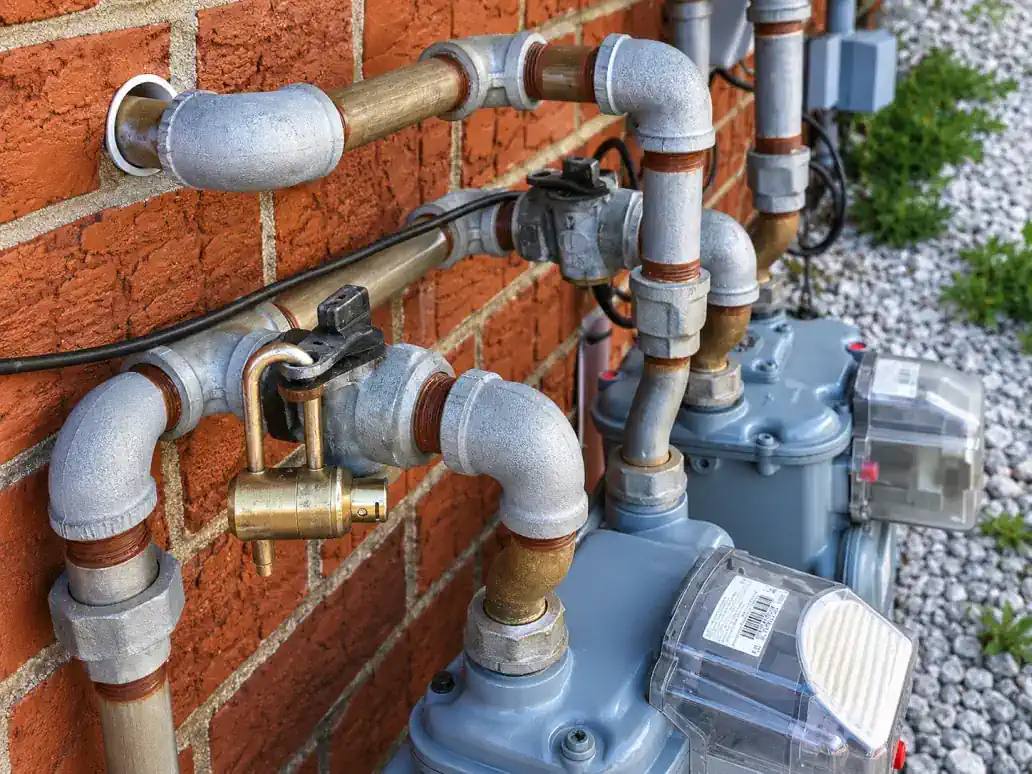 People search “switch to natural gas” for two different jobs, and Google mixes them together. This page is about converting the house: bringing fuel to the meter, running pipe to the appliances, and replacing oil, propane, or electric heat. It is not about shopping a different gas supplier on PAGasSwitch. That is a billing choice after you already have service.
A real conversion usually includes some mix of:
- Confirming a PECO or Philadelphia Gas Works main is close enough to tap.
- Utility service line and meter (the utility’s work).
- Customer-owned piping from the meter into the mechanical room, kitchen, laundry, and outdoor appliances.
- Township or city permits, pressure tests, and inspection.
- New or converted appliances: furnace, boiler, water heater, range, dryer, fireplace, grill.
- Oil tank abandonment or removal if you are leaving heating oil.
Start with the piping if the house is not piped yet: gas line installation, leak detection, and permitted runs in Philadelphia and the suburbs.
Gas line installation with permits — furnace, stove, dryer, water heater, grill
A conversion only pays off if the pipe is sized, routed, bonded, and inspected. We install and extend customer-owned gas lines for heating equipment and everyday appliances, pull the permits, pressure-test the system, and coordinate the inspection so the utility will set or unlock the meter.
Will switching to natural gas actually save money?
In this market, yes — if you are leaving heating oil, propane, or electric-resistance heat and a gas main is already nearby. Natural gas has been the lowest-cost conventional heating fuel in Pennsylvania for years. Heating oil in Montgomery and Bucks Counties has been hovering near the high $4 to $5 per gallon range in recent quotes. A therm of natural gas delivers a similar amount of heat for less money, and you stop paying for tank insurance, sludge service, and emergency deliveries in January.
Use these as planning numbers, not a bid. Every house is different: square footage, insulation, boiler vs. furnace, and how far the pipe has to run.
| Heat source | What you feel | Typical annual fuel* | Best fit |
|---|---|---|---|
| Natural gas furnace / boiler | Fast heat, no deliveries | Often the lowest conventional bill in PECO / PGW territory | Main at the street; oil or electric now |
| Heating oil | Works, but tank + delivery risk | Usually hundreds to $1,000+ more per winter than gas | No gas main; tank already in good shape |
| Propane | Clean burn, still a tank | Typically well above natural gas | Rural lots with no gas utility |
| Electric resistance / baseboard | Simple, expensive to run | Often the highest winter bill | Small spaces, or temporary heat |
| Cold-climate heat pump / mini-split | Heat and cool in one system | Can beat gas on mild days; closer on deep-cold snaps | No nearby main, or you want dual-fuel |
*Fuel cost swings with PECO, PGW, and oil-dealer pricing. We run the numbers on your last 12 months of bills during the visit.
What a conversion usually costs in this area
National guides put a full oil-to-gas conversion between about $6,000 and $20,000. Local Philadelphia-area jobs cluster like this:
- Interior gas piping and valves only (meter already on the house): often $800–$3,000 depending on distance and how many appliances you add.
- High-efficiency gas furnace installed: commonly mid four figures to around $10,000+ depending on efficiency, venting, and duct repairs.
- Gas boiler or combi boiler: typically higher than a furnace, especially on older radiator homes in Philadelphia, Abington, and Media.
- Oil tank abandonment or removal: a few hundred for a simple aboveground tank; underground tanks cost more because of testing.
- Street service line: often credited or installed by PECO or PGW when the main is at the curb. Long private runs or neighborhood extensions are the expensive exception.
The job that converts service calls into installation work is the bundled one: pipe the house once, set the furnace or boiler, add the water heater, and leave every appliance on a permitted, tested line.
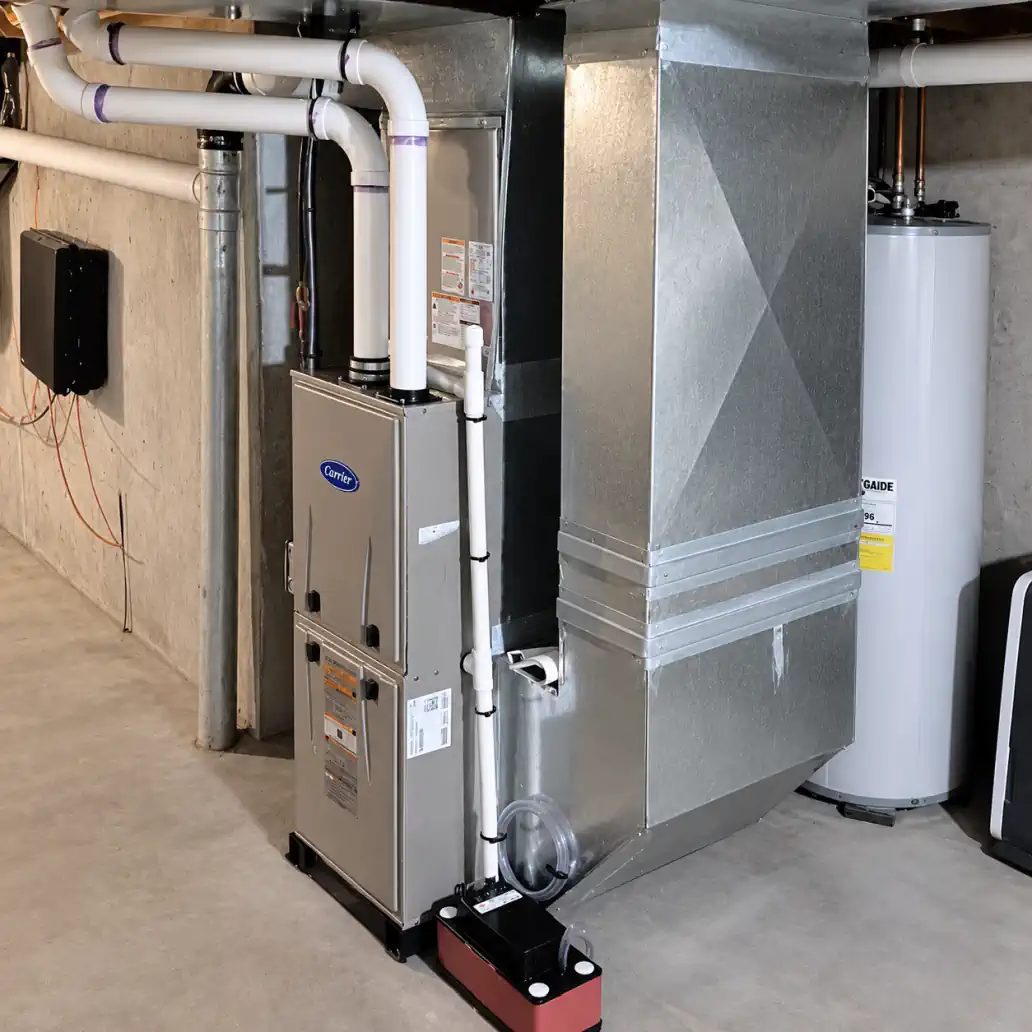
High-efficiency gas furnaces — including Carrier
EMCO Tech is a Carrier Heating & Cooling dealer. We also install and service Trane, York, Lennox, Goodman, and other common brands already in local homes. If you are switching to gas heat, this is the equipment that actually lowers the bill: 95–98% AFUE furnaces, correct sizing, sealed combustion, and a combustion tune so the new unit is not fighting bad ductwork. We pull permits, haul the old oil or electric unit, pressure-test the gas connection, and verify carbon monoxide and venting before we leave. See gas furnace installation, Carrier gas furnaces, gas boilers & radiant, and new system sale / warranty options.
How to switch to natural gas the right way
Utility websites make this look like a form. On a real street in Willow Grove, Horsham, Fishtown, or Doylestown it is a sequence. Skip a step and the meter never gets set.
- Call EMCO Tech first. We look at the mechanical room, the meter location, the appliances you want on gas, and whether the house even wants a gas furnace versus a heat pump. You get a path and a budget before you sit on hold with the utility.
- Check the utility. PECO covers most of Montgomery, Bucks, Chester, and Delaware Counties. Philadelphia Gas Works covers the city. Ask how far the nearest main is, whether they will extend service, what credits apply, and what they need from the contractor before they set a meter.
- Load and layout. We size the furnace or boiler, map pipe diameter, and decide venting. An oversized “just in case” furnace short-cycles and wastes the efficiency you paid for.
- Permits and interior piping. Township and city rules differ. We pull the permit, install the customer-owned piping, bond CSST where required, and pressure-test.
- New gas furnace, boiler, tankless or tank water heater, and any range, dryer, or fireplace connections you want done while the walls are open.
- Utility meter and commissioning. Leak check, combustion analysis, carbon monoxide test, thermostat setup, and a walkthrough so you know how to shut the gas off.
- Stay on a service plan. A new gas appliance still needs an annual clean and safety check. That is how conversions stay cheap in year five.
PECO publishes its own conversion tools and rebate forms at peco.com gas conversion. PGW customers start with PGW. We coordinate both.
Everyday appliances that belong on the same gas line
The heating plant is the big saver. The rest of the house is why people stay happy with the project.
- Gas water heaters and tankless units — faster recovery after back-to-back showers. See our gas water heater services and tankless options.
- Ranges and cooktops — if you are already opening the kitchen wall for pipe, run the stove now.
- Clothes dryers — shorter cycles than most electric dryers.
- Fireplaces, fire pits, and grills — outdoor lines need the same permits and burial depth as indoor ones.
Gas water heater services · Tankless water heaters
Is natural gas being phased out in Pennsylvania?
You will hear the rumor. Some West Coast and Northeast cities have limited gas in new construction. That is not Pennsylvania policy today, and it is not how homes in Montgomery County or Philadelphia are being heated this decade.
Pennsylvania is a major natural-gas producing state. Existing homes can still add service. PECO is still running neighborhood main-extension pilots. There is no statewide ban on gas furnaces, boilers, or gas lines for the houses we service. Anyone promising that gas heat disappears here in five years is selling a different product.
That does not mean gas is the only smart answer. Electricity prices, heat-pump hardware, and hybrid systems are getting better. If your street has no main, if you already need a new air conditioner, or if you want one system that heats and cools, we will put a heat pump or ductless mini-split on the table instead of forcing a long, expensive gas extension. The honest conversion company is the one willing to talk you out of gas.
Keep gas where it wins. Use a heat pump where it wins.
A cold-climate heat pump or a Carrier / Fujitsu / Mitsubishi ductless mini-split is often the better project when the gas main is far, the oil tank is already gone, or you need cooling anyway. Dual-fuel setups keep a gas furnace for the coldest nights and let the heat pump handle the shoulder seasons. We design both. Compare gas vs. heat pump on a real load calc: 215-366-1001.
Heat Pump Systems
Whole-home heat pumps when a gas main is not the right move.
Heat Pump Installation
Sized, permitted, and commissioned for Pennsylvania winters.
Plan a Replacement
When to replace, what it costs, and how to avoid a panic swap.
Mini-Split Installation
Ductless heat and cool for additions, row homes, and zones.
Carrier Ductless
Factory-authorized Carrier mini-splits, installed by EMCO Tech.
PECO vs. PGW: who serves your house
Getting this wrong wastes a week of phone calls.
- Philadelphia Gas Works (PGW) — City of Philadelphia neighborhoods: Northeast Philadelphia, Fishtown, Northern Liberties, South Philadelphia, Manayunk, Roxborough, West Philadelphia, Center City, Chestnut Hill.
- PECO natural gas — most of Montgomery County, Bucks County, Chester County, and Delaware County, including Willow Grove, Abington, Horsham, Dresher, Jenkintown, Doylestown, Newtown, Warminster, Bensalem, West Chester, Media, Haverford, and Wayne.
PECO has, in recent program years, offered a heating-fuel conversion rebate when gas becomes the main heat source, plus extra incentives on qualifying high-efficiency furnaces and boilers. Amounts and forms change. We check current PECO and PGW offers when we write the proposal and help you file what you qualify for. Do not plan the whole job around a rebate you have not confirmed.
Shopping a cheaper commodity supplier after the meter is set is a separate step at PAGasSwitch.com. That does not install the pipe.
Where We Convert Homes to Natural Gas
From multiple locations throughout Greater Philadelphia EMCO Tech Heating & Cooling converts and services homes and light commercial buildings across Montgomery County, Philadelphia, Bucks County, Chester County, and Delaware County — from Willow Grove to West Chester and everywhere in between.
Montgomery County
- Willow Grove
- Abington
- Horsham
- Dresher
- Ambler
- Jenkintown
- Glenside
- Huntingdon Valley
- Norristown
- Montgomeryville
- Bala Cynwyd
Philadelphia
- Northeast Philadelphia
- Center City & Fishtown
- Manayunk & Roxborough
- South Philadelphia
- Northern Liberties
- Chestnut Hill
- West Philadelphia
- Old City / Society Hill
Bucks County
- Doylestown
- Newtown
- Warminster
- Bensalem
- Feasterville-Trevose
- Richboro
- Yardley
- Southampton
- Langhorne
- Chalfont
Chester County
All Chester County →Delaware County
All Delaware County →Not sure if we cover your street? Call (215) 366-1001 or schedule an appointment and we will confirm gas-conversion availability near you.
Safety, permits, and why the cheap quote fails inspection
Natural gas is safe when the joints hold, the venting is right, and someone who is licensed signs the card. It is not a weekend hardware-store project on a Philadelphia rowhome or a 1960s Willow Grove split-level.
- We handle customer-owned piping. The utility owns the main and usually the service to the meter. Everything after the meter is on you — and on us.
- Permits and inspections are part of the job, not an add-on we “see about later.”
- Combustion, draft, and carbon monoxide are checked before we call the house done.
- If you smell gas, leave the house, call 911, then call the utility. After it is safe, call us at 215-366-1001 for the customer-owned piping.
Same-day leak and piping help: gas line repair and leak detection.
Questions people actually type into Google
Confirm a PECO or PGW main, hire a licensed contractor for interior piping and equipment, pull permits, pass inspection, then have the utility set the meter. Start with a house visit so you know whether the main is close enough to bother.
Most occupied homes in our five-county area land between a modest piping job and a full oil-to-gas replacement in the $6,000–$20,000 national band. The swing is service-line distance, boiler vs. furnace, and tank removal. We quote after we see the house.
If neighbors already have gas meters, you probably can get it. If you are on a long rural stretch of upper Bucks or Chester County, maybe not at a sane price. We and the utility will tell you which it is.
Yes. That is the most common conversion we run: abandon or remove the oil tank, pipe the mechanical room, and set a gas furnace or gas boiler. Annual fuel cost usually drops enough to justify the project when a main is at the street.
Some appliances can be converted with a kit. Most oil furnaces and boilers of conversion age should be replaced. A 20-year-old oil burner with a gas kit still wastes heat through a tired heat exchanger.
Not under current state policy, and not on any timeline that should stop a homeowner in Willow Grove or Northeast Philadelphia from installing a high-efficiency gas furnace this year. If your lot has no main, we will talk heat pumps instead of pretending a mile of pipe is “no big deal.”
That is PAGasSwitch — a commodity choice after you have a meter. It does not install a furnace.
Yes, and you should. One permit, one pressure test, one inspection is cheaper than three visits.
Keep the new system cheap to own
A conversion is only a bargain if the equipment stays tuned. Our residential and commercial service agreements cover seasonal safety checks, priority scheduling, and the kind of filter and combustion service that keeps a 97% furnace at 97%.
Financing is available on qualifying installations: HVAC financing.
Ready to see if the switch is worth it on your house?
Bring last winter’s oil or electric bills if you have them. We will walk the mechanical room, check gas availability with you, and put a number on piping, a Carrier or other gas furnace or boiler, and the water heater. If gas is a bad fit, we will say so and show you a heat pump or mini-split instead.
Talk to EMCO Tech Heating & Cooling
Call 215-366-1001 Request Service
Montgomery County · Philadelphia · Bucks County · Chester County · Delaware County
Related work on this site: gas line services, gas furnace installation, gas boilers, gas water heaters, heat pumps, ductless mini-splits, indoor air quality, and service agreements. We repair and install Carrier and other common brands including Trane, York, Lennox, Fujitsu, and Goodman.
Post Updated: September 2026
Latest Updates – Keep Cool, Feel Warm, Breathe Clean Air with EMCO Tech
Emergency Heat (AUX) Won’t Turn Off? Here’s Which Heat Pump Fixes It
If AUX or emergency heat runs all winter, the heat pump has handed your house to electric backup strips, and the PECO bill shows it. See how…
Planning a Heat Pump Replacement: Upgrade Before It Fails
The worst time to replace a heat pump is the morning it dies. A planned swap lets you choose the equipment, lock in better pricing, and stay warm on…