


Why Is My Furnace Making Noise? The Short Answer
Some furnace sounds are normal: a soft click when the cycle starts, a whoosh when the burners light, and the steady hum of the blower. Loud or new sounds usually point to a specific part. A bang or boom at startup means delayed ignition. Squealing or screeching usually means a blower or inducer motor. Rattling means something is loose. Humming or buzzing points to an electrical part. Repeated clicking without heat means an ignition problem. The sound itself tells a technician most of what they need to know, so pay attention to when it happens.
Use the guide below to match the sound, see how urgent it is, and know when to call for same-day heating repair.
Normal Furnace Sounds You Don’t Need to Worry About
A working furnace makes a few predictable sounds every cycle. You’ll hear a click as the thermostat calls for heat, the hum of the small inducer motor clearing the vent, a soft whoosh as the burners light, and then the blower starting about a minute later. Metal ductwork can tick or creak quietly as it warms up and cools down. These sounds should be fairly quiet and consistent. A sound that’s new, louder than it used to be, or that comes with a smell or lack of heat is the one to look into.
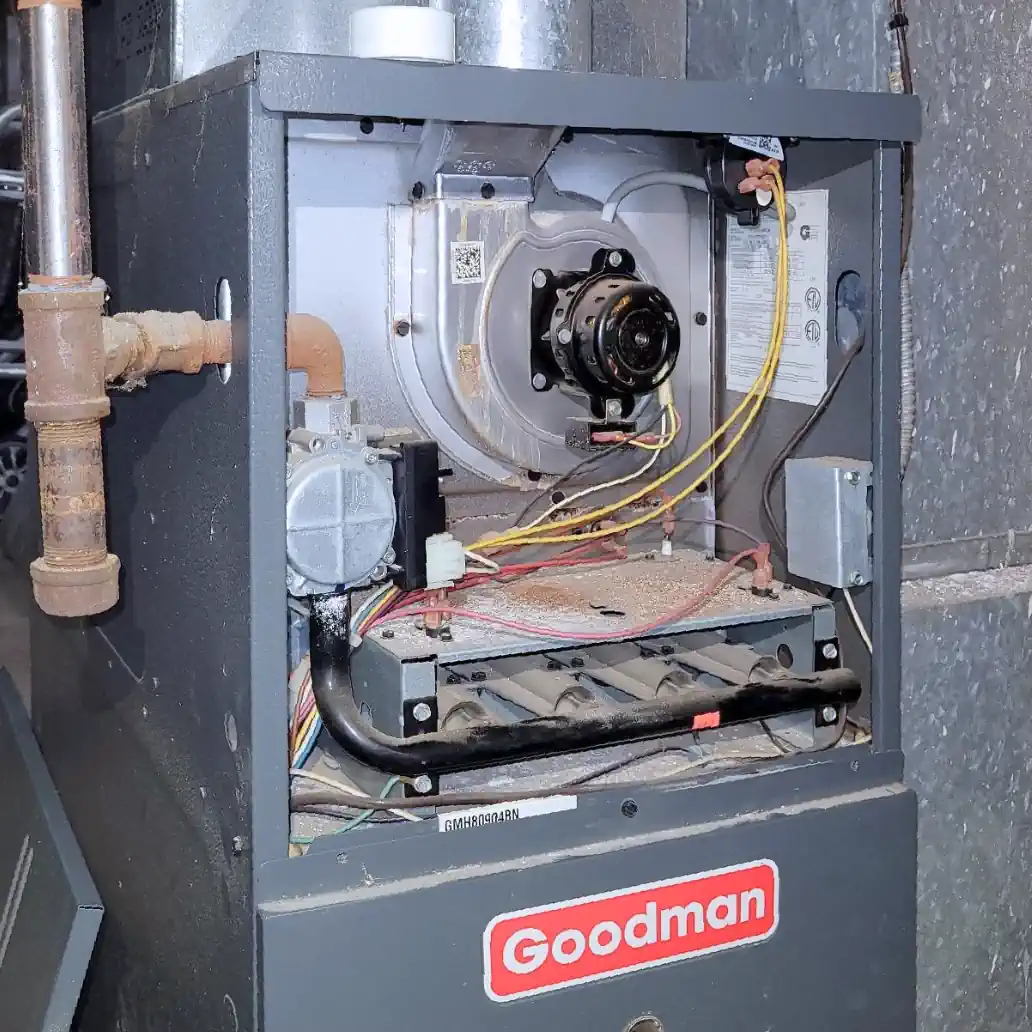
What Each Furnace Noise Means
Loud Bang or Boom When the Furnace Kicks On
A boom from inside the furnace as the burners light is delayed ignition. Gas flows for a moment before it lights, builds up, and ignites all at once. The usual causes are dirty burners, a weak or misaligned ignitor, or incorrect gas pressure. Delayed ignition stresses the heat exchanger and can crack it over time, which creates a carbon monoxide risk. This one shouldn’t wait. Turn the heat down and schedule a repair right away.
Popping or Banging in the Ductwork
A pop or bang that comes from the ducts rather than the furnace, usually right as the blower starts or stops, is metal ductwork flexing under air pressure or expanding as it heats. It’s common in older homes and basements with long, flat duct runs. It isn’t dangerous, but it can mean the ducts are undersized, the filter is clogged, or too many vents are closed. Reinforcing or modifying the ductwork usually quiets it.
Squealing or Screeching
A high-pitched squeal usually comes from a motor. On most furnaces, it’s the blower motor bearings or the inducer motor wearing out. On older belt-drive blowers, it can be a worn or loose belt. Squealing tends to get louder over a few weeks before the motor fails, so catching it early can save you from a no-heat call on the coldest night.
Rattling
Rattling is often something simple, like a loose access panel, screw, or section of ductwork. It can also mean a failing inducer motor or a blower wheel that has come loose. On older furnaces, rattling from the heat exchanger area deserves a closer look, because a cracked heat exchanger can rattle as it expands and contracts.
Humming or Buzzing
A steady, quiet hum while the blower runs is normal. A loud hum or buzz usually points to an electrical part, like a failing run capacitor, a buzzing transformer, a contactor or relay that’s sticking, or a blower motor that’s struggling to start. A hum that continues after the furnace shuts off can mean a relay is stuck, which keeps parts energized when they shouldn’t be.
Clicking Over and Over, but No Heat
A few clicks at startup are normal. Repeated clicking with no flame means the furnace is trying to light and failing, usually because of a cracked hot surface ignitor, a dirty flame sensor, or a gas supply problem. If it lights and then shuts off, see our guide to a furnace that keeps shutting off. If nothing happens at all, see furnace not working.
Scraping or Grinding
Metal-on-metal scraping or grinding is serious. It usually means the blower wheel is rubbing its housing or the motor bearings have failed. Turn the furnace off and call for service. Running it can destroy the blower motor and turn a moderate repair into a much bigger one.
Whistling
A whistle is air squeezing through a small opening. The most common causes are a clogged filter, closed or blocked vents, undersized return ducts, or a gap in the ductwork or around the filter slot. Replacing the filter and opening vents often stops it. If it doesn’t, the return ductwork may be too small for the furnace.
Rumbling After the Furnace Shuts Off
A low rumble that keeps going after the furnace should be off can mean fuel is still burning in the combustion chamber, often from dirty burners or a gas valve that isn’t closing fully. On oil furnaces, rumbling, puffing, or pulsing points to a combustion problem with the nozzle, air setting, or pump. Both need a technician soon, and an oil burner that puffs or rumbles should be checked before the next heating cycle.
Hearing a Bang, Squeal, or Grind?
Catch it before it turns into a no-heat night. Our technicians track down the noise and fix the failing part, with same-day heating repair across Philadelphia and the suburbs.
Furnace Noise Guide: How Urgent Is It?
| Sound | Likely Cause | How Urgent |
|---|---|---|
| Soft click, whoosh, steady hum | Normal startup and blower | Normal |
| Ticking or creaking ducts | Metal expanding and contracting | Normal |
| Bang or boom inside the furnace at startup | Delayed ignition | Call now |
| Popping in the ductwork | Ducts flexing under pressure | Schedule a visit |
| Squealing or screeching | Blower or inducer motor, belt | Schedule soon |
| Rattling | Loose panel or duct, inducer, blower wheel | Schedule soon |
| Loud humming or buzzing | Capacitor, transformer, relay, motor | Schedule soon |
| Repeated clicking, no heat | Ignitor, flame sensor, gas supply | Schedule soon |
| Scraping or grinding | Blower wheel or motor bearings | Turn off, call now |
| Rumbling after shutoff | Fuel still burning, oil combustion problem | Call now |
When a Noisy Furnace Is a Safety Problem
Turn the furnace off and call right away if a noise comes with a gas or rotten egg smell, a burning smell, smoke, soot near the burners, or a carbon monoxide alarm. If you smell gas, leave the house and call your gas utility from outside, PGW in Philadelphia or PECO in most of the suburbs. Booms from delayed ignition and rattling near the heat exchanger can both point to a cracked heat exchanger, which our guide to a cracked heat exchanger explains. A furnace that’s getting louder every season along with other symptoms may be showing the signs your furnace is going out.
Banging Pipes or Radiators? That’s Your Boiler
If the banging comes from radiators or heating pipes rather than a furnace, you have a boiler system. Banging and knocking in steam systems is usually water hammer from trapped water in pipes that have lost their pitch, and gurgling or kettling in hot water boilers points to air or mineral buildup. Our boiler repair team handles both, and if some radiators stay cold, see our guide to no heat from radiators.
Noisy Furnace in the Philadelphia Area? We’ll Find the Sound
EMCO Tech repairs gas, oil, and electric furnaces and ductwork across Philadelphia, Montgomery, Bucks, Chester, and Delaware counties. Many furnaces in Philly rowhomes and older suburban basements have run for decades on the same motors and ductwork, and the noises usually start well before a breakdown. Our technicians track down the sound, replace only the part that’s failing, and give you the price before any work starts. Call 215-366-1001 or book online. A yearly winter heater tune-up catches worn motors and dirty burners before they get loud.
Furnace Noise FAQs
A loud furnace usually has a specific part failing, and the type of sound narrows it down. A bang or boom at startup points to delayed ignition from dirty burners or a weak ignitor. Squealing or screeching usually means the blower or inducer motor bearings are wearing out. Rattling often comes from a loose panel, duct, or blower wheel. Loud humming or buzzing points to a capacitor, transformer, or relay. Scraping or grinding means the blower is damaged and the furnace should be shut off. Note when the sound happens, at startup, while running, or after shutdown, and tell your technician, since timing is often the biggest clue.
A bang or boom from inside the furnace when it turns on is usually delayed ignition. Gas flows into the burners for a moment before the ignitor lights it, so a small amount builds up and ignites all at once. Common causes are dirty or rusted burners, a weak or misaligned hot surface ignitor, and incorrect gas pressure. Delayed ignition puts stress on the heat exchanger and can crack it over time, which can lead to carbon monoxide leaks, so it should be repaired promptly. If the bang comes from the ductwork instead, it’s usually metal ducts flexing under air pressure, which is noisy but not dangerous.
Squealing or screeching usually comes from a motor. On most modern furnaces, the blower motor or the small inducer motor has worn bearings, and the noise gets louder as the bearings fail. On older furnaces with belt-driven blowers, a worn, loose, or misaligned belt can squeal too. A squeal that starts when the furnace kicks on and fades after a minute often points to the inducer. A squeal that lasts the entire cycle usually points to the blower. Either way, it’s a sign the motor is near the end of its life, and replacing it before it seizes prevents a no-heat breakdown during a cold snap.
A soft, steady hum while the blower runs is normal. A loud hum or buzzing usually points to an electrical component. A failing run capacitor can make the blower motor hum without starting, a transformer can buzz as it ages, and a sticking contactor or relay can hum and keep parts powered after the furnace should be off. A loose panel can also amplify a normal hum. If the hum is new, getting louder, or comes with a burning smell or a blower that won’t spin, turn the furnace off and call for service. Electrical problems inside the furnace involve high voltage and should be handled by a technician.
Repeated clicking without heat means the furnace is trying to start its ignition sequence and failing. The click is usually a relay or the gas valve opening. The most common causes are a cracked or worn hot surface ignitor, a dirty flame sensor that shuts the gas off after a few seconds, a pressure switch that won’t close because of a blocked vent or condensate drain, or a gas supply problem. On older furnaces with a standing pilot, it can mean the pilot is out. After several failed tries, most furnaces lock out and flash an error code. Write the code down and call for repair.
Most furnace noises are mechanical problems that need repair but aren’t emergencies. A few are dangerous. A boom at startup from delayed ignition can crack the heat exchanger and lead to carbon monoxide leaks. Scraping or grinding can destroy the blower motor. Rumbling after the furnace shuts off can mean fuel is still burning. Any noise that comes with a gas or rotten egg smell, burning smell, smoke, soot, or a carbon monoxide alarm means you should turn the furnace off and call right away. If you smell gas, leave the house and call your gas utility from outside before calling for repair.
Popping and banging in the ductwork, often called oil canning, happens when thin metal duct walls flex under air pressure as the blower starts or stops, or expand and contract as they heat up and cool down. It’s common with long, flat duct runs in basements and older homes. It isn’t dangerous, but it can mean the ducts are undersized for the furnace, the filter is clogged, or too many registers are closed, which raises the pressure inside the ducts. Opening vents and replacing the filter can help. For a lasting fix, ductwork can be reinforced, resized, or modified so the system runs quieter.
It depends on the source of the noise. Tightening a loose panel or duct section is a small repair, and replacing a capacitor, belt, or ignitor usually lands in the range of a few hundred dollars. Replacing a blower motor, inducer motor, or control board costs more, and cleaning burners or correcting gas pressure to fix delayed ignition depends on what the technician finds. Ductwork modifications vary with the size of the job. EMCO Tech diagnoses the noise first and gives you the price before any work starts. If the furnace is 15 or more years old and needs a major motor, it’s worth comparing repair against replacement.
Explore Our Furnace Repair Services
Heating Repair
Same-day heater repair for furnaces, boilers, and heat pumps across Greater Philadelphia.
Gas Furnace Repair
Blower motors, inducers, ignitors, and burner cleaning for gas furnaces.
Oil Furnace Repair
Rumbling, puffing, and burner combustion problems on oil heat.
Boiler Repair
Banging pipes, water hammer, and cold radiators on steam and hot water boilers.
Ductwork Repair
Popping, whistling, and undersized ducts reinforced or redesigned.
Winter Heater Tune-Up
Worn motors and dirty burners caught before they get loud.
Related Guides
Post Updated: October 2026
Latest Updates – Keep Cool, Feel Warm, Breathe Clean Air with EMCO Tech
Emergency Heat (AUX) Won’t Turn Off? Here’s Which Heat Pump Fixes It
If AUX or emergency heat runs all winter, the heat pump has handed your house to electric backup strips, and the PECO bill shows it. See how…
Planning a Heat Pump Replacement: Upgrade Before It Fails
The worst time to replace a heat pump is the morning it dies. A planned swap lets you choose the equipment, lock in better pricing, and stay warm on…