


Central air conditioning does not make cold air out of nothing. It moves heat from inside your home to the outside, using a closed loop of refrigerant and a handful of key parts. Once you understand how that loop works, weak cooling, strange noises, and high bills all start to make sense. Here is the whole system, explained simply.
Central Air Issues?
If your HVAC system wouldn't turn on or not working properly, EMCO Tech provides central air services with fast response and prompt repairs for homes and businesses.
How Central Air Conditioning Works
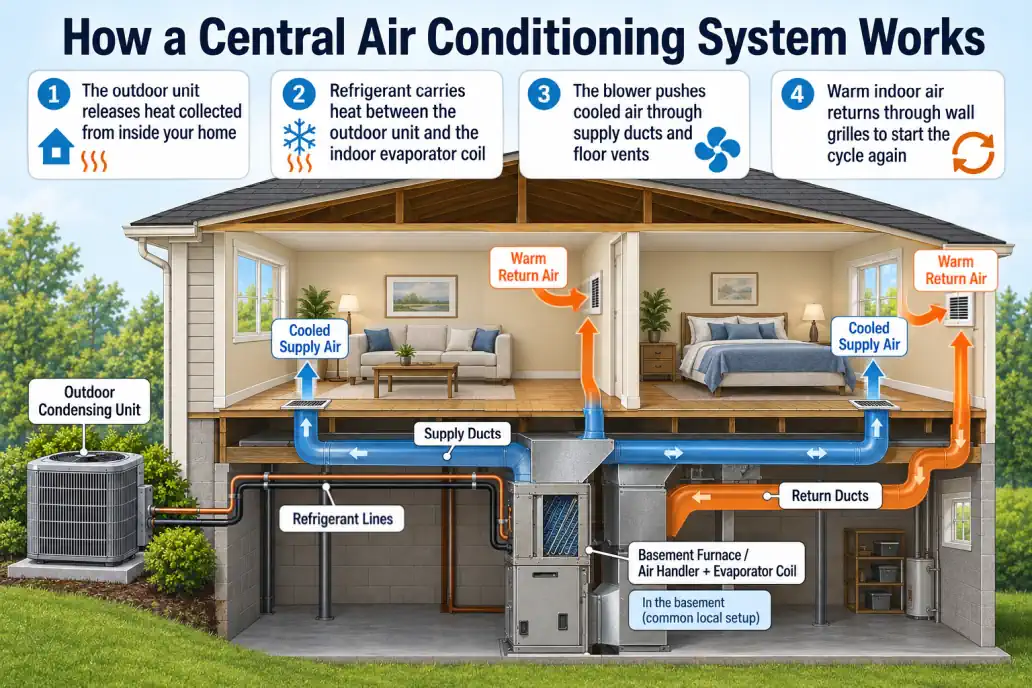
A central air system cools your whole home from one unit, sending conditioned air through a network of ducts. It works by moving heat, not by creating cold. Refrigerant circulates between an indoor coil and an outdoor unit, absorbing heat inside your home and releasing it outdoors. A blower pushes the cooled air through the ducts and into each room, while warm indoor air is drawn back to start the cycle again.
The Main Parts of a Central AC System
Most central air systems share the same core components, split between an outdoor unit and an indoor unit:
- Compressor — the pump in the outdoor unit that pressurizes refrigerant and drives the whole cycle. If you suspect trouble here, see our guide on a bad AC compressor.
- Condenser coil — also outdoors, it releases the heat collected from inside your home.
- Evaporator coil — sits indoors above the furnace or in the air handler, and absorbs heat and moisture from the indoor air.
- Refrigerant — the fluid that carries heat between the coils. Low levels cause weak cooling, as our low refrigerant guide explains.
- Air handler or blower — moves cooled air through the ducts. Learn more about air handlers.
- Thermostat and ductwork — the control and the delivery network that send conditioned air to each room.
The Cooling Cycle, Step by Step
Here is the loop that repeats every time your AC runs:
- Warm indoor air is pulled in and passed over the cold evaporator coil, which absorbs its heat and moisture.
- The refrigerant, now carrying that heat, flows to the outdoor unit.
- The compressor pressurizes it, and the condenser coil releases the heat into the outside air.
- The cooled refrigerant returns indoors, and the blower sends the freshly cooled air through your ducts.
- The cycle repeats until the thermostat reaches your set temperature.
What Goes Wrong, and What Each Part Does
Knowing the parts makes troubleshooting easier. A failing compressor means little or no cooling. A dirty condenser coil traps heat outside and raises bills. A frozen evaporator coil usually points to low refrigerant or poor airflow. A weak blower or leaky ductwork leaves rooms uneven. If your system runs but the house will not cool, our guide on an AC not blowing cold air walks through the usual causes.
Need Central Air Service or a New System?
From repairs to full installs, our team keeps central air running across the Philadelphia area. Explore our central air conditioning services.
FAQ
Central air conditioning cools your home by moving heat outdoors rather than making cold air. Refrigerant absorbs heat at the indoor evaporator coil, the compressor pumps it to the outdoor unit, the condenser coil releases that heat outside, and a blower sends the cooled air through your ducts.
The core parts are the compressor and condenser coil in the outdoor unit, the evaporator coil in the indoor unit, refrigerant that carries heat between them, an air handler or blower that moves the air, and the thermostat and ductwork that control and deliver cooling.
The evaporator coil sits indoors and absorbs heat and moisture from the air passing over it, which is what actually cools and dehumidifies your home. If it freezes or fails, you get weak or no cooling.
AC Related Posts & Pages
Latest Updates – Keep Cool, Feel Warm, Breathe Clean Air with EMCO Tech
Emergency Heat (AUX) Won’t Turn Off? Here’s Which Heat Pump Fixes It
If AUX or emergency heat runs all winter, the heat pump has handed your house to electric backup strips, and the PECO bill shows it. See how…
Planning a Heat Pump Replacement: Upgrade Before It Fails
The worst time to replace a heat pump is the morning it dies. A planned swap lets you choose the equipment, lock in better pricing, and stay warm on…