


The Short Answer on Thermostat Placement
Put the thermostat on an interior wall, about 52 to 60 inches off the floor, in a room your household actually lives in: the living room, family room, or a central first-floor hallway that sees real traffic. That location reads the average air in the house, not a draft, a sunbeam, or last night’s leftover oven heat.
If you are weighing a move or an upgrade, our thermostat repair, replacement, and installation team does this correctly the first time.
How High Should a Thermostat Be?
Roughly eye level, 52 to 60 inches from the floor, is the sweet spot. Mount it too high and it reads the warm air that pools near the ceiling, so the system shuts off early and the room you actually sit in stays cool. Mount it too low and it reads cold floor air and overruns. Accessibility guidance puts controls around 48 inches, which is fine, just do not drop it to baseboard level.
Places That Quietly Ruin a Heating Season
Same house, same furnace, wrong wall. Any of these will make a healthy system look broken:
- Exterior wall. The wall itself runs colder than the room. The thermostat thinks the house is freezing and keeps calling for heat. You get a hot living room and a high gas bill.
- Next to a supply vent or return. The blast of warm air, or the pull of a return, fools the sensor. The system shuts off early, the room cools ten minutes later, and the cycle repeats until November.
- Direct sun, even for an hour. A west-facing hallway in late September convinces a thermostat that summer never ended. Then the sun drops and the house sits at 64°F.
- Kitchen, bath, or laundry. Cooking heat, shower steam, and dryer exhaust are not the house. They are local weather events.
- Dead-end hallway or an unused bedroom. The thermostat keeps that empty space perfect while the rooms you use run hot or cold.
- Right above a lamp, TV, or radiator. A small heat source next to the sensor means a false reading and extra runtime.
Older homes in Willow Grove, Abington, Horsham, and Northeast Philadelphia see this constantly. The thermostat went wherever the wire happened to come out of the wall in 1987. That was convenient for the builder. It was not a comfort plan.
Not sure the wall is the problem?
If your rooms will not hold temperature or the system short cycles on mild days, have the thermostat placement and wiring checked before the heat stays on for good.
Why Does My Thermostat Read Wrong After Summer?
This is the most common early-fall call. Nothing failed over the summer. What changed is the sun angle and the daily temperature swing. A spot that read fine in flat July heat starts telling lies in September, when mornings are 50°F and afternoons hit 75°F and the low sun reaches a wall it never touched all summer. If the house suddenly feels weird in September and felt fine in July, suspect the location before you suspect the furnace.
Two-Story Homes: The Classic Philly-Suburbs Problem
Heat rises. If the only thermostat lives upstairs, the first floor stays cool while the second floor bakes. If it lives in a first-floor hallway with a vent blowing on it, the upstairs never catches up. The best pattern for most two-story homes across Montgomery, Bucks, Chester, Delaware County, and Philadelphia is a main thermostat on the first floor, on an interior wall in a central living area, with remote sensors upstairs and in the rooms you care about most.
That is one of the real reasons people upgrade. A smart thermostat with room sensors can average several spaces instead of trusting one lucky wall. A new Nest or Ecobee on the same bad wall will still lie. Location first, features second.
Heat Pumps and Dual-Fuel Systems Are Fussier
Placement matters even more with a heat pump. These systems run longer, gentler cycles and lean on backup or auxiliary heat on the coldest days, so a sensor fooled by a draft or a sunbeam can kick expensive backup heat on when it is not needed. Heat pumps and dual-fuel setups also need the right control wiring, which is where a casual relocation goes wrong. If you run a heat pump, get the thermostat placed and wired by someone who knows the system.
How to Tell Placement Is the Problem
- One room is always too hot or too cold no matter where you set it.
- The system short cycles on mild fall days.
- You keep nudging the setpoint up and down like a volume knob.
- The display temperature does not match a cheap thermometer in the same room.
- Everything felt fine in July, then September arrived and the house got weird.
Those are placement and control issues as often as they are equipment issues. A 15-year-old furnace can still be fine. The sensor driving it may not be. A seasonal heating maintenance visit is a good time to have the placement checked too.
Can I Just Move My Thermostat to Another Wall?
Sometimes yes. Sometimes the wire run, the wall cavity, or the system type makes it a real job, especially with heat pumps, dual-fuel setups, and boilers that need the right control wiring. DIY relocation is how C-wires get skipped, heat-pump reversing valves get crossed, and “it worked yesterday” becomes a no-heat call on the first cold night. If you want it done once, that is a job for a licensed tech.
Fall Timing That Actually Matters
Labor Day through mid-October is the window. You still have mild days to test a new location, the heating plant is not in emergency demand yet, and you are not discovering a wiring surprise at 9 p.m. on the first frost. If the thermostat sits in a bad spot, moving it or adding sensors often does more for comfort than another degree on the dial.
Thermostat Placement FAQ
Yes, an interior wall is best. Exterior walls run colder than the room and push the system to overheat the house. An interior wall in a central, lived-in room gives the most accurate average reading.
Usually location: sun, a nearby vent, a lamp or TV, or an exterior wall. Sometimes it is a failing sensor or a unit that has drifted out of calibration. Compare the display to a cheap thermometer in the same room to tell which.
Only if it is placed well. Room sensors help by averaging several spaces, but a smart thermostat on a bad wall still reads badly. Fix the location first, then add the smart features.
Get the Thermostat Placed and Working Right
Latest Updates – Keep Cool, Feel Warm, Breathe Clean Air with EMCO Tech
Weatherizing Your Home Before Winter (The Cheap Fixes That Make Your Furnace’s Job Easier)
Before you blame the furnace for a cold house, check the holes it is fighting. Most homes leak a surprising amount of heat through gaps you never…
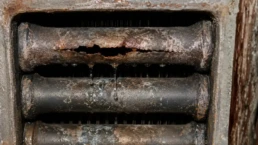
Cracked Boiler Heat Exchanger: Why Cast Iron Sections Leak and What to Do
Your boiler is losing pressure, or there is water on the floor, and someone mentioned the heat exchanger. Before you accept a replacement quote, it…