


Why Your AC Runs but Won't Blow Cold Air
An air conditioner doesn’t “make” cold — it moves heat out of your home and dumps it outside. When the fan still blows but the air feels warm or lukewarm, it almost always means one part of that heat-transfer process has broken down: airflow is restricted, refrigerant is low, a component has failed, or the system is icing up. Here’s how to tell which one you’re dealing with.
No cold air on a hot day? Don't sweat it out.
We offer same-day AC repair across Montgomery & Bucks County. Call 215-366-1001 or book online below.
1. Dirty or Clogged Air Filter
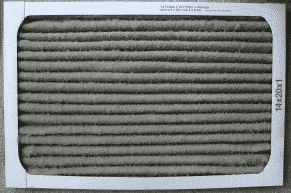
This is the single most common reason an AC system underperforms, and it’s the first thing to check before calling anyone. A filter that’s been in place for two or three months — especially during pollen season or a stretch of heavy use — can become clogged enough to cut airflow dramatically. When that happens, the system runs but can’t move enough conditioned air through the home to make a noticeable difference.
Check your filter. If it’s grey, dark, or visibly packed with debris, replace it. Use a filter with the MERV rating your system was designed for — a filter that’s too restrictive can cause the same airflow problem even when it’s new. After replacing the filter, give the system 20–30 minutes to stabilize before deciding if the problem is resolved.
2. Thermostat Set Wrong or Failing
Before anything else, confirm the thermostat is set to COOL (not just “fan”), the fan is on AUTO, and the temperature is set a few degrees below the current room reading. If the fan is set to “ON,” it runs continuously and can blow room-temperature air between cooling cycles, which feels like the AC isn’t working. A thermostat with dead batteries or a failing sensor can also stop calling for cooling correctly.
3. Low or Leaking Refrigerant
This is the number-one reason an AC runs but blows warm or room-temperature air. Refrigerant is what actually absorbs heat from your indoor air — when the charge drops because of a leak in the coil or line set, the system keeps running but loses its ability to cool. The air from the vents feels weak and barely cool, the system runs in long cycles without satisfying the thermostat, and your electric bill climbs because it never shuts off.
Other tells: ice on the copper lines or indoor coil, a hissing or bubbling sound near the line set, or oily residue around fittings. Refrigerant can’t legally be added without a certified technician, and topping it off without fixing the leak only buys a few weeks. The leak has to be found and repaired. If you suspect this, our guide on how to tell if your AC is low on refrigerant walks through the symptoms, and whether a recharge is the right fix covers your options.
4. Frozen Evaporator Coil
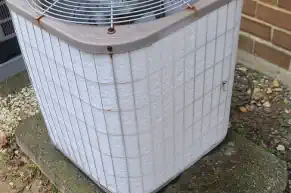 When airflow is restricted or refrigerant is low, the evaporator coil inside your air handler can drop below freezing and ice over. Once that happens, the ice acts as insulation and the system can no longer transfer heat — so warm air keeps blowing through the house even though everything sounds like it’s running.
If you open the air handler and see frost or ice on the coil, switch the thermostat to fan-only (not off, not cool) and let it thaw fully — usually two to four hours. Don’t run cooling against a frozen coil; it can damage the compressor. Once it thaws, the underlying cause — a dirty filter, blocked returns, or low refrigerant — still has to be corrected or it freezes again.
5. Dirty Condenser Coils (Outdoor Unit)
The condenser coil is the large coil that wraps around the outside of your outdoor unit. Its job is to release the heat the refrigerant collected from inside your home. When it’s covered in dirt, pollen, cottonwood, or grass clippings — which happens quickly in Philadelphia summers — it can’t shed heat efficiently. The result is the same as low refrigerant: the system works harder, runs longer, and delivers less cooling.
You can carefully rinse the outside of the coil with a garden hose from the inside out (never a pressure washer), but professional coil cleaning is more thorough and is included in a proper AC tune-up. Keep at least two feet of clearance around the outdoor unit and cut back any vegetation that has grown close to it.

6. Failed Capacitor
The capacitor is a small cylindrical part in the outdoor unit that gives the compressor and fan motor the jolt they need to start and run. Capacitors degrade faster under heat, so they fail most often mid-summer. The classic symptom: the outdoor unit hums but doesn’t start, or the fan spins slowly or not at all. When the compressor can’t start, no refrigerant gets compressed — so no cold air, even though the indoor blower keeps pushing air through the vents.
The part itself is inexpensive, but replacing it means working inside a live electrical panel, so it’s a technician job. A humming outdoor unit that won’t fully start is one of the most common emergency repairs we see during Philadelphia heat waves.
7. Failing Compressor
The compressor is the heart of the system — it pressurizes refrigerant so it can release heat outside. When it starts to fail, you may notice the outdoor unit short-cycling (clicking on and off), tripping the breaker, running hot, or making a rattling or grinding sound. A compressor that can’t build pressure means the air indoors never gets cold.
Compressor problems are the most serious cause on this list, and on older systems the repair cost often approaches the cost of replacement. If your system is more than 10–12 years old and the compressor is failing, it’s worth weighing the numbers with our repair-or-replace breakdown before sinking money into it.
8. Stuck Reversing Valve (Heat Pumps)
If your system is a heat pump rather than a straight air conditioner, there’s one extra failure worth knowing about. A heat pump uses a reversing valve to switch between heating and cooling. If that valve sticks, the system can blow warm air even when it’s set to cool — a symptom that looks exactly like refrigerant loss and is easy to misdiagnose. Our heat pump repair service covers reversing-valve diagnostics along with refrigerant and electrical issues.
9. Ductwork Leaks or Restrictions
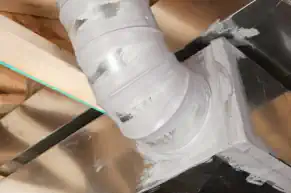 Your air conditioner may be working perfectly — and still failing to cool the house — if the ductwork delivering that cold air is leaking, disconnected, or severely restricted. Duct leaks dump conditioned air into attics, crawl spaces, and wall cavities instead of into living areas. The result is the system runs constantly, the house never reaches the set temperature, and some rooms are noticeably warmer than others.
This is particularly common in older Philadelphia row houses and homes with original ductwork from the 1970s and 80s, where flex duct has degraded and joints have separated over time. If your vents have noticeably weak airflow even with a clean filter and the outdoor unit running normally, duct inspection and repair is worth scheduling. Sealing duct leaks can dramatically improve both comfort and efficiency without touching the HVAC equipment itself.
10. Oversized or Undersized Equipment
Equipment sizing is the least obvious cause but one of the most frustrating because it doesn’t show up as a clear failure — the system runs, it produces some cooling, but the house never feels right. An oversized AC system short-cycles: it cools the air quickly, shuts off before removing humidity, and leaves the home feeling clammy even at the target temperature. An undersized system runs constantly and never achieves the set temperature on a hot day.
Either problem points back to improper load calculation at the time of installation. If you’ve dealt with persistent comfort issues in a home since a new system was installed, or if you’ve had multiple service calls without a clear diagnosis, sizing should be part of the conversation with your technician.
Quick Checks You Can Do in 5 Minutes
 Before you call, it’s worth ruling out the easy stuff:
- Replace or clean the air filter.
- Set the thermostat to COOL / AUTO, a few degrees below room temperature, and check the batteries.
- Make sure all supply vents are open and unblocked.
- Check the breaker for the AC hasn’t tripped.
- Look for ice on the coil or copper lines — if you see it, switch to “fan only” and let it thaw.
- Rinse off a dirty outdoor unit and clear away leaves and debris.
Just turned your system on for the first time this season? Start with our spring AC startup checklist — first-run problems often have a different, simpler cause.
When It’s Time to Call a Technician
If the air is still warm after the checks above — or you see ice, smell something burning, hear hard-starting or clicking, or the breaker keeps tripping — it’s time for a pro. Refrigerant, capacitors, compressors, and reversing valves all require licensed tools and training to handle safely. We offer same-day service and we’ll diagnose the real cause before quoting any work, so you’re not paying to guess.
AC Repair Across Willow Grove, Montgomery & Bucks County
EMCO Tech has kept homes comfortable across the greater Philadelphia area for over 20 years. Our techs work throughout Montgomery and Bucks County — Willow Grove, Horsham, Hatboro, Huntingdon Valley, and the surrounding towns — with fast response when you need us. A quick $89 AC tune-up each spring is also the simplest way to catch most of these problems before they leave you without cold air.
Frequently Asked Questions
Almost always it’s restricted airflow (a clogged filter or frozen coil), low refrigerant from a leak, or a failed component like a capacitor or compressor. Start with the filter and thermostat — if the air is still warm, it’s time for a technician to pinpoint the cause.
A sudden loss of cold air usually points to a tripped breaker, a failed capacitor, a frozen coil, or a refrigerant leak that finally reached a critical level. Check the breaker and filter first; if those are fine, the cause is likely electrical or refrigerant-related and needs a pro.
If the vents feel cool but rooms stay warm, the air may not be reaching them. Leaky or blocked ductwork, closed registers, or an undersized system are the usual reasons. Rooms that cool unevenly are a strong sign of a duct or sizing problem.
Yes — it’s the number-one cause we see. A clogged filter starves the system of airflow, which reduces cooling and often freezes the indoor coil. Replacing a dirty filter is the first thing to try, and checking it monthly prevents most repeat problems.
Yes. Refrigerant absorbs the heat from your indoor air, so when it’s low the air comes out warm. Low refrigerant always means a leak — your system doesn’t consume it — so it needs a licensed technician to find and seal the leak, not just a top-off.
It can. Ducts that are disconnected, crushed, or leaking in an attic or crawlspace lose cold air before it reaches your rooms, which keeps the house warm and drives up bills. Sealing or repairing the ductwork restores the cooling you’re already paying for.
Yes. An undersized unit can’t keep up on hot days, while an oversized one short-cycles and leaves the air humid and clammy. Sizing is set at installation and is corrected with a proper load calculation, not a repair.
It depends on the unit’s age, the cost of the repair, and how often it’s needed service. A single capacitor or filter issue is an easy fix. A failing compressor on a 12-plus-year-old system is where replacement often makes more sense — we’ll give you both numbers so you can decide.
Latest Updates – Keep Cool, Feel Warm, Breathe Clean Air with EMCO Tech
Emergency Heat (AUX) Won’t Turn Off? Here’s Which Heat Pump Fixes It
If AUX or emergency heat runs all winter, the heat pump has handed your house to electric backup strips, and the PECO bill shows it. See how…
Planning a Heat Pump Replacement: Upgrade Before It Fails
The worst time to replace a heat pump is the morning it dies. A planned swap lets you choose the equipment, lock in better pricing, and stay warm on…