


What to Do Before Turning On Your AC for the First Time After Winter (Step by Step)
Before the first Montgomery County heatwave, run this quick startup checklist so your AC turns on clean, safe, and actually cooling — no first-hot-day panic.
This is the “barebones but smart” version. Do these steps in order before you run a full cooling cycle, especially if you’re in Montgomery County, Bucks County, or Philadelphia, where spring can jump from hoodie weather to heatwave with zero warning. Use this before turning on AC after winter checklist to make sure your system is clean, safe, and ready before the first heatwave.
- Check the outdoor temperature first: don’t test cooling when it’s too cold outside (see the next section for the safe range).
- Remove any winter cover and clear leaves, sticks, and debris away from the outdoor unit.
- Give the condenser breathing room: clear space around the unit so air can flow freely.
- Replace (or clean) your HVAC air filter before the first real run.
- Open supply vents and make sure returns aren’t blocked by rugs, furniture, or closed doors.
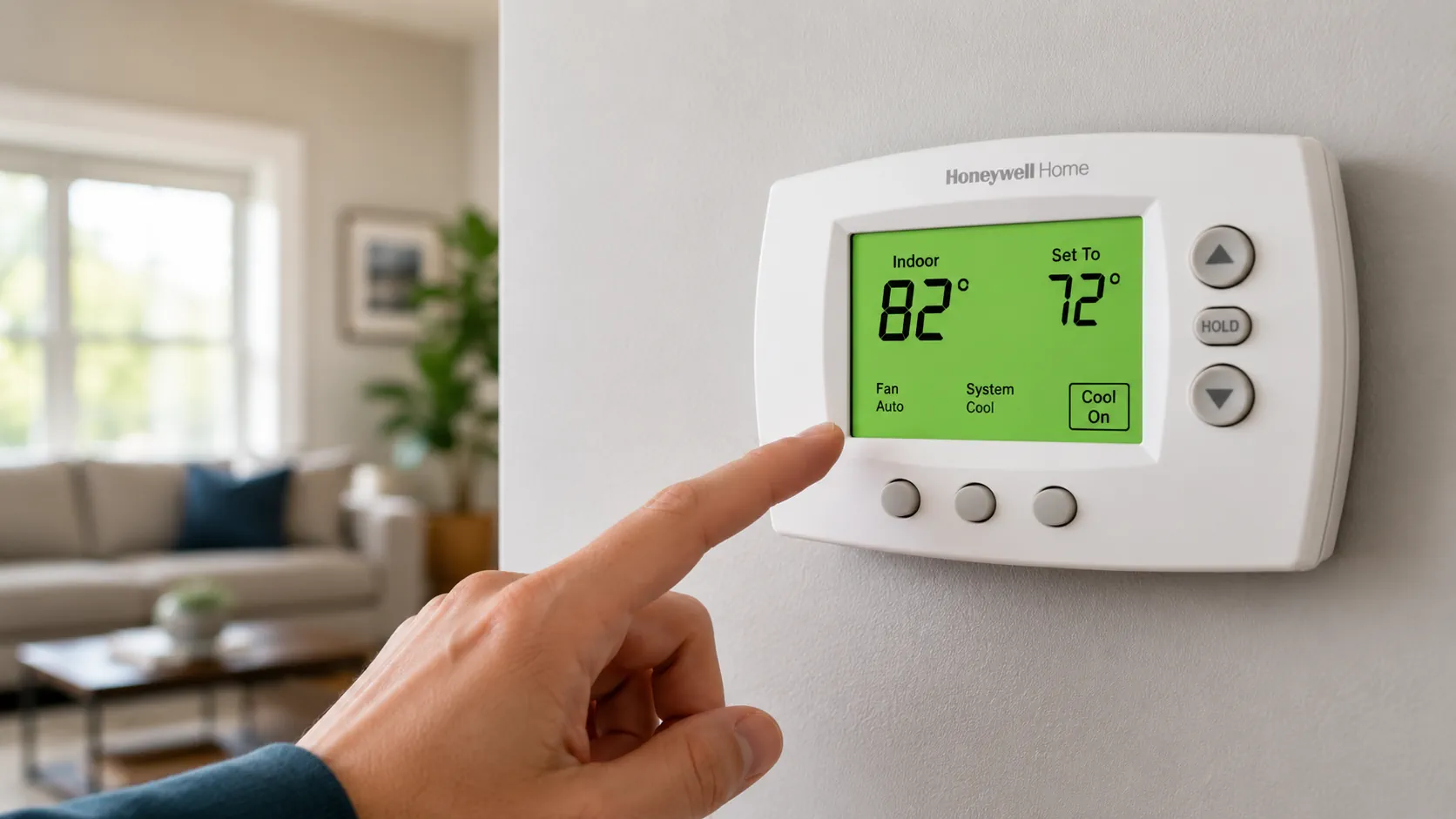
- Set thermostat to COOL + Fan AUTO and lower the setpoint 2–3 degrees to call for cooling.
- Let it run 10–15 minutes and confirm the air coming out of vents feels cooler and the home temperature starts trending down.
- Watch for water issues: check for dripping/overflow near the indoor unit and keep an eye on the condensate drain.
- If anything looks/smells/sounds wrong: shut it off and schedule a professional check (don’t “test harder”).
Want the pro version instead of DIY guesswork? Book a professional air conditioner maintenance visit so your system is clean, tested, and ready before the first real heat hits.
Not Sure How to Turn On Your AC for the First Time After Winter?
Before the first heatwave hits Montgomery County, make sure your system is clean, safe, and cooling properly. EMCO Tech provides professional air conditioner maintenance and spring AC tune-ups to catch problems early and keep your system running efficiently all summer.
Now let’s cover the four things people actually search for (and the stuff that prevents expensive mistakes).
How Warm Outside Should It Be to Safely Test Your AC?
Here’s the blunt truth: testing your AC when it’s too cold outside can cause problems—best case, it won’t cool right; worst case, you risk equipment damage.
- Smart homeowner rule: wait until it’s roughly 60°F+ outside before you run a true cooling test.
- Equipment reality: many systems are built for cooling operation above ~55°F unless the system has approved low-ambient controls.
If you “need cooling” when it’s still cold outside, open windows or use fans for a day. It’s not worth gambling a compressor just to prove the thermostat still works.
AC Turned On After Winter But Not Cooling? Here’s Why
If you started your AC for the first time after winter and it’s running but not cooling, the most common reasons are simple. It may be too cold outside to test (below ~60°F, your system can’t cool properly). The air filter or outdoor coil may be clogged from winter, choking airflow. A tripped breaker or off disconnect can leave the outdoor unit idle while the indoor fan still blows. And after a long off-season, low refrigerant or a compressor that needs to warm up (the 24-hour power rule below) can both cause weak or no cooling.
Quick check: confirm the outdoor unit’s fan is spinning and the breaker is on. If the fan runs, the filter is clean, and it’s warm outside but the house still isn’t cooling after 15–20 minutes, stop testing and schedule an AC repair — running it dry can damage the compressor.
The “24-Hour Rule” After Winter: Do You Need to Turn Power On First?
If your outdoor unit’s disconnect or breaker has been OFF all winter, don’t just flip it on and immediately call for cooling. Many systems use crankcase heat to reduce liquid refrigerant migration into the compressor oil during off cycles. After a long shutdown, manufacturers commonly require the crankcase heater to be energized for a long stretch before starting the compressor.
- If the breaker/disconnect was OFF for months: turn power ON and wait (often 12–24 hours) before the first cooling run.
- If you never shut power off: you can usually proceed with the rest of the checklist.
Bottom line: if you’re not sure, play it safe and wait. Or just schedule an HVAC tech and remove the uncertainty.
Schedule air conditioning repair if your unit trips breakers, refuses to start, or you suspect electrical damage.
The “3-Minute Rule” for Air Conditioners (Why You Shouldn’t Rapid-Fire the Thermostat)
People love flipping the thermostat like it’s a light switch. Don’t. Restarting the compressor too soon after shutdown can cause damage, which is why many thermostats and controls enforce a short “wait” time (often a few minutes) before allowing cooling to restart.
- If you turned the system off (or lost power), wait a few minutes before turning it back on.
- If your thermostat displays something like “Waiting,” that’s usually compressor protection doing its job.
How to Turn On Your AC for the First Time After Winter (The Short Version)
If you’re scrolling fast, here’s the short version: turning on your AC for the first time after winter should be deliberate, not a one-second thermostat flip. Wait until it’s warm enough outside (60°F or above), restore power to the outdoor unit ahead of time so the crankcase heater can do its job, swap the filter, clear the condenser, and run a short test cycle. If something sounds, smells, or feels wrong on first startup, shut it down. The fastest way to skip the guesswork is to book a spring AC tune-up and let a tech handle the first-run inspection.
DIY Maintenance That Actually Matters Before the First Heatwave
Many of the basic steps in this checklist—such as replacing air filters, keeping outdoor condenser coils clear, and checking the condensate drain—are widely recommended by industry authorities. The U.S. Department of Energy explains that regular maintenance like filter replacement and coil cleaning helps air conditioners operate more efficiently and prevents common system failures. See the Department of Energy’s Air Conditioner Maintenance guide for additional technical recommendations.
Swap the air filter (seriously—don’t skip this)
Starting the cooling season with a clogged filter is like trying to breathe through a blanket. It restricts airflow, reduces efficiency, and can contribute to performance issues. If you don’t remember the last time you changed it, change it now.
If you want help choosing filtration upgrades, check out air purification & filtration services (especially helpful for spring allergy season).
Clear the outdoor unit so it can breathe
Check that the outdoor unit is free of leaves, dead plants, and winter junk. Also trim back landscaping so air can move through the condenser properly.
Here’s a solid, authoritative external guide you can trust: U.S. Department of Energy – Air Conditioner Maintenance.
Confirm vents and returns are open and unobstructed
Don’t “optimize” your HVAC by closing half the house vents. Your system was designed for balanced airflow. Make sure supply vents are open and return grilles aren’t blocked by furniture or rugs.
What’s Normal on First Startup—and What’s a Red Flag
Normal-ish
- A slightly dusty smell for a short time (especially if you ran the fan for the first time in months).
- Light clicking as the system starts and stops.
Shut it off and call a pro
- Burning smell (possible electrical issue).
- Loud grinding, banging, or metal-on-metal noises.
- Outdoor fan not spinning while the system is trying to run.
- AC runs but the house temperature isn’t dropping after a reasonable test run.
- Water leaking around the indoor unit or signs the drain is backing up.
Fast path to resolution: book air conditioning repair or, if it’s urgent, use our emergency HVAC services.
Start here if you want options (repair, tune-up, replacement): air conditioning services.
Need the Full Spring Plan? See the March AC Maintenance Checklist
For the broader seasonal planning article, read: March AC Maintenance Checklist.
FAQ
Yes. At minimum: check outdoor temperature, remove covers/debris, change the filter, confirm vents are open, and run a short test cycle. If anything seems off (burning smell, loud noise, no cooling), shut it down and schedule service.
Don’t restart the compressor immediately after shutting the system off. Wait a few minutes between cycles. Many thermostats enforce this automatically to protect the compressor.
If your disconnect/breaker was OFF all winter, turn it on well before your first cooling call, then follow the full startup checklist. This reduces the risk of a hard start and protects the compressor.
Wait a few minutes between off and on cycles. If the unit was without power for months, wait significantly longer (often 12–24 hours) after restoring power before the first cooling run.
Common causes include airflow restrictions (filter), thermostat settings, outdoor unit issues, electrical problems, or refrigerant-related concerns. If you’ve confirmed basic airflow and settings, schedule a diagnostic—don’t keep forcing it.
Start by checking the outdoor temperature (wait for 60°F or above), then turn power back on at the disconnect or breaker so the crankcase heater can warm up before the compressor runs. Pull off any winter cover, clear leaves and debris from the condenser, swap the air filter, and confirm vents and returns are open. Set the thermostat to COOL and Fan AUTO, drop the setpoint a few degrees, and let the system run for 10 to 15 minutes. If anything seems off, shut it down and schedule service.
Yes, as long as you prep first. Running your AC for the first time after winter is safe when the outdoor temperature is warm enough (around 60°F+), power has been restored to the unit long enough for the crankcase heater to do its job, the filter is fresh, and the condenser is clear. Skipping these steps is where homeowners run into trouble (warm air, breaker trips, or short-cycling on the very first run).
AC Service Near Willow Grove, Bucks County & Philadelphia
If the checklist does not solve the problem, EMCO Tech provides air conditioning service across nearby Montgomery County, Bucks County, and Philadelphia. Our Willow Grove and Northeast Philadelphia locations help us cover many local neighborhoods quickly for spring AC tune-ups, cooling repairs, and first-start system checks.
Philadelphia
- Center City
- South Philadelphia
- Northeast Philadelphia
- Fishtown & Northern Liberties
- Manayunk & Roxborough
- Chestnut Hill & Mount Airy
Latest Updates – Keep Cool, Feel Warm, Breathe Clean Air with EMCO Tech
Emergency Heat (AUX) Won’t Turn Off? Here’s Which Heat Pump Fixes It
If AUX or emergency heat runs all winter, the heat pump has handed your house to electric backup strips, and the PECO bill shows it. See how…
Planning a Heat Pump Replacement: Upgrade Before It Fails
The worst time to replace a heat pump is the morning it dies. A planned swap lets you choose the equipment, lock in better pricing, and stay warm on…