How to Get the Most Out of Your AC This Summer

Most American homes rely on air conditioning to get through summer comfortably, and as Philadelphia-area heat waves get longer and more intense, keeping your AC in good shape matters more than ever. A well-maintained air conditioner runs quieter, breathes cleaner, costs less to operate, and lasts years longer than one that’s neglected.

So how do you keep your AC running at peak performance — without an oversized power bill? Here are 10 proven air conditioning tips our technicians recommend to every homeowner, from filter habits and thermostat strategy to the maintenance schedule that quietly adds years to your unit’s life.

AC Not Cooling Like It Should?

If your air conditioner is blowing warm air, short-cycling, or skipping the cool it used to deliver, no DIY tip will fix what's broken inside. EMCO Tech provides fast, honest professional AC repair across the Philadelphia area with same-day diagnostics and code-compliant repairs for homes and businesses.

1. Schedule Professional Maintenance Once a Year

Nothing keeps an AC running smoothly like an annual professional tune-up. Yet a surprising number of homeowners skip it entirely — and pay for that decision later in repair bills or premature replacement. A 22-point spring AC tune-up checks refrigerant levels, cleans coils, tests capacitors, inspects electrical connections, and catches small problems before they become emergency repairs in the middle of a heat wave.

Tune-up pricing varies by region and system, but the cost is small relative to what it prevents. Read our companion guide on when to schedule a spring AC tune-up for timing advice — earlier is almost always better than later.

2. Replace Your AC Filter Regularly

The filter in your central HVAC system traps dust, pet hair, pollen, and other particles before they reach the blower fan and coil. A clogged filter starves your AC of airflow, forces it to work harder, and drags down both efficiency and indoor air quality. Standard 1-inch filters typically need replacing every 1 to 3 months during heavy use; thicker 4–5 inch media filters can run 6–12 months. Households with pets, allergies, or recent renovation dust should change more often.

If you want cleaner indoor air on top of better airflow, see our indoor air quality solutions — high-MERV filtration, whole-home air purifiers, and dehumidifiers all stack with regular filter changes.

3. Check Your Thermostat for Defects

The thermostat is the brain of your cooling system. When it short-cycles, reads temperature incorrectly, or fails to communicate with the AC, the whole system suffers — and damage can cascade to other components. Signs of a failing thermostat include the AC running constantly without cooling, the system not turning on at all, or the indoor temperature never quite matching the setpoint.

If you suspect your thermostat is the problem, do not wait. Schedule a quick diagnostic with our team for fast AC repair before the issue spreads.

4. Keep the Outdoor Condenser Unit Clean

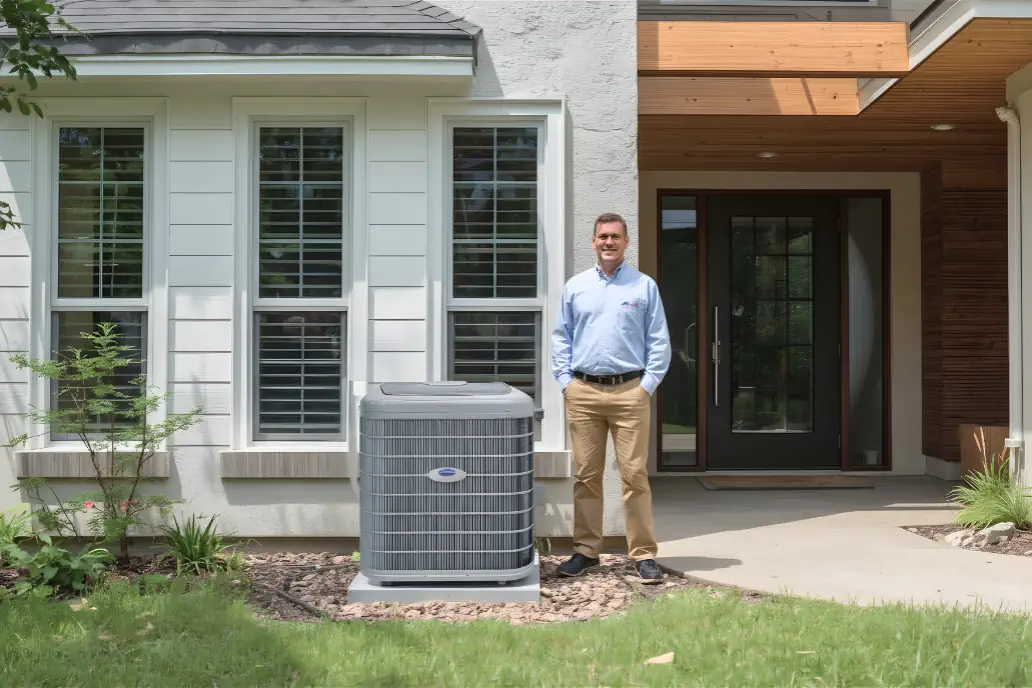
The outdoor condenser is the workhorse of your AC, and because it sits out of sight, most homeowners forget it exists until something goes wrong. Grass clippings, leaves, dirt, and even cottonwood fluff cake the coil fins and choke airflow — forcing the system to work harder for the same cooling output.

Once a month during cooling season, rinse the outdoor unit gently with a garden hose (low pressure only — fins bend easily) and trim back any vegetation within 2 feet of the cabinet. For a deeper clean and coil inspection, leave it to the tune-up technician.

5. Install Your Thermostat Away From Heat Sources

If your thermostat is mounted in direct sunlight, next to a lamp, or near the kitchen, it will read warmer than the rest of the house and tell your AC to run longer than it needs to. That extra runtime adds up to higher bills and faster wear on the compressor.

The ideal thermostat location is an interior wall, roughly 5 feet off the floor, away from windows, vents, and heat-producing appliances. If yours is in a bad spot and you are planning a system upgrade anyway, ask about relocation during your next AC installation.

6. Weatherize Your Home

The most efficient air conditioner in the world cannot keep up with a house that leaks. Cracks around windows, gaps under doors, unsealed attic hatches, and uninsulated rim joists let cooled air escape and let humid outdoor air seep in — making your AC run longer and your power bill climb.

Caulk visible gaps around window and door frames, add weather-stripping where needed, and consider an energy audit if your bills feel too high for the square footage. Pair weatherization with proper humidity control for the biggest comfort gain.

7. Set the Thermostat Strategically (Not Too Low)

The U.S. Department of Energy recommends setting your thermostat to 78°F when you are home and awake in summer, and several degrees warmer when you are out or asleep. Every degree below 78 increases cooling costs noticeably — and pushing the setpoint to 68°F doesn’t cool your home any faster, it just runs the system longer.

The easiest way to stay disciplined is a programmable or smart thermostat that adjusts automatically based on your schedule. Most homeowners save 10–15% on cooling costs in the first year after upgrading.

8. Replace an Aging AC With a More Efficient Model

Sometimes no amount of tips can rescue a unit at the end of its life. Central AC systems typically last 12–15 years with good maintenance; heat pumps closer to 10–15. If your unit is older than that — or if you are repairing it more than once a year — replacement usually pays back in lower bills within 5–7 years.

Modern high-SEER systems use 30–50% less energy than units from a decade ago, and newer refrigerants run cleaner and cooler. Browse our AC installation services for size and brand guidance, or consider a ductless mini-split system if you want zoned comfort without new ductwork.

9. Shade Your Outdoor Unit (Mind the Landscaping)

An outdoor condenser surrounded by asphalt, concrete, or south-facing brick absorbs and re-radiates heat — making the unit work harder to dump heat outside. The opposite problem also exists: shrubs planted too close choke airflow.

The sweet spot is partial shade with at least 2 feet of clear space on all sides and 5 feet of clearance above. A trellis, awning, or strategically placed shrub (planted far enough away) can drop the air temperature around the unit by 5–10°F and improve efficiency measurably.

10. Run Ceiling Fans the Right Direction

Ceiling fans don’t cool a room — they cool the people in it, by moving air across skin. That said, they let you raise the thermostat 3–4°F without feeling warmer, which can shave real money off your cooling bill.

The trick is direction: in summer, fans should spin counterclockwise when viewed from below, pushing air down. Most fans have a small switch on the motor housing to reverse direction. Turn fans off when you leave the room — they cool people, not empty spaces.

Final Thoughts

Your air conditioner is your single biggest weapon against Philadelphia-area summer heat. With consistent habits — annual tune-ups, clean filters, sane thermostat settings, and an outdoor unit that can breathe — you’ll get years of reliable cooling at a much lower lifetime cost than the homeowner who ignores it until something fails.

Need help with an AC that is not cooling like it used to, or thinking about an upgrade? Contact our team for expert AC service and installation tailored to your home.

Beyond Tips: Trust EMCO Tech for Real AC Service

Air Conditioning Tips – Frequently Asked Questions

For a standard 1-inch pleated filter, replace every 1 to 3 months during heavy cooling or heating use. Homes with pets, allergies, or recent construction dust should change monthly. Thicker 4–5 inch media filters can run 6 to 12 months. Check yours quarterly regardless — if it looks gray, replace it.

The U.S. Department of Energy recommends 78°F when you are home and awake, and several degrees warmer when you are away or asleep. Lower setpoints increase cooling costs significantly without cooling the house any faster. A programmable or smart thermostat makes this strategy automatic.

In cooling season, ceiling fans should spin counterclockwise when viewed from below, pushing cool air down toward you. Most fans have a small reverse switch on the motor housing. Remember that fans cool people, not rooms — turn them off when you leave.

Early spring — typically March through May in the Philadelphia area — is ideal. HVAC schedules fill quickly as temperatures rise, and getting on the calendar before peak season means faster appointments and a system that is ready for the first heat wave. See our guide on when to schedule a spring AC tune-up for more detail.

Central AC systems last 12 to 15 years with regular maintenance, and heat pumps last 10 to 15. Once your unit passes that range — or if you are facing repair bills more than once a year — replacement with a high-SEER model usually pays back in lower energy bills within 5 to 7 years.

It is cheaper to raise the setpoint 7 to 10°F when you are out (not turn it off entirely, especially in humid weather). A higher setpoint reduces runtime; turning the system off lets your home heat-soak, which forces a longer recovery cycle when you get home. A smart thermostat handles this automatically.

Common red flags include warm air from vents, unusually long cooling cycles, the system short-cycling on and off, water pooling near the indoor unit, strange smells, loud or new noises, and a sudden spike in your power bill. Any of these warrant a quick diagnostic — small issues become expensive ones if ignored. Contact us for fast AC repair.

Post Updated: May 2026

Latest Updates – Keep Cool, Feel Warm, Breathe Clean Air with EMCO Tech
Privacy Preference Center