


Quick AC Troubleshooting Checklist
Before calling anyone, run through these five checks. They resolve a surprising share of “broken AC” calls in a few minutes:
- Thermostat: set to COOL, temperature below room temp, fresh batteries if it’s battery-powered.
- Air filter: if you can’t see light through it, replace it. A clogged filter is the single most common cause of weak cooling and frozen coils.
- Breaker panel: check for a tripped breaker labeled AC, condenser, or air handler. Reset it once — if it trips again, stop and call a technician.
- Outdoor disconnect: make sure the pull-out disconnect next to the condenser is fully seated.
- Condensate safety switch: a full drain pan trips a float switch that shuts the system down. If the pan is full, the drain line is clogged.
Still no cold air? The sections below match the symptom to the likely cause — and to the detailed guide for fixing it.
AC down and the house is heating up?
Skip the guesswork — our licensed technicians handle AC repair in Philadelphia and the surrounding suburbs with fast response any time.
AC Running but Not Blowing Cold Air
If the system runs but the air from the vents is warm or barely cool, the usual suspects are a clogged filter, a refrigerant leak, a frozen evaporator coil, dirty condenser coils, or a failed capacitor. We cover all ten causes, the DIY checks, and the fixes in our full guide: AC not blowing cold air.
AC Won’t Start or Struggles to Turn On
Clicking or humming at startup, short cycling, breaker trips, or lights dimming when the unit kicks on all point to a starting problem — most often a weak capacitor or an aging compressor fighting to spin up. Our guide to AC hard starting explains the causes, when a hard start kit helps, and when it’s just a band-aid.
Signs of Compressor Trouble
The compressor is the heart of the system and the most expensive part to replace. Warm air, grinding or rattling from the outdoor unit, repeated breaker trips, and short cycling are the classic warning signs. See our breakdown of a bad AC compressor — including when repair makes sense and when replacement is the smarter call.
Refrigerant Leaks and Frozen Coils
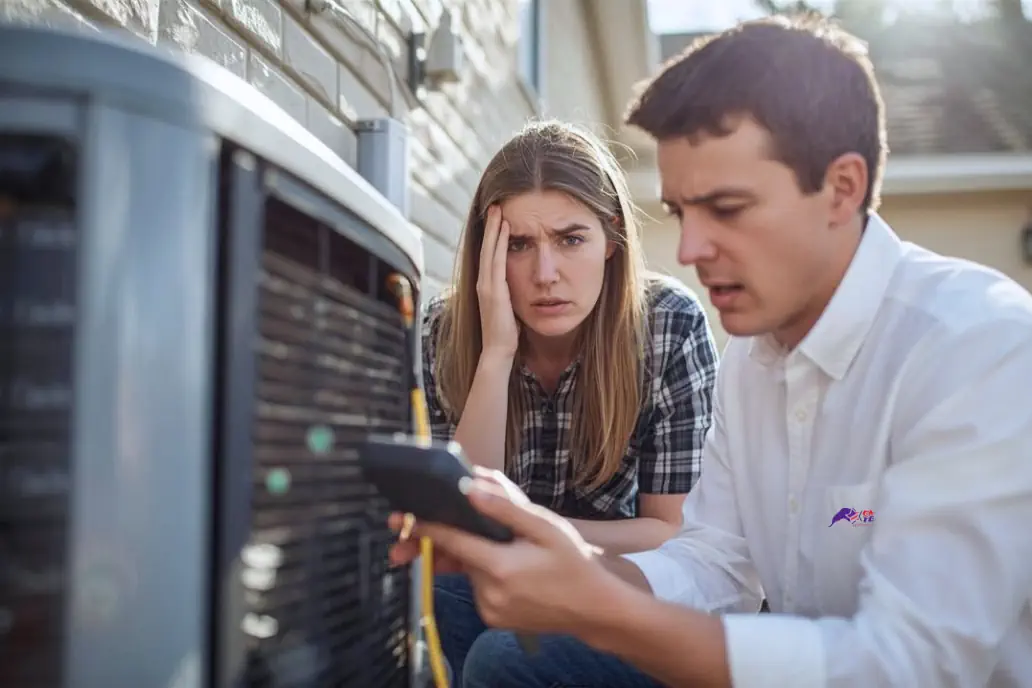 An air conditioner never “uses up” refrigerant — if it’s low, it’s leaking. Low refrigerant drops the coil temperature below freezing, so humidity in the air ices the coil over and airflow collapses. The telltale signs: ice on the copper lines or indoor coil, a hissing sound near the unit, and cooling that gets worse the longer the system runs. Topping off refrigerant without fixing the leak just delays the same failure. A proper repair means locating the leak, sealing or replacing the component, and recharging to factory spec — licensed work, not a DIY job.
Drainage, Sensor, and Airflow Problems
Philadelphia’s humid summers push a lot of condensate through your AC’s drain line, and algae clogs are common by mid-season — water around the indoor unit or a system that shuts itself off usually means the drain pan float switch tripped. Thermostat sensor problems show up as an AC that short cycles or never stops running. And airflow problems — crushed or leaky ductwork, closed registers, blocked returns — leave some rooms warm while others freeze. Rooms cooling unevenly is almost always a duct or sizing issue, not a refrigerant one.
When to Stop Troubleshooting and Call a Pro
If the filter is clean, the thermostat is set right, and the breaker holds — you’ve done everything worth doing without a gauge set and a meter. Refrigerant, electrical, and compressor diagnostics need licensed hands. EMCO Tech’s NATE-certified technicians provide air conditioning repair in Philadelphia, Willow Grove, and across Montgomery, Bucks, Chester, and Delaware counties — with two stocked warehouses, most repairs are completed on the first visit. Flat-rate quote before any work begins.
Frequently Asked Questions
Check five things: the thermostat is set to COOL and below room temperature, the air filter is clean, the breaker hasn’t tripped, the outdoor disconnect is seated, and the condensate drain pan isn’t full. These checks take a few minutes and resolve many no-cool calls without a service visit.
The most common causes are a clogged filter restricting airflow, a refrigerant leak, a frozen evaporator coil, or a failing capacitor or compressor. Start with the filter and thermostat — if the air is still warm after that, the cause is likely refrigerant or electrical and needs a technician.
Turn the thermostat off, switch the AC breaker off at the panel, wait 5 minutes so system pressures equalize, then switch the breaker back on and set the thermostat to COOL. If the system won’t restart or trips the breaker again, stop resetting it — repeated trips signal an electrical or compressor fault.
It can be. For households with elderly residents, young children, or medical conditions, losing cooling during a Philadelphia heat wave is a genuine safety issue — and a system left running with a failing component often turns a small repair into a major one. We offer emergency service with fast response any time.
A healthy system typically runs 15 to 20 minutes per cycle in normal summer weather. Cycles under 10 minutes (short cycling) point to a starting problem, an oversized system, or a sensor fault. A system that never shuts off may be undersized, low on refrigerant, or fighting a dirty coil.
Once a year, ideally in spring before the cooling season. A tune-up catches weak capacitors, low refrigerant, and clogged drains before they turn into mid-July breakdowns, and keeps the system running at rated efficiency.
Post updated: July, 2026
Latest Updates – Keep Cool, Feel Warm, Breathe Clean Air with EMCO Tech

Planning a Heat Pump Replacement: Upgrade Before It Fails
The worst time to replace a heat pump is the morning it dies. A planned swap lets you choose the equipment, lock in better pricing, and stay warm on…

Weatherizing Your Home Before Winter (The Cheap Fixes That Make Your Furnace’s Job Easier)
Before you blame the furnace for a cold house, check the holes it is fighting. Most homes leak a surprising amount of heat through gaps you never…
I’ve been dealing with AC issues recently, and this breakdown of common problems is really helpful. It’s good to understand what might be causing things like poor cooling or system shutdowns before they get worse.
That’s exactly the idea — catching these problems early can save a lot of time and money.
Issues like airflow restrictions, refrigerant problems, or electrical faults often start small and get worse over time. If your system is already showing symptoms, our AC repair services can help diagnose and fix the problem before it turns into a major breakdown.
I’ve been researching new AC systems lately, and this guide really helped clarify what actually matters when comparing quotes. The part about sizing and efficiency makes a lot more sense now, especially for homes in this area.
Glad it helped — that’s exactly the goal. A lot of homeowners focus only on price, but sizing and system matching are what really determine long-term comfort and efficiency.
If you’re planning a replacement, it’s worth reviewing both AC installation options and how proper system design impacts performance over time.
It’s surprisingly helpful to see common air conditioning problems explained like this. A lot of these issues seem minor at first but can turn into bigger repairs if ignored.
Exactly — many AC problems start small and gradually affect performance if they’re not addressed early.
Regular inspections and maintenance can prevent most of these issues from turning into major repairs. You can also learn more about our AC tune-up services to keep your system running efficiently.
Completely agree with the points here. Many AC issues start small, like restricted airflow or minor component wear, and gradually lead to bigger problems if they’re not addressed early.
That’s exactly how it usually happens. Small issues build up over time, and by the time they’re noticeable, the repair is bigger than it needed to be. Early inspection through AC repair services can prevent that snowball effect.
I’ve been trying to learn more about how air conditioning systems actually work, especially when something goes wrong. This article explains typical AC repair situations in a way that’s easy to follow for homeowners.
Appreciate that — understanding how the system works makes it easier to recognize when something isn’t right. When things feel off, having a professional check through air conditioning services can help pinpoint the issue quickly.
Interesting breakdown of common air conditioning problems. It’s helpful to see how small issues like weak airflow or temperature imbalance can turn into bigger repair needs if they’re not handled early.
Exactly — most major AC repairs start from smaller issues that go unnoticed. Addressing them early can save a lot. Regular AC tune-ups can help catch those problems before they turn into bigger repairs.
Has anyone else noticed issues like airflow problems or uneven cooling in older systems? This post really helped me understand what might be causing common AC problems and when it’s time to look into repair instead of ignoring it.
You’re not alone — airflow issues and uneven cooling are some of the most common complaints we see. Catching those early usually makes repairs simpler. If problems are already showing up, it’s worth looking into air conditioning repair services before they get worse.