


How Do You Know Your Furnace Is Going Out?
A furnace rarely dies without warning. Most give months of signs first: it’s 15 years old or more, the heating bills keep climbing, it needs a repair every winter, the burner flame looks yellow instead of blue, soot or rust shows up around the cabinet, or the house never quite feels warm anymore. One sign on its own usually means a repair. Three or four together usually mean the furnace is near the end of its life.
Here are the 10 warning signs our technicians see most in Philadelphia-area homes, what each one means, and which ones need attention right away. If you spot more than one, book a free estimate and we’ll tell you whether a repair or a replacement makes more sense.
10 Signs Your Furnace Is Failing
1. Your Furnace Is 15 Years Old or More
Most gas furnaces last about 15 to 20 years, oil furnaces about the same with good yearly service, and electric furnaces often longer. Once a furnace passes 15, parts wear out faster, efficiency drops, and repairs come closer together. Many Philadelphia rowhomes and twins still run furnaces installed in the 1990s and early 2000s. Check the data plate inside the furnace door for the manufacture date, or ask your technician to read the serial number.
2. Your Heating Bills Keep Climbing
If your gas, oil, or electric bill is higher than last winter and your rates and habits haven’t changed, the furnace is probably working harder to make the same heat. Worn burners, a failing blower motor, dirty heat exchangers, and leaky ductwork all waste fuel. An older furnace rated around 80% efficiency already loses a fifth of its fuel up the chimney before any of that wear sets in.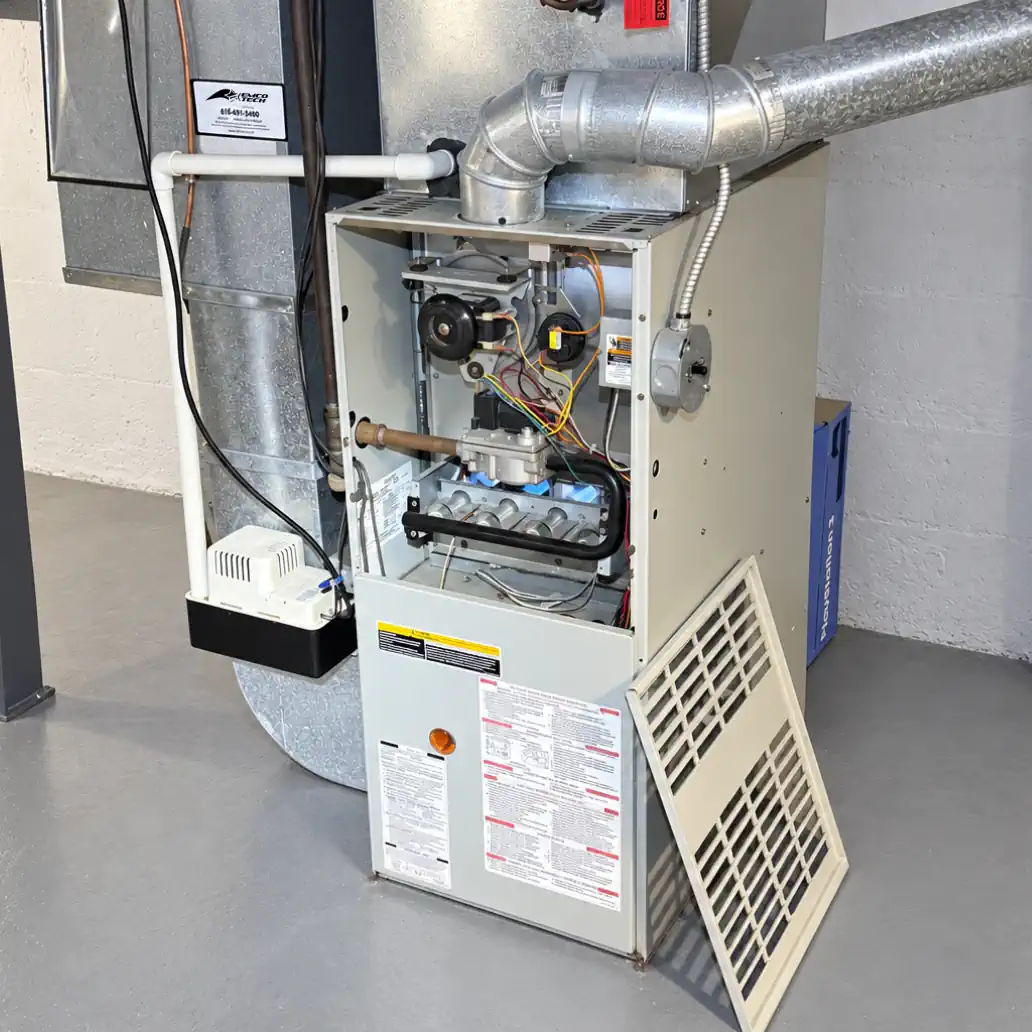
3. It Needs Repairs Every Winter
One repair isn’t a warning sign. A new repair every season is. When ignitors, flame sensors, inducer motors, and control boards start failing one after another, the furnace is wearing out as a whole, and those repair bills add up quickly. If you’ve had two or more major repairs in the last two years, it’s time to compare repairing against replacing.
4. A Yellow or Flickering Burner Flame
A healthy gas burner flame is mostly blue with steady, even flames. A yellow, orange, or lazy flickering flame means the gas isn’t burning cleanly, which can come from dirty burners, a venting problem, or a cracked heat exchanger. Incomplete combustion produces more carbon monoxide, so a yellow flame is one of the signs that deserves a service call right away, not at the next tune-up.
5. Soot, Rust, or Water Around the Furnace
Black soot around the burner opening, on the vent pipe, or at your supply registers is a combustion warning. Rust on the cabinet, flue pipe, or heat exchanger means moisture is eating the furnace from the inside. Water pooling under a high-efficiency furnace can be a simple condensate drain clog, but on older furnaces it can also point to a failing secondary heat exchanger. Scorch marks near the burners are a sign of flame rollout, which needs immediate service.
6. Headaches, a CO Alarm, or Burning Smells
If people in the house get headaches, nausea, or flu-like symptoms that ease up when they leave, take it seriously, because those are classic signs of carbon monoxide exposure. A carbon monoxide alarm going off means get everyone out and call 911. A burning electrical smell, or a dusty smell that doesn’t fade after the first few minutes of the season, means a motor, wire, or component is overheating. The CDC’s carbon monoxide guide lists the symptoms to know.
7. Strange Noises
Banging, booming, squealing, scraping, or rattling sounds usually mean a worn blower motor, loose panels, a failing inducer motor, or delayed ignition. A loud boom when the burners light is the one to act on fast. We cover each sound and what it means in our guide to a furnace making noise.
8. Uneven Heat or Cold Air
Rooms that never warm up, or vents that blow cool air for long stretches, can mean a weakening blower, ignition trouble, or ductwork losing heat on the way. Our guide to a heater blowing cold air walks through the causes.
9. Short Cycling
A furnace that turns on and off every few minutes without warming the house is either overheating, losing its flame signal, or oversized for the home. Short cycling wears out parts quickly and is often the first sign of a bigger failure. See furnace keeps shutting off for the common causes.
10. Dust, Dry Air, and Poor Air Quality
More dust settling on furniture, stuffy rooms, and very dry air in winter can mean a furnace with a worn blower, failing seals, or leaky return ducts pulling in dust from the basement or crawl space. On older furnaces, these indoor air problems tend to show up alongside the other signs on this list.
Spotting More Than One of These Signs?
Have a technician check it before the first cold snap. We'll tell you honestly whether it needs a furnace repair or a replacement, with the price before any work starts.
Signs Your Furnace Is Going to Explode? What’s Actually Dangerous
A modern gas furnace exploding is very rare, because it has several safety controls that shut off the gas when something isn’t right. The real dangers are gas leaks, carbon monoxide, and fire, and they come with warning signs you can watch for:
- A gas or rotten egg smell. Leave the house immediately and call your gas utility from outside, PGW in Philadelphia or PECO in most of the suburbs. Don’t flip switches or use the thermostat on the way out.
- A loud boom when the burners light. That’s delayed ignition: gas builds up for a moment before it lights. It can crack the heat exchanger and needs service right away.
- Scorch marks or soot near the burners. These point to flame rollout or incomplete combustion.
- A carbon monoxide alarm or CO symptoms. Get everyone out and call 911.
- A cracked heat exchanger. Technicians find these during inspections. Learn what to look for in our guide to a cracked heat exchanger.
If you notice any of these, turn the furnace off at the thermostat and call for service. Our furnace gas smell guide explains what to do step by step. Every home with a gas or oil furnace should also have working carbon monoxide alarms on each floor.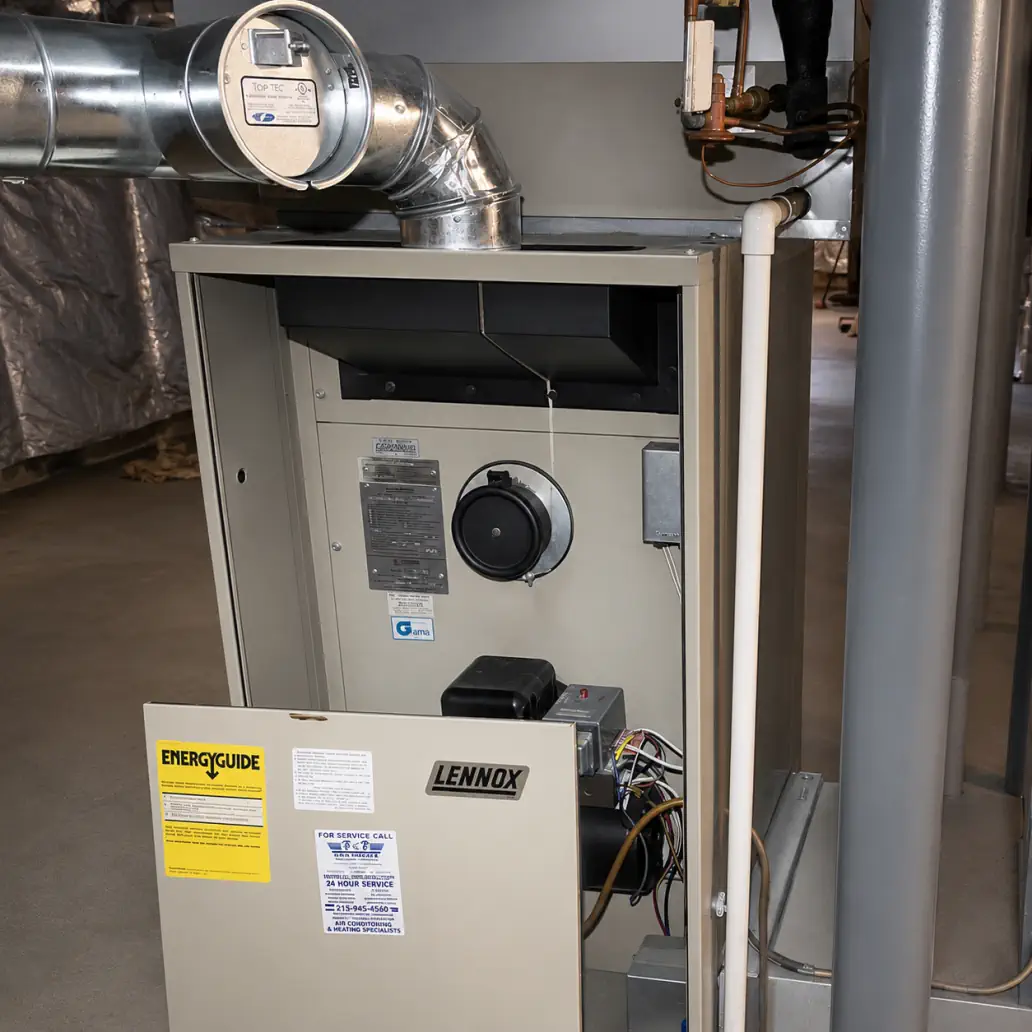
Repair or Replace a Failing Furnace?
Not every warning sign means you need a new furnace. A single failed part on a 10-year-old furnace is usually a repair. Our rule of thumb: if the furnace is 15 or more years old, or a single repair would cost more than a third of a new system, replacement usually makes more sense. Safety problems like a cracked heat exchanger or failing venting can tip the decision even on a younger furnace.
For repairs, see our gas furnace repair, oil furnace, and electric furnace repair services. If it’s time for a new system, our gas furnace installation and heating replacement teams take it from there, and our guide to signs it’s time for a new heating system covers the decision in more depth.
Why Furnaces Fail Faster in Older Philadelphia Homes
Many furnaces across Philadelphia and the older suburbs were installed into ductwork and venting designed for a different system. Undersized returns make furnaces overheat, shared or unlined chimneys cause venting and condensation problems, and basement furnaces in rowhomes often sit in damp spaces that speed up rust. A furnace that’s never had a yearly tune-up also loses years of life to dirty burners and worn parts. A winter heater tune-up catches most of these problems early, and the U.S. Department of Energy recommends yearly service for fuel-burning heating systems.
Seeing Signs Your Furnace Is Failing? Get It Checked Before Winter
EMCO Tech inspects, repairs, and replaces gas, oil, and electric furnaces across Philadelphia, Montgomery, Bucks, Chester, and Delaware counties. We tell you honestly whether your furnace has years left or is ready for retirement, give you the price before any work starts, and offer free written estimates and financing on new systems. Call 215-366-1001 or book online.
Furnace Warning Signs FAQs
The most common signs a furnace is going out are age past 15 years, heating bills that keep rising, repairs needed every winter, a yellow or flickering burner flame, soot or rust around the furnace, strange banging or squealing noises, rooms that won’t warm up, and a furnace that turns on and off every few minutes. One sign by itself usually points to a repair. Several at once, especially on an older furnace, usually mean it’s near the end of its life. A technician can inspect the heat exchanger, burners, blower, and venting and tell you whether it’s worth repairing or time to replace it.
A modern gas furnace exploding is very rare, because it has safety controls that shut off the gas when the flame, venting, or temperature isn’t right. The real risks are gas leaks, carbon monoxide, and fire. Warning signs include a gas or rotten egg smell, a loud boom when the burners light (delayed ignition), scorch marks or soot near the burners, and a carbon monoxide alarm. If you smell gas, leave the house and call your gas utility from outside, PGW in Philadelphia or PECO in most of the suburbs. For a boom at startup or scorch marks, turn the furnace off at the thermostat and call for service right away.
Most gas furnaces last about 15 to 20 years, and some go longer with consistent yearly maintenance. Oil furnaces have a similar lifespan when they’re cleaned and serviced every year, since soot buildup shortens their life quickly. Electric furnaces have no combustion and often last 20 to 30 years. Lifespan depends heavily on installation quality, correct sizing, ductwork, and how often the furnace was serviced. Furnaces in damp basements or connected to undersized ductwork tend to wear out sooner. You can find the manufacture date on the data plate inside the furnace door, or a technician can decode it from the serial number during a visit.
A broken furnace usually stops heating completely or shows a safety problem, while a furnace that needs repair still runs but runs poorly. If the furnace won’t start, blows cold air the whole time, or keeps locking out, a single failed part like an ignitor, flame sensor, or pressure switch is often to blame, and that’s a repair. Signs of a furnace near the end of its life are different: rust and corrosion, a cracked heat exchanger, repeated major part failures, and steadily rising bills. A diagnostic visit tells you which one you’re dealing with, and at EMCO Tech you get the price before any work starts.
It can be. A gas furnace flame should be mostly blue and steady. A yellow, orange, or flickering flame means the gas isn’t burning completely, which produces more carbon monoxide. Common causes include dirty or clogged burners, poor combustion air, a blocked or failing vent, and a cracked heat exchanger that lets air disturb the flame. A yellow flame doesn’t always mean an emergency, but it shouldn’t wait until next season. Make sure your carbon monoxide alarms are working, and schedule a service call so a technician can clean the burners, test combustion, and inspect the heat exchanger and venting.
Yes. A furnace that’s burning poorly, venting improperly, or running with a cracked heat exchanger can leak carbon monoxide into your home. CO has no smell or color, so the only reliable warning is a working carbon monoxide alarm on every floor, especially near bedrooms. Symptoms of exposure include headaches, dizziness, nausea, fatigue, and flu-like feelings that improve when you leave the house. If your alarm sounds or several people feel sick at once, get everyone outside and call 911. Yearly furnace inspections are the best way to catch the cracks, blockages, and combustion problems that cause carbon monoxide leaks before they become dangerous.
Replacement usually makes sense when the furnace is 15 or more years old, a single repair would cost more than a third of a new system, or it has needed several major repairs in the last two seasons. Safety problems like a cracked heat exchanger, failing venting, or heavy rust can make replacement the right call even on a younger furnace. Rising energy bills matter too, since a new high-efficiency furnace can use noticeably less fuel than an aging 80% model. We give you honest repair and replacement options side by side, with a free written estimate for a new system, so the decision is yours.
Not automatically, but you should start planning for one. A 20-year-old furnace that still runs safely and efficiently can keep going, especially if it has been serviced every year. The problem is that it’s past its expected lifespan, parts are harder to find, and a major failure is more likely to happen in the middle of a cold snap. Replacing an old furnace on your schedule in the fall is easier and often less expensive than an emergency replacement in January. A yearly inspection tells you how much life it has left, and a free estimate shows what a replacement would involve.
Furnace Repair & Replacement Services
Gas Furnace Repair
Ignitors, flame sensors, inducer motors, and control boards fixed by licensed technicians.
Gas Furnace Installation
High-efficiency furnaces sized to your home, with free written estimates.
Oil Furnace Service
Repair, yearly cleaning, and replacement for oil-fired furnaces.
Electric Furnace Repair
Heating elements, sequencers, and blower motors repaired fast.
Heating Replacement
Furnaces, boilers, and heat pumps replaced before the next breakdown.
Winter Heater Tune-Up
Catch failing parts and safety problems before the first cold night.
Latest Updates – Keep Cool, Feel Warm, Breathe Clean Air with EMCO Tech
Emergency Heat (AUX) Won’t Turn Off? Here’s Which Heat Pump Fixes It
If AUX or emergency heat runs all winter, the heat pump has handed your house to electric backup strips, and the PECO bill shows it. See how…
Planning a Heat Pump Replacement: Upgrade Before It Fails
The worst time to replace a heat pump is the morning it dies. A planned swap lets you choose the equipment, lock in better pricing, and stay warm on…