


Shopping for a new air conditioner means running into a wall of acronyms: SEER, SEER2, EER, EER2. They all measure efficiency, but they are not the same thing, and the right number for your home depends on how you use your system. Below we break down what each rating means in plain English, what counts as a good number in 2026, and when paying for a higher rating actually pays you back.
What Is SEER? (And Why It Is Now SEER2)
SEER stands for Seasonal Energy Efficiency Ratio. It measures how much cooling a system delivers over a whole season divided by the electricity it uses. A higher SEER means more cooling per dollar of power. As of 2023, the industry moved to SEER2, a stricter testing standard that better reflects real-world conditions, so the SEER2 number you see on a new unit runs slightly lower than the old SEER for the same equipment.
For a deeper purchase walkthrough, including sizing and rebates, see our full AC buying guide.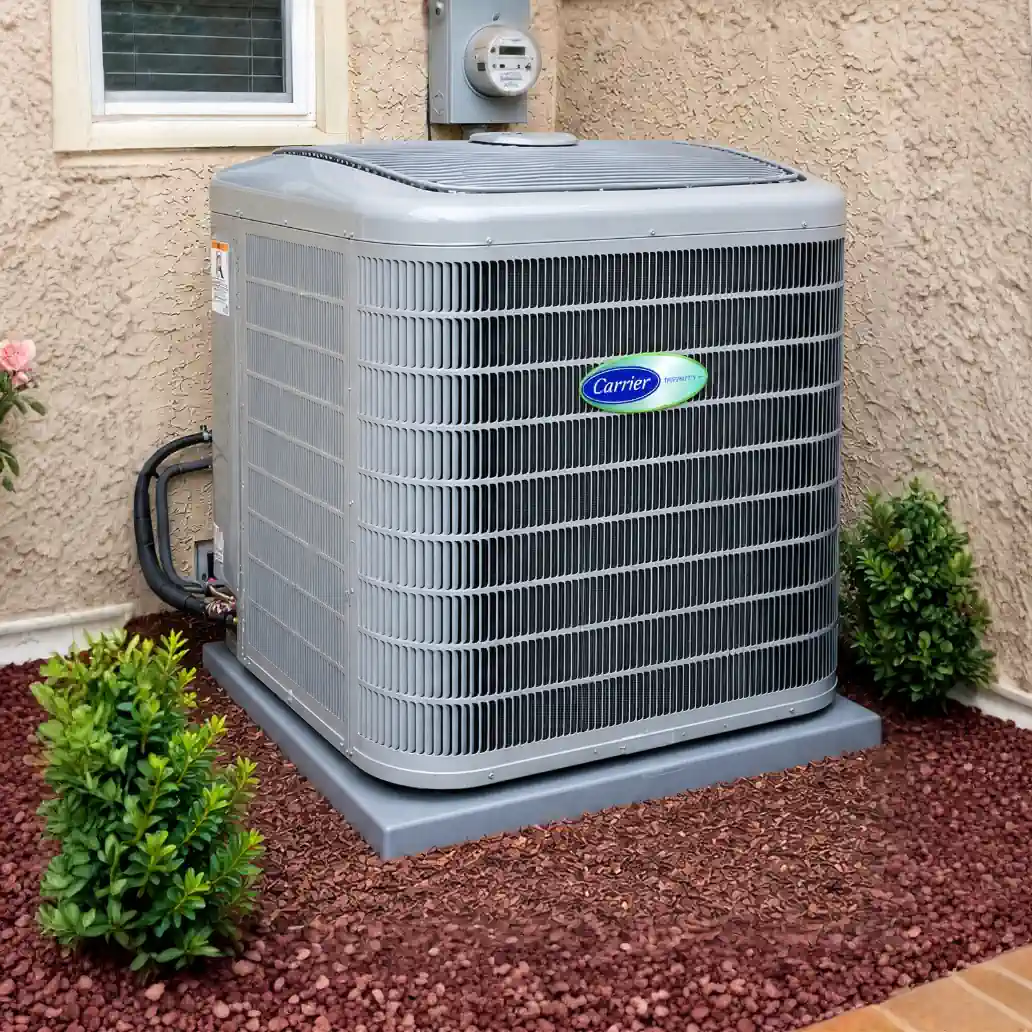
EER vs SEER: What Is the Difference?
EER, or Energy Efficiency Ratio, measures efficiency at a single peak condition, usually a hot 95-degree day, rather than across a whole season. Think of SEER as the season-long average and EER as the performance on the hottest afternoon. In a humid Philadelphia-area summer with long stretches of extreme heat, EER and EER2 matter more than many homeowners realize, because that is exactly when your system works hardest.
What Is a Good SEER Rating?
New systems start around the federal minimum and climb well into the high-efficiency range. A mid-range rating suits most homes, while the highest ratings make the most sense for large homes, heavy cooling use, or anyone planning to stay put for many years. The jump from an old unit to almost any modern system delivers the biggest savings; the gains get smaller as you climb to the very top tier.
What SEER Rating Do You Need for Your Home?
The right number depends on your home size, how long you plan to stay, and how much you run the AC. A higher rating costs more upfront but lowers your bill every season, so the math favors high efficiency when you cool a lot or stay long-term. The wrong size hurts efficiency no matter how high the rating, which is why proper sizing matters as much as the SEER number itself.
If your current system is aging, our guide on whether to repair or replace your HVAC system helps you weigh the upgrade.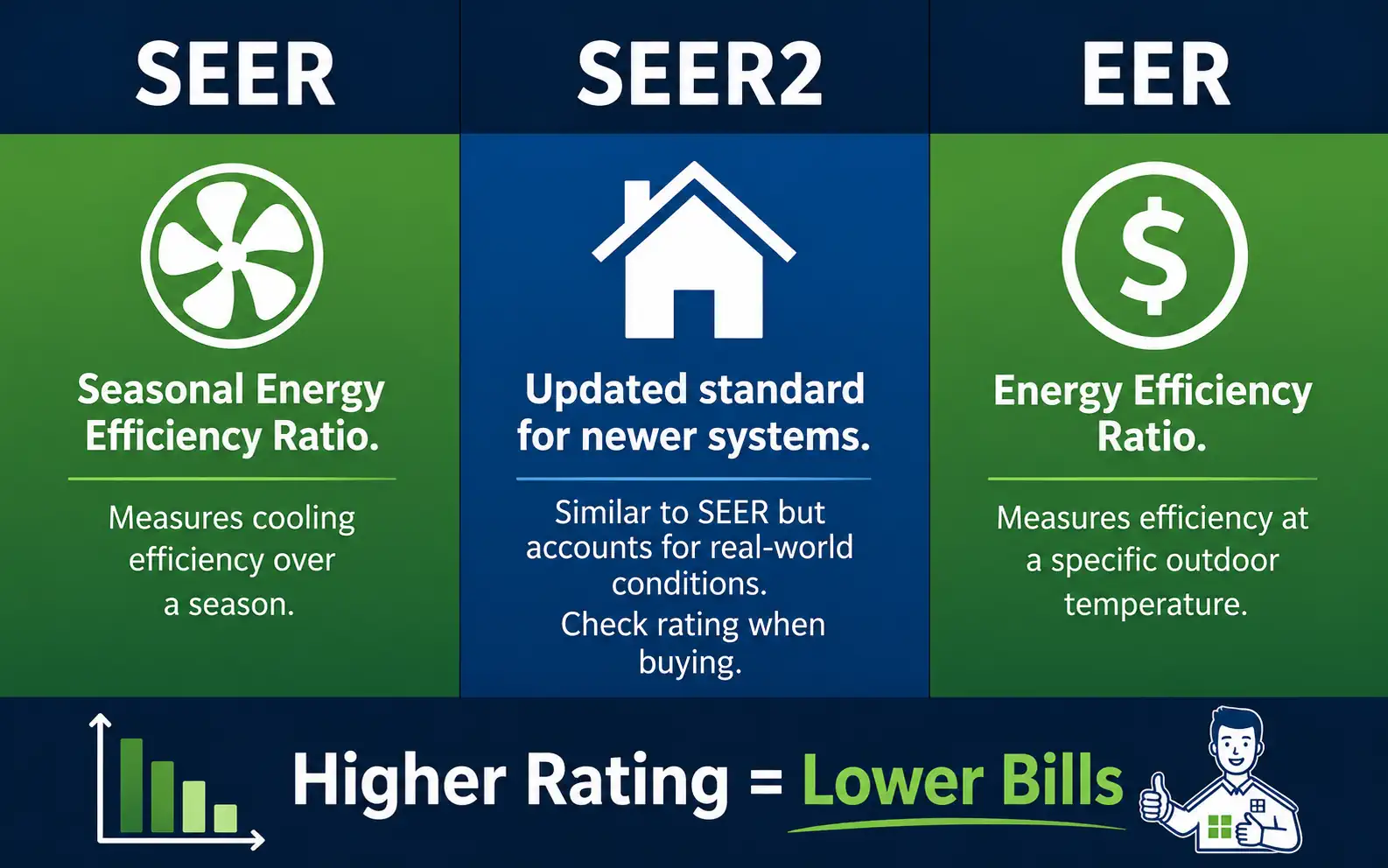
Does a Higher SEER Really Lower Your Bill?
Yes, a higher-rated system uses less electricity for the same cooling, so your summer bills drop. How much depends on your old system, your rates, and your usage, but moving from a decades-old unit to a modern high-efficiency one often cuts cooling costs noticeably. Pricing for a new high-efficiency system varies with size, rating, and home conditions, typically landing in the mid-to-upper thousands of dollars or higher*, and rebates or financing can offset much of that.
Ready to move forward? Explore our AC installation services, see flexible financing options, or check current special offers. Cooling a business? Our commercial HVAC energy-saving strategies and commercial HVAC services apply the same efficiency math at scale.
*Pricing is shown as a general range only and varies by system size, efficiency rating, home conditions, and current equipment and refrigerant costs, which can change without prior notice. Contact us for a current estimate specific to your home.
FAQ
SEER and SEER2 both measure seasonal cooling efficiency, but SEER2 uses a stricter 2023 testing standard that better reflects real-world conditions. For the same equipment, the SEER2 number reads slightly lower than the old SEER, so compare new units by SEER2 to each other.
New systems range from the federal minimum up into the high-efficiency tier. A mid-range rating fits most homes, while the highest ratings make the most sense for large homes, heavy cooling use, or long-term owners. The biggest savings come simply from replacing a very old unit.
Yes. A higher-rated system uses less electricity for the same cooling, so summer bills drop. The exact savings depend on your old system, your energy rates, and how much you run the AC, but upgrading from a decades-old unit usually delivers a noticeable cut.
Latest Updates – Keep Cool, Feel Warm, Breathe Clean Air with EMCO Tech
Emergency Heat (AUX) Won’t Turn Off? Here’s Which Heat Pump Fixes It
If AUX or emergency heat runs all winter, the heat pump has handed your house to electric backup strips, and the PECO bill shows it. See how…

Planning a Heat Pump Replacement: Upgrade Before It Fails
The worst time to replace a heat pump is the morning it dies. A planned swap lets you choose the equipment, lock in better pricing, and stay warm on…