


Does Natural Gas Increase Home Value? The Short Answer
In most of the Philadelphia area, natural gas heat makes a home easier to sell and more appealing to buyers, but there’s no fixed amount it adds to the price. What gas brings is appeal: lower heating bills, no oil deliveries, no oil tank to worry about, and the gas range and dryer many buyers expect. What oil can take away is just as real: an aging oil burner, a buried tank that has to be tested or removed, or a house that’s the only oil-heated home on a street where everyone else has gas.
Appraisers value a home by comparing it to similar recent sales nearby, so the effect of gas heat depends on what’s normal in your neighborhood:
- Gas helps most in Philadelphia and the older inner suburbs, where gas mains run down almost every street and most buyers expect gas heat.
- It matters less in parts of Bucks, Chester, and upper Montgomery County where there’s no gas main, because nearby homes heat with oil, propane, or heat pumps too.
- The condition of the heating system matters as much as the fuel. A newer, well-kept oil boiler can sell better than a neglected 30-year-old gas furnace.
If you’re thinking about converting before you sell, or after you buy, our guide to switching to natural gas covers the process and what a conversion involves.
Why Buyers Prefer Natural Gas Heat
Lower, More Predictable Heating Bills
Buyers increasingly ask for a year of utility bills, and heating cost is one of the first things they compare. The U.S. Energy Information Administration’s October 2026 winter fuels outlook expects the average oil-heated household to spend about 21 percent more this winter than last, while Northeast households heating with natural gas are expected to spend about 14 percent less. Gas rates are set by the utility and adjusted on a regular schedule under state oversight, while oil prices move with the market and can jump in the middle of a cold snap. For a side-by-side look at running costs, see whether switching to natural gas saves money.
No Deliveries and No Running Out
With gas, fuel arrives through a pipe from PGW in Philadelphia or PECO in most of the suburbs. There’s no tank to watch, no delivery to schedule, and no cold morning after the tank runs dry. Buyers who have never owned an oil-heated home often see deliveries as a hassle they’d rather not take on.
Gas Appliances Buyers Want
Once gas is in the house, it can also fuel a range, a clothes dryer, a fast-recovery or tankless water heater, a fireplace insert, and an outdoor grill. A gas range in particular is high on many buyers’ wish lists, and it’s hard to offer one in an oil-heated home without gas service.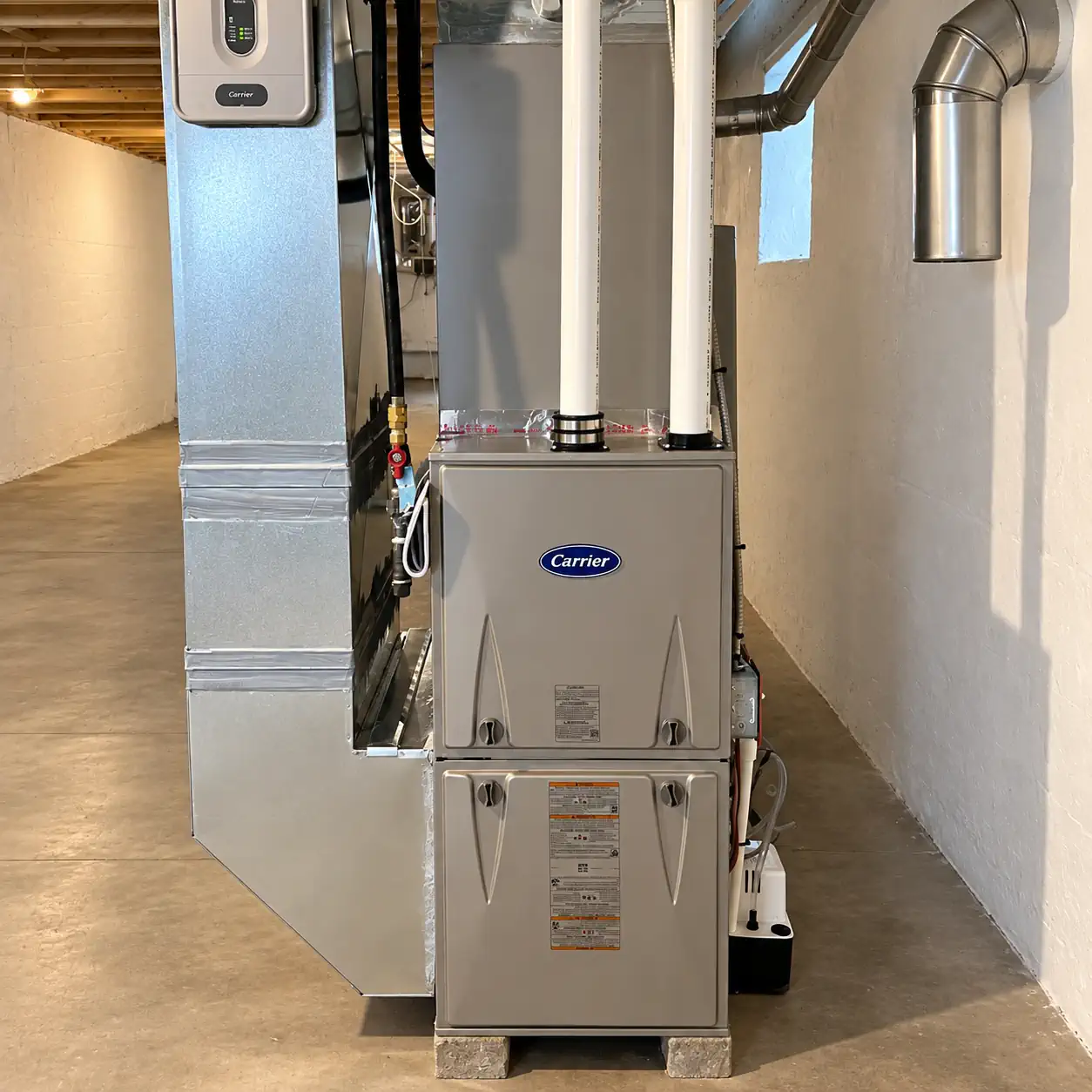
Newer, More Efficient Equipment
High-efficiency condensing gas furnaces and boilers turn 95 percent or more of their fuel into heat, while most oil furnaces and boilers run in the low to high 80s. A newer gas system with a transferable warranty tells a buyer there’s no big heating expense coming. An old oil burner near the end of its life usually gets priced into the offer.
How Oil Heat Can Hold Back a Sale
Buried Oil Tanks
A buried oil tank is the biggest concern. Buyers, home inspectors, lenders, and insurers often treat one as a red flag, and it’s common for a buyer to ask for a tank sweep or soil test, or for the tank to be removed or properly abandoned before closing. A leaking tank can lead to an expensive cleanup, so many buyers walk away rather than take the risk. An aboveground tank in the basement raises fewer questions, but its age and condition still get noticed at inspection.
Older Oil Burners and Boilers
Oil equipment needs annual cleaning to keep soot from building up, and a home inspector will note an old burner, a sooty chimney, rust, or weeping fittings. Each item becomes something to negotiate. If the system is near the end of its life, buyers will often subtract the full cost of a replacement from their offer.
A Smaller Pool of Buyers
Some buyers, especially those moving from areas where everyone has gas, filter out oil-heated homes entirely. Fewer interested buyers can mean a longer time on the market and less leverage for the seller, even when the house is otherwise a good fit.
Natural Gas vs. Oil Heat at a Glance
| Natural Gas | Heating Oil | |
|---|---|---|
| Fuel supply | Piped in from the utility, no deliveries | Delivered by truck and stored in a tank |
| Price changes | Utility rates adjusted on a regular schedule | Follow the oil market and can spike in winter |
| Equipment efficiency | Condensing models at 95 percent and up | Most models in the 80 to 87 percent range |
| Upkeep | Annual tune-up | Annual cleaning, nozzle and filter changes |
| Storage | None | Basement or buried tank that ages |
| Buyer appeal | Widely preferred where gas is available | Can raise questions at inspection |
| Availability | Needs a gas main on your street | Available almost anywhere |
Should You Convert to Natural Gas Before Selling?
It depends on your street, your current system, and your timeline. Converting usually makes sense when:
- There’s a gas main on your street, and most nearby homes heat with gas
- Your oil burner or boiler is old enough that buyers will price in a replacement anyway
- You have a buried oil tank that will need attention before closing either way
- You’re listing in a few months, not a few weeks, because new gas service from the utility can take weeks to schedule
A credit or a written estimate may make more sense when:
- Your oil system is fairly new and well maintained
- There’s no gas main nearby, so a conversion would mean a long and costly service extension
- You’re listing soon and can’t wait for the utility
A written conversion estimate from a licensed contractor is useful either way. It answers the buyer’s first question, “what would it take to switch to gas?”, and keeps a guess from turning into a big price cut. The gas line installation, the new furnace or boiler, and the permits can usually be finished in one project once the utility sets the meter.
Thinking About Gas Heat Before You Sell?
We check gas availability at your street, run the gas line, and install a right-sized furnace or boiler with permits, plus a written estimate you can show buyers. Learn how switching to natural gas works in Philadelphia and the suburbs.
Buying a Home With Oil Heat? What to Check
- The tank: where it is, how old it is, and whether it’s buried. Ask for a tank sweep or soil test on any buried tank before you finalize your offer.
- The burner and boiler or furnace: their age and service records. Annual cleaning receipts are a good sign.
- Gas availability: whether there’s a gas main on the street. PGW serves Philadelphia, and PECO serves most of the suburbs.
- A conversion estimate: if you plan to switch to gas, get a written estimate during your inspection period so you can negotiate with real numbers.
A heating inspection before you buy tells you how much life the system has left, whatever fuel it uses.
Natural Gas for Rental and Investment Properties
For landlords, gas heat with its own meter for each unit lets tenants pay for their own heat, and there are no oil deliveries to manage between tenants. An oil tank that runs dry in a rental is an emergency no-heat call. In Philadelphia, landlords are required to keep the heat on through the heating season, as our guide to no heat in the house explains. When an investment property’s oil system is near the end of its life, converting to gas during a renovation or between tenants is usually the easiest time to do it.
Benefits of Natural Gas Heating
- Lower running cost than oil in most Philadelphia-area homes
- No deliveries, no tank, and no running out of fuel
- High efficiency with condensing furnaces and boilers
- Cleaner burning than heating oil, with fewer emissions of many pollutants, according to the EIA
- One fuel for more appliances, including the range, dryer, water heater, and fireplace
- Stronger buyer appeal when it’s time to sell
Get a Gas Conversion Estimate in Philadelphia and the Suburbs
EMCO Tech converts homes from oil and electric heat to natural gas across Philadelphia, Montgomery, Bucks, Chester, and Delaware counties. That includes checking gas availability at your street, coordinating with PGW or PECO, running the gas line, and installing a right-sized gas furnace or gas boiler with permits and inspections. Whether you’re getting ready to sell, just bought, or want lower bills, you get a written estimate before any work starts. Call 215-366-1001 or book online.
Natural Gas and Home Value FAQs
In most of the Philadelphia area, natural gas heat makes a home more appealing to buyers and easier to sell, but there’s no fixed amount it adds to the price. Appraisers compare your home to similar recent sales nearby, so gas helps most where it’s the norm, like Philadelphia and the older inner suburbs, and matters less in areas without gas mains, where oil, propane, and heat pumps are common. Gas adds value through lower heating bills, no oil deliveries, no oil tank, and gas appliances. The condition and age of the heating system matter just as much as the fuel, so a well-kept system helps either way.
Where natural gas is available, most buyers prefer it. Gas heat usually costs less to run, there are no deliveries to schedule, there’s no tank to inspect, and it opens the door to a gas range, dryer, and water heater. Many buyers who have never owned an oil-heated home see oil as a hassle, and some filter oil-heated listings out entirely. That can mean fewer showings and less leverage for the seller. In rural areas without gas mains, oil is still common and buyers expect it, so a well-maintained oil system with service records and an aboveground tank in good condition is far less of a concern there.
Converting before you sell is usually worth it when there’s a gas main on your street, most nearby homes already heat with gas, and your oil system is old enough that buyers would price in a replacement anyway. It also makes sense when a buried oil tank will need attention before closing either way. It’s less worth it when your oil system is fairly new, when the nearest gas main is far away, or when you’re listing within weeks, because new gas service from the utility can take time to schedule. In those cases a written conversion estimate you can hand to buyers often protects your price just as well.
A buried oil tank can hurt a sale more than the oil heat itself. Many buyers, home inspectors, lenders, and insurers treat an underground tank as a red flag because a leak can mean an expensive soil cleanup. Buyers commonly ask for a tank sweep or soil test, and many want the tank removed or properly abandoned before closing. Dealing with the tank before you list, and keeping the paperwork, removes that uncertainty and the price cut that comes with it. If you’re converting to gas at the same time, the old tank can be planned into the same project, so you’re not handling it twice or at the last minute.
Appraisers don’t add a set amount for gas heat. They compare your home to similar homes that sold recently nearby and adjust for differences buyers actually pay for. If most comparable homes have gas and yours has oil, the difference can show up in the adjustments and, more often, in how buyers respond during showings and negotiation. If most homes in your area heat with oil or propane, the fuel type usually makes little difference to the appraisal. The age and condition of the heating system, and any open questions about an oil tank, tend to affect the final sale price more than the fuel on its own.
In most Philadelphia-area homes, natural gas costs less to heat with than oil, and the price is more stable. Gas rates are set by the utility and adjusted on a regular schedule, while oil prices follow the market and can spike in the middle of winter. For the 2026 to 2027 winter, the EIA expects oil-heated households to spend about 21 percent more than last winter, and Northeast gas-heated households about 14 percent less. Your savings depend on your home’s size, insulation, and equipment efficiency. Our switching to natural gas guide walks through the running-cost comparison and what a conversion involves for a typical Philadelphia-area home.
An oil-heated house can still be a good buy if you know what you’re getting. Check where the tank is, how old it is, and whether it’s buried, and ask for a tank sweep or soil test on any underground tank. Look at the age and service records of the burner and boiler or furnace. Find out whether there’s a gas main on the street, because that tells you whether converting later is realistic. Then get a written conversion estimate during your inspection period. That turns the oil heat from an unknown into a number you can negotiate with, and it shows you the real cost of the house you’re buying.
Natural gas heating usually costs less to run than oil in the Philadelphia area, and its price is more predictable through the winter. Fuel comes through a pipe, so there are no deliveries, no tank, and no running out on a cold night. High-efficiency condensing gas furnaces and boilers turn 95 percent or more of their fuel into heat, and natural gas burns cleaner than heating oil. Once gas is in the house it can also run a range, dryer, water heater, and fireplace. Gas heat also tends to make a home more appealing to buyers when it’s time to sell, especially in neighborhoods where most homes already have it.
Natural Gas Conversion Services
Switching to Natural Gas
How an oil or electric to gas conversion works, step by step.
Gas Line Installation
Permitted gas piping for your furnace, boiler, range, dryer, and water heater.
Gas Furnace Installation
High-efficiency gas furnaces sized to your home with a real load calculation.
Gas Boilers
Condensing gas boilers for homes with radiators and baseboard heat.
Heating Installation
Furnace, boiler, and heat pump replacement with a free written quote.
Gas Water Heaters
Add a gas water heater on the same new gas line.
Post Updated: October 2026
Latest Updates – Keep Cool, Feel Warm, Breathe Clean Air with EMCO Tech
Emergency Heat (AUX) Won’t Turn Off? Here’s Which Heat Pump Fixes It
If AUX or emergency heat runs all winter, the heat pump has handed your house to electric backup strips, and the PECO bill shows it. See how…

Planning a Heat Pump Replacement: Upgrade Before It Fails
The worst time to replace a heat pump is the morning it dies. A planned swap lets you choose the equipment, lock in better pricing, and stay warm on…