


What Is a Heating Inspection?
A heating inspection, also called a heater inspection or heating system inspection, is a hands-on check of your furnace, boiler, or heat pump by a licensed technician to confirm it’s running safely, burning fuel correctly, and in good enough shape to get through the winter. It focuses on safety and condition: carbon monoxide, the heat exchanger, gas connections, venting, safety switches, and electrical parts. A tune-up goes a step further and adds cleaning and adjustments. Every EMCO Tech winter heater tune-up includes a full safety inspection.
You need a heating inspection:
- Before each heating season, ideally in early fall
- When you’re buying or selling a home
- When a system has sat unused, or after a flood, fire, or major renovation
- When your carbon monoxide alarm has gone off or you notice warning signs
- When your manufacturer’s warranty or your insurer asks for proof of regular service
For how often each type of system should be checked, see how often a furnace should be inspected.
Heating Inspection Checklist: What a Technician Checks
Safety and Carbon Monoxide
- Carbon monoxide test of the flue gases and the air around the equipment
- Heat exchanger inspection for cracks, holes, and heavy rust
- Gas leak check at the gas valve, fittings, and connections
- Testing of the flame rollout switch, high-limit switch, and other safety controls
Venting and Combustion
- Chimney or flue draft, and the condition of the vent connector
- PVC intake and exhaust pipes on high-efficiency furnaces, including the condensate drain
- Burner flame color and pattern, plus gas pressure
- Combustion air supply, especially for furnaces in closets and small utility rooms
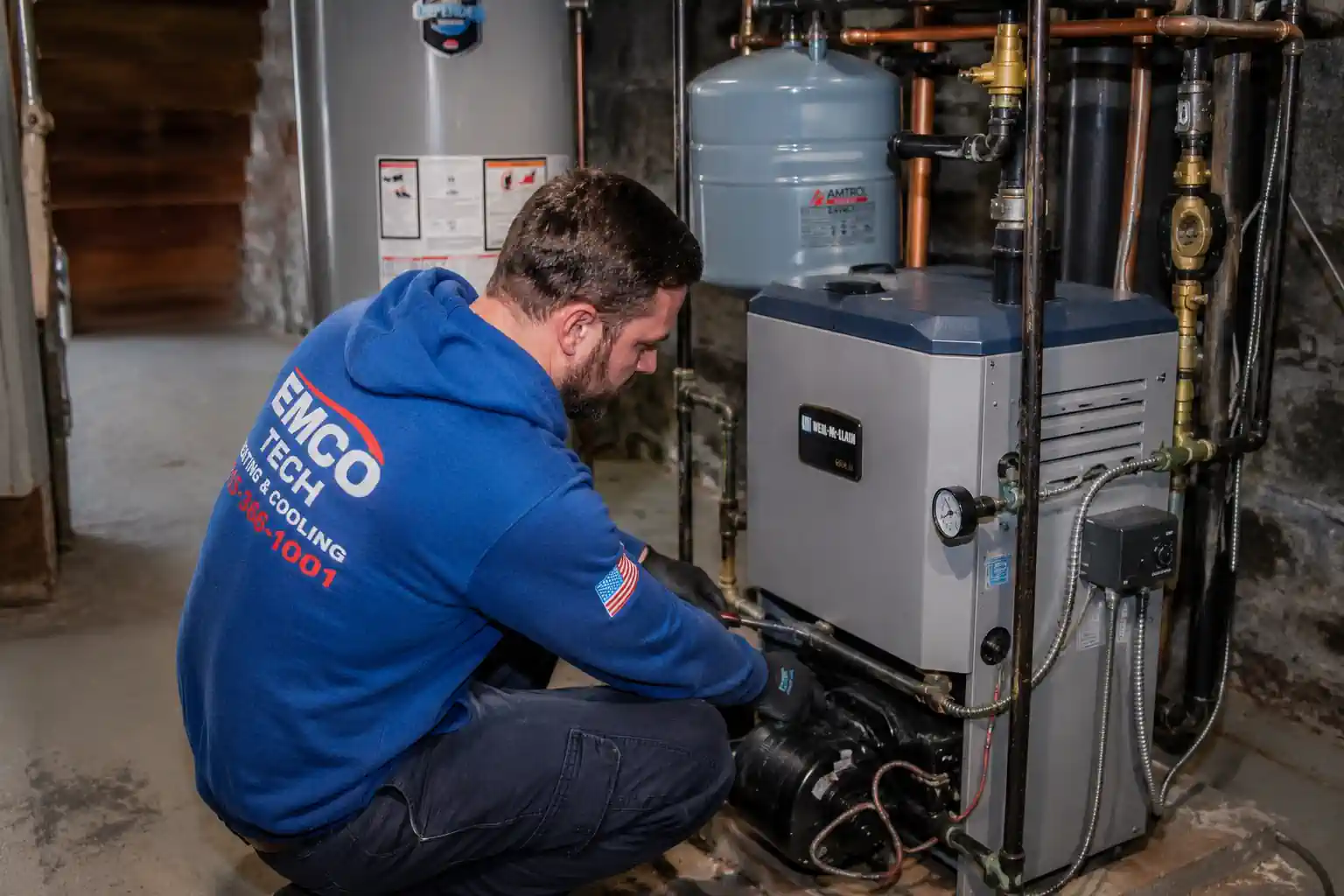
Electrical Parts and Controls
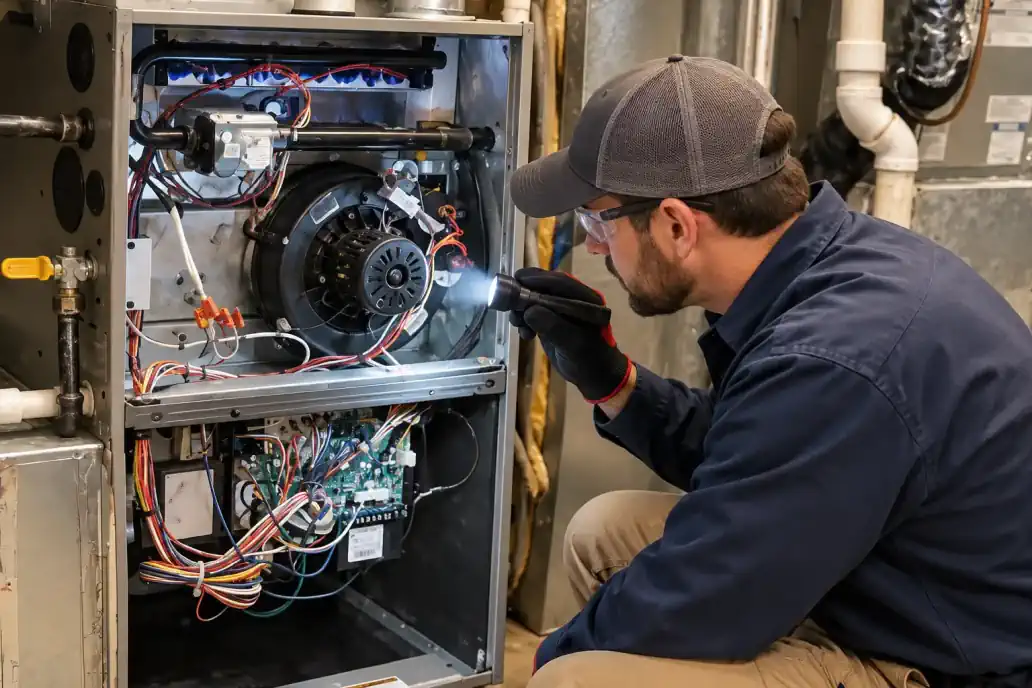
- Wiring and connections for heat damage or looseness
- Igniter, flame sensor, and inducer motor
- Blower motor and capacitor
- Control board fault history and thermostat operation
Airflow
- Filter condition and size
- Temperature rise across the furnace compared to its rating plate
- Return air, blower operation, and the ductwork at the equipment
Boiler Checks
For steam and hot water boilers, the inspection adds system pressure and the pressure relief valve, the water level and low-water cutoff on steam boilers, the expansion tank, the circulator pump, and any leaks at the boiler, piping, and radiator valves. See our boiler maintenance service for more.
Heat Pump Checks
Heat pump inspections add defrost operation, refrigerant temperatures and pressures, the reversing valve, the outdoor coil, and the backup heat strips that carry the house on the coldest nights.
Oil Heat Checks
Oil furnaces and boilers add a combustion efficiency and smoke test, the nozzle and oil filter, the burner and its electrodes, and the oil tank and supply lines. Our oil heater maintenance checklist covers oil systems in detail.
Heating Inspection vs. Tune-Up vs. Home Inspection
| Who Does It | What It Covers | |
|---|---|---|
| Heating inspection | HVAC technician | Safety and condition checks with real tests, including carbon monoxide, heat exchanger, gas, venting, and controls |
| Heater tune-up | HVAC technician | Everything in the inspection, plus cleaning and adjustments so the system runs at its best |
| Home inspection | General home inspector | A visual look at the heating system along with the roof, plumbing, and electrical, usually without opening the furnace or testing combustion |
If you want the details of the cleaning and adjustment side, here’s what a furnace tune-up includes.
Time for Your Heating Inspection?
Every winter heater tune-up includes a full safety inspection: carbon monoxide testing, a heat exchanger check, gas connections, venting, and safety controls, for furnaces, boilers, and heat pumps across Philadelphia and the suburbs.
Heating Inspection When Buying or Selling a Home
A general home inspector checks the heating system along with everything else in the house, but usually doesn’t open the furnace, test for carbon monoxide in the flue, or look closely at the heat exchanger. When the report says “recommend further evaluation by a licensed HVAC contractor,” that’s the heating inspection it’s talking about.
If You’re Buying
- Schedule the heating inspection inside your inspection contingency period, so you can still negotiate or walk away.
- Find out the system’s age from the data plate and ask the seller for service records.
- Ask for a carbon monoxide test and a heat exchanger check, especially on furnaces over 15 years old.
- For oil heat, ask about the tank: where it is, how old it is, and whether it’s buried. Our guide to gas vs. oil heat and home value covers what to check.
- If the system is near the end of its life, get a replacement estimate before you close so the number is part of the negotiation.
If You’re Selling
- A pre-listing inspection finds problems before the buyer’s inspector does, while you still have time to fix them on your terms.
- Fix any safety items first. A carbon monoxide or gas issue on a buyer’s report can stall a sale.
- Keep the service receipts and any warranty paperwork ready to hand to buyers.
Landlords and investors can use the same inspection between tenants, so a heating problem gets caught before the first cold night instead of turning into an emergency call.
Warning Signs You Need a Heating Inspection Now
- Your carbon monoxide alarm sounds, or headaches, dizziness, or nausea ease when you leave the house. Get everyone outside and call 911 first.
- The burner flame on a gas furnace is yellow or flickering instead of steady blue.
- Soot shows up around the furnace, the vent pipe, or the registers.
- There’s rust, water, or a cracked vent pipe around the equipment.
- New noises or smells start, beyond the dusty smell of the first cold day (see furnace making noise).
- Heating bills climb or rooms heat unevenly with no change in how you use the heat.
- The furnace is 15 years old or more and has no service history (see signs your furnace is going out).
If you smell gas, leave the house and call your gas utility from outside: PGW in Philadelphia, or PECO in most of the suburbs.
How Long Does a Heating Inspection Take?
A heating inspection on a single furnace or boiler usually takes about an hour. Homes with more than one system, several heating zones, or older equipment that needs a closer look can take longer. Cost depends on the type of system, the fuel, and whether cleaning is part of the visit. Our current heater tune-up offer includes the full safety inspection, and if the technician finds a problem, you get the repair price before any work starts.
Schedule a Heating Inspection in Philadelphia and the Suburbs
EMCO Tech inspects gas, oil, and electric furnaces, steam and hot water boilers, and heat pumps across Philadelphia, Montgomery, Bucks, Chester, and Delaware counties. Our licensed technicians test for carbon monoxide, check the heat exchanger, gas connections, venting, and safety controls, and walk you through what they found in plain language. Whether it’s your annual check, a home you’re buying or selling, or a system you’re worried about, call 215-366-1001 or book your heater checkup online.
Heating Inspection FAQs
A heating inspection is a hands-on check of your furnace, boiler, or heat pump by a licensed HVAC technician to make sure it runs safely and is in good condition. The technician tests for carbon monoxide, checks the heat exchanger for cracks, checks gas connections for leaks, confirms the venting is drafting properly, and tests the safety switches and electrical parts. The goal is to catch hazards and worn parts before they cause a breakdown or a safety problem in the middle of winter. Most homeowners schedule one every fall, and it’s also smart when you’re buying or selling a home or after a system has sat unused.
A complete heating inspection includes a carbon monoxide test, a heat exchanger inspection, a gas leak check at the valve and fittings, and a check of the chimney or vent pipes. The technician also tests the flame rollout and high-limit safety switches, checks the igniter, flame sensor, blower motor, capacitor, and wiring, looks at the burner flame and gas pressure, and measures airflow and temperature rise. Boilers add pressure, relief valve, water level, and circulator checks. Heat pumps add defrost, refrigerant, and backup heat checks. Oil systems add a combustion efficiency test and a look at the nozzle, filter, tank, and lines.
Not exactly. A heating inspection focuses on safety and condition: testing for carbon monoxide, checking the heat exchanger, gas connections, venting, and safety controls, and finding worn parts. A tune-up includes all of that and adds cleaning and adjustments, like cleaning the burners and flame sensor, checking and adjusting gas pressure, clearing the condensate drain, and lubricating moving parts where needed, so the system runs as efficiently as it can. Think of the inspection as finding out how the system is doing and the tune-up as also making it run better. At EMCO Tech, every winter heater tune-up includes a full safety inspection, so you get both in one visit.
A standard home inspection includes a look at the furnace or boiler, but it’s usually visual and limited. A general home inspector checks that the system turns on and produces heat, notes its approximate age and visible rust or damage, and looks at the venting. Most don’t open the furnace, test the flue gases for carbon monoxide, measure gas pressure, or closely inspect the heat exchanger. That’s why so many home inspection reports say to have the heating system evaluated by a licensed HVAC contractor. A dedicated heating inspection fills that gap and gives buyers and sellers a clear picture of the system’s condition.
Yes, especially if the furnace or boiler is more than 10 to 15 years old or the seller has no service records. A heating inspection during your inspection contingency period tells you whether the system is safe, how much life it likely has left, and whether a major repair or replacement is coming. That gives you real numbers to negotiate with instead of guesses. Ask the technician to test for carbon monoxide and check the heat exchanger, and for oil heat, to look at the tank and supply lines. If replacement is likely, get an estimate before closing so the cost is part of the deal, not a surprise.
A heating inspection on a single furnace or boiler usually takes about an hour. That covers the carbon monoxide test, heat exchanger check, gas and venting checks, safety control testing, and a look at the electrical parts and airflow. A visit that includes a full tune-up with cleaning can take a little longer. Homes with two or more systems, several heating zones, or older oil and steam equipment take more time, because each system and its controls need to be checked separately. When the technician is done, they walk you through what they found, point out anything that needs attention, and give you the price of any repair first.
The cost of a heating inspection depends on the type of system, the fuel it uses, how many systems you have, and whether cleaning and adjustments are included. A furnace inspection is usually the simplest, while oil burners and steam boilers take more time and testing. The best value is usually an inspection bundled with a tune-up, so the technician can fix small things like a dirty flame sensor during the same visit. EMCO Tech’s winter heater tune-up offer includes a full safety inspection. If the technician finds a problem that needs a repair, you get the price before any work starts, so there are no surprises.
Yes. Every EMCO Tech heating inspection includes a carbon monoxide check. The technician tests the flue gases to confirm the system is burning fuel cleanly and venting properly, and checks the air around the equipment for any carbon monoxide escaping into the home. The heat exchanger is inspected for cracks and holes, because a damaged heat exchanger is one of the most common sources of a carbon monoxide leak. The venting and chimney draft are also checked. If you don’t have working carbon monoxide alarms near the bedrooms and on every level of the home, the technician will recommend adding them.
Heating Inspection and Maintenance Services
Winter Heater Tune-Up
Full safety inspection plus cleaning and adjustments before the cold sets in.
Heating Maintenance
Seasonal service for furnaces, boilers, and heat pumps across Greater Philadelphia.
Gas Furnace Maintenance
Burner, flame sensor, venting, and safety control service for gas furnaces.
Boiler Maintenance
Annual service for steam and hot water boilers, from pressure to relief valves.
Oil Heater Tune-Up
Nozzle, filter, combustion testing, and burner cleaning for oil systems.
Heat Pump Maintenance
Defrost, refrigerant, and backup heat checks for heat pumps.
Related Guides
Post Updated: October 2026
Latest Updates – Keep Cool, Feel Warm, Breathe Clean Air with EMCO Tech
Emergency Heat (AUX) Won’t Turn Off? Here’s Which Heat Pump Fixes It
If AUX or emergency heat runs all winter, the heat pump has handed your house to electric backup strips, and the PECO bill shows it. See how…
Planning a Heat Pump Replacement: Upgrade Before It Fails
The worst time to replace a heat pump is the morning it dies. A planned swap lets you choose the equipment, lock in better pricing, and stay warm on…