


Why Summer 2026 Will Stress Test Your AC
NOAA is again forecasting an above-average summer for the Mid-Atlantic, and every Bucks and Montgomery County cooling system is about to be stress-tested. The question isn’t whether your AC can run — it’s whether it can run for 90 straight days without giving up during a heat wave. This guide is a fast, honest readiness check: score your system, learn the warning signs that almost always show up before a breakdown, and know exactly when to call a technician versus when a quick DIY fix is enough.
The 5-Minute AC Breakdown Risk Score
Answer the questions below. Count each “yes” as one point.
- Is your AC 10 years or older?
- Did you skip a professional tune-up in the last 12 months?
- Have you noticed weaker airflow, longer run times, or warm rooms upstairs?
- Does the outdoor unit make new noises — buzzing, clicking, or grinding?
- Is your electric bill climbing month over month with no usage change?
- Have you had two or more repairs in the past two cooling seasons?
- Is your air filter grey, bent, or older than 60 days?
Score 0–1: Low risk — keep up monthly filter changes and book a routine AC tune-up.
Score 2–4: Moderate risk — schedule a pre-season inspection before July.
Score 5–7: High risk — a heat-wave failure is likely. Consider AC repair now or evaluate replacement options.
Scored 2 or Higher? Don't Wait for a Heat Wave.
Most summer breakdowns are preventable when caught in spring. Lock in a 22-point AC tune-up with EMCO Tech and let a NATE-certified technician verify refrigerant, capacitor health, airflow, and electrical safety before peak demand hits.
Warning Signs That Predict an AC Breakdown
Most failures don’t happen out of nowhere. They give signals — usually 2 to 6 weeks in advance. Watch for:
- Short-cycling. The compressor kicks on and off every few minutes. Often a refrigerant, capacitor, or thermostat issue.
- Ice on the indoor coil or copper line. Almost always low refrigerant or restricted airflow.
- Water pooling near the air handler. Clogged condensate drain — cheap to fix now, expensive if it floods a ceiling.
- Hot air from vents. The system runs but doesn’t cool. See our deeper guide on why your AC runs but isn’t cooling.
- Tripped breakers. The outdoor unit is drawing more current than it should — typically a failing capacitor or compressor.
What to Do Before the First Heat Wave
1. Replace the air filter — and set a reminder
A clogged filter is the #1 cause of frozen coils and avoidable service calls. Swap monthly during cooling season; quarterly minimum.
2. Hose down the outdoor condenser
Power off at the disconnect, then rinse from the inside out with a garden hose. Dirty coils can reduce efficiency by up to 30%.
3. Clear two feet around the unit
Remove mulch, shrubs, and patio furniture. The condenser needs free airflow on all sides.
4. Test before you need it
Run the AC for 20 minutes on a mild day. If it short-cycles, smells musty, or doesn’t cool 18–20°F below the return air temperature, schedule service before the first 90° day fills the dispatch board.
5. Book the tune-up early
Our 22-point AC tune-up covers refrigerant pressure, capacitor health, condensate flow, electrical connections, and airflow — the five failure points behind nearly every summer breakdown.
Want the Full Pre-Season Game Plan?
See exactly what to check before warm weather arrives in our March AC Maintenance Checklist for the Philadelphia area — a step-by-step HVAC changeover guide our technicians use every spring.
When DIY Stops and a Technician Starts
Homeowners can safely handle filters, condenser rinsing, vent cleaning, and thermostat batteries. Call a licensed HVAC technician for anything involving refrigerant, electrical components, sealed-system parts, or repeated breaker trips. If your AC is older than 12 years and needs a major repair, get a side-by-side repair-vs-replace estimate before approving the work.
Local Service Across Bucks & Montgomery County
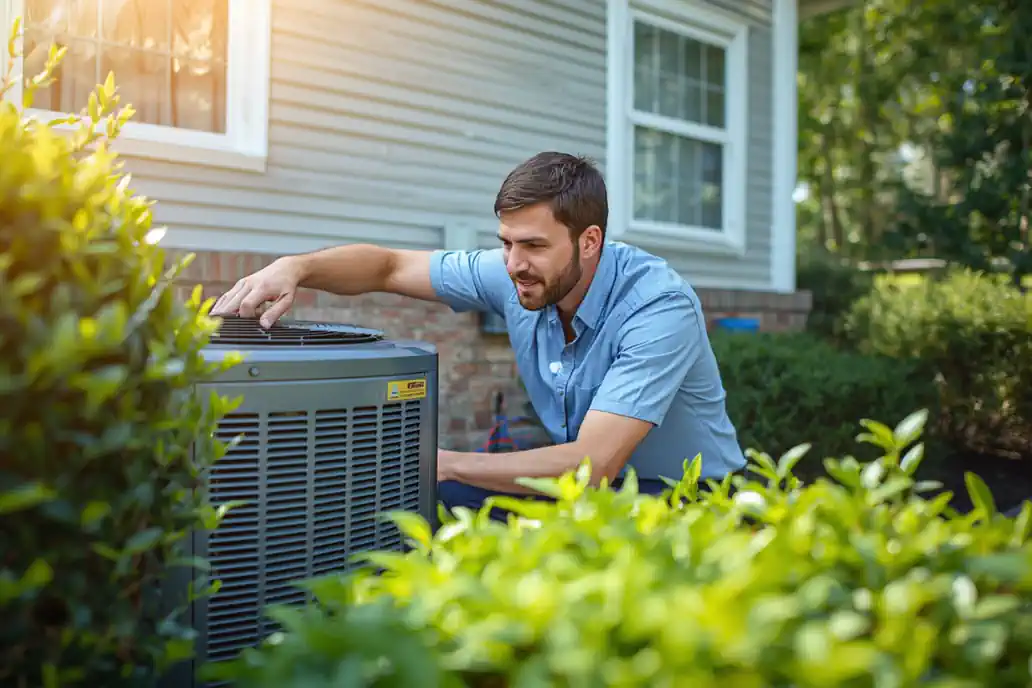 EMCO Tech has been servicing AC systems across the Philadelphia suburbs since 2006. If you’re in a high-demand zip code, book early — these are our busiest neighborhoods during heat waves:
Frequently Asked Questions
How often should I service my AC to prevent summer breakdowns?
Once per year, ideally in March or April before peak demand. Systems older than 8 years benefit from a second mid-season check.
What’s the most common cause of AC failure during a heat wave?
A failed start capacitor on the outdoor unit. Heat soak plus heavy load kills weak capacitors first. It’s a 20-minute, low-cost fix when caught early.
Is it worth repairing an AC that’s 12+ years old?
If the repair quote is above 30% of replacement cost, replacement usually pays back faster in efficiency gains and avoided repeat repairs.
How long does a professional AC tune-up take?
Roughly 60–90 minutes for a residential split system. Our techs run a 22-point inspection and document refrigerant pressures, capacitor microfarads, and amp draw so you have a baseline year over year.
Post Date
Latest Updates – Keep Cool, Feel Warm, Breathe Clean Air with EMCO Tech
Emergency Heat (AUX) Won’t Turn Off? Here’s Which Heat Pump Fixes It
If AUX or emergency heat runs all winter, the heat pump has handed your house to electric backup strips, and the PECO bill shows it. See how…
Planning a Heat Pump Replacement: Upgrade Before It Fails
The worst time to replace a heat pump is the morning it dies. A planned swap lets you choose the equipment, lock in better pricing, and stay warm on…