



Why Running Your AC Costs So Much: Hidden HVAC Problems That Raise Your Electric Bill
High summer electric bills are often caused by more than normal AC use. Dirty filters, leaky ductwork, poor insulation, low refrigerant, thermostat habits, and incorrect system sizing can force your cooling system to run longer than it should. Learn why your AC costs so much to run and when it is time to call EMCO Tech for professional AC service.
Why Running Your AC Costs So Much
When summer heat settles into the Philadelphia area, higher electric bills are expected. Your air conditioner naturally works harder during hot and humid weather. But if your cooling costs seem unusually high, the problem may not be the weather alone.
An air conditioning system that is fighting restricted airflow, leaking ductwork, dirty coils, low refrigerant, weak motors, poor insulation, or thermostat problems can run far longer than necessary. That extra runtime turns directly into wasted electricity, uneven comfort, and more wear on your equipment.
If your utility bill has increased but your daily AC use has not changed much, your system may need more than a quick filter change. EMCO Tech Heating & Cooling helps homeowners find the real cause of high cooling costs, from simple maintenance issues to deeper system problems that need professional repair.
Quick Guide to High AC Bills
- Ductwork and insulation problems
- Maintenance issues that make your AC expensive
- Thermostat habits that waste energy
- AC system sizing problems
- When to call an HVAC technician
- Frequently asked questions
High AC Bills? Your Cooling System May Be Working Too Hard.
If your electric bill keeps climbing, the problem may be more than summer heat. Dirty coils, clogged filters, leaky ducts, low refrigerant, or poor airflow can force your air conditioner to run longer than it should. EMCO Tech Heating & Cooling provides professional air conditioning repair services , AC maintenance , and AC tune-up service to help restore comfort and improve system performance.
Ductwork and Insulation Problems That Raise AC Costs
Your air conditioner may be producing cold air properly, but that does not mean the cold air is reaching the rooms where you need it. In many homes, the problem is not only the AC unit. The problem is the path the cooled air has to travel.
Leaky ducts, poorly sealed joints, weak attic insulation, and air gaps around the home can force your system to run longer while still leaving certain rooms uncomfortable. This is one of the most common reasons homeowners feel like their AC is working all day but never quite catching up.
- Leaky ductwork: Duct leaks can waste a major portion of cooled air before it reaches bedrooms, living areas, or upstairs rooms.
- Poor attic insulation: Heat from the attic can push down into the living space and make your AC fight harder during the hottest part of the day.
- Air gaps and drafts: Openings around windows, doors, wall penetrations, and utility lines can let hot outdoor air enter the home.
- Uneven room temperatures: If one area feels cool and another stays hot, your duct layout, airflow balance, or insulation may need attention.
If your home has hot spots, weak airflow, or rooms that never cool properly, the issue may be connected to ductwork or airflow. Learn more about our air duct design and installation services and air duct repair services.
AC Maintenance Problems That Make Cooling More Expensive
An ignored AC system becomes an expensive AC system. When basic maintenance is skipped, the equipment has to work harder to move air, remove heat, and maintain the temperature you set on the thermostat. That extra strain increases energy use and can shorten the life of the system.
The most frustrating part is that many high-cost cooling problems start small. A dirty filter, clogged coil, weak capacitor, or neglected outdoor unit may not seem urgent at first. Then the system starts running longer, cooling less effectively, and sending you a utility bill that looks like it was printed by someone with a grudge.
- Clogged air filter: A dirty filter restricts airflow and makes the blower motor work harder.
- Dirty condenser coil: The outdoor unit must release heat. If the coil is covered in dirt, grass, or debris, heat transfer suffers.
- Low refrigerant: Low refrigerant usually means there is a leak. The compressor may run longer while the home still does not cool properly.
- Weak blower motor: A struggling motor can reduce airflow and cause longer run times.
- Dirty evaporator coil: Dust and moisture buildup can reduce cooling performance and may contribute to freezing problems.
- Neglected maintenance: Without seasonal AC service, small issues can turn into larger repairs during peak summer heat.
For better performance and lower risk of surprise breakdowns, schedule seasonal air conditioner maintenance or an AC tune-up service before your system is pushed through the hottest weather.
Thermostat Habits That Drain Money
Your thermostat has a direct effect on your electric bill. Small setting changes can make a noticeable difference, especially during long heat waves when your air conditioner is already working harder than usual.
One common mistake is setting the thermostat extremely low because the house feels hot. Lowering the setting to 65 degrees does not make the AC cool faster. It only tells the system to keep running until it reaches that lower number, which may take hours or may not happen at all during extreme heat.
- Avoid extreme low settings: Setting the thermostat too low can cause long run times and higher energy use.
- Do not shut the system off all day: Turning the AC completely off can allow walls, floors, furniture, and upper rooms to absorb heat.
- Use a moderate setback: Raising the temperature a few degrees while away is usually easier on the system than forcing a dramatic recovery later.
- Check thermostat accuracy: A malfunctioning thermostat or poor thermostat location can cause unnecessary runtime.
- Consider a smart thermostat: A properly installed smart thermostat can help manage comfort and energy use more consistently.
If your thermostat seems inaccurate, unresponsive, or poorly matched to your system, EMCO Tech also provides thermostat services for homeowners who want better control over comfort and cooling costs.
AC System Sizing Problems: Too Big or Too Small
Air conditioner size matters. A system that is too small may run constantly and still fail to keep the house comfortable. A system that is too large may cool the air quickly but shut off before removing enough humidity. Both situations can make the home uncomfortable and increase energy waste.
This is why proper system design matters during replacement. A new air conditioner should not be selected by guessing, copying the size of the old unit, or choosing the biggest system available. Bigger is not automatically better. Shocking revelation, apparently.
- Oversized AC system: May short-cycle, turn on and off too often, reduce humidity control, and increase wear on components.
- Undersized AC system: May run constantly, struggle on hot days, and fail to reach the thermostat setting.
- Poor humidity removal: Short cycles can leave the house feeling sticky even when the temperature looks acceptable.
- Higher repair risk: Frequent starts and long run times can strain motors, compressors, capacitors, and electrical parts.
If your current AC is old, inefficient, or never seems to cool the house correctly, it may be time to consider professional air conditioning installation or central air conditioning services.
When High AC Bills Point to a Repair Problem
A higher summer bill does not always mean your AC is broken. But when the bill rises sharply along with comfort problems, the system should be checked. Waiting too long can turn a simple service issue into a more expensive repair.
Call an HVAC technician if you notice any of the following signs:
- Your AC runs constantly but the house still feels warm.
- The system turns on and off every few minutes.
- Some rooms are much warmer than others.
- The outdoor unit is dirty, noisy, or struggling to run.
- The indoor airflow feels weak.
- The evaporator coil or refrigerant lines are freezing.
- Your electric bill increased without a clear change in usage.
- The thermostat does not seem to match the actual room temperature.
- The system is more than 12 to 15 years old and needs frequent repair.
EMCO Tech Heating & Cooling provides air conditioning repair services for homeowners dealing with high electric bills, weak cooling, short cycling, and AC systems that are no longer performing the way they should.
Frequently Asked Questions About AC Costs and Indoor Comfort
Your AC may be expensive to run because the system is working harder than it should. Common causes include clogged air filters, dirty condenser coils, leaky ductwork, poor attic insulation, low refrigerant, thermostat problems, poor airflow, or an air conditioner that is too large or too small for the home. If your electric bill increased but your cooling habits did not change, your AC system should be inspected.
If your electric bill is high even with limited AC use, the problem may be connected to poor insulation, duct leakage, thermostat settings, old equipment, electrical issues, or other appliances in the home. Your AC may also be short-cycling, which means it starts and stops too often instead of running steady cooling cycles.
Keeping the AC at a reasonable temperature can sometimes be more efficient than turning it completely off and forcing the system to recover later. A moderate thermostat setting helps prevent the home from absorbing too much heat. For many homeowners, raising the temperature a few degrees while away is better than shutting the system off completely.
There is no single perfect setting for every home, but higher thermostat settings generally reduce cooling costs. Many homeowners choose a comfortable setting in the mid-to-upper 70s during occupied hours and raise the setting when away. If the home still feels uncomfortable, airflow, humidity, insulation, or equipment performance may need attention.
Air conditioning can help keep indoor temperatures more comfortable during extreme heat. This may be especially important for people who are sensitive to hot weather. However, this is general comfort information, not medical advice. Anyone with high blood pressure, heart disease, or other medical concerns should follow their doctor’s recommendations during hot weather.
Air conditioning itself is not usually the only cause of sinus issues, but dry air, dirty filters, dust buildup, mold, poor humidity control, and indoor air pollutants can irritate the nose and throat. Regular filter changes, coil cleaning, duct inspection, and proper humidity control can help support better indoor air quality.
Yes. A clogged air filter restricts airflow and forces the system to work harder. This can increase energy use, reduce comfort, strain the blower motor, and contribute to frozen coils or longer cooling cycles.
Yes. If cooled air escapes through duct leaks before reaching the rooms in your home, your AC must run longer to satisfy the thermostat. Leaky ducts can also cause uneven temperatures, weak airflow, and comfort complaints in upstairs rooms or far rooms.
Stop Guessing Why Your AC Bill Is So High
If your air conditioner is running longer than usual, turning on and off frequently, or causing unusually high electric bills, EMCO Tech Heating & Cooling can inspect the system and find the cause. Our technicians can check airflow, filters, coils, refrigerant performance, thermostat operation, duct conditions, and overall system efficiency.
We service air conditioning systems for homeowners in Philadelphia, Willow Grove, Bucks County, Montgomery County, Chester County, and Delaware County. If your AC is wasting energy or struggling to keep your home comfortable, call 215-366-1001 or schedule service online.
Schedule AC Service Online or call 215-366-1001.
High utility bills in Horsham, PA are often connected to dirty filters, aging equipment, poor insulation, or neglected HVAC maintenance.
Related Air Conditioning Resources
For more help with cooling problems, energy waste, and seasonal AC service, explore these related EMCO Tech resources:
- How to Lower Your AC Bill: Practical Energy-Saving Tips
- AC Not Blowing Cold Air: What to Do Next
- Water Leaking from Your AC?
- Does Your AC Need a Recharge? What It Really Means
- Why Is Your Air Conditioner Constantly Turning On and Off?
- Springtime AC Tune-Up and Maintenance
- Air Conditioning Services
Local AC & HVAC Service for High Cooling Bills
High cooling bills, weak airflow, uneven temperatures, and overworked air conditioners are common problems in older homes throughout Montgomery County. EMCO Tech Heating & Cooling provides local AC repair, maintenance, tune-ups, ductwork help, and HVAC system service in nearby communities.
Bala Cynwyd
AC repair, HVAC service, and cooling system support for homes and businesses in Bala Cynwyd, PA.
Dresher
Local heating and cooling service for Dresher homeowners dealing with high AC bills or poor airflow.
Hatboro
Professional AC maintenance, cooling repair, and HVAC troubleshooting for Hatboro, PA properties.
Horsham
Cooling service, AC tune-ups, and HVAC repair for Horsham homes with rising summer electric bills.
Huntingdon Valley
Reliable AC repair, system maintenance, and HVAC service for Huntingdon Valley homeowners.

Is It Time for AC Replacement in Horsham, PA?
This guide walks you through the clearest signs it’s time for a new system, how to use the repair-vs-replace rules that HVAC pros actually use, and what AC replacement costs in the Horsham area right now.
Signs You Need a New Air Conditioner
Before you call for another repair, check your system against these common warning signs:
Your AC is 15 or more years old. The average central air conditioner lasts 15–20 years with regular maintenance, and 10–12 years without it. If yours is in that range and struggling, it’s nearing the end of its reliable lifespan.
Your energy bills keep climbing. If your cooling costs have been creeping up year over year without a clear explanation, your AC is likely losing efficiency. Older systems work harder to deliver the same result — and that shows up on your electric bill every month.
You’re calling for repairs more than once a season. One repair is normal. Frequent repairs on an aging system are a red flag that bigger breakdowns are coming.
Your home isn’t cooling evenly. Hot spots, inconsistent temperatures room to room, or an AC that just can’t keep up on a hot summer day in Horsham are signs the system is losing capacity.
You’re hearing unusual noises. Grinding, squealing, banging, or rattling sounds from your unit are signs of mechanical wear that often signal the end is near.
What Is the $5,000 Rule for AC?
The $5,000 rule is a simple rule of thumb HVAC technicians use to help homeowners decide whether to repair or replace. Multiply the age of your unit by the estimated repair cost — if the number exceeds $5,000, replacement is usually the smarter financial move.
For example: a 10-year-old unit facing a $600 repair equals $6,000 — over the threshold. The same repair on a well-maintained 5-year-old unit ($3,000) may still make sense to fix.
For a full breakdown of the AC repair vs. replace decision — including a cost comparison table and the 50% rule — see our guide: Repair or Replace Your HVAC System? The 2026 Cost & Efficiency Breakdown.
What Is the 20 Rule for Air Conditioning?
The “20 rule” is even simpler: if your AC is more than 20 years old, replace it. At that age, even a system that appears to be running is almost certainly costing you money in wasted energy. Modern high-efficiency systems can be dramatically more efficient than units from the early 2000s, and the savings in utility costs often offset a significant portion of the installation cost over time.
Should You Repair or Replace? Here’s How to Decide
The repair-vs-replace decision comes down to age, cost, and reliability. Here’s a quick way to think it through:
Consider replacing if: your system is 15+ years old, you’re spending more than $500/year on repairs, your energy bills have noticeably increased, the repair cost fails the $5,000 rule, or your system uses R-22 refrigerant (no longer manufactured and expensive to recharge).
Consider repairing if: your system is under 10 years old, the repair is minor, and the unit has been well maintained.
Not sure which applies to you? Our detailed guide walks through every scenario: Repair or Replace Your HVAC System in 2026. You can also review the 5 signs you need a new AC for a deeper look at the warning signals.
Best Time to Replace Your AC in Horsham & Montgomery County, PA
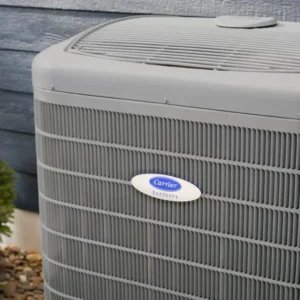
Spring — specifically April through May — is the optimal time to replace your air conditioner in the Horsham and Montgomery County area, and for good reason.
Scheduling is far more flexible before the summer rush hits. You’ll have more options on installation dates, contractors aren’t slammed with emergency calls, and lead times on equipment are shorter. This matters especially when certain high-efficiency systems or heat pumps need to be ordered.
Replacing in spring also gives you time to properly compare options — ductless mini-splits, high-efficiency central AC systems, or a heat pump if you’re thinking about upgrading your heating at the same time — rather than making a rushed decision in August when your old unit has just failed.
How Much Does AC Replacement Cost in Horsham, PA?
The cost of replacing a central air conditioner in the Horsham area varies depending on the size of your home, the type of system, and whether any ductwork modifications are needed. The most accurate way to know your actual cost is a free in-home estimate — that’s exactly what EMCO Tech offers.
Our Carrier-certified team will assess your current system, explain your options clearly, and show you how installation costs compare to the long-term savings of a more efficient unit. Learn more about our AC installation and replacement services →
Ready to Replace Your AC in Horsham, PA?
Don't wait until your system fails on the hottest day of the year. EMCO Tech offers professional AC installation and replacement services throughout Horsham, Montgomery County, and the greater Philadelphia area — with free estimates and Carrier-certified technicians.
Get a Free AC Replacement Estimate in Horsham, PA
At EMCO Tech Heating & Cooling, we serve Horsham, Montgomery County, Bucks County, and the greater Philadelphia area. As authorized Carrier HVAC dealers, we’ll help you find the right system for your home and budget — whether that’s a standard central AC, a high-efficiency unit, or a ductless system.
We know a new air conditioner is a significant investment, and we’ll make sure you have all the information you need to make a confident decision.
Schedule your free estimate online or call us at 215-366-1001.
AC Replacement Services Near Horsham, PA
EMCO Tech serves Horsham and the surrounding Montgomery County communities. Find your area below.
Hatboro, PA
AC installation and replacement services in Hatboro and surrounding areas.
Dresher, PA
Trusted HVAC replacement and cooling services for Dresher homeowners.
Ambler, PA
New air conditioner installation and system upgrades serving Ambler, PA.
Willow Grove, PA
Local AC replacement experts serving Willow Grove and Montgomery County.

Why Does My Cooling Feel Uneven?
Does your cooling feel uneven from room to room? If your Doylestown home has cold living spaces but warm bedrooms, the issue may be restricted airflow, leaky ductwork, poor insulation, solar heat gain, or an aging cooling system. This guide explains why hot and cold spots happen, what simple checks homeowners can make, and when professional AC repair, air duct repair, zoning, or ductless mini-splits can restore balanced comfort.
Why Does My Cooling Feel Uneven in Doylestown Homes?
Is your living room perfectly chilled while your upstairs bedrooms feel like a sauna? This is a common complaint for homeowners in Doylestown and throughout Bucks County, especially in our beautiful historic homes and multi-story builds. Uneven cooling isn’t just a comfort issue; it’s often a sign that your HVAC system is struggling to keep up with the humid Pennsylvania summers.
When one room is significantly warmer than another, your thermostat may continue to run the air conditioner to reach the target temperature in the hallway, causing your energy bills to spike while your comfort levels drop. Understanding the root cause is the first step toward a more efficient, comfortable home.
Does Your Cooling Feel Uneven?
If your Doylestown home has cold living spaces but warm bedrooms, the issue may be restricted airflow, leaky ductwork, poor insulation, solar heat gain, or an aging cooling system. A cooling check can help determine whether you need AC repair , air duct repair , zoning improvements, or a ductless solution for hard-to-cool rooms.
Common Causes of Hot and Cold Spots in Bucks County Homes
There are several reasons why your airflow might be inconsistent. In many local homes, the culprit is often a combination of system age and architectural layout. Here are the most frequent issues we encounter:
1. Blocked or Leaky Ductwork
Your ductwork is the delivery system for your comfort. Over time, ducts can develop gaps or become disconnected. In many older Bucks County residences, original ductwork may not be sized correctly for modern high-efficiency AC units, leading to restricted airflow in the rooms furthest from the blower.
2. Aging HVAC Units
If your cooling system is more than 10-15 years old, it may simply lack the “push” required to circulate air evenly. As components wear down, the motor may struggle to move air to the second or third floor of your home, leaving your upstairs significantly warmer than the ground level.
3. Improper Insulation and Solar Gain
Doylestown homes with large windows or poor attic insulation often suffer from solar heat gain. Rooms that face the afternoon sun can become “heat traps” that your air conditioner cannot keep up with if the insulation isn’t sufficient to keep that heat out.
Professional Solutions for Airflow Balancing
While DIY tips like changing your air filter can help, chronic uneven cooling usually requires a professional touch. We offer several advanced solutions to ensure every corner of your home stays cool:
- Duct Sealing and Repair: We inspect your ventilation to ensure air isn’t escaping into your crawlspace or attic.
- HVAC Zoning Systems: This allows you to control the temperature of different floors or areas independently, perfect for larger Bucks County estates.
- Smart Thermostat Installation: Using remote sensors in “problem rooms” helps your system monitor the actual temperature where you live, not just in the hallway.
Contact Your Local Doylestown HVAC Experts
Don’t spend another summer dealing with uncomfortable hot spots. EMCO Tech Heating & Cooling provides specialized AC repair and maintenance throughout Doylestown, PA, and the surrounding Bucks County area. Our technicians understand the specific needs of local homes and can provide a customized plan to balance your airflow and lower your utility costs.
Ready to restore comfort to your entire home? Contact us today to schedule a comprehensive cooling system evaluation. Whether you need a simple duct adjustment or a high-efficiency system upgrade, we are here to help you stay cool all summer long.
Advanced Solutions for Bucks County Homes: HVAC Zoning and Mini-Splits
Sometimes, traditional HVAC adjustments like duct sealing aren’t enough to overcome the architectural challenges of local Doylestown homes. If your problem is one or two specific rooms rather than the whole house, our guide on how to fix hot and cold spots covers targeted fixes for those trouble spots. If you have a third-floor finished attic or a home office located far from the main air handler, you may need a more localized cooling strategy. Two of the most effective ways to eliminate hot spots for good are HVAC Zoning Systems and Ductless Mini-Splits.
What is HVAC Zoning?
Standard cooling systems operate on an “all or nothing” basis, when the thermostat clicks on, the system pushes air into every room, regardless of whether that room is already cool. In a zoned system, we install a series of dampers within your ductwork. These dampers act like traffic cops, redirecting cooled air only to the zones that need it. This is an ideal solution for multi-story homes in Bucks County, allowing you to keep the bedrooms upstairs at 68 degrees while the rarely-used basement stays at 74.
The Benefits of Ductless Mini-Split Systems
For rooms that never seem to get cold no matter how high you crank the AC, a ductless mini-split is often the perfect answer. These systems provide targeted cooling to a specific area without requiring any additional ductwork. Many homeowners in Doylestown choose mini-splits for:
- Historic Home Preservation: Cool your home without tearing into plaster walls to add bulky ducts.
- Energy Efficiency: You only cool the rooms you are currently using, significantly reducing your monthly utility bills.
- Precise Temperature Control: Each unit comes with its own thermostat, giving you “white glove” control over your environment.
If your problem is one or two specific rooms rather than the whole house, our guide on how to fix hot and cold spots covers targeted fixes for those trouble spots.
Why Doylestown Residents Trust EMCO Tech
We have spent years servicing the specific HVAC needs of the Central Bucks community. We know that a modern ranch in Buckingham has different airflow requirements than a Victorian-style home in the heart of Doylestown Borough. Our team doesn’t believe in “one size fits all” cooling. We perform a detailed load calculation and airflow analysis when needed to ensure the solution we recommend is the one that actually works for your floor plan.
When you choose EMCO Tech Heating & Cooling, you are choosing a partner dedicated to local excellence. We are fully licensed and insured (PA017704), and our technicians stay up-to-date on the latest high-efficiency cooling technologies. Whether you need an emergency repair or a consultation on a new high-velocity system, we are just a phone call away.
Ready to Balance Your Home Temperature?
Stop fighting with your thermostat and start enjoying every room in your house. From Doylestown to Newtown and across all of Bucks County, EMCO Tech is the leading name in reliable, professional HVAC services. We invite you to explore our maintenance plans to keep your system running efficiently year-round or book a service call today to have your airflow professionally balanced.
Uneven cooling problems are common in older and multi-story homes throughout Doylestown, Newtown, Yardley, and Richboro. If one room is cold and another still feels warm, start with an airflow check before replacing equipment. Depending on the cause, the solution may involve duct repair, heat pump repair, mini-split installation, or routine cooling maintenance.
Uneven Cooling Help Near Doylestown
Hot and cold spots are common in older homes, additions, finished attics, and multi-story houses throughout Bucks County. If your cooling feels uneven from room to room, local airflow testing can help identify duct leaks, weak supply runs, zoning problems, aging equipment, or rooms that may benefit from a ductless mini-split.
Doylestown
Cooling feel uneven in your Doylestown home? Get help with airflow problems, warm bedrooms, duct issues, and AC performance.
View Doylestown ServicesNewtown
Airflow checks, AC repair, and comfort solutions for Newtown homes with one room cold and another room still warm.
View Newtown ServicesYardley
Local cooling service for Yardley homes with weak airflow, upstairs heat buildup, duct restrictions, or uneven temperatures.
View Yardley ServicesRichboro
Help for Richboro homeowners dealing with unbalanced air conditioning, hot bedrooms, leaky ducts, or aging cooling systems.
View Richboro ServicesWarminster
Cooling diagnostics for Warminster homes with AC cooling one room but not another, poor airflow, or hot and cold spots.
View Warminster ServicesFrequently Asked Questions About Uneven Cooling
Heat naturally rises, but in most Bucks County homes, the issue is exacerbated by poor attic insulation or an undersized HVAC system. Without proper “push” from your blower motor, the cooled air settles on the first floor, leaving the upper levels struggling to stay comfortable.
Yes. A dirty filter restricts the volume of air entering your system. When airflow is low, the air doesn’t have enough velocity to reach the furthest vents in your home, leading to certain rooms staying warm while others near the main unit stay cool.
The cost varies depending on the cause. Simple airflow balancing or duct sealing is relatively inexpensive. However, if your home requires a zoning system or a ductless mini-split installation, we provide transparent, upfront estimates to help you choose the best fit for your budget.
To fix uneven cooling, switching your thermostat to the ‘On’ position is often better. This keeps the fan running constantly, which helps circulate and “mix” the air between cycles, preventing air from stagnating in warmer rooms.
Yes. Sealing leaky or disconnected ducts is one of the most effective airflow fixes. We recommend a full duct inspection first to find hidden leaks, gaps, or disconnected sections causing the pressure drop, then seal and repair so each room gets even airflow. This targets the root cause rather than just the symptom.
Your cooling may feel uneven today because of a clogged filter, blocked vent, dirty outdoor condenser, thermostat issue, frozen coil, weak blower, duct leak, or sudden heat gain from sun-facing rooms. If the problem appeared suddenly, check the filter and vents first. If airflow is weak or the system keeps running, schedule a cooling diagnostic.
If your cooling feels uneven right now, one part of the home may not be getting enough airflow. Common causes include closed registers, dirty filters, leaky ducts, low refrigerant, poor insulation, or an AC system struggling during high outdoor temperatures. Persistent hot and cold spots usually need professional airflow testing.
Yes. A crushed, folded, disconnected, or kinked flex duct can reduce airflow to one room or an entire section of the home. This can make one area feel warm while other rooms cool normally. A ductwork inspection can identify pressure loss, hidden leaks, or damaged duct sections.
About Our Cooling Experience
EMCO Tech Heating & Cooling has served Philadelphia-area homeowners and businesses since 2006, working on central air conditioning systems, heat pumps, ductless mini-splits, zoning controls, ductwork, and indoor comfort problems throughout Bucks County. Our licensed and insured team, PA017704, uses hands-on diagnostics to identify airflow restrictions, duct issues, aging equipment, and system performance problems before recommending repairs or replacement.
Our team includes EPA-certified and NATE-trained HVAC professionals experienced with residential and light commercial cooling systems.
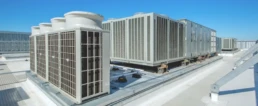
The Facility Manager's Guide to Reducing Commercial HVAC Costs in 2026
Reduce Commercial HVAC Costs in 2026: A Guide for Building Owners and Facility Managers
Commercial HVAC systems don't just keep buildings comfortable — they're often the single largest line item on your utility bill. In Philadelphia-area facilities, HVAC typically accounts for 40–50% of total energy consumption. For a 100,000 sq ft office or retail space spending $300,000–$400,000 annually on energy, even modest efficiency gains can free up $60,000–$120,000 in annual savings — while extending equipment life and slashing unplanned downtime.
At EMCO Tech Heating & Cooling, we’ve helped building owners and facility managers across Montgomery County, Philadelphia, Bucks County, Chester County, and Delaware County turn those numbers into real ROI. As authorized Carrier Heating & Cooling Dealers who also service Trane, York, Lennox, Fujitsu, Goodman, and every major brand, we combine factory-level expertise with local knowledge of Philly’s humid summers and unpredictable winters.This guide delivers five proven commercial HVAC energy saving strategies for 2026 — actionable steps that go far beyond “change your filters.” Whether you manage a retail center in Horsham, a multi-tenant office in Willow Grove, a restaurant in Northeast Philadelphia, or a medical facility in Wayne or Haverford, these strategies deliver measurable results.
Why Traditional HVAC Maintenance Is No Longer Enough
Reactive “fix-it-when-it-breaks” service is costing commercial properties three times more than planned maintenance. In 2026, the shift to predictive maintenance — powered by IoT sensors, AI analytics, and real-time monitoring — is no longer optional for competitive building operators. It’s the new standard.
The problem: A single failed rooftop unit (RTU) during a July heat wave can shut down operations, spike emergency repair costs, and drive energy waste as the rest of the system overcompensates. Dirty coils alone can increase energy consumption by up to 30%. In Montgomery County office parks or Bucks County retail centers, that kind of failure hits your bottom line hard.
The solution: Comprehensive commercial HVAC services with remote monitoring built in. EMCO Tech’s predictive maintenance programs catch issues weeks in advance — vibration anomalies, refrigerant leaks, motor strain — before they become expensive breakdowns. Clients typically see:
- 25–40% fewer emergency service calls
- 15–30% lower annual maintenance costs
- 10–20% longer equipment lifespan
A medical facility in Chester County that switched from reactive to predictive service with EMCO Tech reduced its unplanned downtime by more than a third in the first year — and avoided a compressor replacement that would have cost over $12,000. The math on predictive maintenance isn’t complicated. The cost of prevention is almost always a fraction of the cost of failure.
Optimizing Commercial AC for Peak Summer Performance
Philadelphia summers are hot and humid. That combination forces your commercial AC to work harder than almost anywhere else in the Northeast — dehumidifying and cooling simultaneously, around the clock during peak periods. Upgrading to high-efficiency systems with strong SEER2 ratings and keeping coils clean delivers the fastest payback of any efficiency investment.
- Coil cleaning alone can restore 5–15% efficiency and dramatically reduce compressor stress. In a 50,000 sq ft facility, that translates directly to hundreds of dollars per month in recovered savings.
- Modern variable-speed and inverter-driven units — including Carrier’s latest commercial lines — maintain peak performance at part-load conditions, which is the exact scenario most facilities face 80% of the time.
- Scheduling professional service before August heat peaks — not during them — is the move that separates proactive facility managers from reactive ones.
For businesses in high-traffic retail or office environments across Montgomery County and Philadelphia, our commercial AC maintenance programs include thorough coil cleaning, refrigerant checks, electrical inspections, and performance testing — everything needed to keep your system running at full efficiency through summer’s worst.
High-Efficiency Commercial Heating: Preparing for Philly Winters
When temperatures drop, outdated boilers, furnaces, and heat pumps become profit killers. Aging equipment short-cycles, wastes fuel, and demands constant emergency attention during the exact months you can least afford downtime. The 2026 trend is clear: electrification plus smart controls.
- Commercial heat pumps and hybrid systems deliver superior efficiency even in cold Pennsylvania winters, with modern cold-climate models performing well below 20°F.
- Multi-stage burners and modulating technology eliminate wasteful short-cycling — one of the most common and expensive inefficiencies in older commercial heating systems across Bucks County and Delaware County facilities.
- Smart controls and zoning systems automatically adjust output based on occupancy. Stop heating empty conference rooms, warehouse aisles, or off-hours retail floors.
Upgrading to energy-efficient commercial heating doesn’t just lower your utility bills — it often qualifies your business for local energy rebates through Pennsylvania utility programs like Act 129, PECO incentives, and FirstEnergy efficiency credits. EMCO Tech helps clients navigate and stack these incentives to maximize total ROI.
5 Commercial HVAC Energy Saving Strategies That Deliver Real Results
Here are the highest-ROI moves you can implement this quarter, ranked by payback period and operational impact:
1. Seal the Ductwork
Up to 20–30% of conditioned air is lost through leaks in commercial duct systems — a staggering waste that most building owners never see because it’s invisible. Professional duct sealing pays for itself in under two years in most Philadelphia-area commercial buildings and often within 18 months in larger facilities. If your system is running but your comfort complaints haven’t gone away, leaky ducts are the first thing to check.
2. Smart Thermostat Zoning
Modern zoning systems and smart building controls stop wasting energy on unoccupied spaces. In multi-floor offices, schools, or mixed-use buildings across Montgomery and Chester Counties, integrating thermostats with occupancy sensors and building automation delivers 10–20% in sustained annual energy savings — with no loss in comfort for occupied zones.
3. Variable Frequency Drives (VFDs)
VFDs allow your HVAC fans and pumps to run at lower speeds when full capacity isn’t needed — which in most commercial buildings is the majority of the time. VFD retrofits deliver 30–50% fan energy savings with payback periods of 1.5–3 years. For larger facilities in Bucks County or Northeast Philadelphia with high-horsepower air handler fans, VFD retrofits are one of the fastest ROI plays available.
4. Right-Size Your System
Oversized units short-cycle, wear out faster, and waste energy — and undersized units run constantly and never quite keep up. A proper load calculation (Manual J for smaller buildings, or a full engineering analysis for larger facilities) ensures your system matches your actual load. Right-sizing typically delivers 20–40% in energy savings and dramatically extends equipment lifespan.
5. Adopt VRF (Variable Refrigerant Flow) Systems
VRF is the 2026 gold standard for multi-zone commercial buildings. Unlike traditional rooftop units or VAV systems, VRF technology modulates refrigerant flow precisely to each zone — heating one area while cooling another simultaneously, with no duct losses. Studies show VRF systems can cut commercial HVAC energy use by 20–50% compared to conventional systems. For multi-tenant office buildings, medical offices, or retail centers across Greater Philadelphia, VRF is the upgrade that changes the conversation entirely.
Bonus Strategy: Commission a Full Energy Audit
Before investing in any single upgrade, a professional energy audit identifies your highest-priority opportunities ranked by ROI. EMCO Tech offers no-obligation commercial efficiency assessments for building owners and facility managers across all five counties we serve. We’ll show you exactly where your system is losing money and what the payback period looks like for every fix.
Energy Savings Summary: Quick Reference
| Strategy | Potential Energy Savings | Equipment Impact | Typical Payback |
|---|---|---|---|
| AC Coil Cleaning | 5% – 15% | High (reduces compressor stress) | Immediate |
| Smart Controls & Zoning | 10% – 20% | Moderate (reduces run time) | 1–2 years |
| Duct Sealing | 20% – 30% | High (reduces system load) | Under 2 years |
| System Right-Sizing | 20% – 40% | Very high (eliminates short-cycling) | 2–4 years |
| VFDs on Fans/Pumps | 30% – 50% | High (extends motor life) | 1.5–3 years |
| VRF System Upgrade | 20% – 50% | Very high (eliminates duct losses) | 3–6 years |
Why Philadelphia-Area Buildings Benefit Most From These Upgrades
Philly’s climate creates a double burden: humid summers that force commercial AC systems to dehumidify and cool simultaneously, and cold snaps that punish inefficient heating equipment. Buildings in Montgomery County office parks, Bucks County retail strips, Chester County medical campuses, and Delaware County industrial facilities all face the same combination of aging infrastructure and rising energy rates.
EMCO Tech’s dual offices — our main location in Willow Grove and our Philadelphia office at 7934 State Rd in Northeast Philly — let us respond fast and tailor solutions to each county’s unique building stock and utility rate structures. We’re not a national franchise guessing at your market. We’re the local team that knows whether you’re dealing with a 1970s rooftop unit on a Doylestown retail strip or a newer VAV system in a King of Prussia office tower.
FAQ: Commercial HVAC Energy Efficiency in Philadelphia
Q: How often should a commercial HVAC system be inspected?
At minimum, twice a year — spring for cooling, fall for heating. High-demand facilities like restaurants, schools, data centers, or medical offices in Philadelphia and surrounding counties may benefit from quarterly checks. EMCO Tech’s commercial service agreements include priority scheduling and remote monitoring between visits.
Q: What is the most energy-efficient commercial HVAC system available in 2026?
VRF (Variable Refrigerant Flow) systems and high-efficiency heat pumps lead the market. They heat and cool different zones simultaneously with minimal energy waste and often qualify for Pennsylvania utility rebates. For larger facilities with multiple zones, VRF consistently outperforms conventional rooftop units.
Q: Do commercial HVAC upgrades qualify for rebates in Pennsylvania?
Yes. Through Act 129 programs, PECO, FirstEnergy, and other Pennsylvania utilities offer incentives for high-efficiency HVAC equipment, VFD installations, and smart controls. EMCO Tech helps clients identify and maximize these rebates as part of our commercial service proposals.
Q: How do I know if my commercial HVAC system is oversized?
Short-cycling (the unit turning on and off frequently in short bursts), uneven comfort across zones, and higher-than-expected energy bills are all signs. A proper load calculation from EMCO Tech’s team confirms it and quantifies the savings opportunity.
Q: What is the difference between preventative and predictive commercial HVAC maintenance?
Preventative maintenance follows a fixed schedule — seasonal tune-ups, filter changes, coil cleaning. Predictive maintenance uses real-time sensor data to identify problems before they cause failures. Both matter. EMCO Tech’s commercial agreements combine scheduled service with remote monitoring for maximum protection.
Ready to Audit Your Building’s HVAC Efficiency?
Don’t let an outdated commercial HVAC system drain your facility’s operating budget in 2026. Whether you’re managing a single-building operation or a portfolio of commercial properties across Bucks, Montgomery, Philadelphia, Chester, or Delaware County, EMCO Tech delivers the expertise and local knowledge to turn your HVAC from a cost center into a competitive advantage.
Contact EMCO Tech today for a no-obligation commercial efficiency assessment. We’ll identify your highest-ROI opportunities, outline a custom maintenance plan, and help you navigate available rebates — often recovering the cost of the audit before you even write a check.
Call now or schedule online at emcocooling.com/schedule-an-appointment/
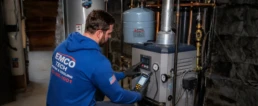
Boiler Service vs Boiler Repair: What’s the Difference?
Homeowners often use the words service, maintenance, and repair like they mean the same thing. They do not. That mix-up leads to the wrong call, delayed repairs, and a lot of frustration when the boiler still does not work after a “tune-up.”
The short version is simple. Boiler service is preventive work done while the system is still operating. Boiler repair is corrective work done because something failed, is leaking, is shutting down, or is no longer heating the house properly.
If your boiler is already giving you trouble, EMCO Tech handles boiler repair in Philadelphia for gas, oil, steam, tankless, and hot-water systems. If your system is still running and you want to reduce the chance of a winter breakdown, regular boiler maintenance is the better place to start.
Not Sure If You Need Boiler Service or Boiler Repair?
If the boiler is still running, seasonal boiler maintenance may be the right call. If it is leaking, locking out, or not heating, schedule repair service now.
What Boiler Service Actually Means
Boiler service is routine upkeep. The goal is to inspect the system, confirm that it is operating safely, clean what should be cleaned, test key controls, and catch wear before it turns into a no-heat call.
A proper service visit may include inspecting venting, checking the heat exchanger area, testing safety controls, checking system pressure, looking at the pressure-relief valve, inspecting the expansion tank, verifying combustion performance, and cleaning components that affect safe and efficient operation.
In plain English, service is what you do before a failure. It is how you reduce the odds of a breakdown, improve efficiency, and catch smaller problems while they are still smaller.
What Boiler Repair Means
Boiler repair starts when something is already wrong. The boiler may not fire, may not stay running, may be leaking, may be short cycling, may be making strange noises, or may be heating the house unevenly. Repair is about diagnosis first and correction second.
That correction might involve ignition components, gas valves, oil burner parts, circulator pumps, zone valves, control boards, thermostats, pressure issues, relief valves, air in the system, or steam-specific problems. In other words, repair is not a checklist visit. It is problem-solving.
Service Is Preventive. Repair Is Corrective.
If the boiler is still operating and you want to keep it that way, you are talking about service. If the boiler is already failing or showing obvious symptoms, you are talking about repair. A lot of homeowners wait too long because they keep calling a repair problem “maintenance.” That delay usually costs more in the end.
Signs You Need Repair Instead of Service
You need repair now, not “just a service,” if your boiler has no heat, no hot water, repeated lockouts, water leaks, pressure that keeps dropping, loud banging or kettling noises, an ignition fault, uneven radiator heat, or a flame problem. Those are failure symptoms, not routine maintenance items.
If your house is cold, your boiler keeps needing resets, or the pressure is falling fast, schedule a real boiler repair appointment instead of waiting for the next annual tune-up.
Can Annual Service Prevent Repairs?
Yes, but only to a point. Service helps catch wear, dirt buildup, venting concerns, pressure issues, weak components, and early warning signs before they become a full breakdown. That is exactly why annual maintenance is worth doing.
No, it does not make repairs disappear forever. Older boilers still wear out. Pumps fail. Valves stick. Sensors drift. Steam systems develop balance issues. Oil systems develop burner and combustion problems. Service reduces risk. It does not cancel age or mechanical failure.
Does the Difference Change by Boiler Type?
Yes. The basic split between service and repair stays the same, but the details change depending on the system.
Gas Boiler Service and Repair
With gas boiler systems, service often focuses on combustion checks, venting, controls, flame quality, pressure, and general operating condition. Repair begins when ignition fails, the flame sensor acts up, the boiler locks out, the gas valve malfunctions, or the system is not circulating heat correctly.
Oil Boiler Service and Repair
With oil boiler systems, service frequently includes burner-related inspection and cleaning work. Repair starts when there are nozzle, filter, pump, ignition, combustion, or control problems that keep the system from operating correctly.
Steam Boiler Service and Repair
With steam boiler systems, service can help catch pressure and control issues early, but repair becomes its own category when you have water hammer, surging, steam trap trouble, uneven radiator heat, or a boiler that is no longer behaving like a stable steam system.
Is Low Pressure a Service Issue or a Repair Issue?
Usually a repair issue, especially if it keeps happening. A healthy boiler system should hold pressure consistently. If you have to keep topping it off, there may be a leak, a relief-valve problem, an expansion-tank issue, or an internal component starting to fail.
That is a good example of why homeowners should not lump everything under “service.” Pressure loss is a symptom. Symptoms need diagnosis.
Is No Heat a Repair Call or a Maintenance Call?
No heat is a repair call. Always. Maintenance can help lower the chance of no heat later, but once the house is cold and the boiler is not doing its job, you are dealing with a failure, not routine upkeep.
If the system stops heating during cold weather, especially in an older Philadelphia rowhome or a house with vulnerable occupants, take it seriously and get the problem diagnosed quickly.
When Service Is Not Enough Anymore
Every boiler reaches a point where good maintenance cannot hide age, inefficiency, repeated repairs, or major internal wear. If the system is old, keeps breaking down, or needs expensive work that does not make long-term sense, it may be time to think beyond service and repair.
If you are stuck between one more repair and replacement, read our guide on whether boilers are worth fixing. If replacement is starting to look more practical, review your options for boiler replacement in Philadelphia.
Boiler Service vs Boiler Repair in Plain English
Service helps keep a working boiler working. Repair fixes a boiler that is already failing. That is the simplest and most honest way to explain it.
If your boiler is running but overdue for seasonal care, plan maintenance before cold weather exposes a weak point. If the system is already leaking, locking out, or not heating properly, schedule boiler repair service instead of hoping a tune-up will save it.
Explore Boiler Service, Repair & Replacement Options
Boiler Maintenance
Annual boiler service, safety checks, combustion testing, and preventive maintenance.
Boiler Repair
Corrective repair for no heat, leaks, lockouts, low pressure, and failed boiler components.
Gas Boilers
Service and repair for gas boiler ignition, flame sensor, venting, and heating problems.
Oil Boilers
Oil boiler service for burner problems, nozzle issues, filters, pump failures, and heating repair.
Boiler Replacement
Replacement options when repair no longer makes financial or mechanical sense.

How to Spot Trouble Early: 5 Warning Signs Your Bucks County AC Needs Repair
5 AC Warning Signs Bucks County Homeowners Should Never Ignore
Bucks County summers don’t ease in gently — they arrive with heat, humidity, and a utility bill that makes your eyes water. Your air conditioner is working overtime from June through August, and when something starts going wrong, it rarely fixes itself. Homeowners in Doylestown, New Hope, Upper Makefield, Lower Makefield, and Solebury are calling us every summer for the same issues — issues that almost always showed up as warning signs weeks earlier.
Catching these problems early is the difference between a several hundred price for a service call and paying thousands for emergency replacement in August. Here are the five AC repair warning signs Bucks County homeowners most commonly miss — and what each one usually means for your system.
1. Strange Noises or Unusual Smells Coming From Your Unit
A properly running air conditioner should be background noise — not something you notice. If you’re suddenly hearing rattling, screeching, grinding, or hissing, your system is telling you something specific. Rattling usually points to a loose component or debris in the fan. Screeching or squealing often means worn bearings or a failing blower motor. Hissing? That’s frequently a refrigerant leak — one of the more serious issues you can have.
Musty or burning smells are equally important. Musty odors suggest mold in the drain pan or ductwork. A burning smell could mean an electrical issue or overheating motor. These are among the first AC warning signs Doylestown PA homeowners report to us each season. The right move: shut the unit off and call for service before the damage compounds.
2. Warm Air or Noticeably Weak Airflow
If you’re standing under a vent and feeling warm or barely-there air, your AC is working but not delivering. The most common culprits are low refrigerant, a failing compressor, a clogged filter, or blocked ductwork. Any one of these can spike your energy bill fast — because the system runs longer trying to reach a temperature it can’t hit.
This is one of the top signs your air conditioner is failing New Hope PA residents call us about during heat waves. Start with the basics: check and replace your filter monthly during peak cooling season. If that doesn’t restore airflow, refrigerant levels and the compressor need professional evaluation.
3. Uneven Cooling or Sticky Indoor Humidity
One bedroom freezing, another room miserable — this pattern usually signals duct leaks, a dirty evaporator coil, thermostat calibration issues, or low refrigerant. In older Bucks County homes with aging ductwork, this is extremely common and often gets chalked up to “just how the house is.” It isn’t.
Beyond comfort, excess indoor humidity sets the stage for mold growth — especially in finished basements and older construction. These problems are straightforward to fix with a professional inspection but get more expensive the longer they sit. If your system isn’t controlling humidity the way it used to, that’s an early sign worth acting on. Homeowners dealing with AC not cooling properly in Upper Makefield PA and surrounding towns often find the fix is simpler than expected.
4. Water Leaks or Ice Forming on the Unit
A little condensation is normal. A puddle under your air handler, water stains on the ceiling near vents, or visible ice forming on the coils is not. These are signs of a clogged condensate drain, a frozen evaporator coil, or a refrigerant leak — all of which need attention before water damage and mold become part of the repair bill.
Important: don’t try to melt the ice yourself or ignore the puddle. Ice buildup almost always points to a refrigerant issue underneath, and running the system while it’s iced over can burn out the compressor. Water leaking from an AC unit in Lower Makefield PA is one of the more urgent calls we receive — and for good reason. Shut it down and get it looked at the same day.
5. Rapid Cycling or Unexplained Shutdowns
Your AC should run in steady cycles — not kick on for 30 seconds, shut off, then kick back on again. Short cycling like this puts enormous stress on the compressor and dramatically shortens the life of the entire system. Common causes include restricted airflow, a dirty evaporator coil, an oversized unit, thermostat problems, or electrical faults.
Ignoring frequent AC cycling in Solebury PA or anywhere in Bucks County is one of the fastest routes from a manageable repair to a full system replacement. If your unit is cycling more than usual or shutting down without reaching temperature, don’t wait for it to fail completely on the hottest day of the year.
EMCO Tech Heating & Cooling provides fast, honest AC repair, diagnostics, and when it’s time, full AC installation — with transparent pricing and no pressure. Call (215) 366-1001 or schedule an appointment online.
Are You Dealing with AC Warning Signs in Bucks County?
Strange noises in Doylestown, warm air in New Hope, water leaks in Upper Makefield, or Lower Makefield, or frequent cycling in Solebury?
Don’t wait for a full breakdown. EMCO Tech provides fast same-day emergency AC repair throughout Bucks County.
Frequently Asked Questions: AC Repair Warning Signs in Bucks County
How do I know if I need a repair or a full AC replacement?
A good rule of thumb: if your system is over 12 years old, has needed more than one repair in the past season, or your energy bills are climbing despite regular maintenance, replacement is often the smarter investment. EMCO Tech gives you honest, side-by-side repair versus replacement costs so you can make the call based on real numbers — not sales pressure.
How fast can EMCO Tech respond to an AC emergency in Bucks County?
We offer same-day and after-hours emergency AC repair throughout Bucks County, including Doylestown, New Hope, Upper Makefield, Lower Makefield, and Solebury. Most calls are picked up within minutes and a technician is typically at your door the same day. Call (215) 366-1001 or schedule online.
What does it mean when my AC makes a hissing or screeching noise?
Hissing almost always points to refrigerant escaping from the lines — a leak that needs immediate attention. Screeching or squealing usually means worn motor bearings or a belt issue. Both are among the most common AC repair warning signs Bucks County PA homeowners report. Run it without addressing either and you risk compressor failure. Shut it off and call for service.
Can a dirty air filter really cause my AC to stop cooling?
Yes, and it’s more common than most people realize. A clogged filter starves the system of airflow, forces the blower to work harder, causes the evaporator coil to freeze over, and can lead to complete cooling failure. Swapping your filter every 30 days during summer is the single easiest way to protect your system. If yours is already struggling, our team can diagnose what the restricted airflow may have damaged.
Do you service ductless mini-splits in Bucks County?
Absolutely. We handle mini-split repair and ductless mini-split installation and replacement across all of Bucks County. Whether you have a traditional central system or a ductless unit in an addition or converted space, our technicians are equipped and ready.
More Cooling Resources from EMCO Tech
- Air Conditioning Repair
- Air Conditioning Services
- AC Installation
- Mini-Split Repair
- Mini-Split Installation & Replacement
- Spring AC Tune-Up Specials
EMCO Tech Heating & Cooling — Carrier dealers serving Montgomery County, Philadelphia, Bucks County, Chester County, and Delaware County. Two convenient offices. Fast, honest HVAC service since 2006.
Expert Tips to Prevent AC Problems Before They Start in Bucks County
Bucks County summers are no joke — the combination of high humidity, sudden heat waves, and pollen-heavy air puts extra stress on every air conditioning system. The good news? Most of the warning signs we covered above can be prevented (or caught early) with a few simple habits and professional help. Homeowners in Doylestown, New Hope, Upper Makefield, Lower Makefield, and Solebury who stay ahead of maintenance report fewer breakdowns, lower energy bills, and longer-lasting systems.
Here’s a quick prevention checklist tailored to our local climate:
- Change your air filter every 30 days during cooling season — especially important in Bucks County where high pollen and humidity cause filters to clog faster than in drier areas.
- Schedule a professional spring AC tune-up before the heat hits. Our techs clean coils, check refrigerant levels, and test the entire system so small issues don’t turn into emergency calls.
- Keep the area around your outdoor unit clear of leaves, grass clippings, and landscaping debris. Many homes in Upper Makefield and Solebury have wooded lots that create hidden blockages.
- Watch for early warning signs like the ones listed above and act fast. A quick service call is almost always cheaper than a full compressor replacement or water-damage cleanup.
- Consider upgrading to a high-efficiency system if your unit is over 10 years old. Modern Carrier and Trane systems handle our humid summers far better and can cut cooling costs by 30–40%.
Why Early Action Saves Bucks County Homeowners Time and Money
When you catch an AC issue at the first rattle or warm-air symptom, you avoid the domino effect: one small problem (like a clogged drain) can lead to frozen coils, refrigerant leaks, and even compressor failure. In our experience serving Montgomery County, Philadelphia, Bucks County, Chester County, and Delaware County, customers who call at the first sign of trouble save an average of $1,200–$2,500 compared to those who wait until the unit completely stops.
EMCO Tech Heating & Cooling (also known as Emergency Maintenance Company) has been the trusted local choice for over a decade. As authorized Carrier Heating & Cooling dealers, our licensed technicians repair and install every major brand — Trane, York, Lennox, Fujitsu, Goodman, and more — for both residential and commercial properties. With offices in Willow Grove and Northeast Philadelphia, we reach every corner of Bucks County quickly, often the same day.
Whether you need emergency AC repair, a full AC installation, or expert mini-split repair, we deliver transparent pricing, same-day service, and honest recommendations every time.
EMCO Tech Heating & Cooling — Proudly serving Montgomery County, Philadelphia, Bucks County, Chester County, and Delaware County with fast, reliable HVAC service you can trust.

Are Smart Thermostats Worth It? Pros, Cons, Savings & What to Know
Stop wasting money with an outdated thermostat
Upgrade your comfort and efficiency with a professionally installed smart thermostat.
The real question is not simply is a smart thermostat worth it. The better question is whether your current thermostat is costing you comfort, efficiency, and control every day without you realizing it.
Is a Smart Thermostat Worth It for Your Home?
For many homes, the answer is yes. A smart thermostat can improve comfort, help manage heating and cooling around your real schedule, and reduce unnecessary runtime when no one is home. That matters even more if your home sits empty during work hours, if different rooms never seem to feel the same, or if your family is constantly adjusting the temperature by hand.
It is even more useful when paired with a system that is already in decent condition. If your HVAC equipment is dirty, overdue for maintenance, or already struggling with airflow or performance issues, the thermostat should be part of the fix, not the entire fix.
Quick jump:
- Is smart thermostat worth it?
- Do Smart Thermostats Save Money?
- Smart Thermostat Pros and Cons
- Smart Thermostat Comparison Table
- Smart Thermostat Disadvantages
- Smart Thermostat Cost vs Savings
- Smart Thermostat Installation Cost
- Commercial Smart Thermostat Systems
- Smart Thermostat Installation Near Me
Do Smart Thermostats Save Money on Heating and Cooling?
Smart thermostats can save money when they are set up correctly and actually used the way they were designed to be used. Better schedules, occupancy settings, and remote control all help reduce wasted heating and cooling time. Instead of conditioning an empty house all day, the system can operate around when comfort is really needed.
That said, a thermostat cannot make up for poor maintenance. If your air conditioner is overdue for service, or your heating system has not been checked before the season starts, your equipment may still run inefficiently. That is why it makes sense to connect smart thermostat upgrades with air conditioning tune-up service and pre-season HVAC heating tune-up service.
Smart Thermostat Pros and Cons for Homeowners
One of the biggest benefits of a smart thermostat is better control. You can adjust settings remotely, build a schedule around your actual routine, and reduce the constant back-and-forth that happens in homes where people want different temperatures. Many models also give usage reports, alerts, and reminders that make it easier to see how your system is behaving.
But smart thermostat pros and cons should be looked at honestly. The advantages are convenience, efficiency, and better day-to-day comfort. The downsides are usually tied to wiring, compatibility, weak placement, or poor setup. If the thermostat is not matched correctly to the HVAC system, the result can be wasted money, unreliable performance, or features that never work the way you expected.
Key Benefits of Smart Thermostats
- Remote Climate Management: Adjust your home’s temperature from any smartphone, tablet, or laptop.
- Smart Adaptive Scheduling: Automatically learns your daily routine to maximize comfort while reducing energy waste.
- Eliminated Hot & Cold Spots: Improves temperature distribution for homes with uneven heating and cooling.
- Reduced HVAC Runtime: Lowers utility bills by optimizing cycles during work hours, school, or travel.
- Proactive System Alerts: Receive performance reports and maintenance reminders to prevent costly HVAC repairs.
- Advanced System Compatibility: Fully optimized for high-efficiency heat pumps and multi-stage HVAC systems.
Things to Think About Before You Buy
- Not every system is compatible with every thermostat
- Some installations need a common wire or adapter setup
- Advanced features depend on Wi-Fi and proper setup
- The wrong placement or incorrect programming can reduce results
The biggest downside is usually not the thermostat itself. It is improper installation, weak compatibility planning, or treating a smart thermostat like a standard manual thermostat.
Smart Thermostat Comparison Table
| Feature | Basic Programmable Thermostat | Smart Thermostat |
|---|---|---|
| Remote access | No remote control | Yes, through app or connected device |
| Schedule changes | Manual updates | Automatic schedules, app control, occupancy logic |
| Energy insights | Little or none | Usage reports, alerts, and runtime tracking on many models |
| Comfort control | Single-point control | Better control, often with room sensors or smarter recovery |
| Best fit | Simple schedules, basic systems | Changing routines, travel, uneven temperatures, smarter efficiency goals |
| Installation complexity | Usually simple | Can be more involved depending on wiring and system type |
Smart Thermostat Disadvantages and Common Mistakes
The biggest smart thermostat disadvantages are usually not about the thermostat itself. They are about the install. A homeowner might buy the wrong model, skip compatibility checks, ignore wiring requirements, or place the thermostat in a bad location where sunlight, drafts, or nearby heat affect the reading.
Another common mistake is expecting a smart thermostat to fix an HVAC system that already needs service. If your air conditioner is overdue for cleaning and inspection, or your heater has not been tuned up, a smarter thermostat alone will not solve the larger performance problem. Smart controls work best when the equipment behind them is also working the way it should.
Smart Thermostat Cost vs Savings
When homeowners compare smart thermostat cost vs savings, they often focus only on the device price. That is too narrow. The real value includes the ability to reduce waste, improve comfort, and help the HVAC system operate more logically throughout the year. A properly installed thermostat can also help reduce the frustration of uneven temperatures, unnecessary runtime, and constant manual changes.
The return is better when the model is compatible, the setup is correct, and the thermostat is used with real schedules instead of default settings that never get changed.
How Much Does a Smart Thermostat Save Over Time?
How much a smart thermostat saves depends on your habits, your insulation, your system condition, and how often your home is empty. Homes with bigger heating and cooling bills, frequent schedule changes, and noticeable temperature swings usually have more to gain than homes where someone is always present and settings rarely change.
That is also why the upgrade should be viewed as part of a larger comfort strategy. Better temperature control, reduced wasted runtime, and stronger seasonal maintenance together usually matter more than the thermostat alone.
Smart Thermostats Are Not a Substitute for Tune-Ups
A smarter thermostat does not eliminate the need for maintenance. Your system still needs seasonal inspection, airflow checks, electrical checks, cleaning, and performance testing. If you skip maintenance and only upgrade controls, you may still end up with poor comfort, higher bills, or unexpected repairs.
For cooling season, review when to schedule a spring AC tune-up. For fall preparation, visit pre-season HVAC heating tune-up. If your goal is true system efficiency, thermostat upgrades and tune-ups belong together.
Smart Thermostat Installation Cost and Why Setup Matters
Smart thermostat installation cost can vary based on wiring, system type, accessories, and whether the property has more advanced equipment such as heat pumps, multi-stage systems, or commercial zoning. Some jobs are simple. Others need extra planning, especially when power requirements or controls are not straightforward.
That is why professional setup matters. The thermostat should not only turn the equipment on and off. It should be configured to support how the system was designed to operate. Bad setup can wipe out the very savings and comfort improvements that made the upgrade appealing in the first place.
Smart Thermostat Installation Near Me vs DIY
If someone is searching for smart thermostat installation near me, they are usually already past the research stage. They want the upgrade, but they do not want to gamble with compatibility, wiring, or programming. That is usually the right instinct. DIY might work in some homes, but professional installation reduces guesswork and helps protect the investment.
If you want local help with setup, placement, replacement, and configuration, visit smart thermostat installation and replacement services.
Thermostat Replacement Near Me: Signs It Is Time to Upgrade
People also search for thermostat replacement near me when the current control starts acting unreliable. Maybe the temperature reading feels wrong. Maybe the system turns on and off too often. Maybe some rooms never feel comfortable even when the equipment seems to be running constantly. In other cases, the HVAC system itself has been upgraded, but the thermostat is still outdated.
If your thermostat feels inconsistent, inconvenient, or out of step with the equipment it controls, replacement may be the simplest way to improve comfort without jumping straight to major HVAC replacement.
Commercial Smart Thermostat Systems for Offices and Light Commercial Spaces
Commercial smart thermostat systems make sense when a property has changing occupancy, after-hours setbacks, multiple zones, or comfort complaints that keep coming back. In offices and light commercial spaces, better schedule control can help reduce wasted runtime, improve consistency, and keep staff or tenants more comfortable without constant manual adjustments.
For many business owners, the real benefit is oversight. Instead of guessing why equipment keeps running late or why one area never feels right, a smart control setup can make the system easier to manage and easier to fine-tune.
Smart Thermostats and Seasonal Tune-Ups Work Better Together
A smart thermostat should support a well-maintained HVAC system, not replace maintenance. If your cooling equipment is dirty, low on performance, or overdue for service, or if your heater has not been inspected before the season begins, the thermostat can only do so much. Better controls and better maintenance belong together.
That is why this upgrade naturally supports pages like before turning on ac after Winter checklist and heating tune-up before winter. The thermostat helps control the system better, while tune-ups help the system earn that control.
FAQ About Smart Thermostats
Sometimes yes, but compatibility needs to be checked first. Older systems can still benefit from better control, but wiring, staging, and accessories matter.
They can still help by reducing wasted runtime, improving scheduling, and making away setbacks easier to manage, but homes with larger comfort swings or empty hours usually see the strongest payoff.
Ideally, both should work together. A thermostat upgrade improves control, while tune-up service improves system condition and performance.
Yes, especially in buildings with changing schedules, multiple occupied zones, and a need for better oversight of after-hours heating and cooling use.
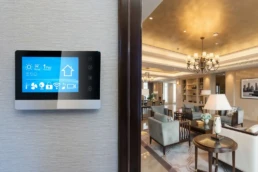
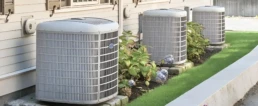
Best Types of Central Air Conditioners for a Happy Home
The Ultimate Guide to the Types of Central Air Conditioners for Your Home in Philadelphia
Homeowners in Philadelphia typically install two main types of central air conditioning systems: split-system central air conditioners and packaged central air systems. These two configurations account for the majority of modern whole-home cooling installations across the United States and remain the most common options for residential whole-home cooling.
A traditional split-system central air conditioner uses an outdoor condenser connected to an indoor evaporator coil installed inside a furnace or air handler. Cool air is distributed throughout the home using a network of air ducts designed for balanced airflow and consistent temperature control. This type of central air conditioning system is extremely common in suburban Philadelphia homes where existing ductwork supports efficient whole-home cooling.
Split systems are the most common central air conditioning systems used in residential properties throughout Philadelphia and surrounding communities. When installing a new system, working with experienced central air conditioning installation professionals helps ensure the equipment is properly sized and matched to the home’s duct layout and airflow requirements.
Another configuration is the packaged central air conditioner. In a packaged system, all cooling components are contained within a single outdoor cabinet installed on a rooftop or next to the building. Packaged units are sometimes used in homes where interior mechanical space is limited or where duct connections are easier to access from outside the structure.
If a property does not have existing ductwork, homeowners may consider alternatives such as ductless mini split air conditioning systems. These systems provide zoned cooling without ducts, but they operate differently from traditional central air conditioning systems designed for whole-home temperature control.
Modern central air conditioning systems also improve indoor air circulation, filtration, and humidity control, which is especially important during humid Philadelphia summers.
Need Help Choosing the Right Central Air System?
If you are comparing central air conditioner options for your home, EMCO Tech can help you choose the right size, efficiency level, and ducted system layout for long-term comfort and lower operating costs. Explore our central air conditioning services or contact our team for expert guidance.
Split System vs Packaged Central Air Conditioning Systems
When comparing the types of central air conditioning systems available today, homeowners typically choose between split-system and packaged central air units. Understanding the differences between these two configurations helps determine which central AC option works best for your property.
Split-system central air conditioning systems use separate indoor and outdoor components. The outdoor condenser releases heat from the home while the indoor evaporator coil absorbs heat from indoor air and sends cooled air through the duct system. This setup allows for efficient cooling and easy service access.
Packaged central air conditioning systems combine the compressor, condenser, and evaporator into a single outdoor cabinet. These systems are often installed on rooftops or exterior pads and are common in certain residential and light commercial buildings.
The best option often depends on available space, duct layout, and accessibility for future central air conditioning repair services. A professional HVAC evaluation can determine which type of central air conditioning system will provide the most reliable cooling performance for your home.
When Should You Upgrade Your Central Air Conditioner?
If your current cooling system struggles to keep up with Philadelphia’s hot and humid summers, upgrading to a modern central air conditioning system can dramatically improve indoor comfort. Central AC systems cool the entire home evenly while operating much quieter than individual room air conditioners.
Energy efficiency is another important factor when comparing central air conditioner options. Modern systems are rated using updated SEER2 efficiency standards that measure cooling performance and operating costs. According to the U.S. Department of Energy central air conditioning guide, properly sized high-efficiency systems can significantly reduce electricity consumption while maintaining comfortable indoor temperatures.
Professional installation also plays a major role in system efficiency. Poor airflow design, undersized ductwork, or incorrect refrigerant charge can reduce the performance of even the most advanced central air conditioning systems. Working with experienced air conditioning service specialists in Philadelphia helps ensure your new system is installed correctly and designed for long-term reliability.
What Central Air Conditioner Should You Buy?
Homeowners often ask which central air conditioning system is best for their home. The answer depends on several factors including home size, insulation levels, ductwork condition, and comfort expectations.
Many homeowners today compare central air conditioner types based on compressor technology. Single-stage systems run at full capacity whenever they operate. Two-stage systems can operate at lower capacity during mild weather for better efficiency. Variable-speed central air conditioning systems adjust output continuously to maintain consistent indoor temperatures and improved humidity control.
If you are comparing equipment options, it is helpful to review several factors when evaluating central air conditioning systems:
- Energy efficiency ratings such as SEER2 and EER2.
- Noise levels produced by the outdoor condenser.
- Humidity control capabilities during hot summer weather.
- Compatibility with existing ductwork and airflow design.
- Long-term service support and availability of air conditioning maintenance services.
Choosing the right system often starts with a proper load calculation and airflow analysis. A qualified HVAC contractor can determine which type of central air conditioning system will provide the best balance of comfort, efficiency, and long-term operating cost.
Compare Central Air Conditioner Types
When evaluating different types of central air conditioning systems, homeowners often compare performance levels rather than just brand names. Modern central air conditioners are typically available in three main compressor configurations that affect comfort, efficiency, and operating cost.
| Feature | Single-Stage Central AC | Two-Stage Central AC | Variable-Speed Central AC |
|---|---|---|---|
| Compressor Operation | Runs at full capacity only | Two output levels (high / low) | Continuously adjusts output |
| Comfort Control | Basic temperature control | More stable temperatures | Most consistent comfort |
| Humidity Removal | Moderate | Improved dehumidification | Excellent humidity control |
| Energy Efficiency | Standard efficiency | Higher efficiency | Highest efficiency potential |
| Noise Level | Louder startup cycles | Quieter operation | Very quiet operation |
| Up-Front Cost | $ | $$ | $$$ |
| Best For | Budget-friendly cooling | Balanced comfort & efficiency | Maximum comfort and efficiency |
If you are comparing central air conditioner types for your home, the best option depends on your comfort expectations, budget, and how long you plan to stay in the property. Many homeowners upgrading their central air conditioning systems choose two-stage or variable-speed units because they improve humidity control and maintain more stable indoor temperatures.
Ready to Install Central Air?
Once you have picked a system type, the next step is a proper install. See our central air conditioning installation and replacement services for the Philadelphia area.
Central Air Conditioning Options for Older Philadelphia Homes
Many homes in Philadelphia were built long before modern central air conditioning systems became common. Older row homes, historic houses, and compact urban properties often present unique challenges when installing central air conditioning systems.
The biggest limitation in older homes is usually space for ductwork. Central air systems rely on properly designed air ducts to distribute cooled air evenly throughout the home. When duct space is limited, professional planning becomes essential. Experienced contractors can evaluate airflow requirements and design efficient duct systems that work within the structure of the building.
Working with specialists in air duct design and installation can make it possible to install central air conditioning systems even in homes that were never originally built with ducts.
In some cases, homeowners may combine central air with supplemental cooling solutions such as ductless mini split systems for specific rooms or additions. However, when ductwork can be installed correctly, central air conditioning systems still provide the most consistent whole-home cooling.
Modern equipment also makes installing central air easier than in the past. Many newer systems are smaller, quieter, and more energy efficient than older models. According to the U.S. Department of Energy central air conditioning guide, proper system sizing and airflow design are among the most important factors affecting performance and energy efficiency.
For many homeowners, upgrading an older house with a well-designed central air conditioning system dramatically improves comfort while increasing overall property value.
How Do You Take Care of Your Central Air Conditioner?
Even the best central air conditioning systems require routine maintenance to perform properly. If your system begins blowing warm air, running constantly, or making unusual noises, it may be time to schedule professional air conditioning repair services in Philadelphia.
Regular maintenance helps prevent costly breakdowns and keeps your central air conditioning system operating efficiently during peak summer months.
- Inspect air filters, blower components, ductwork, and evaporator coils regularly for dust or airflow restrictions.
- Replace HVAC filters every one to two months during heavy cooling use. If needed, contact an HVAC technician to inspect the system and install a replacement filter.
- Check for standing water around the indoor unit or clogged condensate drains.
- Inspect duct connections and equipment cabinets for damaged seals that could reduce airflow.
- Keep the outdoor condenser clear of grass, leaves, and debris so the central air conditioning system can operate efficiently.
Most Recent Air Conditioning Related Posts:
- How Important is an Air Conditioning Contractor
- Central Air Conditioning Ductwork Issues
- The Most Common Air Conditioning Problems
- Before Turning On AC After Winter Checklist (2026 Guide)

Expert AC Buying Guide: Everything Philadelphia Homeowners Need to Know
Checkpoints for a "Good Deal" in the Greater Philadelphia Area
Buying a new air conditioner isn’t just picking a brand and a tonnage. In 2026, the HVAC landscape in the Greater Philadelphia area has changed. Between new SEER2 efficiency standards and the phase-out of older refrigerants, homeowners in Philly, Bucks, and Montco need to be better informed than ever before.
This guide breaks the process into practical checkpoints so you can compare quotes confidently—without turning your project into a research rabbit hole.
Quick Buyer Checklist: A “Good Quote” vs. a “Good Deal”
If you only read one section, read this. A good quote tells you price. A good deal tells you why that equipment fits your home, what efficiency you’ll actually get, and what documentation you’ll have for rebates and permits.
- Sizing Proof: Ask for a Manual J load calculation summary (whole-home and, ideally, room-by-room).
- Efficiency proof: Confirm SEER2 and EER2 (not just “SEER”).
- Matched-System proof: Request the AHRI Certified Reference Number for the complete system.
- Duct reality check: Ask how airflow/static pressure and duct leakage affect performance and comfort.
- Rebate readiness: Confirm the contractor will provide model numbers + AHRI certificate needed for PECO/PPL submissions.
System Sizing: Why Manual J Matters More Than “Same Size as Before”
A lot of replacement quotes start with: “You had a 3-ton unit, so you need another 3-ton.” That is convenient. It’s not always correct. Homes change (windows, insulation, additions), and many older systems were oversized from day one.
What homeowners should ask for
- A Manual J load calculation summary (whole-home and ideally room-by-room).
- The assumptions used (home orientation, window area, insulation levels, occupant assumptions).
- Whether duct losses were considered if ducts run through attic/crawlspace.
Oversized vs. undersized: the comfort tradeoff most people miss
Oversized AC can cool quickly but may not run long enough to remove humidity, leaving the home cool-but-clammy. Undersized AC may run constantly and still struggle on the hottest afternoons. Manual J helps avoid both by sizing to your home’s actual heat gain.
A professional Manual J Load Calculation helps us size the system to your home’s actual heat gain, ensuring maximum comfort and equipment lifespan.
Efficiency Ratings in 2026: Understanding SEER2 & EER2
As of 2023, the DOE updated HVAC test procedures to be more rigorous. We now use SEER2 (seasonal cooling efficiency) and EER2 (peak efficiency). These newer metrics better reflect real-world conditions, like the airflow resistance found in typical Montgomery County duct systems.
Pro Tip: Don’t just buy for the “number.” A high-SEER2 unit attached to leaky, undersized ductwork will never perform at its rated efficiency. Always ask for a static pressure check of your existing ducts.
How to use SEER2/EER2 when comparing quotes
- Compare systems by SEER2 + EER2, not marketing terms (“high efficiency”).
- If two quotes are close in price, prioritize the one that documents airflow improvements. Real performance depends on the system, not just the outdoor unit.
- Ask whether the quoted efficiency is based on the exact matched system (AHRI), not an “outdoor unit only” brochure.
Matched Systems and the AHRI Reference Number: The Paperwork That Protects Your Efficiency
Central split systems are rated as combinations (outdoor unit + indoor coil/air handler and sometimes a furnace). The verified ratings are tied to an AHRI Certified Reference Number. Many rebate programs require the certificate for the complete matched system.
What to request on every bid
- AHRI Certified Reference Number for the full system
- Model numbers for: outdoor unit, indoor coil/air handler, and furnace (if applicable)
- A copy of the AHRI certificate after final equipment selection
Refrigerants: What’s Changing in 2025–2026 (and What Homeowners Should Ask)
Refrigerant policy is pushing new equipment toward lower‑GWP options. Homeowners will increasingly see updated refrigerants paired with new equipment designs. Meanwhile, older systems—especially R‑22—can become expensive to keep alive.
Three practical homeowner questions
- Which refrigerant does the quoted system use, and is it aligned with current transition timelines?
- If I’m comparing two quotes (different refrigerants), what are the warranty and long-term service implications?
- If my current system is R‑22, what does that mean for repair cost and long-term viability?
Ductwork and Airflow: The Hidden Reason “High SEER2” Doesn’t Always Feel Better
Even a top-tier unit can underperform if airflow is restricted or ducts leak. If you’ve dealt with hot rooms, weak airflow at vents, or a system that “runs forever,” duct condition and static pressure should be part of the buying conversation.
Buyer-guide airflow checks
- Ask whether supply/return sizing supports the new equipment.
- Ask if duct leakage or crushed duct runs are suspected (common in older homes).
- If one area is always uncomfortable, ask whether zoning or a ductless mini-split add-on is a better fit than oversizing the whole system.
Philadelphia Permits and Utility Rebates (PECO, PPL, & PGW)
In the Greater Philadelphia area, HVAC work is regulated through mechanical permitting. Some replacement projects may qualify for EZ permits depending on scope. Separately, PECO and PPL rebate programs commonly require the system to be AHRI-rated and to meet efficiency thresholds. To claim local utility rebates, your system must be an AHRI-matched combination (outdoor unit + indoor coil/air handler).
Because rebate amounts and federal tax credit status are subject to change in 2026, we recommend following the links below to view the most up-to-date eligibility requirements and dollar amounts:
- Federal Incentives: Visit the official Energy Star Federal Tax Credit portal to check for active incentives (Note: the 25C credit expired Dec 31, 2025).
- PECO Rebates: Check the latest PECO Heating & Cooling Rebates for Southeastern PA.
- PPL Rebates: View PPL Electric Savings for residents in Bucks and Montgomery counties.
- PGW EnergySense: Visit PGW EnergySense for high-efficiency incentives within Philadelphia.
What to keep in your project folder
- Signed proposal with model numbers (outdoor + indoor + furnace/air handler)
- AHRI certificate for the matched system
- Invoice showing install date and equipment identifiers
- Any permit documentation provided by the contractor (if applicable)
Done Comparing? Let Us Size and Install It.
Put the numbers to work with a professional install. See our central air conditioning installation and replacement services, sized right for your home.
FAQ
Start by comparing quotes using SEER2 and EER2 values and then factor in rebate eligibility. Higher efficiency can make sense if your ductwork and airflow will support the rated performance.
If you want the system sized correctly, yes. Manual J helps prevent oversizing (humidity and short cycling) and undersizing (constant runtime and uneven comfort). It’s also the best way to compare contractors objectively.
Replacing only one component can reduce efficiency, create compatibility issues, and may remove access to AHRI-matched ratings used for rebates. It’s usually better to evaluate matched-system options.
It identifies the certified matched combination of indoor and outdoor components and helps verify efficiency ratings. Utilities often require it for rebate processing.
Philadelphia requires mechanical permits for HVAC work regulated by city code, and some replacement work may qualify for EZ permits depending on scope. Ask your contractor how permitting applies to your project.
Rebates depend on your utility territory and the installed system’s efficiency and AHRI documentation. Confirm program requirements before installing so you don’t miss eligibility.
Ready to upgrade your home comfort?
If you’re in Warminster, Doylestown, Willow Grove, or anywhere in the Philadelphia area, let’s talk about the right system for your home.
- View Residential AC Installation Services
- Explore Ductless Mini-Splits for Older Homes
- Request a Free Estimate & Manual J Calculation
- How to choose a new AC once you’ve decided to replace
Conclusion: Choosing a Future-Proof Cooling Strategy
Buying a new air conditioner in 2026 is no longer a simple “like-for-like” replacement. With the total transition to SEER2 efficiency standards and the shift toward low-GWP refrigerants like R-454B, the technical requirements for a successful installation have never been higher. Homeowners in the Greater Philadelphia (areas we serve) have a unique opportunity to significantly lower their energy bills and carbon footprint, provided they choose the right equipment and a qualified partner.
At EMCO Tech, we pride ourselves on being more than just installers; we are home comfort consultants. We ensure your system is accurately sized through professional assessment and that you are positioned to claim every available dollar in utility rebates from PECO, PPL, or PGW. By focusing on quality over shortcuts, we help you avoid the “cool-but-clammy” pitfalls of oversized systems and ensure your investment lasts for the next decade and beyond.
Ready to start your upgrade? Schedule your professional cooling consultation today and experience the difference that expert sizing and high-efficiency design can make for your home.


When Should You Schedule a Spring AC Tune-Up in Philadelphia?
Why Spring Is the Best Time to Schedule an AC Tune-Up
The best time to schedule a spring AC tune-up in Philadelphia is before your system is needed every day. Early to mid-spring gives homeowners time to catch problems, avoid peak-season delays, and prepare their cooling system before the first serious heat wave arrives.
Spring is ideal because your air conditioner has likely been through months of little or no cooling use. That makes it a practical time to check how the system starts up, how it performs, and whether anything changed since last season. It also gives you room to make decisions before the busy season begins.
Once outdoor temperatures turn consistently hot, HVAC schedules fill up quickly and cooling problems become more urgent. Booking earlier gives you more appointment flexibility and more time to address issues before they affect your comfort. If you are ready to book service, our spring AC tune-up service in Philadelphia page covers the current offer and scheduling details.
Schedule Before the First Heat Wave Hits
Booking early helps you avoid peak-season delays and gives your cooling system a better chance to perform efficiently when temperatures rise. EMCO Tech offers professional spring AC tune-up to help homeowners prepare before summer demand ramps up.
How Early Should You Schedule an AC Tune-Up Before Summer?
The best time to schedule a pre-season AC inspection is before your system becomes something you depend on every afternoon. In the Philadelphia area, that usually means early to mid-spring, before the first prolonged warm stretch turns every minor cooling problem into a same-day emergency.
Homeowners who schedule early are usually in a better position than those who wait until the first 85- to 90-degree week. By then, appointment demand rises fast, and even small issues can be more disruptive simply because you need the system immediately. If your unit has been sitting idle all winter, it may also help to review our before turning on your AC after winter checklist.
Why Waiting Too Long Can Lead to Summer Breakdowns
Many air conditioning issues develop gradually. Restricted airflow, weak electrical components, drain problems, dirty coils, and low refrigerant conditions often start small and get worse only when the system begins working harder. That is why the first hot week of the season tends to expose problems homeowners did not realize were already there.
Spring service gives you a chance to catch those issues earlier, when they are usually easier to understand and easier to address. If your system is already showing warning signs, our air conditioning repair services page is the better next step.
What a Spring Cooling Check Helps Catch Early
A spring cooling visit is valuable because it helps identify the kinds of issues that often turn into summer comfort problems. Instead of treating maintenance like a last-minute chore, it helps to think of it as an early system check that can reveal weak airflow, operating inconsistencies, drainage concerns, component wear, or signs that the system is working harder than it should.
This is especially useful for homeowners who noticed anything unusual at the end of last summer, including longer cooling cycles, uneven temperatures, rising utility bills, or reduced comfort in certain rooms. If your goal is to avoid emergency service during peak summer demand, early detection matters more than waiting to see what happens.
Who Should Schedule Spring AC Service Early?
Some homes benefit from early cooling service more than others. If your air conditioner ran heavily last year, if upstairs rooms stayed warm, or if the system is older, it makes sense to schedule earlier rather than later. The same goes for households with pets, renovation dust, or airflow complaints that may have built up over time.
You should strongly consider early service if your system is more than several years old, if it struggled last season, or if you want a clearer sense of whether it is ready for another summer. Homes with higher cooling demand generally have the most to gain from acting before the rush.
Do Newer Air Conditioners Still Need Spring Service?
Yes. Even newer cooling systems benefit from regular seasonal attention. Modern equipment may be more efficient, but it still depends on proper airflow, correct settings, good drainage, stable electrical performance, and clean operating conditions. A newer system that seems fine can still develop small issues that affect comfort and efficiency.
Seasonal service also helps protect long-term performance and gives you a better understanding of how the system is operating before summer arrives. If you want a broader look at upkeep beyond spring timing alone, visit our air conditioner maintenance services page.
How Spring AC Maintenance Helps Lower Cooling Costs
One of the biggest advantages of early service is that a cleaner, properly operating system usually does not have to work as hard to deliver the same result. When airflow is restricted or components are not performing well, the unit often runs longer and uses more electricity to keep up. That does not always create an immediate breakdown, but it does make summer operation more expensive.
Spring maintenance can help reduce that strain by identifying inefficiencies before the hottest part of the season. If high electric bills have already been a problem, our article on how to lower your AC bill may also help.
According to the U.S. Department of Energy, regular air conditioner maintenance helps improve efficiency and reduce cooling costs over time.
Signs Your Air Conditioner Needs Attention Before Summer
Even if your AC still turns on, that does not always mean it is ready for full summer demand. Some systems give subtle warnings first, such as taking too long to cool, producing weaker airflow, cycling oddly, or leaving some rooms warmer than others. Those symptoms often point to issues that are easier to deal with before the hottest weather arrives.
If you noticed anything unusual last season, spring is the time to act on it. For more examples of what to watch for, see the most common air conditioning problems in Philadelphia.
When to Schedule a Spring AC Tune-Up in Philadelphia
If you want the simplest answer, schedule your tune-up before you truly need your AC every day. That is the real cutoff. A spring appointment gives you time to prepare, reduces the chance of getting caught in the seasonal rush, and helps your system enter summer in better shape.
EMCO Tech Heating & Cooling provides professional professional spring AC service for homeowners who want to prepare before peak heat arrives. If your system may need more than maintenance, you can also explore our broader air conditioning services in Philadelphia.