


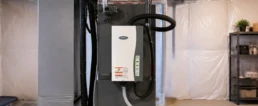
Humidifiers vs Dehumidifiers: Differences, Seasonality & More
Let’s Talk Humidity
Humidity sneaks up on you until the house feels either desert–dry or swamp–sticky. Finding a healthy middle ground is tough in Pennsylvania’s extreme seasons. That’s why so many homeowners search for the difference between humidifiers and dehumidifiers and how to choose the right system for year-round comfort.
What You Need to Know About Humidity
Indoor humidity decides how your air feels. Dry air irritates your skin, throat, and sinuses. Damp air encourages mold, musty odors, and general discomfort. The ideal indoor humidity range stays between 30% and 50%. Once you drift outside that zone, problems show up fast. Checking humidity levels helps you figure out whether you need to add moisture or remove it.
Humidifiers: What They Actually Do
Humidifiers increase moisture when your home’s air drops below a healthy level. In winter, heaters strip the air down to nothing, making symptoms like dry skin, scratchy throat, and static electricity worse. A humidifier replaces that missing moisture so your air feels normal again and your home stays more comfortable.
If you’ve decided a humidifier is right for you, the next choice is the type. Learn the pros and cons of each in our guide to whole-house steam vs. bypass humidifiers.
Dehumidifiers: Why You Might Need One
Dehumidifiers pull excess moisture out of the air. Summer in Greater Philadelphia can feel unbearable when humidity spikes, and that sticky air leads to mold growth, condensation, and persistent odors. A dehumidifier removes that extra moisture and helps keep your home fresher and cooler. It also protects walls, furniture, and HVAC equipment from moisture buildup.
Need a Humidifier or Dehumidifier You Can Rely On?
Ready to take action? Explore our humidifier & dehumidifier installation and service options in Philadelphia and surrounding counties. EMCO Tech installs and services whole-home humidifiers and dehumidifiers to solve dry air, sticky rooms, and musty odors in Philadelphia, Willow Grove, Abington, Horsham, Jenkintown, Warminster, and nearby Bucks & Montgomery County communities.
Humidifier vs Dehumidifier: Key Differences
Both systems manage humidity, but they work in opposite directions.
• A humidifier adds moisture to dry indoor air.
• A dehumidifier removes moisture when humidity is too high.
If you’re asking “do I need a humidifier or dehumidifier,” the answer depends on your symptoms, the season, and your indoor readings.
Seasonal Changes: Why the Right Choice Isn’t the Same Year-Round
Winter air is naturally dry, especially with forced-air heating. That’s when humidifiers help the most.
Summer locks humidity inside the home, making dehumidifiers essential to prevent mold and discomfort.
Spring and fall can swing either way, so monitoring humidity levels with a hygrometer is the simplest way to stay in control.
Dry Skin? Constant Sweat? How to Know Which One You Need
When You Need a Humidifier
- Dry Skin and Lips: Air that’s too dry pulls moisture from your skin.
- Breathing Discomfort: Sore throat, dry nose, or sinus irritation point to low humidity.
- Static Shocks: Too many sparks indoors usually mean the air is under 30% humidity.
When You Need a Dehumidifier
- Sticky, Sweaty Feeling Indoors: High humidity traps heat and makes everything feel clammy.
- Musty or Damp Smells: Extra moisture feeds mold and mildew.
- Condensation on Windows: Water droplets mean humidity levels are too high.
Control Humidity Every Season With EMCO Tech Heating & Cooling
Managing humidity is a simple way to improve comfort and protect your home. EMCO Tech installs, services, and maintains whole-house humidifiers and dehumidifiers across Philadelphia, Montgomery County, Bucks County, and nearby areas. We also help improve indoor air quality through IAQ testing and filtration, air duct design, and routine HVAC tune-ups.
For businesses dealing with moisture control issues, our Commercial HVAC Services offer targeted solutions for apartments, restaurants, offices, and large buildings.
Keeping humidity stable is one of the easiest upgrades you can make for better health, better comfort, and better HVAC performance.
Side-by-side Humidifier and Dehumidifier Features
| Feature | Humidifier (adds moisture) | Dehumidifier (removes moisture) |
|---|---|---|
| Main purpose | Increases indoor humidity when the air is too dry below about 30%. | Reduces indoor humidity when levels are too high above about 50–60%. |
| Best season to use | Winter and heating season when dry air causes static, dry skin and sore throat. | Late spring through summer when hot, sticky air and excess moisture build up. |
| Helps with | Dry skin, chapped lips, nosebleeds, scratchy throat and irritated sinuses. | Musty odors, mold and mildew, condensation on windows and clammy rooms. |
| Typical locations | Bedrooms, living areas and whole house systems tied into the HVAC supply. | Basements, crawl spaces, damp first floors or whole home dehumidifier systems. |
| Comfort impact | Makes air feel warmer and more comfortable at lower thermostat settings. | Makes air feel cooler and less heavy so AC does not have to work as hard. |
| Good choice when you search… | “Humidifier vs dehumidifier for dry air” or “do I need a humidifier in winter.” | “Humidifier or dehumidifier for summer” or “dehumidifier vs humidifier for mold.” |
| When not to use | Avoid if humidity is already high or you are seeing condensation and mold. | Avoid if air already feels dry and you notice static, dry eyes or cracked skin. |
Humidifiers and Dehumidifiers FAQ
Both devices control indoor humidity, but they work in opposite directions. A humidifier adds moisture to dry air, while a dehumidifier removes excess moisture from damp air. If you are searching for the difference between a humidifier and a dehumidifier or “humidifier vs dehumidifier,” remember this: humidification increases humidity, dehumidification lowers it.
The goal is to keep indoor humidity between about 30% and 50% so you avoid dry-air discomfort and high-humidity problems like mold and musty odors.
The easiest way is to measure humidity with a hygrometer. If readings stay below 30%, a humidifier is recommended. If levels are above 50–60%, a dehumidifier is the better choice.
- Signs you need a humidifier: dry skin and lips, static shocks, scratchy throat, irritated sinuses.
- Signs you need a dehumidifier: condensation on windows, musty odors, damp spots, clammy rooms.
Many homeowners search “how to know if I need a humidifier or dehumidifier” because their symptoms are confusing. Matching what you feel with humidity readings gives a clear answer.
In winter, indoor air in Pennsylvania is usually too dry, not too humid. Heating systems lower humidity, often well below 30%. In that case, a humidifier is usually better in winter because it adds moisture back into the air and helps with dry skin, nosebleeds, and sore throats.
If your home is unusually tight or has moisture issues, you might still see high humidity and condensation in winter. Then a dehumidifier may be needed, but that is less common. For most homes, “humidifier or dehumidifier for winter” usually means a properly sized whole-house humidifier.
If your air is dry and your nose feels raw, a humidifier is usually better for congestion and cough. It adds moisture, which can help loosen mucus and soothe irritated nasal passages.
If your symptoms are triggered by mold, dust mites, or very damp air, a dehumidifier may help by reducing humidity and improving air quality. People often look up “humidifier or dehumidifier for a cold” or “which is better for stuffy nose” because both can affect breathing, but the right choice depends on whether the air is too dry or too humid.
Humidifiers can be safe for babies and kids when used correctly. Many parents use cool-mist humidifiers to ease dry cough, congestion, and dry skin in winter. The key is to keep humidity in the 30% to 50% range and clean the unit regularly so it does not grow mold or bacteria.
Avoid placing the unit where a child can touch hot surfaces or spill water. If you prefer a whole-house option, EMCO Tech can recommend humidifiers that safely control humidity without portable units running in every room.
Yes. In climates with cold, dry winters and humid summers, many homes use both at different times of the year. You might run a humidifier in winter when the air is dry, then switch to a dehumidifier in summer when humidity rises.
Some homeowners even use a whole-house humidifier on the supply side and a whole-house dehumidifier for basements or high-humidity areas. This balanced approach keeps humidity within the ideal range year-round.
The opposite of a humidifier is a dehumidifier. A humidifier raises humidity by adding moisture; a dehumidifier lowers humidity by pulling moisture out of the air and collecting it in a tank or draining it away.
If you are searching for the “opposite of humidifier” because your home feels damp, you likely need a dehumidifier instead of more moisture.
Portable units help small spaces, but many homes and businesses in the Philadelphia area benefit from professionally installed whole-house systems. These tie into your existing HVAC equipment and control humidity in every room, not just one area.
If you are searching for “humidifiers and dehumidifiers services Philadelphia PA” or want better indoor air quality, EMCO Tech can size the right system, install it correctly, and provide ongoing maintenance. Visit our Humidifier & Dehumidifier Services page to learn more or schedule service.
Post Updated: November 2025
Cracked Heat Exchanger: Signs, Inspection, Cost, and When Replacement Is Real
Spotting Signs and Swift Solutions for a Cracked Heat Exchanger
Let’s kick off with a reassuring truth: Gas furnaces aren’t villains lurking in your basement, plotting against your family’s safety like some over-the-top horror movie plot. Nope, they’re more like loyal sidekicks, efficient, warm, and mostly drama-free when properly maintained. But, like any hero, they have a weak spot: the cracked heat exchanger. Especially in furnaces pushing 15 years or older, cracks can develop, turning a minor flaw into a major headache (or worse, a headache from carbon monoxide, yikes!). The good news? Regular maintenance is your superpower for prevention. And if you’re in Philadelphia, our team at EMCO Tech Heating & Cooling has your back for everything from routine check-ups to full gas furnace repairs.
Told your heat exchanger is cracked?
Ask to see the photo before you authorize anything. If you want a second opinion, we inspect with a borescope and give you the images and combustion readings in writing. Philadelphia, Bucks, Montgomery, Chester, and Delaware counties.
What Exactly Is a Heat Exchanger, Anyway?
Picture this: Your gas furnace is like a high-tech campfire (minus the s’mores, unfortunately). It burns fuel to create heat, but instead of letting those flames roam free, the heat exchanger acts as a sturdy metal barrier. It traps combustion gases inside while transferring that toasty warmth to the air blown through your vents. This keeps dangerous fumes, like carbon monoxide, safely contained and vented outside via the flue. In short, it’s the unsung hero ensuring your home stays warm without the “smoky cabin” vibe. But when cracks appear? That’s when things get dicey, think of it as your furnace’s Achilles’ heel, begging for a professional inspection.
What Causes a Heat Exchanger to Crack?
Heat exchangers crack due to repeated heating and cooling cycles, metal fatigue, corrosion from combustion gases, restricted airflow, and overheating caused by dirty filters or blocked vents. Over time, the metal expands and contracts thousands of times, weakening the structure. Furnaces over 15–20 years old are especially vulnerable to heat exchanger cracks.
Is the Cracked Heat Exchanger Myth Real?
Ah, the infamous cracked heat exchanger myth, or is it? Spoiler: It’s no urban legend, though we’d all prefer if it were just a tall tale told around the water cooler. Over time, corrosion from the combustion process wears down the metal, leading to tiny fissures that grow like unchecked weeds in your garden. These cracks allow toxic gases to leak into your living space. The scariest culprit? Carbon monoxide (CO), that sneaky, odorless assassin. A properly functioning exchanger sends it packing outdoors, but a crack turns your furnace into a potential hazard, kind of like inviting a villain to your cozy movie night.
Is it safe to run a furnace with a cracked heat exchanger? Absolutely not, it’s like driving with a faulty brake line (spoiler: bad idea). Even small leaks can lead to CO buildup, causing headaches, dizziness, or worse. And yes, your carbon monoxide detector can detect a cracked heat exchanger indirectly by alerting you to rising CO levels. But don’t rely solely on that; proactive checks are key.
Symptoms of heat exchanger crack symptoms include:
- Unusual clicking or popping sounds when the blower shuts off (the metal contracting unevenly, think of it as your furnace’s awkward cough).
- Sooty buildup around vents or a strange, metallic smell.
- Frequent furnace cycling or uneven heating.
- Higher-than-normal utility bills, as the system works overtime.
If you’re wondering how to diagnose a cracked heat exchanger, visual inspections during maintenance are gold. Pros use tools like a heat exchanger crack tester (a specialized camera or dye test) to spot issues without dismantling everything.
Suspect a Cracked Heat Exchanger?
Don’t risk it, our Philadelphia experts handle detection, repairs, and replacements fast.
How to Detect a Cracked Heat Exchanger
Detecting cracks isn’t rocket science, but it’s not a DIY weekend project either, unless you fancy playing HVAC detective with potentially deadly stakes (pro tip: leave the sleuthing to the pros). Here’s how experts (like us) do it, optimized for those searching how to check heat exchanger for cracks or how to tell if heat exchanger is cracked:
- Listen Up: That post-blower click? It’s a classic red flag for expansion and contraction issues in your gas furnace.
- Sniff and Scan: Check for soot, rust, or unusual odors near the furnace. Use a mirror and flashlight for a quick peek at visible areas.
- Test for Leaks: Wondering how to check for a cracked heat exchanger? A combustion analyzer measures CO levels in the airstream. If they’re elevated, it’s inspection time.
- Professional Tools: Heat exchanger test kits or borescopes allow for deeper dives. For vents and air systems, we inspect for blockages or corrosion that exacerbates cracks.
Remember the what is the 2 3 rule heat exchanger? It’s a handy guideline: If your furnace is over 20 years old, plan for replacement within 2-3 years to avoid cracks altogether. Prevention beats cure every time, especially for cracked furnace heat exchanger issues!
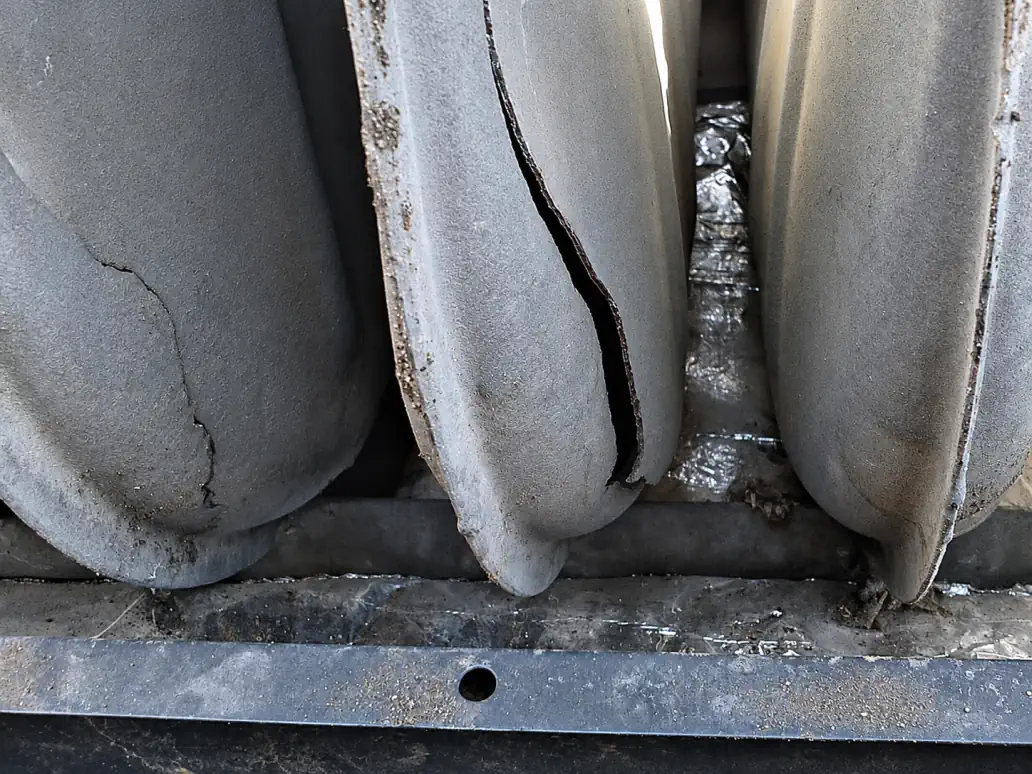
What a Cracked Heat Exchanger Actually Looks Like
Most cracks do not look like a broken plate. They look like a dark hairline seam along a fold or bend in the metal, a section of scaling and rust where the surface has thinned, or a separated weld seam that opens only when the metal is hot.
The three places they show up most: along the top bend of each clamshell section where thermal stress concentrates, at the crimped seams where two halves of the exchanger join, and around the burner ports where flame impingement has thinned the metal over years.
That is why a cold visual inspection can miss a crack that opens under heat, and why a borescope and combustion test matter more than a flashlight.
Heat Exchanger Inspection Cost and What You Get for It
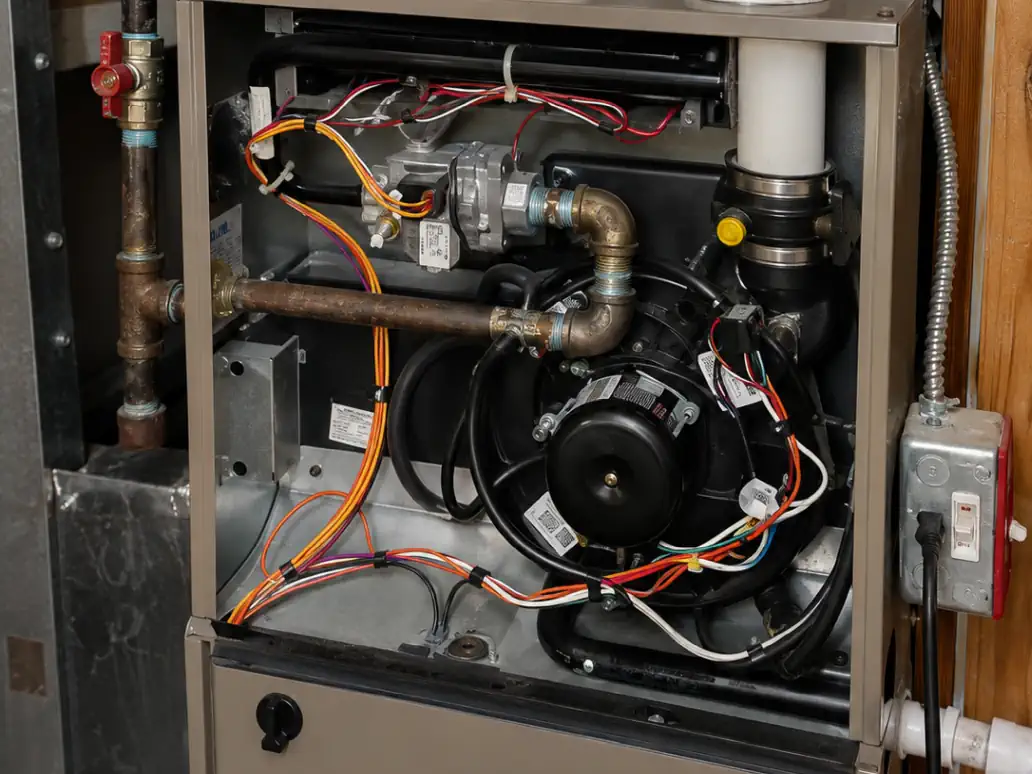
Inspection cost varies with method and how much disassembly the furnace needs. A visual inspection during a service call is often included or nominal. A borescope inspection, where a camera goes inside the heat exchanger, costs more because it takes time and the blower and burner assembly usually have to come out. Combustion analysis and a CO draft test add to that again.
What matters more than the number is what you get back. A proper inspection produces evidence: photographs of the actual crack, combustion readings, and a written finding. If a contractor tells you the heat exchanger is cracked and cannot show you an image of it, that is the moment to ask for one before authorizing anything. Any technician who found a crack can document it.
Second opinions are worth the cost here. Heat exchanger replacement often approaches the price of a new furnace, so a second inspection is small money against that decision.
Found a crack? Don’t panic, act. What action should be taken if a cracked heat exchanger is found? Shut off the furnace immediately, ventilate the area, and call in the cavalry (that’s us). Repair isn’t always feasible; often, replacement is safer and more cost-effective for long-term reliability.
Cracked heat exchanger cost? Expect $500–$2,000 for repairs, but full exchanger replacement can run $1,000–$3,000, depending on your model. For older units, it might make sense to upgrade entirely, check our gas furnace installation services in Philadelphia for energy-efficient options that qualify for rebates.
We also handle related systems like boilers and radiant heating, including boiler repair and installation. For emergency heat exchanger repair, we offer fast response any time, plus same-day and next-day appointments across the Greater Philadelphia area. Our licensed technicians carry combustion analyzers and borescopes, so your cracked heat exchanger carbon monoxide concerns get confirmed or ruled out on the first visit rather than guessed at.
What Happens During a Heat Exchanger Inspection
A proper heat exchanger inspection runs in four stages, and a technician should be able to tell you which ones they performed.
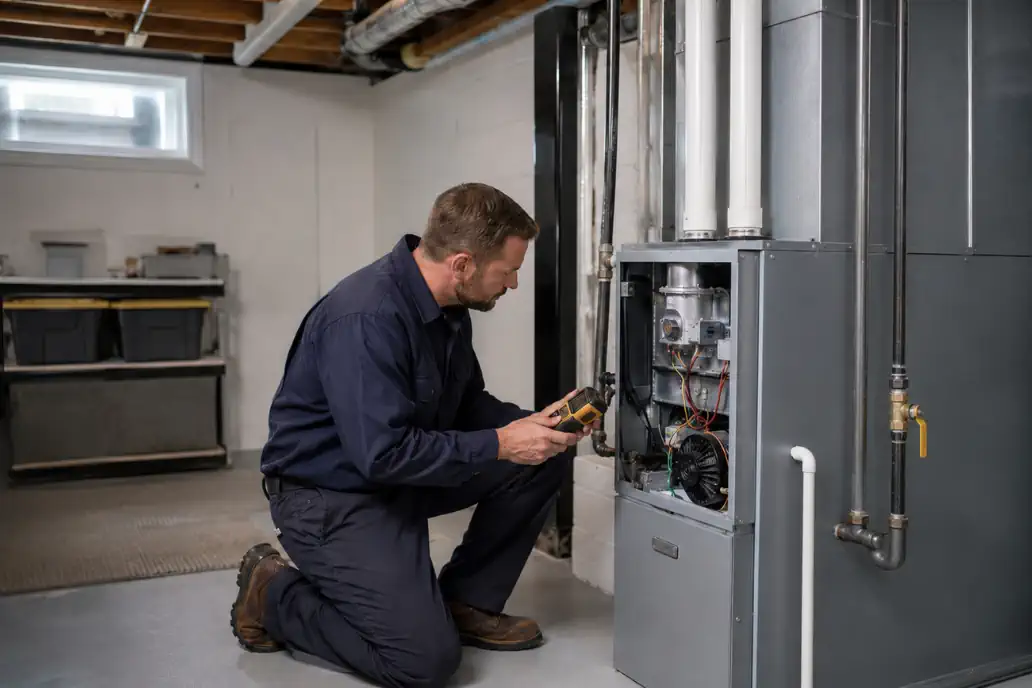
Visual inspection. Panels come off, burners and the blower assembly are pulled where access requires it, and the exchanger surfaces are examined with a mirror and light for splits, warping, rust-through, and separated seams.
Borescope inspection. A camera goes inside the exchanger where the eye cannot reach. This is the method that finds hairline cracks, and it is the one that produces the photograph you should ask to see.
Combustion analysis. A combustion analyzer measures carbon monoxide in the flue and in the supply airstream. Elevated CO in the airstream with the blower running is the strongest functional evidence of a breach.
Flame observation. The burner flame is watched as the blower engages. A flame that rolls, flickers, or changes shape when air moves across it indicates pressure crossing the exchanger wall.
A technician who performs all four and finds nothing has told you something valuable. A clean combustion test with a steady flame under blower load is real evidence your furnace is safe, and that is worth paying for on its own.
Can a Cracked Heat Exchanger Be Repaired?
One of the most searched questions is can a cracked heat exchanger be repaired. In most modern gas furnaces, the heat exchanger itself is not safely weldable or patchable, and manufacturers typically recommend replacing the heat exchanger or the entire furnace. In some warranty situations, a heat exchanger repair may mean “replacement of the heat exchanger assembly” rather than a patch or weld.
The safest next step is a heat exchanger inspection to confirm the crack, measure combustion safety, and determine whether replacement makes sense based on age, warranty coverage, and overall furnace condition. If your system is older, full furnace replacement is often the smarter long-term move.
More Furnace Troubleshooting Guides
A cracked heat exchanger is one of several things that go wrong with a gas furnace, and the symptoms overlap enough that it is worth ruling out the cheaper causes first.
- Signs your furnace is failing, the warning signs that show up before a complete breakdown
- Why is my furnace not heating, when the system runs but the house stays cold
- Common furnace problems in winter, the failures we see most once the cold sets in
- Why your furnace breaks down, the root causes behind repeat service calls
Clicking at shutdown, uneven heating, and rising bills all appear on a cracked heat exchanger and on half a dozen cheaper problems. If your carbon monoxide readings come back clean, one of the guides above is probably a better match for what you are seeing.
Frequently Asked Questions About Cracked Heat Exchangers
Detecting a cracked heat exchanger starts with watching for clicking noises, soot buildup, uneven heating, or strange odors. Professionals confirm a furnace cracked heat exchanger using combustion testing, CO analysis, and visual inspection tools. If a crack is found, shut the furnace down immediately to prevent carbon monoxide exposure and schedule repair or replacement.
Cracked heat exchanger myth?
The idea that a cracked heat exchanger is a “myth” often comes from misdiagnosed furnace problems or fear of unnecessary replacement. While not every furnace issue is caused by a crack, heat exchanger failures are real and documented by manufacturers and safety agencies.
Over time, corrosion, overheating, and metal fatigue can weaken the exchanger walls, especially in furnaces 15–20 years old. A professional heat exchanger inspection using combustion testing and visual tools confirms whether the crack is legitimate or if another issue is causing symptoms.
Cracked heat exchanger repair usually costs $500–$2,000 depending on furnace model and severity. Full heat exchanger replacement ranges from $1,000–$3,000. If you have an aging system, replacing the entire furnace may be more cost-effective, especially in cases like a Carrier furnace cracked heat exchanger.
No. A cracked heat exchanger is dangerous because it can leak carbon monoxide. Even small cracks in a gas furnace can expose your home to CO. Turn the furnace off immediately and call a licensed HVAC technician if you suspect a problem.
Technicians use diagnostic tools such as borescopes, mirrors, dye tests, and combustion analyzers to locate heat exchanger cracks. These tools help verify what a cracked heat exchanger looks like without fully dismantling the furnace.
Common cracked heat exchanger symptoms include soot on or near burners, chemical or burning smells, high energy bills, cold or hot spots in the home, and clicking sounds when the furnace cycles. These warning signs often appear before a complete failure.
Diagnosing a cracked heat exchanger requires professional inspection. HVAC technicians check for corrosion, warped metal, and elevated CO readings. DIY methods for how to check for a cracked heat exchanger are limited and frequently miss early-stage cracks.
A carbon monoxide detector may alert you if CO leaks from a cracked heat exchanger, but it cannot detect the crack itself. Treat any CO alarm as an emergency and shut down the furnace until inspected by a professional.
Turn off the furnace immediately, ventilate the space if safe, and schedule a professional evaluation. Depending on the severity, cracked heat exchanger repair or full furnace replacement may be required to restore safe operation.
The 2–3 rule suggests that if a heat exchanger is over 20 years old, the furnace should be replaced within 2–3 years due to higher risk of cracking, carbon monoxide leaks, and declining efficiency, especially in older gas heating systems.
Post Updated: August 2026

Alternative Heat Sources to Gas Furnaces for Winter Heating
Exploring Non-Gas Heating Options to Keep You Warm and Cozy in Winters
Looking for furnace alternatives? This guide compares alternative heat sources to gas furnaces for winter so you can choose the most efficient option for your home.
Heat Pumps
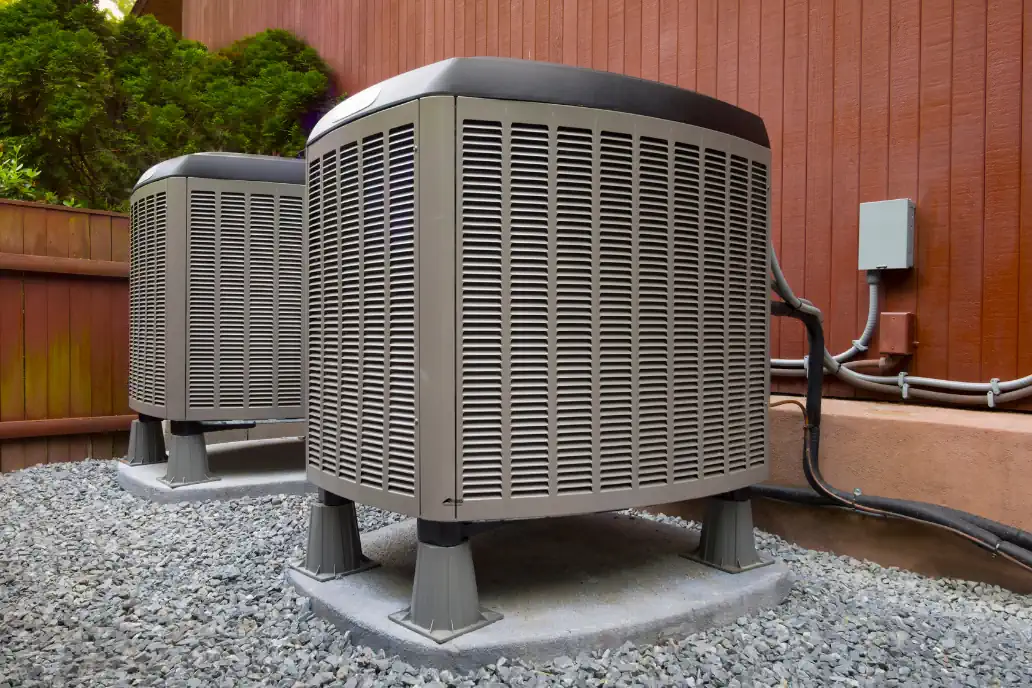
A heat pump is an efficient alternative for homes that do not have a natural gas line. It’s essentially a two-in-one HVAC system, offering both heating and cooling from the same unit. A heat pump works much like a standard air conditioner that circulates refrigerant—except it can reverse its operation to provide heat instead of cold air. This means in winter it extracts heat from the outside air (even when it’s chilly) and pumps that heat indoors. Heat pumps are well-known for their energy efficiency, often operating at 300–500% efficiency under moderate conditions (meaning they produce 3–5 times more heat energy than the electrical energy they consume). Because they move heat rather than generate it, they can heat your home with significantly less electricity than electric resistance heaters or older furnaces. U.S. Department of Energy: Heat Pump Systems
Heat pumps are a leading furnace alternative, delivering efficient heating and cooling in one system; modern inverter models work reliably even in freezing temps.
Modern inverter technology (Carrier Infinity)
Modern Improvements: One limitation of traditional heat pumps is that they can struggle in freezing temperatures, requiring backup heat for extremely cold days. However, today’s cold-climate heat pumps have largely closed that performance gap. Thanks to advanced inverter technology and variable-speed compressors, modern heat pumps can continue delivering heat efficiently even when the thermometer drops. In fact, a recent study in Canada found that at –8 °C (17 °F), some air-source heat pumps were still about 370% efficient (COP ≈ 3.7) — a testament to how far the technology has come. This improved cold-weather performance means fewer instances of the heat pump needing an electric strip heater or other backup heat, saving you money and ensuring comfort year-round.
High Efficiency Example: To put the efficiency in perspective, top-of-the-line models like Carrier’s Infinity series heat pumps offer extremely high efficiency ratings (up to about 23 SEER2 for cooling and 13 HSPF for heating in older rating systems). These variable-speed systems can run longer at lower speeds, maintaining steady indoor warmth and greatly reducing the need for any auxiliary heat even on very cold nights. This level of performance approaches the efficiency of some geothermal systems but at a much lower upfront cost. In other words, a modern inverter heat pump can give you near-geothermal efficiency without the invasive installation of ground loops.
While heat pumps are highly efficient, it’s still important to size and install them correctly for your home’s climate. And if you ever notice your heat pump struggling or not keeping up, it may be time for maintenance or repairs – learn when it’s time to call a pro for your heat pump repair services to ensure your system runs optimally through winter’s worst. (Heat pumps also provide air conditioning in summer, making them a versatile, year-round furnace alternative.)
Get a Free Estimate and $500 Off a New Carrier Infinity Heat Pump
Take your comfort to the next level with Carrier Infinity heat pump system. Book a free estimate in Willow Grove, Philadelphia, Abington, Horsham, Warminster, Doylestown, and surrounding areas.
We offer 10-year parts + labor warranty for all complete HVAC installations bundled with a maintenance plan.
Infinity® 20 Heat Pump With Greenspeed® Intelligence
Need Carrier Infinity heat pump installation near me? EMCO Tech provides quick, reliable service to keep your home comfortable.
Radiant Heaters (Boiler-Based Systems)
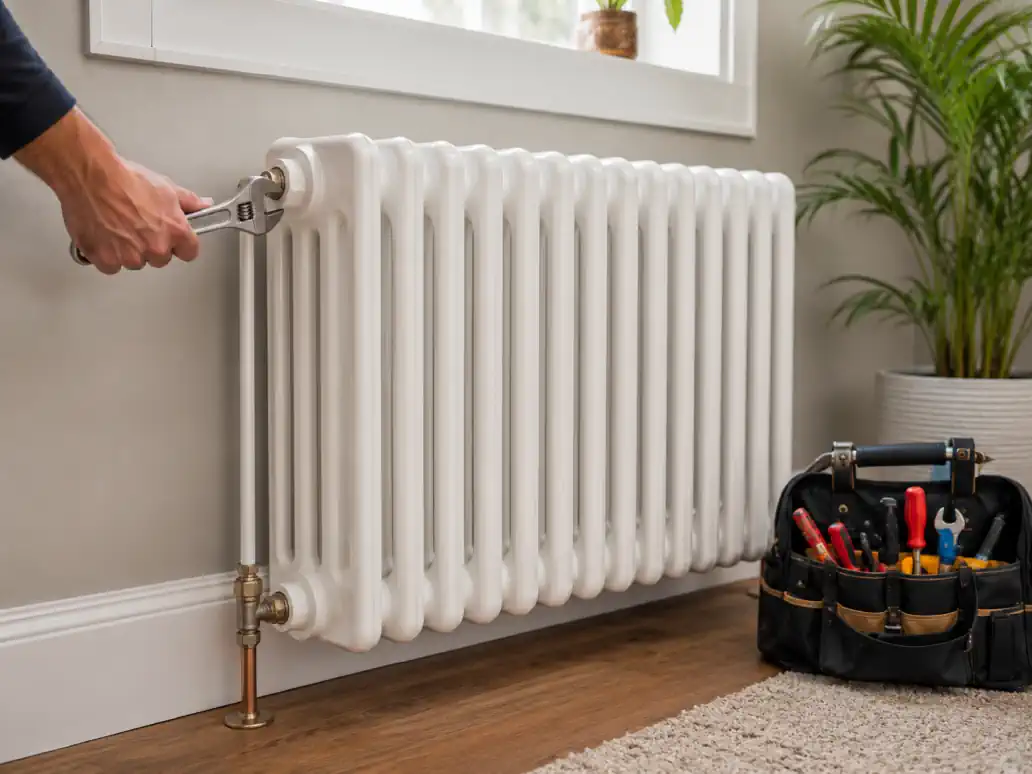
Radiant heating is a broad category for systems that warm your home by heating objects (floors, walls, furniture, people) rather than blowing hot air through ducts. In a typical radiant heating setup, a boiler heats water and pumps it through a network of pipes to radiators or baseboard convectors in each room. These radiators then emit heat, warming the room’s objects and air indirectly (you feel the warmth radiating off the hot surfaces). This is fundamentally different from a furnace, which directly heats air and forces it through ducts into the rooms. DOE: Radiant Heating Basics and Efficiency
Radiant heat warms objects, not just air—quieter comfort and no duct losses, making it a strong alternative to gas furnaces in many homes.
High-efficiency radiant floors
Radiant heat has some unique comfort advantages. Many people find the heat from radiators or floors feels cozier and more uniform than the sometimes-drafty warmth from forced-air systems. There’s no blower fan kicking on and off, so radiant systems operate very quietly and tend to circulate less dust – a bonus for allergy sufferers. On the efficiency side, modern radiant systems can be quite efficient, especially if paired with a high-efficiency boiler. There is no duct heat loss (a typical forced-air furnace can lose 20% or more of its heat through leaky or uninsulated ductwork), so all the heat goes directly into the home. In fact, the Department of Energy notes that radiant heating is often more efficient than baseboard heating and usually more efficient than forced-air heating, specifically because no energy is lost through ducts.
One common type of radiant system in older homes is the classic cast-iron radiator. These can put out a lot of heat but take a while to warm up and cool down. Newer radiant systems might use sleek wall panel radiators or hot water baseboard units, which are more compact. There are even radiant ceiling panels that use electric elements to gently warm a room. Regardless of the style, the principle is the same: heat is delivered via hot water or electric elements to emit gentle, pervasive warmth.
Keep in mind that if you have a boiler-based system, you’ll need to maintain the boiler (much like a furnace needs maintenance). Also, boilers can run on natural gas, propane, oil, or electricity depending on the model. If you’re curious about boiler upkeep or when you should consider upgrading, check out our related post: To Repair or Replace? Are Boilers Worth Fixing? – it offers insight into common boiler issues and when repairs are viable versus when replacement makes more sense.
Discover Efficient Furnace Alternatives for Your Home
Upgrade to a modern boiler or radiant heating system—an energy-saving alternative heat source that keeps every room evenly warm.
Under-Floor Heating (Radiant Floor Systems)
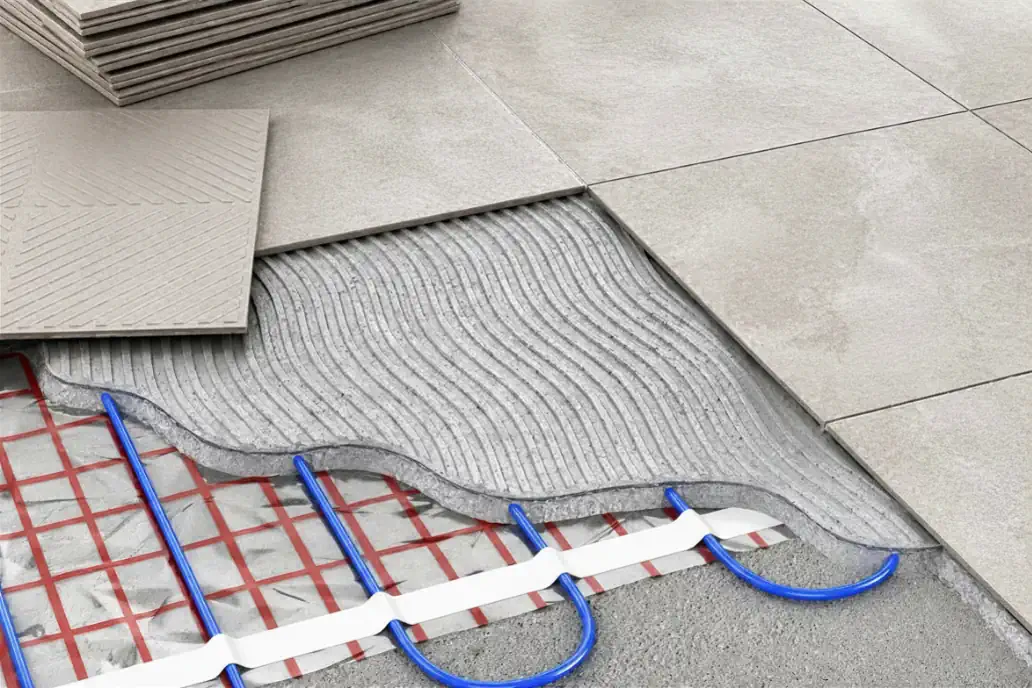
When people mention radiant heating these days, under-floor heating is often one of the most popular and desirable options. As the name suggests, this approach involves installing heating elements under the flooring of your home, turning the entire floor surface into a gentle radiator. Under-floor radiant heating can be achieved with either electric cables/mats or hydronic (water-based) tubing, though the hydronic systems are far more common for whole-home heating. In a hydronic radiant floor system, a boiler (or heat pump or water heater) supplies warm water that circulates through flexible tubing embedded in the floors. The heat then rises evenly from the floor, warming everything in the room from the ground up.
Radiant floor heating is a popular, cost-effective upgrade that spreads low-temperature warmth evenly from the ground up for premium comfort.
Popular, cost-effective hydronic systems
Under-floor radiant heat provides a luxurious comfort – imagine stepping out of bed on a winter morning to a pleasantly warm floor instead of a cold shock to your feet. Beyond comfort, it’s also energy-efficient in many cases. The heat starts at floor level and radiates upward, which means you can feel warm even if the thermostat is set a few degrees lower than you’d need with a forced-air system. (By contrast, hot air from a furnace tends to collect near the ceiling first). According to Scientific American , radiant floor systems transmit heat about 15% more efficiently on average than conventional radiator systems. And as the U.S. DOE notes, under-floor heating eliminates the heat losses associated with ductwork, and it can often outperform traditional forced-air in efficiency.
Another reason homeowners love radiant floors is the lack of noise and drafts – no blowing air, no humming furnace fan, and no dust being circulated. It’s an especially attractive option for people with allergies or sensitivities. Additionally, since the system is under the floor, you free up space (no radiators along the walls and no floor registers or baseboards). This can give more flexibility in furniture placement and interior design.
However, installing under-floor heating is a significant project, especially as a retrofit. It typically requires removing existing flooring so you can lay down the pipes or electric mats and then replacing or rebuilding the floor on top. For that reason, radiant floor installations are ideal for new construction or major remodels. They can be pricey to put in, but many homeowners feel the comfort and efficiency gains are worth it. If you’re remodeling a single room (like a bathroom or kitchen), electric radiant floor mats can be a simpler add-on for that space, though they are more expensive to run than hydronic systems. Hydronic systems make more sense for larger areas or whole-house heating when paired with an efficient boiler or heat source.
It’s also worth noting that hydronic radiant floors are one of the most popular and cost-effective types of radiant heating for homes. They operate at lower water temperatures than traditional radiators (since the heat is spread over a large floor area), which can improve boiler efficiency and even allow the use of alternative heat sources like solar thermal or heat pumps. Hydronic floors can work with a variety of floor coverings, from tile (most efficient) to wood or even carpet (which will slightly insulate and reduce the output). Proper design and insulation underneath the pipes is crucial to direct heat upward and prevent losses into the subfloor or ground.
Example of an under-floor hydronic heating system being installed: flexible PEX piping is laid out in a patterned grid before the floor is finished. Once embedded and covered (with a thin layer of concrete or underlayment), the heated pipes will turn the entire floor into a low-temperature radiator. Radiant floor installations like this are highly efficient and provide evenly distributed warmth, eliminating the drafts and stratification common with forced-air systems.
Under-floor radiant heating can significantly cut back on the heat loss that might occur in a ducted system, and studies show it often allows comfortable heating at lower thermostat settings. This option may also prove beneficial to individuals with allergies, as it doesn’t rely on blowing air around the home the way a furnace does. If you are planning a new build or a major renovation, it’s certainly worth considering installing radiant floor heating for both the comfort and potential energy savings. Just keep in mind that retrofitting it into an existing home (without an ongoing remodel) will be an involved process. It’s best done by professionals who can properly design the system and ensure your flooring materials and insulation are appropriate.
Radiant Floor Heating: A Smarter Home Heating Alternative
Step into consistent, silent warmth with efficient hydronic floors—an alternative heating solution built for lasting comfort.
Electric Furnaces
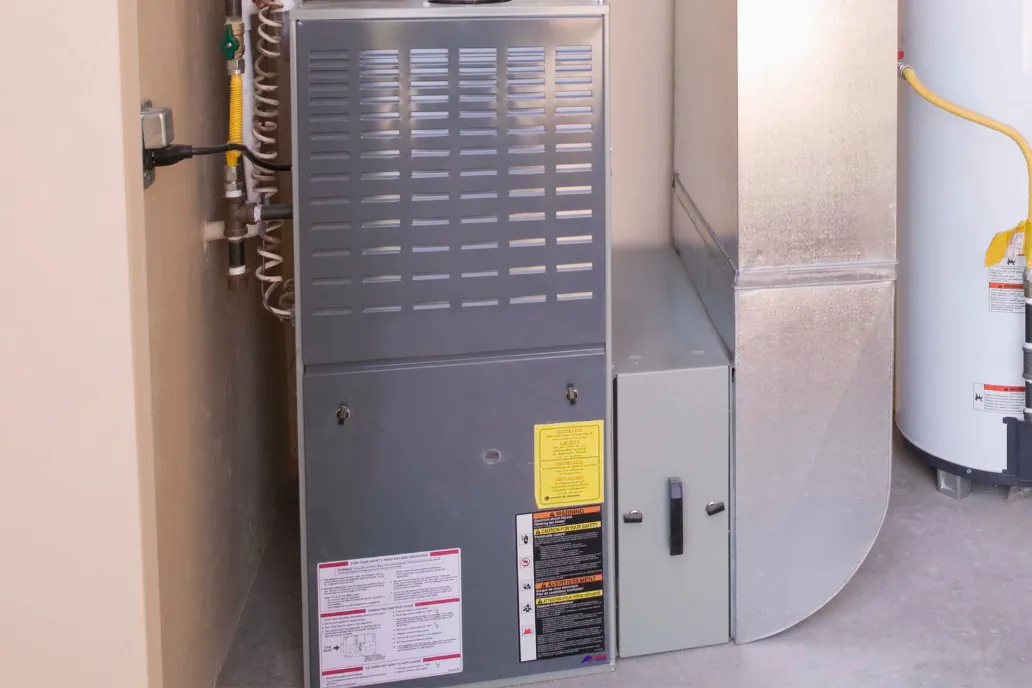
An electric furnace is another alternative for those who don’t have access to natural gas or prefer not to use combustion-based heating. In an electric furnace, electricity powers heating elements (similar to large versions of the coils in a toaster or hair dryer) that warm the air, which is then blown through ducts around your home. In terms of heating performance, an electric furnace can do a solid job of keeping a home warm and will have lower installation cost than a new gas furnace since it doesn’t require flue piping or gas lines. Electric furnaces are also simpler mechanically (no combustion process), which means there’s no risk of gas leaks or carbon monoxide, and maintenance is relatively straightforward.
Electric furnaces install easily and avoid combustion, but heat pumps usually cost less to run in our climate.
Where electric makes sense
There are, however, some important caveats with electric furnaces. First, while they are technically 100% efficient at turning electrical energy into heat (since all the electricity is converted to heat), electricity is usually much more expensive per unit of heat than natural gas, propane, or oil. This means the operating cost of an electric furnace can be quite high, especially in colder climates or regions with expensive electricity rates. In the Philadelphia area, for example, running an electric furnace all winter could lead to steep electric bills compared to a gas furnace. Because of this, electric furnaces are often recommended only for smaller homes, milder climates, or perhaps as backups.
Another limitation is capacity – very large heat output requirements would demand a lot of electrical current, so your home’s electrical service has to be sufficient to handle an electric furnace (most are in the range of 10-20 kilowatts or more). If your home isn’t wired for that, an upgrade might be needed.
For many homeowners without gas, a more cost-effective alternative to an electric furnace is actually a heat pump (discussed above). Heat pumps also run on electricity but are 2-4 times more efficient than an electric furnace, since they move heat instead of generating it. In moderate climates, a heat pump can entirely replace a furnace. In colder climates, some people use a dual-fuel system where a heat pump handles heating on milder winter days and an auxiliary furnace (electric or gas) kicks in only during the very coldest weather. This hybrid approach can reduce costs.
That said, electric furnaces do have advantages: they’re generally smaller and cheaper to install, have fewer moving parts, and can last a long time with minimal maintenance (aside from fan motors and such). If your heating needs are modest or you prioritize a simple, low-upfront-cost system, an electric furnace could be a viable choice. Just be aware of the potentially higher monthly bills. (We at EMCO Tech can help you calculate and compare the long-term costs of electric furnaces vs other alternatives for your situation.)
Replace Your Furnace with a High-Efficiency Electric System
Upgrade to an electric furnace—clean, quiet, and efficient. A modern alternative heating system that saves energy and space.

Smart Thermostats & Modern Controls
No matter which furnace alternative you choose, pairing it with a smart thermostat or advanced control system can maximize your comfort and efficiency. Smart thermostats (like Nest, ecobee, Carrier Infinity Touch, and others) learn your schedule and preferences, automatically adjusting the temperature to avoid wasting energy when you’re not home or when you’re sleeping. They also allow remote control from your smartphone and can integrate with home automation or even react to local weather forecasts.
Smart thermostats boost comfort and cut waste with learning schedules, remote control, and smarter heat source switching.
Comfort, savings, automation
Why is this important? Heating and cooling typically account for the largest portion of a home’s energy use. By optimizing when and how your system runs, a smart thermostat ensures you get the heating you need without unnecessary run time. According to studies of actual homeowners, smart thermostats can save around 10–12% on heating costs and about 15% on cooling costs on average. In dollar terms, that could be roughly $140 per year off your utility bills for a typical home. Over a few years, the thermostat essentially pays for itself – all while keeping you comfortable.
Smart thermostats also provide useful data: you can get monthly energy reports, see how outside weather impacted your usage, and get tips for further savings. Some models use geo-fencing (tracking your phone’s location) to know when you’re on the way home and adjust the temperature accordingly. Others have sensors for multiple rooms to eliminate hot or cold spots. And if you have a zoned heating system or multiple heating sources (say a heat pump and a furnace together), modern thermostats or control systems can intelligently manage the switchover to use the most efficient source for the conditions.
For example, with a hybrid heat pump + furnace setup, a smart control can run the heat pump when outdoor temperatures are above, say, 30°F, and automatically switch to the furnace below that if it’s more cost-effective – all transparent to the user. With radiant floor heating, smart controls can anticipate the longer warm-up time and start heating a bit earlier to have the room at the right temperature by your scheduled time. Essentially, these devices make your heating system smarter and ensure you’re not paying to overheat your home when it’s not needed.
When upgrading your heating system or exploring alternatives, it’s definitely worth considering a smart thermostat. Many utility companies even offer rebates for them because reducing peak demand helps the grid. And importantly, modern systems like the Carrier Infinity series actually rely on smart controls to achieve their highest efficiency – the furnace or heat pump communicates with the thermostat to modulate output in real-time. In short, a smart thermostat is the cherry on top of any efficient heating system, helping you squeeze out additional savings and convenience with relatively little effort.
Geothermal Heat Pumps
Unlike an air-source heat pump that collects heat from the outside air, a geothermal heat pump (also known as a ground-source heat pump) draws heat from the stable temperatures underground. Just a few feet below the earth’s surface, the ground remains at a more constant temperature (typically between about 45 °F and 75 °F year-round, depending on your location) – often warmer than the winter air above. This allows geothermal systems to operate very efficiently in winter, since they’re extracting heat from a relatively mild heat source (the ground) rather than frigid air. As a result, geothermal heat pumps can deliver even higher energy efficiency than typical air-source models, with some systems able to reach coefficients of performance (COPs) of 4 or more (meaning 400%+ efficiency). DOE: Geothermal Heat Pumps
Geothermal heat pumps offer top efficiency using stable ground temps; upfront cost is higher, but operating costs are very low.
Efficiency vs upfront cost
To install a geothermal system, technicians must either drill boreholes and insert loops of piping deep into the ground or bury long loops in horizontal trenches (or sometimes submerge loops in a nearby pond/lake). These pipes are filled with an antifreeze solution that circulates and exchanges heat with the earth. The upfront installation is more complex and costly than other heating systems due to this ground loop. However, the U.S. Department of Energy notes that the lower operating costs of geothermal can often make up the difference: homeowners can recoup the cost of a geothermal heat pump in roughly 5–10 years through energy savings. Additionally, geothermal heat pump equipment is long-lived – the underground loops can last 50+ years, and the indoor heat pump unit often lasts around 20–25 years.
Geothermal systems offer superb efficiency and very quiet operation (no outdoor fan unit is needed). They can also provide cooling in summer by pulling heat out of your home and depositing it underground. On the downside, the installation requires sufficient yard space (or a water source) and a significant upfront investment. But for those planning to stay long-term in their home – or those wanting one of the greenest, lowest-carbon heating options – geothermal is a compelling furnace alternative. There are also tax credits and incentives available that can offset the initial cost. In summary, if you want a heating system that’s ultra-efficient and hidden entirely out of sight, geothermal could be the answer. Just be prepared for a higher initial project cost and be sure to hire qualified installers with geothermal experience.
Pellet Stoves
Long before central heating, many homes were warmed by wood-burning stoves. Today, pellet stoves offer a modern take on that old idea – providing efficient, renewable fuel heating in a convenient package. Pellet stoves burn small pellets made from compressed organic materials (usually wood waste like sawdust, plus agricultural byproducts like corn husks or nutshells). These pellets are loaded into a hopper and automatically fed into the stove’s burn chamber, where they combust and release heat that is circulated into the home via a blower.
Pellet stoves provide clean, renewable heat for zones or small homes, reducing reliance on your main furnace.
Pellet stoves have gained popularity as a greener and often cheaper fuel alternative, especially in areas where firewood or pellets are readily available. They can be powerful enough to heat an entire small home or can supplement your main furnace by heating a central area. According to recent research, pellet stoves are one of the cleanest solid-fuel heating options on the market in terms of emissions. High-quality pellet stoves have efficient burn processes and exhaust systems that produce very little smoke or creosote compared to traditional wood stoves. This means less air pollution and often eligibility for clean energy tax credits or rebates.
There are some considerations with pellet stoves: they do require electricity to run the feed auger and fans, so they won’t operate in a power outage unless you have a backup power source. You also need space to store bags of pellets and will have to refill the hopper periodically (typically every day or two, depending on usage and hopper size). Routine cleaning of ash is necessary, though pellets burn fairly cleanly with low ash content.
Pellet fuel prices can fluctuate but are generally quite stable and affordable – and since they’re made from waste biomass, they’re considered carbon-neutral (the CO₂ released was absorbed by the plants when growing, making it part of the current carbon cycle). This makes pellet stoves appealing for those looking to reduce reliance on fossil fuels. Just make sure you have a good supply of pellets locally, and be prepared for some maintenance like cleaning the burn pot and servicing the motor parts occasionally.
One interesting note from a Journal of Physics conference study: to keep pellet stoves ultra-clean in terms of carbon monoxide (CO) emissions, it’s important that they have the right air supply design and electronic controls. Essentially, engineering the stove to provide plenty of secondary air for complete combustion is key. So if you’re shopping for a pellet stove, look for models with a proven track record of low emissions and possibly an EPA certification.
Overall, a pellet stove can be a cost-effective and environmentally friendly alternative heat source – either as a primary heater for a smaller home or as a supplemental heater that allows you to run your main furnace less. Plus, the ambiance of a flame in the stove can make winter evenings extra cozy!
Which Alternative Home Heating System Is Right for You?
With so many furnace alternatives available – from heat pumps (air-source or geothermal) to radiant heating to high-efficiency stoves – the best choice really depends on your home’s infrastructure, your budget, and your heating goals. Start by considering your priorities: Are you looking to replace your gas furnace entirely, or simply reduce your reliance on it with a supplemental heater? Do you want the lowest operating cost, the smallest carbon footprint, or the coziest comfort? Different solutions shine in different areas.
Match option to home & budget
For instance, if your home already has ducts and you want a seamless transition from a furnace, an air-source heat pump might be the easiest swap (and it adds summer A/C if you don’t have it). If you’re doing a major renovation or building new, radiant floor heating can provide incredible comfort and efficiency. If you have land and plan to stay put, geothermal could eliminate your heating fuel bills for decades. Or maybe you love the independence of a pellet stove to heat a specific zone of your home and keep the gas bill low. In many cases, a combination of solutions works best – e.g. a heat pump as primary heating with a furnace or electric resistance as backup, plus a smart thermostat to orchestrate everything.
It’s also important to factor in the climate. Here in Pennsylvania, winters can be cold but also have many moderate days – perfect for a heat pump to handle much of the load. During extreme cold snaps, a backup heat source ensures you stay warm. Homes in milder climates might never need anything beyond a heat pump. On the other hand, a well-insulated, smaller home might do fine with an electric system or a pellet stove. Always consider insulation and sealing too; sometimes the best “alternative” is actually improving your home’s efficiency so that any heating system will perform better.
If you’re unsure which route to take, it’s wise to consult with HVAC professionals (like our team at EMCO Tech). We can assess your home’s heating requirements, evaluate your current system, and help you compare options – whether it’s upgrading to a high-efficiency Carrier Infinity heat pump, installing a new boiler for radiant heating, or integrating a smart thermostat with zoning controls. Our goal is to find the solution that fits your needs and keeps you comfortable cost-effectively.
Need Help? Call EMCO Tech Heating & Cooling
For more information about the best furnace alternatives for your home, reach out to the specialists at EMCO Tech Heating & Cooling (aka Emergency Maintenance Company) today! We’re happy to answer your questions and guide you toward a warm and cozy winter with the perfect heating setup. With the right system in place – and perhaps a smart thermostat at the helm – you can stay toasty and save on energy bills, all while saying goodbye to any worries about your old gas furnace. Give us a call 215.366.1001 or contact us online to get started on your home’s heating upgrade!

Furnace Alternatives: FAQs
Yes. Modern inverter heat pumps provide reliable heat in freezing temps and often cost less to run than electric furnaces.
For remodels or new builds, hydronic radiant floors deliver quiet, even warmth at lower water temps and can improve efficiency when paired with high-efficiency boilers or heat pumps.
Geothermal offers top efficiency and very low operating costs but higher upfront price. Inverter air-source heat pumps cost less to install and provide strong year-round performance. Explore your options in our heating services.
Top furnace alternatives include air-source heat pumps, geothermal systems, boiler-based radiant heat, radiant floors, and electric furnaces. The right choice depends on ducts, budget, and climate.
Yes. Boilers and radiant heating reduce duct losses, run quietly, and can achieve excellent efficiency with modern equipment.
An electric furnace is simple and combustion-free, but heat pumps usually deliver lower operating costs in our climate. We can compare lifetime costs for your home.
Yes. Smart thermostats optimize schedules, manage dual-fuel changeover, and coordinate zones to reduce energy use while keeping steady comfort.
Pellet stoves can provide efficient, renewable zone heat for living areas or small homes. Ask our team how they integrate with your primary heating system.
Many projects qualify for utility rebates or federal tax credits on high-efficiency heat pumps, boilers, and smart controls. Contact us for current programs and guidance.
Start with a professional load calculation, check ducts or hydronic options, and compare operating costs and comfort goals. Book a free estimate and we’ll tailor the best solution.
Compare Furnace Alternatives Today
Free in-home estimate, rebates guidance, clear pricing. We install Carrier equipment and service all major brands.
Explore Efficient Heating Alternatives
Discover modern, energy-efficient alternatives to gas furnaces. From heat pumps and boilers to radiant floors, EMCO Tech helps you choose the best heating solution for your home.
Serving Philadelphia and nearby areas · Financing available · Call 215.366.1001
Post Updated: October 2026
Furnace Smells Like Rotten Eggs? Why It's Dangerous and How to Fix It Fast
Why Your Furnace Smells Like Rotten Eggs, and How to Stop It Before It Gets Dangerous
Is your furnace pumping out a rotten eggs smell, or maybe something like sewage, a dead animal, or even burning? If you’re searching for “rotten eggs smell from furnace dangerous” or “how to fix rotten eggs smell from furnace,” you’re in the right place. These odors aren’t quirky; they’re red flags for serious issues like gas leaks, electrical failures, or buildup that could turn your cozy home into a hazard zone. At EMCO Tech Heating & Cooling, we’ve seen it all in Philadelphia, and we’re here to break it down smartly so you can act before things go boom.
A rotten eggs smell from your furnace is often mercaptan, the additive in natural gas that makes invisible leaks detectable. It’s a potential explosion warning. If it’s in your car, “heat smells like rotten eggs in car” usually points to a catalytic converter issue, but for home furnaces, act fast. Other smells like sewage (clogged drains or bacterial growth) or a dead animal (critters in vents) need attention too. Even electric heaters can emit similar odors if components overheat or off-gas.
Smell Rotten Eggs Right Now?
Leave the house first and call your gas utility from outside: PGW in Philadelphia or PECO in most of the suburbs. Once it's safe, call us for gas leak repair and a full furnace safety check.
Safety First: Don’t Ignore the Warning Signs
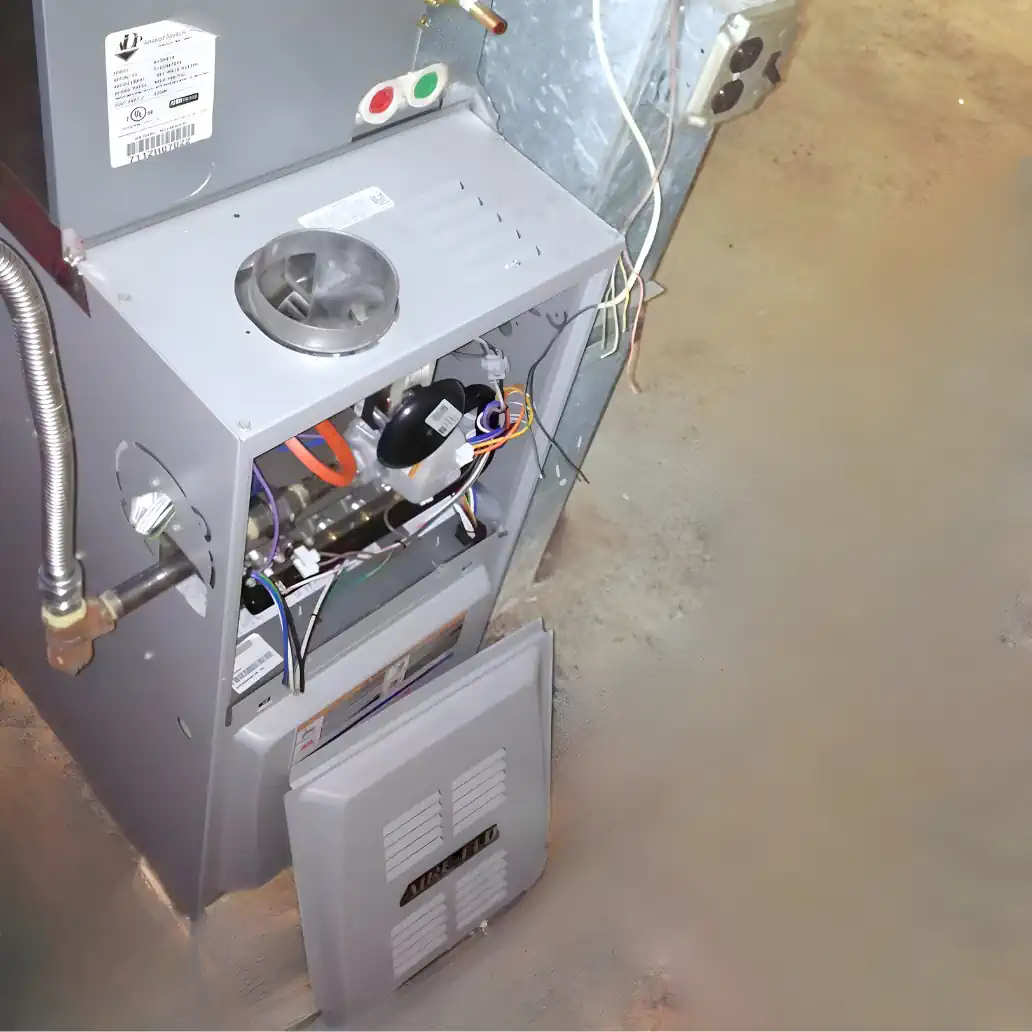
If you smell gas or suspect a leak, evacuate immediately. Grab your family and pets, and get outside. Call 911 from a safe spot. Don’t touch switches or phones inside, they can spark ignition. Too many people learn this the hard way after reading “rotten eggs smell from furnace Reddit.”
Quick emergency steps if you detect a rotten eggs, burning, or sulfuric smell:
- Evacuate everyone now. No heroes.
- Avoid sparks: Don’t use lights, appliances, or start your car.
- Ventilate if safe: Crack windows on your way out, but don’t linger.
- Call pros from outside: Contact emergency services, then EMCO Tech at (215) 366-1001.
- Stay out: Wait for clearance from authorities or certified technicians.
Regular maintenance prevents most of these issues. Check out our gas furnace maintenance in Philadelphia to stay safe.
Common Causes of Furnace Odors (and Why They’re Not DIY-Friendly)
Furnaces are machines that wear down over time, and smells are warnings. Here’s the quick breakdown:
- Rotten Eggs Smell (Gas Leak): Usually mercaptan. Could mean faulty valves or gas line leaks. Don’t touch it, call a pro.
- Burning Smell: Normal at season start, but if persistent, suspect wiring or motor issues. Sometimes it’s rodents in ducts or melting insulation.
- Sewage or Sulfuric Odors: Caused by bacterial growth or sewer gas backup.
- Electric Heater Smells: Often new unit chemical off-gassing or failing elements.
Ignoring these signs risks carbon monoxide poisoning, fires, and high bills. Schedule a gas furnace repair in Philadelphia or explore electric furnace services.
Electric Heater Smells Like Rotten Eggs? Here’s What It Means
Electric heaters, electric furnaces, baseboard heaters, and heat pumps don’t burn fuel, so they can’t leak natural gas or make combustion fumes on their own. When an electric heater smells like rotten eggs, the smell is almost always coming from somewhere else and the heater’s airflow is spreading it. The most common sources:
- A gas leak from another appliance. A gas water heater, stove, dryer, or gas line nearby can leak, and the heater’s fan carries the smell through the house. Treat it as a gas leak until a professional rules it out.
- An overcharging battery. Lead-acid batteries in a UPS backup or a sump pump battery backup can release hydrogen sulfide, which smells like rotten eggs, when they overcharge or fail.
- Overheating electrical parts. A failing blower motor, heating element, or wire connection usually smells like burning plastic or fish rather than eggs, but it can be hard to tell apart. Either way, it’s a fire risk.
- Sewer gas. A dry floor drain or plumbing trap near the air handler can let sewer gas into the return air, and the heater spreads it.
If there’s any chance it’s gas, leave the house and call your gas utility from outside. If the smell is electrical, turn the heater off at the breaker and don’t use it again until it’s been checked. Our electric furnace repair technicians find the source and fix it safely.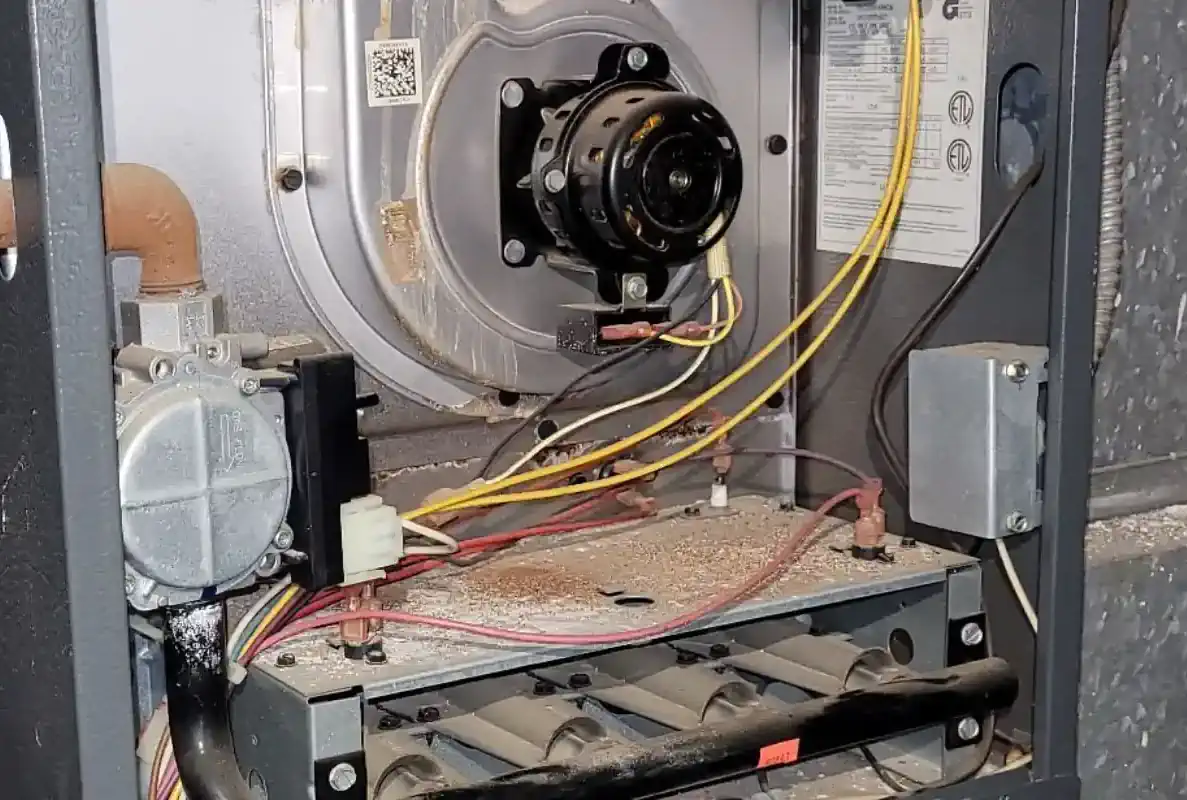
Rotten Egg Smell Only When the Heat Comes On
If the rotten egg smell shows up right when the furnace starts, or blows out of the heat vents and then fades, the most likely causes are:
- A small gas leak at the furnace. A loose fitting or a failing gas valve can release a little gas every time the burners light. This is the most important one to rule out, because small leaks can get bigger.
- Delayed ignition. When the burners are slow to light, gas builds up for a moment before it ignites, which can give off a quick puff of rotten egg smell and a loud boom or whoosh.
- A smell that was already in the basement. The blower pulls air from around the furnace, so a gas leak at the water heater, sewer gas from a floor drain, or a dead animal near the return gets spread through every vent the moment the heat kicks on.
Furnace Smells Like Sulfur
A sulfur smell from the furnace, especially from the exhaust or around the vent pipe, can mean combustion gases aren’t leaving the house the way they should. A blocked flue, poor chimney draft, or a cracked heat exchanger can push exhaust back into the home, and with it carbon monoxide. Oil furnaces and oil boilers are the most likely to smell like sulfur, because heating oil contains sulfur and a dirty nozzle, delayed ignition, or a blocked chimney makes it obvious. Turn the system off, open a window, and call for service. A cracked heat exchanger is one of the signs your furnace is going out, and our oil furnace repair technicians handle sooty, smelly oil burners every winter.
Boiler Smells Like Rotten Eggs?
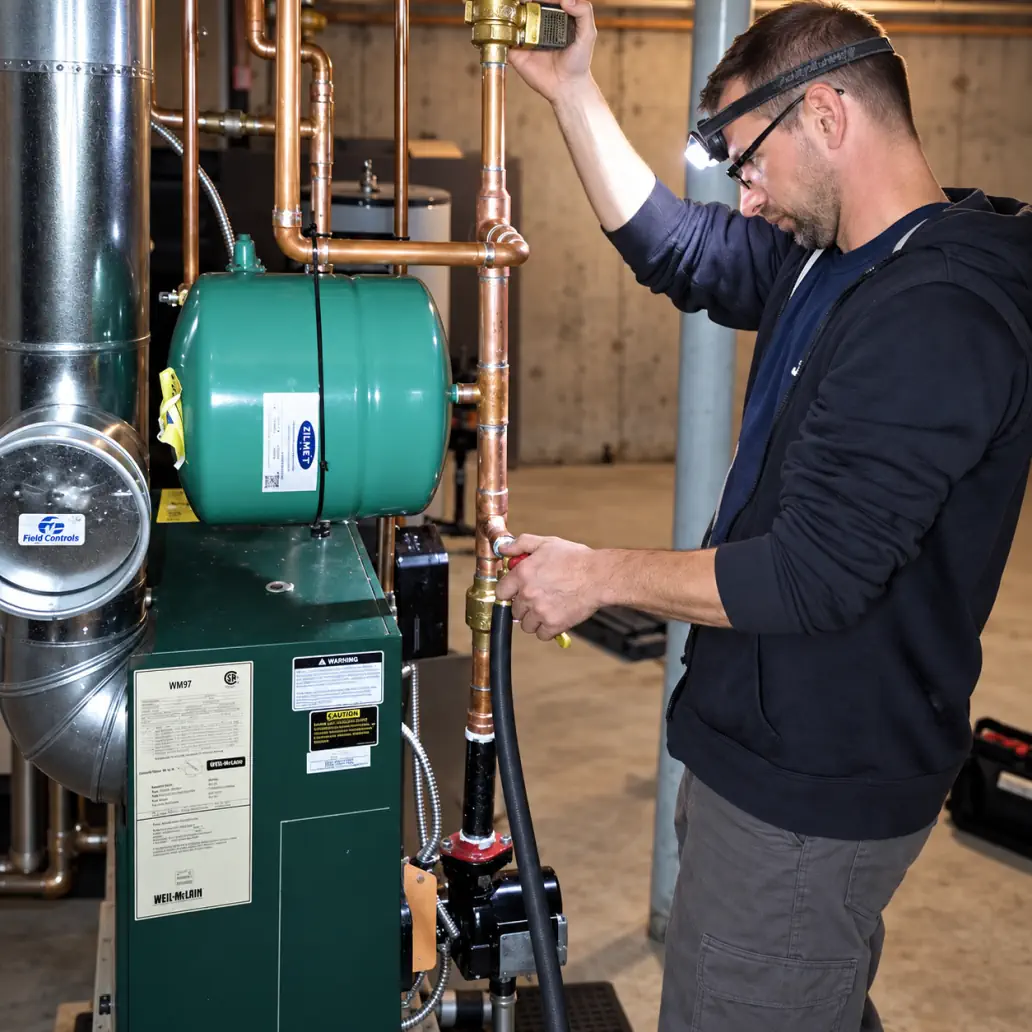
Boilers can smell like rotten eggs for the same reasons furnaces do. On a gas boiler, a leak at the gas valve, a fitting, or the gas line is the first thing to rule out. On an oil boiler, a sulfur or rotten egg smell usually points to poor combustion or a venting problem: a dirty burner, a clogged nozzle, delayed ignition, or a blocked chimney. Boiler rooms often have floor drains too, and a dry drain can let sewer gas into the room. Because boilers sit in basements and utility rooms that people rarely check, the smell can build for a while before anyone notices. Our boiler repair technicians check gas connections, combustion, and venting on gas, oil, and steam boilers.
Furnace Smells Like a Dead Animal, Sewage, or Skunk
Dead Animal Smell
A dead animal smell from the furnace or vents usually means exactly that: a mouse, bird, or squirrel got into the ductwork, the return air, or the furnace cabinet and died there. The smell gets worse when the blower runs because warm air carries it through the house. The animal has to be found and removed, and the area cleaned, before the smell will go away. Some people also describe the natural gas odorant as a dead animal or skunk smell, so if you can’t find an obvious source, treat it as a possible gas leak.
Sewage Smell
A sewage smell when the furnace runs usually comes from a dry floor drain or plumbing trap near the furnace, a condensate drain line on a high-efficiency furnace that has lost its water seal, or a cracked drain or vent pipe nearby. The blower pulls that sewer gas into the return air and spreads it through the vents.
Skunk Smell
Natural gas and propane are odorized with mercaptan, which many people describe as smelling like skunk or rotten eggs. If your furnace or furnace room smells like skunk and there’s no skunk outside, assume it’s gas. Leave the house and call your gas utility from outside: PGW in Philadelphia, or PECO in most of the suburbs. Then call us for gas leak repair once the utility has made it safe.
How to Fix Rotten Eggs Smell from Furnace (The Right Way)
DIY hacks won’t save you here. Most are temporary and risky. Do this instead:
- Shut it down: Turn off the furnace at the thermostat or breaker.
- Inspect safely: You can vacuum vents but stop there.
- Call experts: We recommend Carrier gas furnaces for reliability.
- Prevent future problems: Get a professional gas furnace installation or regular tune-up through our gas furnace services.
These smells often mean it’s time for an upgrade. EMCO Tech handles diagnostics, repairs, and installations to keep your Philadelphia home safe and efficient.
AC or Heat Vents Smell Like Rotten Eggs?
Air conditioners don’t use gas either, but in most homes the AC and the furnace share the same blower and ductwork. That means a gas leak near the furnace, sewer gas from a dry condensate trap, or a dead animal in the ducts can come out of the vents whether the heat or the AC is running. If your AC or heat vents smell like rotten eggs, check whether the smell is strongest near the furnace or air handler, then follow the same safety steps: if there’s any chance it’s gas, get out and call the utility. For cooling-side problems, our AC repair technicians clear condensate drains and track down odors in the air handler and ducts.
Ready to Ditch the Stink? Contact EMCO Tech Today
Don’t let a smelly furnace ruin your winter. Professional help beats DIY disasters every time. Call (215) 366-1001 or contact us online for fast, expert HVAC service in Philadelphia and nearby areas.
Furnace or Heater Smell Won't Go Away?
Our technicians track down rotten egg, sulfur, sewage, and dead animal smells from furnaces, boilers, electric heaters, and AC systems, then fix the cause with the price before any work starts.
Furnace Smells Like Rotten Eggs FAQ
Look, if your nose is screaming “rotten eggs,” it’s not your imagination or last night’s takeout, it’s mercaptan, the stinky additive in natural gas that screams “leak alert!” Common culprits? Faulty valves, loose connections, or even contaminated oil in oil furnaces. Sarcasm alert: Nature didn’t make gas smell like eggs for fun; it’s to save your butt from invisible danger.
What to do: Evacuate ASAP, avoid sparks, and call us for gas furnace repair in Philadelphia. Don’t play hero, gas leaks aren’t negotiable.
Hell yes, genius, it’s basically your home yelling “evacuate!” Natural gas leaks can cause explosions, fires, or carbon monoxide poisoning (think headaches, dizziness, nausea, or worse). We’ve seen Reddit threads (“rotten eggs smell from furnace reddit”) full of near-misses where folks waited too long. Even if it’s “just” sewage-like (from bacterial buildup) or dead animal vibes (critters in ducts), it tanks air quality.
What to do: Get out, call 911 if strong, then hit us up for a safety check via gas furnace maintenance in Philadelphia. Better safe than sorry (or sued).
Arguing with a gas leak? Bad idea. Shut off the furnace at the breaker, ventilate if safe, and bail. Pros like us trace leaks with detectors, DIY hacks from Google are recipes for disaster. For electric heaters smelling like eggs? Could be overheating or chemical off-gassing; same drill.
What to do: Skip the YouTube tutorials and schedule our gas furnace services. If it’s time for an upgrade, check Carrier residential gas furnaces or our gas furnace installation in Philadelphia.
Ah, the classic “first heat of the season” drama, dust and debris burning off after months of neglect. Harmless if it fades quick, but persistent? Could be clogged filters, motor burnout, or electrical issues (wires frying, yikes). New furnaces? They off-gas protective oils, smelling weird for a day.
What to do: Change that filter, stat. If it lingers, call for electric furnace services if electric, or us generally. Annual tune-ups prevent this nonsense.
Sewage whiff? Blame bacterial growth in drains or coils, gross but fixable. Dead animal? Literal rodents rotting in vents (Philly winters drive ’em in). Either way, it’s killing your air quality and efficiency.
What to do: Don’t mask it with Febreze; get a deep clean. Our techs handle this, contact us at (215) 366-1001 or online.
You bet, dirty filters build up grime that burns, overworking your system. New units? That burning plastic/chemical scent is normal break-in, gone in 24–48 hours. But if it’s oil-like (leaks) or diesel (overfill), that’s trouble.
What to do: Swap filters seasonally. For installs, trust pros like our gas furnace installation.
Smart question, prevention beats panic. Schedule yearly maintenance to catch leaks, clean coils, and clear ducts. Avoid overfilling oil tanks, and upgrade old clunkers. Heat pumps? Zero gas risk, but that’s another chat.
What to do: Book our gas furnace maintenance in Philadelphia now. It’s cheaper than emergency calls (and explosions).
Nah, but brief chemical off-gassing is, fades in a day. Persistent? Leak city.
What to do: Monitor, then call for gas furnace repair.
A gas leak typically smells like rotten eggs, sulfur or skunk-like, garlic or burned garlic, due to a chemical called mercaptan intentionally added to natural gas and propane for safety. Natural gas and propane are naturally odorless, so utility companies add mercaptan to give them a distinctive, pungent odor that is easily detectable even at very low concentrations.
If you suspect a gas leak, call your gas service provider and book an appointment with gas line repair company.
An electric heater can’t leak gas or produce combustion fumes, so a rotten egg smell usually comes from something nearby that the heater’s airflow is spreading. The most common source is a gas leak at another appliance, like a gas water heater, stove, or dryer. An overcharging lead-acid battery in a UPS or sump pump backup can also release hydrogen sulfide, which smells like rotten eggs. Overheating wiring or motors usually smell like burning plastic or fish. If there’s any chance it’s gas, leave and call your gas utility from outside. If it smells electrical, shut the heater off at the breaker and have it checked.
A dead animal smell from a furnace usually means a mouse, bird, or squirrel got into the ductwork, return air, or furnace cabinet and died there. The smell gets stronger when the blower runs, because warm air carries it through every vent in the house. The animal has to be found and removed, and the area cleaned, before the smell goes away, and any gaps where it got in should be sealed. Some people also describe the odor added to natural gas as a dead animal or skunk smell. If you can’t find an obvious source, treat it as a possible gas leak and call your gas utility from outside.
No. Carbon monoxide has no smell, no color, and no taste, which is why a working carbon monoxide alarm on every level of your home is so important. The rotten egg smell comes from mercaptan, the odorant gas utilities add to natural gas and propane so leaks can be detected. That said, the two problems can show up together. A furnace with a gas leak, a blocked flue, or a cracked heat exchanger can produce both a smell and carbon monoxide. If your CO alarm sounds, or anyone has headaches, dizziness, or nausea that ease when they leave the house, get everyone outside and call 911.
On a gas boiler, a rotten egg smell most often means gas is leaking at the gas valve, a fitting, or the gas line, so treat it as a leak: leave the house and call your gas utility from outside. On an oil boiler, a sulfur or rotten egg smell usually points to poor combustion or venting, like a dirty burner, a clogged nozzle, delayed ignition, or a blocked chimney, because heating oil contains sulfur. A dry floor drain in the boiler room can also let sewer gas in. A technician can test the gas connections, combustion, and draft to find the exact cause and make the boiler safe again.
Propane is odorized with the same kind of rotten egg smelling chemical as natural gas, so a rotten egg smell from a propane furnace, heater, or space heater should be treated as a possible leak. Turn the heater off if you can do it safely, leave the area, and call your propane supplier from outside. A smell can also show up when a propane tank is running very low, but you shouldn’t assume that’s the cause. Once the supplier has made it safe, have the heater, the regulator, and the connections checked by a technician before you use them again, especially on an older unit.
An air conditioner doesn’t burn gas, but in most homes it shares the same blower and ductwork as the furnace. So a gas leak near the furnace or water heater, sewer gas from a dry condensate trap or floor drain, or a dead animal in the ducts can all come out of the vents while the AC runs. Start by noticing where the smell is strongest. If it’s near the furnace or any gas appliance, treat it as a gas leak and call your utility from outside. If it’s near the indoor coil or drain line, a technician can clean the condensate drain, restore the trap, and track down the source.
A new furnace often gives off a light burning or oily smell for the first few heating cycles as manufacturing oils and coatings on the heat exchanger and burners burn off. That smell is normal and usually fades within a few days of regular use. Keep the area ventilated and replace the filter if it’s dusty from installation. It should never smell like rotten eggs, sulfur, or strong exhaust, and it shouldn’t set off a carbon monoxide alarm. If it does, or if the burning smell lasts more than a week, turn the furnace off and have the installer check the gas connections, venting, and combustion right away.
Furnace Smell and Gas Safety Services
Gas Leak Repair
Leak detection and repair on furnace, boiler, and appliance gas lines.
Gas Furnace Repair
Gas valves, delayed ignition, venting, and heat exchanger problems.
Emergency Service
Fast response when a smell, a CO alarm, or no heat can't wait.
Boiler Repair
Gas, oil, and steam boilers with smells, leaks, or venting issues.
Electric Furnace Repair
Overheating elements, motors, and wiring that cause burning smells.
Winter Heater Tune-Up
Gas connections, venting, and a carbon monoxide test before the cold sets in.
More on Furnace Smells and Heating Safety
To Repair or Replace? Are Boilers Worth Fixing?
How Do I Know if My Boiler Needs Repairing?
Strange noises like banging or whistling, low water pressure, a leak, or a lack of hot water or heat all mean the same thing, your boiler is telling you something. Catching these early usually means a smaller repair bill. Call us for a diagnosis before it turns into a no-heat emergency.
Can a Boiler Be Repaired?
Yes — in most cases, boilers are worth repairing, at least for a while. With regular maintenance and timely fixes, you can extend your boiler’s life and save money over the years. However, always weigh the repair costs against the price of a new boiler, especially considering your unit’s age and model. Sometimes putting money into an old, inefficient boiler isn’t the best move if that money could go toward a newer, more efficient replacement.
“Repair or Replace? The Ultimate Dilemma!” – Making the Right Choice
Deciding on boiler repair or replacement comes down to a few key factors. Age is one of the biggest considerations. If your boiler is more than 15 years old, it’s likely less efficient and more prone to problems than newer models. In that case, investing in a replacement could save you money on energy and reduce breakdowns. (In fact, Energy Star recommends considering a new boiler after about 15 years.) Likewise, a unit that’s constantly breaking down or requiring expensive fixes is probably ready to retire.
On the other hand, if your boiler is under, say, 10 years old and has been running without major issues, repairing it might be the smarter move financially. A relatively newer boiler often has plenty of life left, especially with proper maintenance. Always compare the repair bill to the cost of a new boiler before deciding. In many situations, a repair that costs a few hundred dollars is well worth it when a new boiler would be several thousand.
Boiler Acting Up? Decide Whether to Repair or Replace.
If your boiler is leaking, making strange noises, or struggling to heat your home, it may be time to evaluate whether a repair will solve the problem or if replacement is the smarter investment. Our experienced technicians provide honest recommendations and reliable solutions for homes across the Philadelphia area.
 What Is the Life Expectancy of a Boiler?
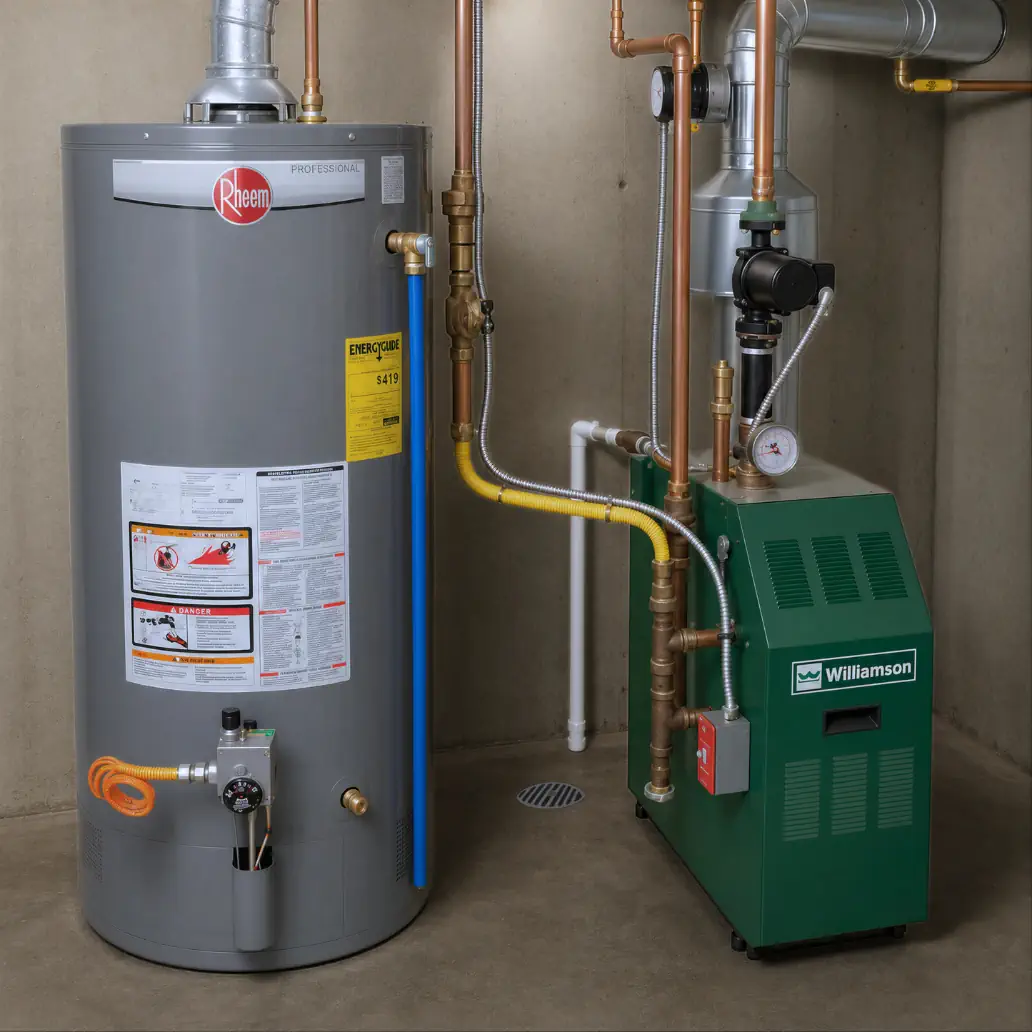
Life expectancy depends heavily on the type. Cast iron steam and hot water boilers, the kind most common in older Philadelphia homes, often run 20 to 30 years with regular maintenance. Steel and condensing boilers typically run 15 to 20 years before efficiency drops and issues start piling up. Either way, as a boiler ages its efficiency declines, so a unit that’s still running isn’t necessarily running well. Curious what your specific noise or symptom usually means? We break it down further below.
What Are the Most Common Boiler Problems?
Boilers can run into a variety of issues over time. Some of the most common problems include low water pressure, thermostat malfunctions, limescale buildup (mineral deposits in the system), leaks, and strange banging or whistling noises. It’s important to address these symptoms as soon as possible to prevent a minor issue from turning into a major breakdown. Regular servicing by a professional can help catch and fix these problems early.
Prolonging the Life of Your Boiler: Regular Maintenance and Repairs
One way to ensure your boiler lasts as long as possible is to keep up with regular maintenance and needed repairs. Flushing the system, checking pressure, and tuning the burner annually can prevent many issues that shorten a boiler’s lifespan. Also, consider the type of boiler you have. For example, combination boilers (combi boilers) tend to be pricey to replace, so it might be worth fixing a high-end combi unit rather than buying a new one right away. In general, if your system is older, inefficient, and still breaking down often even with maintenance, it’s probably time to think about a replacement. But if it’s relatively new and has been well maintained, a repair will likely get it back on track for much less money than a new boiler.
Explore More Heating System Advice
Still researching your heating options? These guides explain how different heating systems work, what warning signs to watch for, and when repairs or upgrades may be the smarter choice for long-term comfort and efficiency.
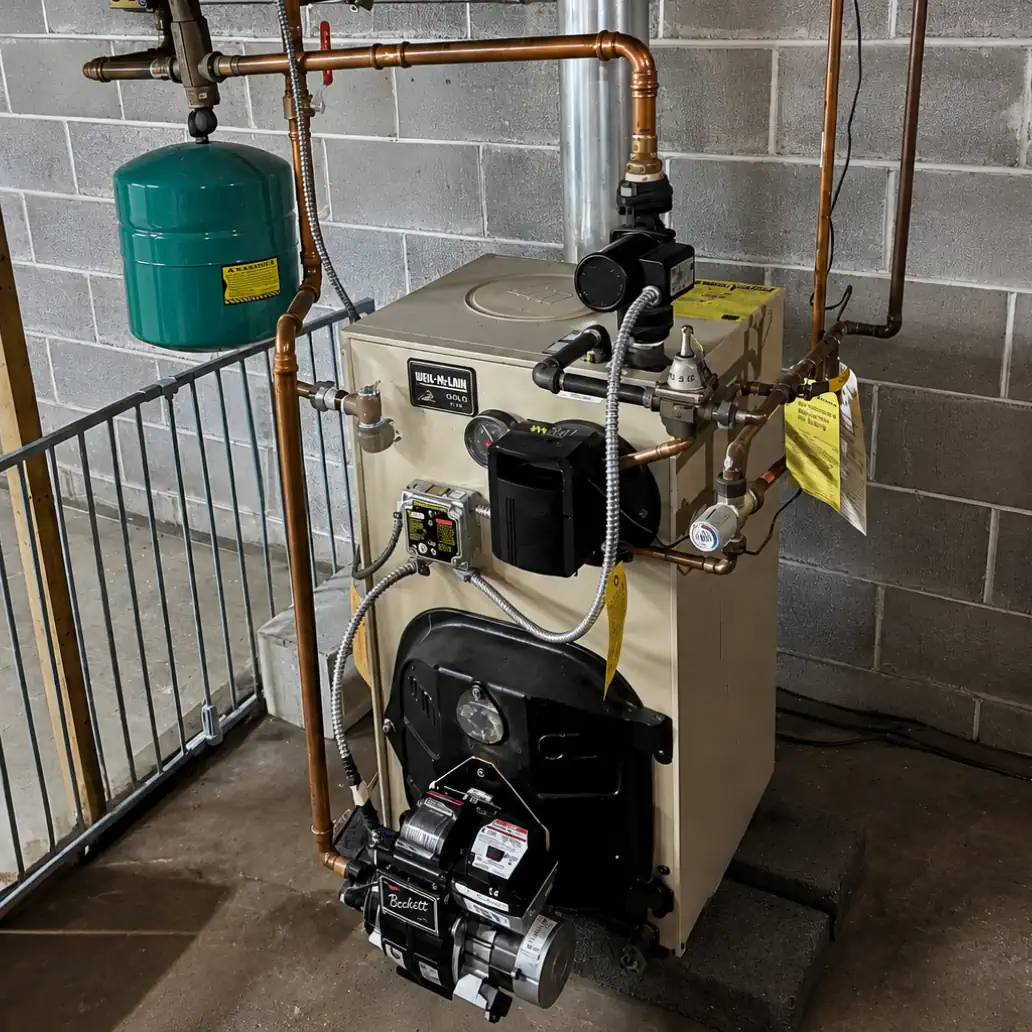 Guide for Choosing the Perfect Heating System for Your Home
Choosing the ideal heating solution for your home isn’t always straightforward. When weighing the decision to repair or replace your boiler, base it on clear factors like age, efficiency, and the type of unit. As mentioned, consistent maintenance can stretch a boiler’s lifespan and reduce long-term costs. If you’re still unsure which way to go, don’t hesitate to consult a professional heating expert. An experienced HVAC technician can inspect your boiler and give you personalized advice, so you can feel confident about your choice.
Get Help from EMCO Tech Heating & Cooling for Your Home Heating Needs
Making informed decisions about your boiler starts with knowing your options before you spend a dollar. Regular tune-ups and prompt repairs can extend a boiler’s life and save you money, and whichever way this decision goes, a second honest opinion never hurts. Our licensed HVAC technicians at EMCO Tech Heating & Cooling give you straight answers based on what’s actually happening with your system, not a sales pitch.
Still on the fence about whether your boiler is worth fixing or due for a replacement? We’ll give you an unbiased assessment and a free estimate either way.
We proudly serve boiler repair and replacement across Philadelphia (Northeast Philadelphia, Chestnut Hill, Fishtown), Montgomery County (Abington, Horsham), Bucks County (Southampton, Doylestown), Chester County (West Chester), and Delaware County (Wayne, Newtown Square), so you can count on prompt, reliable service.
If you want to learn more about home heating options or need a free estimate for a boiler repair or a new boiler installation, contact us today at 215-366-1001 to schedule an appointment or get straight answers to your heating questions.
Boiler Repair or Replacement FAQs
Some plumbers can handle basic boiler issues, but most homeowners are better off hiring an HVAC contractor who specializes in boiler repair and replacement.
If your boiler is under 10 years old and the repair cost is modest, fixing it usually makes sense. However, if it’s older than 15 years, inefficient, or breaking down often, replacement is the smarter long-term option.
The cost to repair a boiler depends on the issue. Minor fixes might only run a few hundred dollars, while major repairs can be so expensive that replacing the unit becomes more sensible. Always compare the repair quote with replacement costs before deciding.
It depends on the type. Cast iron steam and hot water boilers, common in older Philadelphia homes, often run 20 to 30 years with proper maintenance. Steel and condensing boilers typically run 15 to 20 years before efficiency drops.
Frequent breakdowns, rising energy bills, uneven heating, strange noises, or leaks are all warning signs. If those problems keep coming back and repair bills are piling up, then replacing the boiler is usually more cost-effective.
Often, constantly repairing an old boiler ends up costing more in the long run. While you might squeeze a bit more life out of it with fixes, a newer system will likely be more efficient and save money on fuel and future service calls.
Common boiler issues include leaks, thermostat failures, low water pressure, strange banging noises, and limescale buildup. Getting regular service helps prevent these problems from turning into costly emergencies.
Boiler replacement cost depends more on your home’s setup than the brand. Fuel type, steam versus hot water, the efficiency tier, and how much of the existing piping needs correcting all move the number more than the equipment does. See our boiler replacement page for what actually drives the cost, or call for a free written estimate.
That’s usually kettling, sediment or scale built up near the heat exchanger creating hot spots that make the water pop and bang as it boils against them. It won’t fix itself and it accelerates wear. Worth a look before it turns into a bigger repair.
Usually a weak or dirty thermocouple, a draft problem, or a gas supply issue. It’s not something to keep relighting on your own, especially on a gas appliance. Have it diagnosed properly.
Most often a failed circulator pump, a stuck zone valve, or air trapped in the system. The boiler itself can be working fine while heat never makes it to the radiators. This is usually a straightforward repair.
Check the cheap causes first, a waterlogged expansion tank or a weeping pressure relief valve cause the same symptoms as a real leak and cost a fraction to fix. If those check out and pressure still drops, see our guide to cracked boiler sections for what else it could be.
Explore Our Boiler & Heating Services
Gas Boilers
Efficient heating solutions for homes with reliable gas boiler systems.
Oil Boilers
Stay warm with dependable oil boiler installation, service, and repair.
Steam Boilers
Classic steam heat systems serviced and installed by local experts.
Tankless Boilers
Modern, space-saving boilers with hot water on demand.
Gas Line Services
Safe gas line installation for boiler upgrades and conversions.
Boiler Repair vs. Replacement: A Deeper Look
Age, cost, and system type, worked through in more detail below.
The foundation of any repair-or-replace decision starts with knowing your boiler’s expected lifespan and the broader financial implications. On average, residential boilers last 15 to 25 years, though well-maintained cast-iron models can push toward 30 years. Steel boilers, however, may only reach 15-20 years before efficiency wanes and issues mount. If your unit is over 15 years old, it’s wise to monitor it closely, as repair frequency and costs tend to rise.
Older boilers lose efficiency over time, forcing them to consume more fuel to maintain warmth, which drives up your heating bills. A typical 20-year-old boiler might operate at 60-70% efficiency, while modern condensing models achieve 90-98% or higher. Upgrading can cut your annual heating costs by 20-40%, potentially recouping the investment through savings in just a few years, especially with Philadelphia’s variable winters and fluctuating natural gas prices.
Not every noise or leak means the same thing. Here’s what we’re usually looking at once we get on site.
Boiler Leaking Water From the Bottom. On a cast iron boiler this is either a failed gasket or push nipple between sections, which is a repair, or a cracked section, which usually isn’t. The two look similar from the outside but cost very differently to fix. See our full breakdown on telling a gasket leak from a cracked section.
Loud Banging or Rumbling (Kettling). Sediment and scale build up near the flame and create hot spots. Water flashes against them and you hear it as banging or rumbling during a heating cycle. It’s a sign of scale, not structural damage, but left alone it does eventually contribute to cracked sections.
Pilot Light Keeps Going Out. Usually a weak or dirty thermocouple, a draft issue at the flue, or a gas supply problem. Not something to keep relighting yourself, especially on a gas appliance. Have it diagnosed.
Boiler Turns On But No Heat. The boiler can be firing fine while heat never reaches the radiators. Usual causes are a failed circulator pump, a stuck zone valve, or trapped air in the system. This is typically a straightforward, inexpensive repair, not a sign the boiler itself is failing.
Low Pressure or the Boiler Shuts Off. Rule out the cheap causes first, a waterlogged expansion tank or a weeping pressure relief valve both mimic a real leak and cost a fraction to fix. If those check out and pressure keeps dropping, you’re likely looking at a section leak.
Steam Boiler Shaking, Clicking, or Banging. Steam systems have their own quirks. Water hammer from improperly pitched pipes, a clogged air vent, or the wrong water level all sound alarming but are often simple fixes. See our dedicated steam boiler page for steam-specific troubleshooting.
Weil-McLain, Burnham, Peerless, and H.B. Smith are the cast iron brands we see most across Philadelphia’s older housing stock, and parts are generally still available for all four. If yours is an older or less common brand, ask us to check before assuming you’re stuck replacing it.
Cost is often the deciding factor, and it’s also the hardest one to pin down from an article, because no two boiler jobs are quite the same. A simple part swap might run a few hundred dollars. A bigger repair, a circulator or a control board, can run into four figures. Full replacement is typically several thousand dollars installed, and where it lands depends on fuel type, whether it’s steam or hot water, the efficiency tier, and what the last installer left behind. Code upgrades, accessories, and radiator or piping issues all move that number in ways a phone quote can’t account for.
Two rules of thumb hold regardless of the exact number. If a repair costs more than half of what a new boiler would run installed, replace. And if you multiply the boiler’s age by the repair cost and it clears 5,000 dollars, that also points toward replacement. We give a firm written number after we’ve actually looked at the system, not a guess over the phone.
Ultimately, the equation boils down to age, efficiency losses, and total ownership costs. Let’s explore specific scenarios next.
Repairing your boiler is a smart move if the system is still relatively young and the issue is isolated and affordable. Here are key situations where fixing makes sense:
- Boiler Age Under 10-15 Years: Newer units with solid maintenance records respond well to repairs. Parts are readily available and efficiency remains high, so a modest fix can add years of reliable service without a full overhaul.
- Low-Cost, Targeted Repairs: For minor problems like a faulty igniter, valve, or circulation pump, the bill stays well under what a new boiler would cost. These fixes restore functionality quickly and economically, ideal if your boiler has no prior major issues.
- Reliable Track Record: If this is your first big breakdown and the boiler has been dependable, a professional repair can address it without signaling deeper problems. Annual maintenance helps here, as it prevents small issues from escalating.
- Budget Limitations: A new boiler is a major expense, so if funds are tight, a safe, affordable repair can bridge the gap for 1-2 more seasons while you save for an upgrade. Just avoid repeated patches on units over 20 years old.
In these cases, repair extends your boiler’s life cost-effectively. Prioritize licensed technicians for safety, particularly with gas or oil systems.
Pro Tip: Consistent maintenance, annual inspections and cleanings, maximizes repair value by keeping efficiency optimal and catching issues early.
Sometimes, repairs just delay the inevitable. Replacement shines when your boiler shows signs of advanced age or chronic problems. Consider these indicators:
- Age 15+ Years: At this stage, even functional boilers are inefficient and prone to failure. A new unit offers 15-25 more years of service, plus features like smart controls and better zoning for even heating in your Philly home.
- Frequent or Expensive Repairs: Multiple service calls in recent years, or a single fix that starts approaching what a new boiler would cost, signal it’s time to replace. The 50% rule applies here, if repairs hit half a new boiler’s price, the math favors starting fresh to avoid ongoing disruptions.
- Rising Energy Bills and Poor Performance: If bills are climbing despite stable fuel costs, or your home feels unevenly heated, inefficiency is likely the cause. Modern high-efficiency boilers can slash fuel use by 30% or more, providing quicker ROI amid Pennsylvania’s energy landscape.
- Safety Issues: Cracked heat exchangers, gas leaks, or carbon monoxide risks demand immediate action, often replacement over repair for household safety. Visible corrosion, leaks, or unusual odors are red flags.
- Obsolete Parts or Technology: For units over 10-15 years, sourcing parts becomes challenging and costly. New boilers ensure easy maintenance, warranties (often 5-10 years), and compatibility with rebates for energy-efficient models.
- Long-Term Home Plans: If you’re staying put, a replacement boosts comfort and home value, appealing to buyers in areas like Horsham or Southampton who prioritize modern HVAC during inspections.
Replacement isn’t just about fixing, it’s an investment in reliability and savings.
Spotting trouble early can prevent winter emergencies. Watch for these common red flags:
- Age Exceeding 15-20 Years: Lifespan limits mean breakdowns are imminent.
- Frequent Repairs: Repeated calls indicate systemic wear.
- Increasing Utility Bills: Unexplained spikes suggest efficiency loss.
- Inconsistent Heating: Cold spots or struggling to warm up point to circulation or capacity issues.
- Noises Like Banging or Whistling: These signal sediment buildup, valve problems, or overheating, common in aging units.
- Leaks, Rust, or Corrosion: Water around the base or visible damage risks floods or inefficiency.
- Discolored Flame or Soot: Yellow flames on gas/oil boilers indicate combustion issues, potentially unsafe.
- Outdated or Hard-to-Find Parts: If repairs involve rare components, obsolescence is near.
Multiple signs? It’s likely time for replacement to avoid costly surprises.
To decide, assess your specifics:
- Opt for Repair: Young boiler (under 15 years), a single low-cost fix, good history, e.g., an 8-year-old unit needing a routine pump replacement.
- Opt for Replacement: Old unit (over 15 years), repeated or high-cost issues, safety concerns, e.g., a 22-year-old boiler needing a major heat exchanger repair.
Timing matters: in peak winter, repair for immediate relief; off-season, plan a replacement. Calculate long-term: new boilers offer warranties, and it’s worth asking about current PECO or state rebate programs for high-efficiency models, plus meaningful fuel savings that offset the upfront cost.
Consult a pro for an unbiased evaluation, we’ll inspect and quote both options.
Unsure? A local HVAC expert can diagnose your boiler, estimate repair viability, and compare replacement benefits, factoring in Philly-area fuel costs and incentives. In neighborhoods from Manayunk to Bustleton, our harsh winters make dependable heat non-negotiable.
For tailored advice on whether to repair or replace your boiler, contact the heating specialists at EMCO Tech. We provide thorough diagnostics and straightforward recommendations to match your needs, be it a targeted repair or efficient new installation. Visit our boilers and radiant heating services for more on keeping your home cozy, explore boiler repair options, or learn about professional boiler installation. With EMCO Tech, you get peace of mind and optimal comfort.
Post updated: September 2026
How Often Should You Get a Furnace Tune Up? - Philadelphia Furnace Maintenance Guide
Updated October 2025
How Often to Tune Up a Furnace?
Once a year—ideally in late August or September—so your system is safe, efficient, and ready before the first cold snap. New furnaces still need annual inspections to protect the warranty. Heavy use, dust/pets, renovations, or older equipment may benefit from a mid-season check. A professional furnace tune up helps extend system life and prevent costly breakdowns
Benefits of a Professional Furnace Tune Up
Furnace tune-up in Philadelphia and seasonal maintenance are vital services that keep your HVAC system running smoothly and efficiently in winter. A qualified technician will inspect your gas furnace or oil furnace and make sure it is in good shape. A forced air heater tune-up can prevent common problems with your heating system—such as dirty filters, faulty pilot lights, or cracked heat exchangers—which can affect your comfort and safety.
Ready to Book Your Furnace Tune-Up?
Keep your Philadelphia home safe and warm all winter with EMCO Tech's 22-point furnace tune-up. If you have an oil-fired system, see our oil furnace tune-up page for fuel-specific pricing and details.
Why Regular Furnace Inspections Play Important Role in Philadelphia Heating Services
If you live near Philadelphia and notice any issues with your furnace system, contact a local HVAC repair contractor in Philadelphia as soon as possible. Additionally, schedule regular furnace tune-ups and maintenance at least once a year—especially before the cold season. In this article, we explain the importance of furnace maintenance for your home or business and what it entails.
Are You Curious About What’s Included in A Furnace Tune-Up?
Let me tell you all about it and help you understand why it’s important for your home heating system!
As the cold season approaches, you need to make sure your furnace is ready to keep you warm and comfy. Furnace maintenance confirms your heating system is working correctly and efficiently.
Maintaining your furnace involves a comprehensive assessment, testing, and calibration. (Deep cleaning is part of our complete maintenance service.) Your furnace contractor will complete several specific tasks, including clearing any debris from the service area, checking the electrical contacts and wiring, testing safety controls, blower, fuel burner, and checking the air filter. The heating contractor will also test the thermostat and examine the heat exchanger for any damage. These tasks are crucial in catching and preventing faults that could compromise comfort by disrupting the heating function of your HVAC system. We also verify venting/flue operation to help prevent backdrafting and perform basic airflow checks so warm air reaches every room.
Want the full checklist and how it compares to complete maintenance? See our furnace tune-up details (inspection & diagnostics) and our complete maintenance option for deeper cleaning and optimization.
EMCO Tech’s 22 Point Heater Tune-Up Service is The Best Way to Keep Your Heating System Running Smoothly in Philadelphia
By scheduling a regular heating system furnace tune-up in Philadelphia, you can avoid costly repairs and enjoy a reliable and efficient heating system throughout the fall and winter seasons.
In fact, before reading further, learn more about EMCO Tech’s exclusive 22 point heater tune-up service and how it helps reduce carbon monoxide risks, optimize performance, and maintain warranty requirements.
Our 22-point furnace tune-up service keeps Philadelphia homes safe and warm all winter
Common Problems from Inadequate Furnace Services
If you neglect your gas or oil furnace servicing, you may face complications that can affect heating comfort and safety. Some common problems from poor furnace maintenance are:
Dirty filters or blockages: Clean or replace your furnace filters regularly. Dirty or clogged filters reduce airflow and heating efficiency – your furnace works harder and consumes more energy. Keeping filters clean maintains proper air circulation and improves heating capacity.
Mechanical wear and tear issues: Your furnace has many components that need periodic inspection and lubrication (as applicable). If you fail to do so, you may encounter overheating, airflow problems, or even a complete breakdown. A malfunctioning component can also affect the performance of other parts and cause more damage to your system.
Pilot or ignition issues: To ensure your furnace produces heat properly, keep pilot assemblies and ignition controls in good condition. These components ignite the fuel. Failure can lead to no or inconsistent heat and risk gas leaks or carbon monoxide concerns. Professional maintenance helps avoid these issues.
Learn more about our professional furnace tune-up and repair services in Philadelphia.
The Advantages of Getting Preventive Heating Check-Ups for Your Furnace
Regular maintenance can boost fuel efficiency and lower energy bills by allowing the furnace to operate at its optimal level. It can also extend system lifespan and improve performance by ensuring there are no leaks, cracks, or blockages that damage the equipment. By getting your gas, oil, or electric furnace inspected and serviced regularly, you can prevent premature deterioration and avoid replacing your furnace—or your entire HVAC system—sooner than necessary.
A clean and well-maintained heating and AC appliance supports better airflow and heating capacity, making it more reliable and consistent. This improves comfort and overall satisfaction with your heating system. Just as importantly, regular furnace maintenance supports safety by reducing risks of gas leaks, carbon monoxide, or fire hazards. Keeping filters clean also helps indoor air quality by preventing dust and allergens from circulating.
Contact EMCO Tech Philadelphia Heating Contractors for Tune-Ups 215-366-1001
Don’t wait until you have a costly or dangerous problem with your furnace to think about your heating needs. Contact EMCO Tech Heating and Cooling today for professional furnace services in Philadelphia. Our experienced, trained technicians deliver effective tune-ups and repair services to keep your home comfortable. Book online your furnace tune-up in Philadelphia. We also offer AC tune-up service near you.
Want the full checklist and comparison? See our Furnace tune-up details and complete maintenance.
Safety & code awareness
Technicians perform combustion safety and CO testing, verify venting/flue operation to avoid backdrafting, confirm safety controls, and note recommended updates—especially in older Philadelphia homes.
Airflow & ductwork
We verify blower performance, temperature rise, and basic airflow. Minor duct issues or seasonal damper adjustments can improve comfort and reduce runtime.
Thermostat calibration & filters (MERV)
Calibrating the thermostat helps prevent over/under-heating. We assess filter condition and recommend a suitable MERV rating that balances filtration and airflow.
Boilers & oil heat
- Combustion analysis with flue-gas testing; draft/smoke checks; verify safe venting
- Burner and heat-exchanger cleaning/inspection as part of complete maintenance
- Oil systems: nozzle & filter replacement, pump strainer (where applicable)
- Hydronic: bleed radiators, check system pressure; Steam: test low-water cutoff, inspect sight glass
Time & expectations
A standard gas furnace tune-up typically takes about 45–90 minutes; boilers and older systems can take longer.
Furnace Tune-Up FAQs
Is a furnace tune up really necessary?
Yes. A professional furnace tune up keeps your system efficient, reduces safety risks, and prevents costly repairs. Most manufacturers require annual tune-ups to maintain your warranty.
How often to tune up a furnace?
Once a year—ideally late August or September—to be ready before the first cold snap. New systems still need annual inspections to protect the warranty.
How long does a furnace tune-up take?
About 45–90 minutes for a standard gas furnace; older units and boilers can take longer.
What’s included in a professional tune-up?
Combustion/CO checks, heat-exchanger and burner inspection, ignition & flame sensor testing, thermostat calibration, blower/electrical checks, venting review, and filter assessment (replace if provided).
What’s the difference between a tune-up and complete maintenance?
Tune-up = inspection/diagnostics. Complete maintenance adds deep cleaning, lubrication, and more detailed component care.
Explore More Heating Maintenance & Repair Services
Heating Maintenance
Deeper cleaning and full-system service for homes that need more than a seasonal tune-up.
Gas Furnace Maintenance
Fuel-specific service and inspection for gas-fired furnace systems.
Boiler Maintenance
Combustion, venting, and hydronic system checks for gas, oil, and steam boilers.
Mini-Split Maintenance
Seasonal service to keep ductless heating and cooling systems running efficiently.
Maintenance Plans
Priority scheduling and yearly tune-ups built into one simple service agreement.
Emergency Heating Repair
Same-day help for no-heat situations throughout the Philadelphia region.
Post Updated: July 2026
Is It Time for a New Heating System?
Ready to Ditch Your Outdated Heater for Cozy Comfort?
Picture this: it’s a frosty Philadelphia evening, and your furnace decides to throw a tantrum—clanking, wheezing, or leaving half your home in a deep freeze. Sound familiar? In 2025, heating systems are smarter, greener, and kinder to your wallet, turning chilly nights into cozy retreats. With innovations like AI-powered thermostats and cold-climate heat pumps, you can control warmth from your phone (or even by voice with Alexa) while cutting energy bills by up to 30%. No more wrestling with a grumpy old heater! At EMCO Tech Heating & Cooling, Philly’s top Carrier dealer, we’re here to transform your home with expert heating installation tailored to your needs. Thinking about a new heating system Philadelphia homeowners trust, with smart controls and lower bills? Start with expert new heating system installation near me from EMCO Tech.
Why upgrade now? Old furnaces over 15 years old struggle in Philly’s brutal winters, spiking bills and repair costs. Modern options like ductless mini-split installation & replacement offer zoned comfort without ductwork, while boiler installation contractors deliver silent, radiant warmth through your whole house. Plus, federal rebates can offset costs, making now the perfect time to act. Ready to stay toasty? Let’s explore why your heater might be begging for retirement.
Why Old Furnaces Fail in Philadelphia Winters
Aging furnaces, think 15-20 years old, often can’t keep up with Philadelphia’s icy winters. They guzzle energy, cause uneven heating, and rack up repair bills faster than you can say “snowstorm.” Signs like strange noises, cold spots in rooms, or monthly bills climbing 20% higher are screaming that it’s time for a change. Start with a right‑sized gas furnace to match your home’s load and duct design, while ensuring reliable, quiet warmth and superior efficiency.
If repairs keep stacking up, a new heating system Philadelphia upgrade often beats patchwork fixes. Moreover, a right‑sized New Heating System stabilizes comfort in every room keeping all areas evenly conditioned.
Brand New Heater = Warm home + Lower bills + Zero stress
Get a same‑week, no‑pressure estimate for a new heating system and $500 off from EMCO Tech local pros.
Get Your Free QuoteEmbrace 2025’s Smart Heating Revolution
Today’s heating systems are game-changers. Imagine a Carrier residential HVAC system that learns your schedule, adjusts via smartphone, and even purifies your indoor air. Heat pumps—now built for sub-zero Philly winters—offer both heating and cooling with up to 300% efficiency. Curious about costs? A heat pump replacement cost $5,000–$15,000, often offset by rebates, check our Mini-Split Installation & Replacement page for details. By embracing smart thermostats and high-efficiency units, you get more control, cleaner air, and total comfort on demand. For rowhomes and additions, ductless mini‑split installation Philadelphia delivers zoned comfort without new ductwork.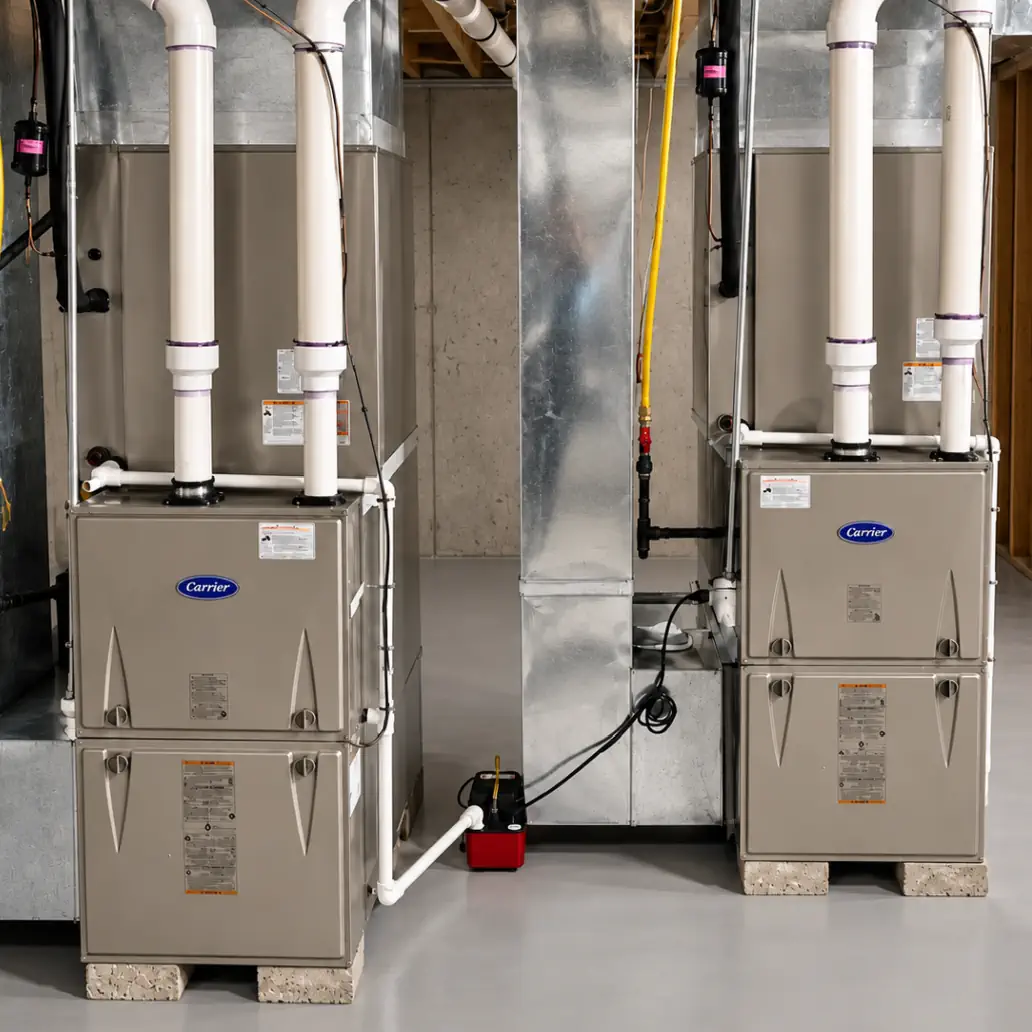
New Heating System Replacement Cost: What to Expect
Wondering about new heating system cost Philadelphia families see in 2025? Upgrading isn’t just about comfort – it’s about savings. New heating systems can cut energy bills by 20–30%, and federal incentives (like the new Inflation Reduction Act) offer up to $2,000 in tax credits for high-efficiency upgrades. The average cost of replacing an HVAC system in 2025 might range from $5,900–$14,100 for a basic heater change-out, while a premium comfort HVAC costs over $20.000, but with strategic choices and expert guidance from EMCO Tech, you can maximize value for your Philadelphia home. In other words, spend a little now to save a lot for years to come.
Save Big with Energy-Efficient Upgrades. Average cost of replacing an HVAC system depends on home size, efficiency rating, and ductwork condition. For many Philadelphia homes, full-system projects land in the low five figures, while a furnace‑only swap can be far less. Ask about new heating system financing Philadelphia options and transparent quotes through our HVAC financing to lower your out‑of‑pocket.
Is It Worth Replacing a 20‑Year‑Old Furnace?
A 20-year-old furnace might still limp along, but if repairs approach 50% of a new unit, replacement typically wins. Old systems risk carbon monoxide leaks, frequent breakdowns, and lousy efficiency, while new models boost home value, safety, and comfort. Plus, new units often come with advanced safety features and long-term warranties, giving you peace of mind. We’ll evaluate your existing setup and recommend the best path: repair, tune‑up, or new heating installation.
Explore gas furnace installation in Philadelphia for a reliable, modern solution that will keep you warm and worry-free. It’s the fastest path to a new heating system installation near me with reliable, quiet heat.
How Long Should Your Philly Heating System Last?
Most residential heating systems last 15–25 years, with furnaces around 15–20 and boilers up to 30 years with proper care. Philly’s harsh winters can shorten this lifespan, so regular heating maintenance is key to reaching the upper end. Schedule a tune-up with our heating services team to keep your system running smoothly season after season. A little upkeep can add years to your heater’s life and save you from an untimely replacement.
Smart Heating Upgrades that Pay You Back
Cold-Climate Heat Pumps
Enjoy dual heating and cooling performance that thrives even in freezing Philly winters.
Carrier High-Efficiency Furnaces
Get quieter, cleaner heat and top indoor air quality with advanced comfort technology.
Boilers & Radiant Heat
Even warmth and fewer drafts with expert boiler installation by local pros.
Get a New Heating System Before Winter Strikes
Don’t wait for a total breakdown to leave you shivering. Replacing your heater before it fails helps you avoid emergency HVAC repair costs, which can run 20–50% higher for last-minute fixes. By planning ahead, you also won’t be left in the cold waiting for an overbooked technician during the first big freeze. Our professional heating installation services ensure your home stays warm through Philly’s coldest months without a hiccup. Get ahead of the chill with EMCO’s expert solutions and enjoy a stress-free winter. Lock in your estimate for a new heating system Philadelphia install and skip peak‑season delays. Book heater tune-up and evaluation online or call 215-366-1001.
Frequently Asked Questions About Heating Upgrades
New heating system cost Philadelphia projects typically fall between $5,900 and $15,000 installed, depending on size, ductwork and efficiency. High-end comfort systems can exceed $20,000. Rebates and financing can cut upfront cost. Get a precise quote through our Gas Furnace Installation in Philadelphia page or by scheduling a free estimate.
Yes if repairs approach 50% of a new unit, if safety is questionable, or efficiency is poor. A modern furnace improves comfort, lowers bills, and reduces breakdown risk. See local options for gas furnace.
Typical lifespan is 15–25 years. Furnaces average 15–20 years, boilers may reach 30 with maintenance. Harsh winters shorten life, so annual tune-ups help you reach the high end. Let EMCO Tech take care of your heater maintenance by signing up for one of our HVAC service agreements.
Proactive replacement avoids peak‑season delays and emergency premiums, and lets you choose a right‑sized, efficient system on your schedule. Compare repair vs. replace with a no‑pressure contact EMCO Tech Heating Services.
For a whole-home change‑out, many homes land in the low five figures installed. Furnace‑only swaps cost less; ductwork or IAQ add-ons increase totals. Check our Heating Services page or contact us for tailored pricing and financing options.
Cold‑climate heat pump installs commonly range from about $5,900 to $20,000 depending on tonnage, layout and electrical needs. Rebates can reduce the final price. Explore heat pump installation options.
Yes. Ductless mini‑splits add zoned comfort without new ducts, making them ideal for rowhomes, additions and bedrooms with hot/cold spots.
EMCO Tech Heating & Cooling provides load calculations, right‑sizing, and Carrier high‑efficiency options with clean, safe installation and local warranty support.
If it’s over 15 years old, frequently breaks down, or causes uneven heating, it’s time. Visit our Heating Installation page for modern options and professional guidance.
Compare multiple quotes, choose ENERGY STAR® models, and take advantage of rebates. Explore our Carrier residential HVAC systems for high-efficiency options and current promotions that maximize your savings.
Furnace‑only replacements often fall below a full HVAC change‑out. Efficiency level and duct condition are the big drivers. Explore options: Carrier Gas Furnaces.
Yes! The latest 2025 heat pumps are built to handle cold Northeast winters efficiently. They can provide comfortable heat even on freezing nights. See our Mini-Split Installation & Replacement page for details on cold-climate heat pumps and how they can work in your Philly home.
Most approvals are same‑day with proof of residence and income. We pair rebates with new heating system financing Philadelphia plans to reduce upfront cost. See financing options and request a quote.
Transform Your Home’s Comfort Today with a New Heating System
Say goodbye to chilly nights and hello to modern warmth! As Philadelphia area trusted Carrier dealer, EMCO Tech Heating & Cooling offers expert heating installation and personalized solutions for every home. Upgrading your heater isn’t just a purchase—it’s an investment in comfort, savings, and peace of mind. Schedule your free consultation now and stay cozy all winter long! Fast installs for a new heating system Willow Grove and nearby suburbs. Weekday and Saturday quotes for new heating system Abington homeowners.

Switching to Natural Gas in the Philadelphia Area
About half of all U.S. homes use natural gas (source – eia.gov) for water, cooking, and heating, and our home state of Pennsylvania ranks as the fourth-largest consumer of natural gas in America. However, our office routinely receives questions from homeowners about converting from oil, LP gas, or electric systems to natural gas.
EMCO Tech Heating & Cooling handles the home side of that project — licensed gas piping, permits, Carrier and other major-brand furnaces, boilers, water heaters, and the safety checks that keep the job legal. We work from Willow Grove and Northeast Philadelphia across Montgomery County, Philadelphia, Bucks County, Chester County, and Delaware County.
Quick answer
Most Greater Philadelphia conversions take a utility availability check, a permitted interior gas line, and a new furnace, boiler, or water heater. Homes with a gas main at the street often land in the mid four figures to low five figures for piping plus equipment. Homes that need a long service extension cost more. Oil-to-gas heat typically saves money every winter at current Pennsylvania prices. There is no statewide ban on natural gas heat in Pennsylvania. If a main is far away, a cold-climate heat pump or ductless mini-split can be the cleaner path.
Call 215-366-1001 or book a conversion walkthrough. We will tell you whether gas is the right move for your house — or whether a heat pump makes more sense — before you spend a dollar with PECO or PGW.
What “switching to natural gas” actually means
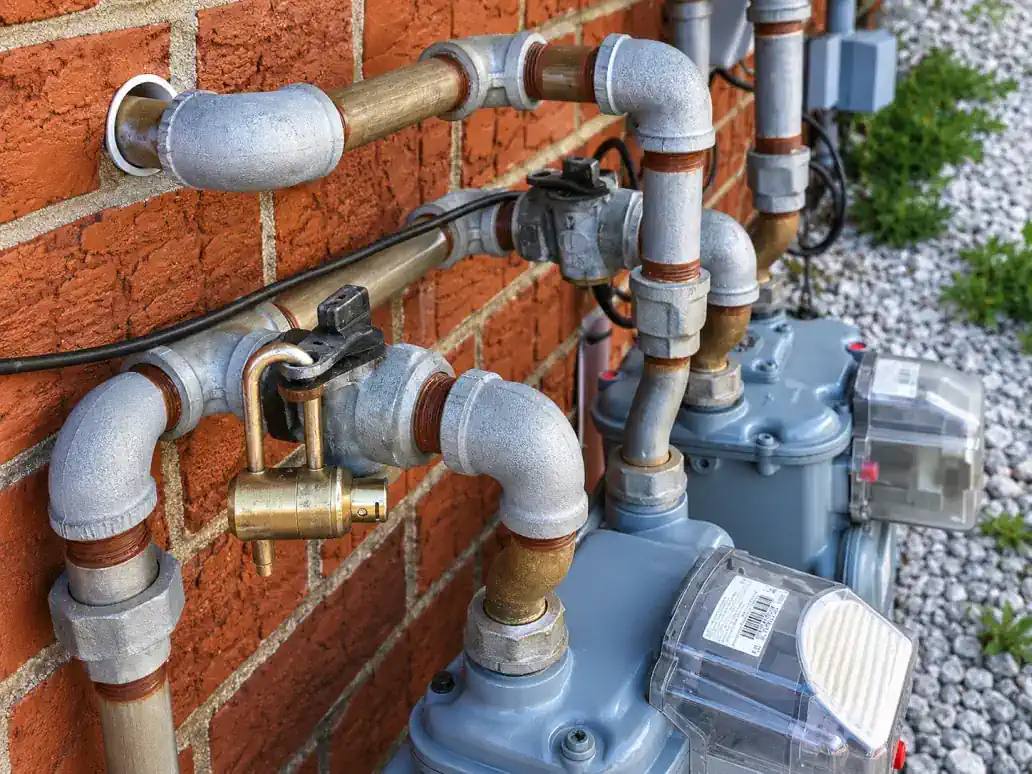 People search “switch to natural gas” for two different jobs, and Google mixes them together. This page is about converting the house: bringing fuel to the meter, running pipe to the appliances, and replacing oil, propane, or electric heat. It is not about shopping a different gas supplier on PAGasSwitch. That is a billing choice after you already have service.
A real conversion usually includes some mix of:
- Confirming a PECO or Philadelphia Gas Works main is close enough to tap.
- Utility service line and meter (the utility’s work).
- Customer-owned piping from the meter into the mechanical room, kitchen, laundry, and outdoor appliances.
- Township or city permits, pressure tests, and inspection.
- New or converted appliances: furnace, boiler, water heater, range, dryer, fireplace, grill.
- Oil tank abandonment or removal if you are leaving heating oil.
Start with the piping if the house is not piped yet: gas line installation, leak detection, and permitted runs in Philadelphia and the suburbs.
Gas line installation with permits — furnace, stove, dryer, water heater, grill
A conversion only pays off if the pipe is sized, routed, bonded, and inspected. We install and extend customer-owned gas lines for heating equipment and everyday appliances, pull the permits, pressure-test the system, and coordinate the inspection so the utility will set or unlock the meter.
Will switching to natural gas actually save money?
In this market, yes — if you are leaving heating oil, propane, or electric-resistance heat and a gas main is already nearby. Natural gas has been the lowest-cost conventional heating fuel in Pennsylvania for years. Heating oil in Montgomery and Bucks Counties has been hovering near the high $4 to $5 per gallon range in recent quotes. A therm of natural gas delivers a similar amount of heat for less money, and you stop paying for tank insurance, sludge service, and emergency deliveries in January.
Use these as planning numbers, not a bid. Every house is different: square footage, insulation, boiler vs. furnace, and how far the pipe has to run.
| Heat source | What you feel | Typical annual fuel* | Best fit |
|---|---|---|---|
| Natural gas furnace / boiler | Fast heat, no deliveries | Often the lowest conventional bill in PECO / PGW territory | Main at the street; oil or electric now |
| Heating oil | Works, but tank + delivery risk | Usually hundreds to $1,000+ more per winter than gas | No gas main; tank already in good shape |
| Propane | Clean burn, still a tank | Typically well above natural gas | Rural lots with no gas utility |
| Electric resistance / baseboard | Simple, expensive to run | Often the highest winter bill | Small spaces, or temporary heat |
| Cold-climate heat pump / mini-split | Heat and cool in one system | Can beat gas on mild days; closer on deep-cold snaps | No nearby main, or you want dual-fuel |
*Fuel cost swings with PECO, PGW, and oil-dealer pricing. We run the numbers on your last 12 months of bills during the visit.
What a conversion usually costs in this area
National guides put a full oil-to-gas conversion between about $6,000 and $20,000. Local Philadelphia-area jobs cluster like this:
- Interior gas piping and valves only (meter already on the house): often $800–$3,000 depending on distance and how many appliances you add.
- High-efficiency gas furnace installed: commonly mid four figures to around $10,000+ depending on efficiency, venting, and duct repairs.
- Gas boiler or combi boiler: typically higher than a furnace, especially on older radiator homes in Philadelphia, Abington, and Media.
- Oil tank abandonment or removal: a few hundred for a simple aboveground tank; underground tanks cost more because of testing.
- Street service line: often credited or installed by PECO or PGW when the main is at the curb. Long private runs or neighborhood extensions are the expensive exception.
The job that converts service calls into installation work is the bundled one: pipe the house once, set the furnace or boiler, add the water heater, and leave every appliance on a permitted, tested line.
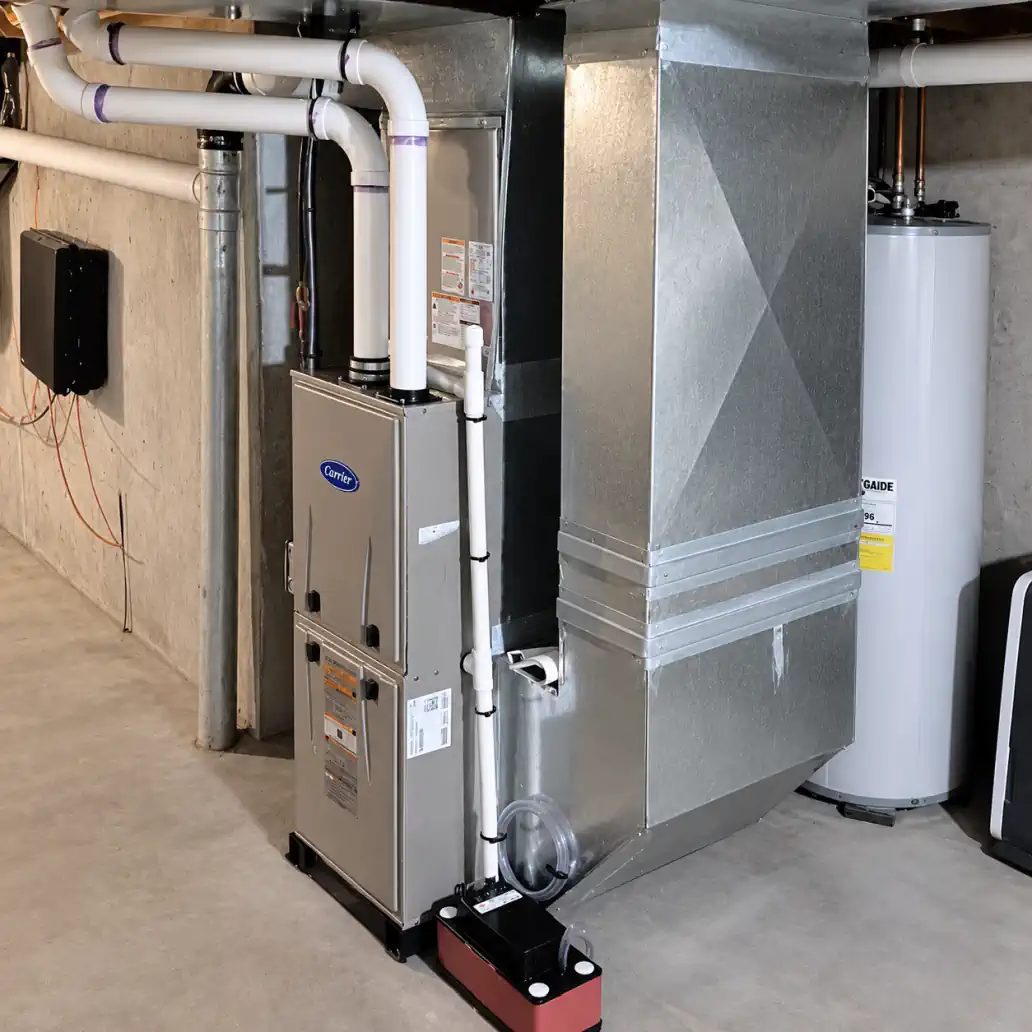
High-efficiency gas furnaces — including Carrier
EMCO Tech is a Carrier Heating & Cooling dealer. We also install and service Trane, York, Lennox, Goodman, and other common brands already in local homes. If you are switching to gas heat, this is the equipment that actually lowers the bill: 95–98% AFUE furnaces, correct sizing, sealed combustion, and a combustion tune so the new unit is not fighting bad ductwork. We pull permits, haul the old oil or electric unit, pressure-test the gas connection, and verify carbon monoxide and venting before we leave. See gas furnace installation, Carrier gas furnaces, gas boilers & radiant, and new system sale / warranty options.
How to switch to natural gas the right way
Utility websites make this look like a form. On a real street in Willow Grove, Horsham, Fishtown, or Doylestown it is a sequence. Skip a step and the meter never gets set.
- Call EMCO Tech first. We look at the mechanical room, the meter location, the appliances you want on gas, and whether the house even wants a gas furnace versus a heat pump. You get a path and a budget before you sit on hold with the utility.
- Check the utility. PECO covers most of Montgomery, Bucks, Chester, and Delaware Counties. Philadelphia Gas Works covers the city. Ask how far the nearest main is, whether they will extend service, what credits apply, and what they need from the contractor before they set a meter.
- Load and layout. We size the furnace or boiler, map pipe diameter, and decide venting. An oversized “just in case” furnace short-cycles and wastes the efficiency you paid for.
- Permits and interior piping. Township and city rules differ. We pull the permit, install the customer-owned piping, bond CSST where required, and pressure-test.
- New gas furnace, boiler, tankless or tank water heater, and any range, dryer, or fireplace connections you want done while the walls are open.
- Utility meter and commissioning. Leak check, combustion analysis, carbon monoxide test, thermostat setup, and a walkthrough so you know how to shut the gas off.
- Stay on a service plan. A new gas appliance still needs an annual clean and safety check. That is how conversions stay cheap in year five.
PECO publishes its own conversion tools and rebate forms at peco.com gas conversion. PGW customers start with PGW. We coordinate both.
Everyday appliances that belong on the same gas line
The heating plant is the big saver. The rest of the house is why people stay happy with the project.
- Gas water heaters and tankless units — faster recovery after back-to-back showers. See our gas water heater services and tankless options.
- Ranges and cooktops — if you are already opening the kitchen wall for pipe, run the stove now.
- Clothes dryers — shorter cycles than most electric dryers.
- Fireplaces, fire pits, and grills — outdoor lines need the same permits and burial depth as indoor ones.
Gas water heater services · Tankless water heaters
Is natural gas being phased out in Pennsylvania?
You will hear the rumor. Some West Coast and Northeast cities have limited gas in new construction. That is not Pennsylvania policy today, and it is not how homes in Montgomery County or Philadelphia are being heated this decade.
Pennsylvania is a major natural-gas producing state. Existing homes can still add service. PECO is still running neighborhood main-extension pilots. There is no statewide ban on gas furnaces, boilers, or gas lines for the houses we service. Anyone promising that gas heat disappears here in five years is selling a different product.
That does not mean gas is the only smart answer. Electricity prices, heat-pump hardware, and hybrid systems are getting better. If your street has no main, if you already need a new air conditioner, or if you want one system that heats and cools, we will put a heat pump or ductless mini-split on the table instead of forcing a long, expensive gas extension. The honest conversion company is the one willing to talk you out of gas.
Keep gas where it wins. Use a heat pump where it wins.
A cold-climate heat pump or a Carrier / Fujitsu / Mitsubishi ductless mini-split is often the better project when the gas main is far, the oil tank is already gone, or you need cooling anyway. Dual-fuel setups keep a gas furnace for the coldest nights and let the heat pump handle the shoulder seasons. We design both. Compare gas vs. heat pump on a real load calc: 215-366-1001.
Heat Pump Systems
Whole-home heat pumps when a gas main is not the right move.
Heat Pump Installation
Sized, permitted, and commissioned for Pennsylvania winters.
Plan a Replacement
When to replace, what it costs, and how to avoid a panic swap.
Mini-Split Installation
Ductless heat and cool for additions, row homes, and zones.
Carrier Ductless
Factory-authorized Carrier mini-splits, installed by EMCO Tech.
PECO vs. PGW: who serves your house
Getting this wrong wastes a week of phone calls.
- Philadelphia Gas Works (PGW) — City of Philadelphia neighborhoods: Northeast Philadelphia, Fishtown, Northern Liberties, South Philadelphia, Manayunk, Roxborough, West Philadelphia, Center City, Chestnut Hill.
- PECO natural gas — most of Montgomery County, Bucks County, Chester County, and Delaware County, including Willow Grove, Abington, Horsham, Dresher, Jenkintown, Doylestown, Newtown, Warminster, Bensalem, West Chester, Media, Haverford, and Wayne.
PECO has, in recent program years, offered a heating-fuel conversion rebate when gas becomes the main heat source, plus extra incentives on qualifying high-efficiency furnaces and boilers. Amounts and forms change. We check current PECO and PGW offers when we write the proposal and help you file what you qualify for. Do not plan the whole job around a rebate you have not confirmed.
Shopping a cheaper commodity supplier after the meter is set is a separate step at PAGasSwitch.com. That does not install the pipe.
Where We Convert Homes to Natural Gas
From multiple locations throughout Greater Philadelphia EMCO Tech Heating & Cooling converts and services homes and light commercial buildings across Montgomery County, Philadelphia, Bucks County, Chester County, and Delaware County — from Willow Grove to West Chester and everywhere in between.
Montgomery County
- Willow Grove
- Abington
- Horsham
- Dresher
- Ambler
- Jenkintown
- Glenside
- Huntingdon Valley
- Norristown
- Montgomeryville
- Bala Cynwyd
Philadelphia
- Northeast Philadelphia
- Center City & Fishtown
- Manayunk & Roxborough
- South Philadelphia
- Northern Liberties
- Chestnut Hill
- West Philadelphia
- Old City / Society Hill
Bucks County
- Doylestown
- Newtown
- Warminster
- Bensalem
- Feasterville-Trevose
- Richboro
- Yardley
- Southampton
- Langhorne
- Chalfont
Chester County
All Chester County →Delaware County
All Delaware County →Not sure if we cover your street? Call (215) 366-1001 or schedule an appointment and we will confirm gas-conversion availability near you.
Safety, permits, and why the cheap quote fails inspection
Natural gas is safe when the joints hold, the venting is right, and someone who is licensed signs the card. It is not a weekend hardware-store project on a Philadelphia rowhome or a 1960s Willow Grove split-level.
- We handle customer-owned piping. The utility owns the main and usually the service to the meter. Everything after the meter is on you — and on us.
- Permits and inspections are part of the job, not an add-on we “see about later.”
- Combustion, draft, and carbon monoxide are checked before we call the house done.
- If you smell gas, leave the house, call 911, then call the utility. After it is safe, call us at 215-366-1001 for the customer-owned piping.
Same-day leak and piping help: gas line repair and leak detection.
Questions people actually type into Google
Confirm a PECO or PGW main, hire a licensed contractor for interior piping and equipment, pull permits, pass inspection, then have the utility set the meter. Start with a house visit so you know whether the main is close enough to bother.
Most occupied homes in our five-county area land between a modest piping job and a full oil-to-gas replacement in the $6,000–$20,000 national band. The swing is service-line distance, boiler vs. furnace, and tank removal. We quote after we see the house.
If neighbors already have gas meters, you probably can get it. If you are on a long rural stretch of upper Bucks or Chester County, maybe not at a sane price. We and the utility will tell you which it is.
Yes. That is the most common conversion we run: abandon or remove the oil tank, pipe the mechanical room, and set a gas furnace or gas boiler. Annual fuel cost usually drops enough to justify the project when a main is at the street.
Some appliances can be converted with a kit. Most oil furnaces and boilers of conversion age should be replaced. A 20-year-old oil burner with a gas kit still wastes heat through a tired heat exchanger.
Not under current state policy, and not on any timeline that should stop a homeowner in Willow Grove or Northeast Philadelphia from installing a high-efficiency gas furnace this year. If your lot has no main, we will talk heat pumps instead of pretending a mile of pipe is “no big deal.”
That is PAGasSwitch — a commodity choice after you have a meter. It does not install a furnace.
Yes, and you should. One permit, one pressure test, one inspection is cheaper than three visits.
Keep the new system cheap to own
A conversion is only a bargain if the equipment stays tuned. Our residential and commercial service agreements cover seasonal safety checks, priority scheduling, and the kind of filter and combustion service that keeps a 97% furnace at 97%.
Financing is available on qualifying installations: HVAC financing.
Ready to see if the switch is worth it on your house?
Bring last winter’s oil or electric bills if you have them. We will walk the mechanical room, check gas availability with you, and put a number on piping, a Carrier or other gas furnace or boiler, and the water heater. If gas is a bad fit, we will say so and show you a heat pump or mini-split instead.
Talk to EMCO Tech Heating & Cooling
Call 215-366-1001 Request Service
Montgomery County · Philadelphia · Bucks County · Chester County · Delaware County
Related work on this site: gas line services, gas furnace installation, gas boilers, gas water heaters, heat pumps, ductless mini-splits, indoor air quality, and service agreements. We repair and install Carrier and other common brands including Trane, York, Lennox, Fujitsu, and Goodman.
Post Updated: September 2026
Furnace Can't Keep Up in Extreme Cold? What's Normal and What's Not
Why Your Furnace Can’t Keep Up When It’s Freezing
On the coldest nights of the year, a furnace that runs almost nonstop is often doing exactly what it was designed to do. Furnaces are sized to hold the house at a comfortable temperature down to a “design temperature,” and in the Philadelphia area that’s roughly 10 to 15 degrees outside. Above that, a healthy, properly sized furnace should hold your thermostat setting. If the house is losing ground when it’s 25 or 30 degrees out, or the indoor temperature keeps sliding even though the furnace never shuts off, something is restricting airflow, leaking heat, or cutting the furnace’s output.
The most common reasons a furnace can’t keep up in cold weather:
- A dirty filter or blocked return vents choking off airflow
- Leaky or disconnected ductwork dumping heat into the attic, crawlspace, or garage
- A furnace that isn’t producing its full heat output
- Deep thermostat setbacks the system can’t recover from in a cold snap
- Drafts and missing insulation, especially in older rowhomes and twins
- A furnace that’s too small for the house, or a house that grew since the furnace went in
If your furnace is running constantly and the house still won’t warm up, our technicians can find out why with same-day heating repair across Philadelphia and the suburbs.
Is It Normal for a Furnace to Run Constantly in Extreme Cold?
Up to a point, yes. A correctly sized furnace is matched to how much heat your home loses on a typical design-temperature night, based on a room-by-room load calculation. When the outdoor temperature drops below that point, heat leaves the house about as fast as the furnace can replace it. The furnace may run for hours with only short breaks, and the house may drift a degree or two below the thermostat setting. That isn’t a breakdown. Long, steady run cycles are actually easier on the equipment and more efficient than constant starting and stopping.
What isn’t normal:
- The house drops more than 2 or 3 degrees below the thermostat setting while it’s above the teens outside
- The indoor temperature keeps falling hour after hour, even though the furnace never stops
- The air coming out of the vents feels lukewarm instead of hot (see why your heater is blowing cold air)
- The furnace runs nonstop even on mild days in the 40s
- One or two rooms stay 10 degrees colder than the rest of the house (see how to fix hot and cold spots)
If your furnace turns on and off every few minutes instead of running long cycles, that’s a different problem called short cycling. Our guide on why a furnace keeps shutting off covers it.
Normal Cold-Weather Running or a Problem? A Quick Guide
| Outdoor Temperature | What’s Normal | Red Flag |
|---|---|---|
| Above 30 degrees | Furnace cycles on and off with regular breaks and holds the setting | Runs nonstop or can’t reach the setting |
| 15 to 30 degrees | Long run cycles with short breaks, holds within about a degree | House losing 2 degrees or more, vents feel lukewarm |
| Below about 15 degrees | Runs almost continuously, house may drift 1 to 3 degrees | Temperature keeps falling into the low 60s or 50s |
Why a Furnace Can’t Keep Up in Cold Weather: 8 Common Causes
1. A Dirty Filter or Blocked Return Vents
A furnace can only deliver as much heat as the air moving across it can carry. A clogged filter, a return grille covered by furniture, or closed-off returns cut that airflow, so less heat reaches your rooms and the furnace runs longer to make up for it. Bad enough restriction can make the furnace overheat and shut itself off on its safety limit. Filters load up fastest during long winter run times, so check yours monthly when it’s cold.
2. Leaky or Disconnected Ductwork
Ducts that run through an attic, crawlspace, garage, or unheated basement lose heat before the air ever reaches a register, and that loss grows as the temperature drops. A disconnected joint or a crushed run can dump a big share of your heat into the attic. It’s common in Philadelphia homes with additions, converted attics, or ductwork run through exterior walls during a renovation. Sealing and repairing the ducts often fixes a house that “never gets warm” without touching the furnace. Learn more about air duct repair.
3. The Furnace Isn’t Producing Full Heat
A furnace can run all day and still put out less heat than it’s rated for. Dirty burners, a weak or lazy flame, low gas pressure, a misadjusted gas valve, or a failing inducer motor all reduce output. A technician checks this by measuring the temperature rise across the furnace and comparing it to the range printed on the rating plate, then checking gas pressure and the burner flame. Two-stage and variable-speed furnaces can also get stuck on low fire because of a thermostat setting or wiring problem, which is fine at 45 degrees and not enough at 15. Our gas furnace repair technicians check all of this on every visit.
4. Blower Speed or Airflow Set Wrong
If the blower is set to the wrong speed, or a weak motor or capacitor is turning it slowly, the furnace can’t move enough warm air through the house. Sometimes a blower was set up for air conditioning and never adjusted for heating. The furnace may feel hot at the cabinet while the far rooms stay cool.
5. Deep Thermostat Setbacks During a Cold Snap
Turning the heat down 8 or 10 degrees overnight saves energy in mild weather, but in a cold snap the furnace may not be able to climb back up by morning. It runs for hours trying to recover and the house still feels cold. A thermostat in a poor spot, like near a drafty door or a sunny window, can also read the wrong temperature and short the rest of the house. Here’s where a thermostat should go.
6. Drafts, Old Windows, and Missing Insulation
Heat loss grows with the temperature difference between inside and outside, so a house that feels fine at 40 degrees can fall behind at 10. Air leaks around old windows and doors, open attic hatches, uninsulated rim joists, and gaps around pipes all let warm air out and cold air in. Many older Philadelphia rowhomes and twins have little or no wall insulation. See our tips on weatherizing your home before winter.
7. A Furnace That’s Too Small, or a House That Changed
Some furnaces were undersized from day one, and some homes outgrew theirs. An addition, a finished basement, a sunroom, or a converted attic adds heat load the original furnace was never sized for. Replacement furnaces are also sometimes matched to “the same size as the old one” without a load calculation. The tell is a furnace in good working order that runs nonstop and still can’t hold temperature in moderately cold weather. Duct sealing and insulation can close the gap, and when they can’t, a properly sized replacement based on a real load calculation fixes it for good.
8. Oil Furnaces and Heat Pumps Have Their Own Cold-Weather Limits
In extreme cold, heating oil in an outdoor tank or exposed fuel line can thicken and starve the burner, and a partly clogged oil filter or nozzle weakens the flame. Our oil furnace repair team handles both. Heat pumps lose heating capacity as the outdoor temperature falls, so below a certain point they depend on backup heat to keep up. If the backup heat isn’t working, the house falls behind fast. Our guide to aux heat and cold-climate heat pumps explains how it should work.
House Still Losing Heat?
If your furnace runs nonstop and the house keeps getting colder, our technicians find out why, from airflow and ductwork to a furnace that isn't putting out full heat, with same-day heating repair across Philadelphia and the suburbs.
What You Can Do Tonight to Help Your Furnace Keep Up
- Check the filter. If it’s gray and dusty, replace it.
- Open every supply register and clear the returns. Keep interior doors open so warm air can circulate back to the furnace.
- Hold a steady temperature. During a cold snap, skip deep overnight setbacks and keep any setback to a degree or two.
- Use your windows. Close curtains and blinds at night, and open the ones on sunny windows during the day.
- Block obvious drafts. Roll a towel along the bottom of drafty doors and make sure the fireplace damper is closed.
- Clear snow and ice. Keep the furnace’s outdoor intake and exhaust pipes and any heat pump outdoor unit clear.
- Protect your pipes. If the house is falling behind, open the cabinet doors under sinks on outside walls and let those faucets drip.
Use space heaters only as the manufacturer directs, keep them away from curtains and bedding, and plug them straight into the wall. Never heat the house with a gas oven, stove, or grill, because they can fill the home with carbon monoxide.
When a Furnace That Can’t Keep Up Becomes an Emergency
A furnace that’s falling behind can turn into a no-heat emergency during a long cold snap. Call for service right away if the indoor temperature is dropping into the 50s, if pipes are at risk of freezing, or if there’s an infant, an older adult, or anyone with health concerns in the home. Our emergency heating service responds fast across the Philadelphia area. If you smell gas or rotten eggs, leave the house and call your gas utility from outside: PGW in Philadelphia, or PECO in most of the suburbs. If your carbon monoxide alarm sounds, get everyone out and call 911. If the furnace has stopped heating altogether, our furnace not working guide covers what to check first.
How We Diagnose a Furnace That Can’t Keep Up
When a furnace runs nonstop and the house won’t warm up, guessing gets expensive. Our technicians work through the whole system so you fix the real cause the first time:
- Filter, return air, and blower airflow
- Temperature rise across the furnace compared to its rating plate
- Gas pressure, burner condition, and flame quality
- Blower motor, capacitor, and speed settings
- Thermostat location, settings, and staging on two-stage furnaces
- Ductwork for leaks, disconnected runs, and crushed sections
- Heat exchanger, venting, and safety controls
You get a plain explanation of what we found and the price before any work starts. If the furnace is simply too small for the house, we’ll run a room-by-room load calculation and walk you through your options, from duct sealing to a right-sized system.
Other Furnace Problems?
- Furnace won’t turn on at all: furnace not working
- Heat on but cold air from the vents: heater blowing cold air
- Furnace starts and stops every few minutes: furnace keeps shutting off
- Banging, squealing, or rattling: furnace making noise
- Old furnace with rising bills and repairs: signs your furnace is going out
- No heat anywhere in the house: no heat in the house
Furnace Can’t Keep Up? Get Help in Philadelphia and the Suburbs
EMCO Tech keeps homes warm through the coldest stretches of winter across Philadelphia, Montgomery, Bucks, Chester, and Delaware counties, from city rowhomes with ducts in tight spaces to larger suburban homes with additions and finished basements. Our licensed technicians find out why your furnace is falling behind, fix it with the parts we carry on the truck whenever possible, and give you the price before any work starts. Call 215-366-1001 or book online. A winter heater tune-up before the first deep freeze catches weak burners, dirty filters, and airflow problems while it’s still mild out.
Furnace Can't Keep Up FAQs
A furnace usually can’t keep up in cold weather for one of a few reasons: restricted airflow from a dirty filter or blocked returns, heat lost through leaky or disconnected ductwork, a furnace that isn’t producing its full rated output, or a house that loses heat faster than the furnace was sized to replace. Deep thermostat setbacks during a cold snap, drafty windows, and missing insulation make it worse. If the house is losing ground when it’s 25 or 30 degrees outside, that points to a problem rather than normal cold-weather running. A technician can measure the furnace’s output and airflow and tell you exactly which one it is.
Yes, on the coldest nights it’s normal for a furnace to run almost nonstop. Furnaces are sized to hold the house at a comfortable temperature down to a design temperature, which in the Philadelphia area is roughly 10 to 15 degrees. Near or below that point, a healthy furnace may run for hours with only short breaks, and the house may drift a degree or two below the thermostat setting. Long run cycles are actually easier on the equipment than frequent starts. It’s not normal if the furnace runs constantly in milder weather, if the indoor temperature keeps dropping, or if the air from the vents feels lukewarm.
Most furnaces are designed around the local winter design temperature, the outdoor temperature that’s only colder a small number of hours each year. In the Philadelphia area that’s roughly 10 to 15 degrees. A properly sized, well-maintained furnace should hold your thermostat setting above that temperature, and fall behind by only a degree or two below it. If your furnace is struggling at 20 or 30 degrees, the cold isn’t the real problem. Something is reducing airflow or output, or the house is losing more heat than it should. Older homes with additions or little insulation tend to show it first, on the first real cold snap of the season.
If the furnace runs nonstop and the house stays cold, the heat is either not being made or not reaching your rooms. On the making side, dirty burners, low gas pressure, a weak flame, or a two-stage furnace stuck on low fire all cut output. On the delivery side, a clogged filter, a slow blower, closed registers, or ductwork leaking into the attic or crawlspace waste the heat the furnace does make. Feel the air at a register near the furnace. If it’s hot there but cool at the far rooms, suspect the ducts. If it’s lukewarm everywhere, suspect the furnace itself and have it checked before the next cold night.
During a cold snap, it’s better to keep the setting steady or set it back only a degree or two at night. A deep setback of 8 or 10 degrees saves energy in mild weather, but in extreme cold the furnace may not be able to climb back up by morning. It ends up running for hours to recover while the house still feels cold, and you lose most of the savings. Heat pumps are even more sensitive to deep setbacks, because a big recovery can call for expensive backup heat. If you have a smart thermostat, check that eco or away modes aren’t dropping the temperature more than you realize while you’re home.
Yes. Some furnaces were undersized when they were installed, and some homes outgrew theirs after an addition, a finished basement, a sunroom, or a converted attic. Replacement furnaces are also sometimes sized to match the old unit without a load calculation. The tell is a furnace in good working order, with clean filters and sealed ducts, that runs nonstop and still can’t hold temperature in moderately cold weather. The right answer starts with a room-by-room load calculation. Sometimes duct sealing and insulation close the gap. When they don’t, a right-sized replacement fixes the comfort problem for the life of the system.
A heat pump pulls heat out of the outdoor air, and the colder it gets, the less heat there is to collect, so its output drops as temperatures fall. Below a certain point, called the balance point, the heat pump needs backup heat, usually electric heat strips or a gas furnace, to keep the house warm. If the backup heat has a failed element, a tripped breaker, or a control problem, the house falls behind fast in freezing weather. Ice buildup and defrost problems also cut capacity. Cold-climate inverter heat pumps hold their output much better in the cold, but they still need correct setup and a working backup.
EMCO Tech provides emergency heating service for homeowners across Philadelphia and Montgomery, Bucks, Chester, and Delaware counties when a cold snap pushes a struggling furnace, boiler, or heat pump past its limit. Our licensed technicians repair gas, oil, and electric furnaces, steam and hot water boilers, and heat pumps, and we carry common parts so most cold-weather breakdowns are fixed in one visit. You get the price before any work starts. If your house is getting colder by the hour, your pipes are at risk, or someone vulnerable is at home, call 215-366-1001 and tell us what your system is doing so we can send the right technician.
Help for a Furnace That Can't Keep Up
Heating Repair
Same-day repair for furnaces, boilers, and heat pumps across Greater Philadelphia.
Gas Furnace Repair
Burners, gas pressure, blower, and staging problems that cut heat output.
Air Duct Repair
Leaky, crushed, and disconnected ducts that lose heat before it reaches your rooms.
Heat Pump Repair
Backup heat, defrost, and refrigerant problems that leave you cold in freezing weather.
Heating Installation
Right-sized furnace and heat pump replacement based on a real load calculation.
Winter Heater Tune-Up
Catch weak burners, dirty filters, and airflow problems before the deep freeze.
Post Updated: October 2026
Oil Heater Maintenance Checklist: Fix These Now or Freeze Later
Oil Burner Smoking, Sooty, or Locked Out?
Don't keep pressing the reset button. Repeated resets can flood the chamber with oil and cause a puffback. EMCO Tech provides fast oil furnace repair and oil boiler service for homes and businesses across the Philadelphia area.
Oil Furnace & Oil Boiler Maintenance Checklist: What Gets Checked Every Year
Oil heat works hard all winter, and it burns dirtier than gas. That means soot, clogged nozzles, and dirty electrodes build up every season. This oil heater maintenance checklist covers what a yearly service should include for oil furnaces, oil boilers, and burners, how often to book it, and the warning signs that mean your system needs attention now.
If anything on this list sounds familiar, EMCO Tech Heating & Cooling handles oil furnace maintenance and tune-ups for homes and businesses across Philadelphia and the surrounding counties.
How Often Should an Oil Furnace Be Serviced?
Once a year, every year. Oil burns with more soot than natural gas, so an oil furnace or oil boiler that skips a season loses efficiency fast and is far more likely to lock out on a cold night. The best time to book is late summer or early fall, before the heating season starts and before service calendars fill up.
Some systems need more than one visit. Older burners, homes that run the heat hard, and systems that have had soot or puffback problems may need a mid-season check. Commercial oil heat usually runs on a set service schedule. Either way, the nozzle and oil filter should be replaced at every annual oil heater tune-up.
Thermostat and Controls: The First Item on the Checklist
If your oil heat doesn’t respond to the thermostat, short cycles, or never reaches the set temperature, the cause is often in the controls rather than the burner. During service our technicians verify thermostat operation, check low-voltage wiring, and test the primary control, cad cell, and limit switches so the burner fires and shuts off when it should.
Air Filter and Blower Check (Oil Furnaces)
A clogged filter chokes airflow, overheats the heat exchanger, and trips the high limit. It also shows up as weak airflow, rising oil use, and uneven temperatures from room to room. As part of annual oil furnace maintenance we replace the filter, check the blower motor and wheel, and confirm the system is moving the right amount of air.
Safety Controls, Switches, and Electrical Connections
Every oil furnace and oil boiler has safety devices built in: the emergency shutoff switch, the burner reset on the primary control, limit switches, and on boilers the low-water cutoff and relief valve. If a system keeps shutting down, trips a breaker, or won’t restart, one of these is telling you something is wrong.
A proper oil furnace inspection tests every safety control, confirms limit switch operation, and tightens electrical connections so the system shuts down safely when it has to and stays running when it should.
Burner keeps locking out? Frequent resets, tripped breakers, and unexplained shutdowns are signs of a deeper problem. Schedule an oil heat inspection or call 215-366-1001.
Protect Your Comfort With Expert Oil Furnace Care
Don’t wait until the coldest day of winter to find out your oil furnace isn’t ready. EMCO Tech Heating & Cooling provides professional maintenance and safety checks to keep your system running smoothly.
Comprehensive Oil Heater Maintenance
Thorough inspection, cleaning, and adjustment for peak efficiency
Book Oil Heater MaintenanceGet $500 Off New Oil Heater and AC
Serving Willow Grove, Montgomery County, Bucks County, Philadelphia, and beyond
Book Free Estimate & $500 Off New HVAC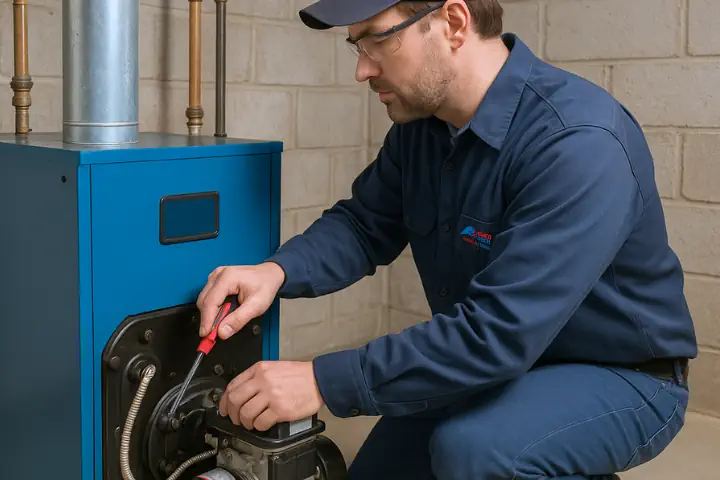
Oil Burner Maintenance Checklist
The burner is the heart of any oil heating system, and most of the yearly work happens here. A complete oil burner service includes:
- Nozzle replacement: a worn nozzle sprays unevenly and creates soot.
- Oil filter and pump strainer: replaced or cleaned so sludge doesn’t starve the burner.
- Electrodes: cleaned, gapped, and checked for reliable ignition.
- Combustion test: smoke, draft, stack temperature, and efficiency readings, then burner adjustment.
- Pump pressure and cutoff: checked so oil doesn’t drip into the chamber after shutdown.
- Primary control and cad cell: tested so the burner shuts off if the flame doesn’t light.
Skipping this is how small problems turn into delayed ignition, rumbling startups, and puffbacks. If your burner is already showing symptoms, see our oil furnace service options.
Chamber, Heat Exchanger, and Flue Check
Soot insulates the heat exchanger, so more of your oil goes up the chimney instead of into the house. During service we vacuum the combustion chamber, brush the heat exchanger passages, and inspect the smoke pipe, barometric damper, and chimney base for blockages or leaks.
This is also where a technician looks for cracks and venting problems that can lead to carbon monoxide risk. Birds’ nests, fallen liner pieces, and heavy soot at the flue are common finds after a long summer.
Oil Boiler Maintenance Checklist
An oil boiler gets the same burner and chamber work as a furnace, plus the water side of the system:
- Low-water cutoff tested (and flushed on steam boilers)
- Pressure relief valve inspected
- Expansion tank and system pressure checked
- Circulator pumps and zone valves tested
- Aquastat or boiler control settings verified
- Air bled from radiators and piping where needed
- Visible piping and fittings checked for leaks and corrosion
If your home runs on hot water or steam heat, pair this with our oil boiler services or full boiler maintenance.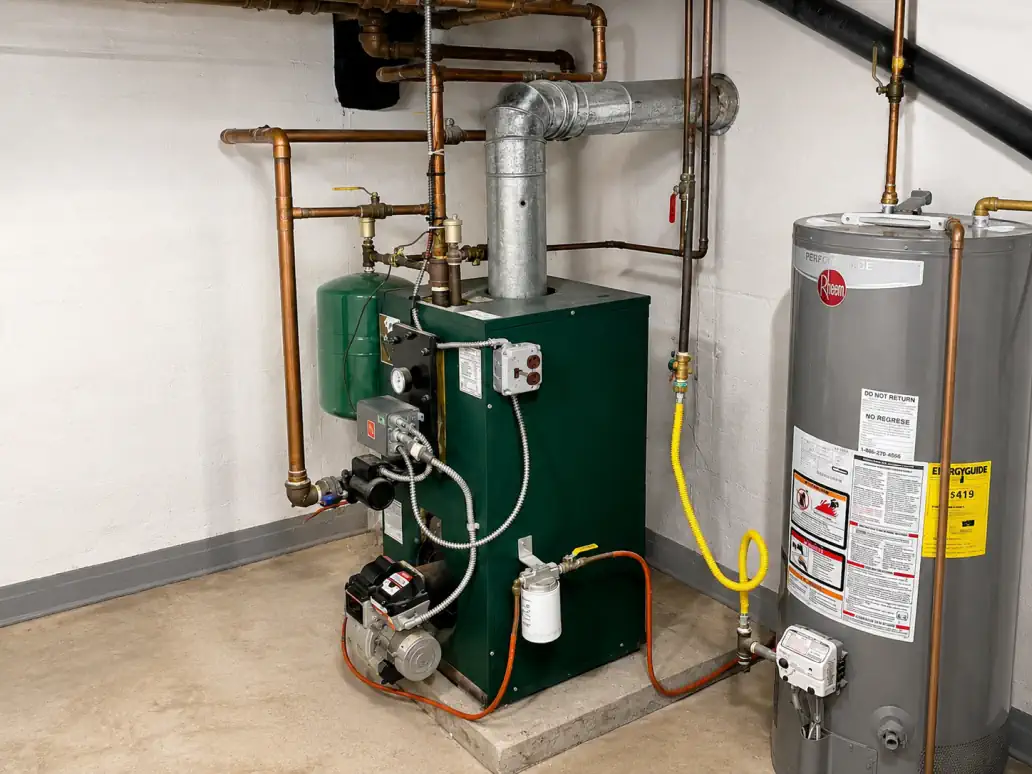
Oil Tank and Fuel Line Inspection
The fuel supply is part of the system too. A yearly service should include a look at the oil tank for rust, weeping seams, and water at the bottom, plus a check of the oil line, fittings, and any fuel filter or de-aerator (such as a Tiger Loop) for leaks and air. Air and sludge in the line are two of the most common causes of burner lockouts.
Warning Signs Your Oil Heater Needs Service Now
Don’t wait for the annual visit if you notice any of these:
- Black soot around registers, the burner, or the chimney
- Smoke from the flue or an oil smell in the basement
- Rumbling, booming, or delayed ignition at startup
- The burner locking out and needing a reset
- Oil deliveries coming more often than last winter
- Some rooms staying cold while others overheat
Any of these calls for a technician, not another reset. For heat loss on a freezing night, we also provide emergency heating services.
Oil Heater Maintenance FAQs
Yes. Oil burns with more soot than gas, so an oil furnace or oil boiler needs a professional service every year to keep the nozzle, electrodes, and heat exchanger clean. Annual service keeps efficiency up, cuts the risk of mid-winter lockouts, and gives a technician the chance to catch venting or safety problems early. Book your annual oil heater tune-up.
At least once a year, ideally in late summer or early fall before the heating season. Older burners, heavily used systems, and commercial oil heat may need a second check mid-season. If you see soot, smell oil, or the burner locks out, schedule service right away instead of waiting for the yearly visit.
A complete oil furnace service includes nozzle and oil filter replacement, pump strainer cleaning, electrode cleaning and adjustment, a combustion test, chamber and heat exchanger cleaning, a flue and chimney check, filter and blower service, and testing of all safety controls. See our oil furnace service page for details.
Everything on the burner side plus the water side: testing the low-water cutoff, inspecting the relief valve, checking the expansion tank and system pressure, testing circulators and zone valves, verifying aquastat settings, and bleeding air where needed. Learn more about our oil boiler services.
Soot around the burner or registers, smoke from the chimney, an oil smell, rumbling or delayed ignition, frequent lockouts, and rising oil use are the most common signs. Any of these means the burner is out of adjustment or something is clogged, and it needs a technician before it gets worse.
Each press sends more oil into the combustion chamber. If the burner then lights, all that extra oil can ignite at once and cause a puffback that spreads soot through the house or damages the chamber. If the burner locks out more than once, shut it off and call for oil furnace repair.
A Tiger Loop is a de-aerator installed on the oil line that removes air from the fuel before it reaches the burner pump. It helps one-pipe oil systems run smoother and reduces air-related lockouts. Our technicians inspect it during annual service and can install one if your system has recurring air problems.
Late summer and early fall. The system gets serviced before it has to run full time, and you avoid the rush once the first cold snap hits. Check our seasonal heater tune-up offer before you book.
Schedule Oil Furnace and Oil Boiler Maintenance With a Local Contractor
A checklist tells you what to watch for. A trained technician handles the rest: nozzle and filter replacement, combustion testing, chamber cleaning, and safety checks that keep oil heat running clean all winter. EMCO Tech Heating & Cooling services residential and commercial oil furnaces, oil boilers, and burners of every major make.
Locally owned since 2006, we serve Willow Grove, Philadelphia, Montgomery County, Bucks County, Chester County, and Delaware County.
Get ahead of the cold. Schedule your oil heater maintenance online or call 215-366-1001.
Updated September 29, 2026.
Explore Our Oil Heating Services
Oil Heater Tune-Up
Annual maintenance for oil furnaces and oil boilers, done right.
Oil Furnace Service
Repair, replacement, and burner service for oil forced-air heat.
Oil Furnace Repair
Fast fixes for lockouts, soot, smoke, and no-heat calls.
Oil Boilers
Oil boiler service, repair, and installation for hot water and steam.
Oil-to-Gas Conversion
Gas line installation when you're ready to switch fuels.
EMCO Tech Heating & Cooling provides oil heater maintenance, oil furnace inspections, oil boiler maintenance, and oil burner service throughout the Philadelphia area, including Willow Grove, Abington, Horsham, Hatboro, Warminster, Doylestown, Jenkintown, Huntingdon Valley, and Northeast Philadelphia. Our annual oil heat checklist covers nozzle and oil filter replacement, electrode adjustment, combustion testing, chamber and heat exchanger cleaning, flue and chimney inspection, safety control testing, and oil tank and fuel line checks for residential and commercial oil-fired furnaces and boilers.