



Is Your HVAC System Ready for Winter? A Pre-Season Checklist and Warning Signs
Start Outside: Clear the Outdoor Unit
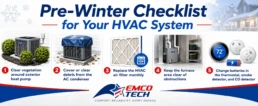
If you run a heat pump, clear leaves, grass, and debris from around it so air moves freely and the unit does not overheat or ice up. If you have a separate AC condenser you will not use this winter, clear debris around it and cover the top to protect it from snow and ice. Keep vegetation cut back at least a couple of feet on all sides.
Inside: Filter, Space, and a Test Run
Change the air filter. A clogged filter chokes airflow, drops efficiency, and makes a healthy furnace work too hard. Clear stored boxes and clutter away from the furnace so it has several feet of open space on every side, this is a safety issue, not just a tidiness one. Change the batteries in your thermostat and your smoke and carbon monoxide detectors while you are at it.
Then run a test. Set the thermostat to call for heat, let the system run, and walk the house checking that vents or radiators are actually putting out warmth. If a room stays cold or the system will not fire, you have found a problem while it is still a scheduled repair and not an emergency.
System not passing the test run?
If it will not fire, blows cold, or a room stays freezing, get it looked at before the first cold snap. Book a heating tune-up now.
Warning Signs by System, and When to Call
Most no-heat calls give a warning first. Here is what each system does right before it quits, and where to go when it does.
Furnace: Warning Signs Before Winter
Watch for delayed or repeated ignition, a burner flame that burns yellow instead of blue, banging or rumbling at startup, short cycling, weak airflow, or a burning or sulfur smell. A furnace over 15 years old showing any of these is telling you something. Do not wait for the no-heat night. See furnace repair.
Heat Pump: Struggling in the Cold
Heat pumps work harder as temperatures drop. Warning signs include weak or lukewarm air, ice building on the outdoor unit that will not clear, the system stuck running backup or auxiliary heat, short cycling, or unusual noises. Cold-weather heat pump problems get worse fast once real winter arrives. See heat pump repair.
Boiler: Pre-Season Checks
For hot water and steam systems, watch for a boiler that will not fire, low pressure, water pooling near the unit, cold radiators or uneven heat, banging pipes, or a pilot or ignition that keeps dropping out. Small boiler issues in October become mid-winter failures. See boiler repair.
No Heat At All
If the system will not produce heat, check the thermostat setting and batteries, the furnace switch, and the breaker first. If those are fine and you still have no heat, it is time for a professional. See heating repair.
When to Book a Professional Tune-Up
A yearly inspection before winter is the single best way to avoid a cold-night breakdown. During a heating tune-up, the technician checks the burner assembly, ignition system, heat exchanger, gas or oil supply, blower, and electrical components, then gives you a clear read on the system’s condition and anything that needs attention before the cold sets in.
Fall Timing
Do this in the mild weeks before the first freeze. You still have easy days to test the system, parts and appointments are easier to get than during the first cold snap, and you are not discovering a dead furnace at the worst possible moment. A short checklist now buys a quiet winter.
HVAC Winter Readiness FAQ
Early to mid fall, before the first hard freeze. Mild weather lets you test the system safely, appointments are easier to get than during the first cold snap, and you catch small problems while they are still scheduled repairs instead of emergencies.
Delayed or repeated ignition, a yellow burner flame, banging at startup, short cycling, weak airflow, or a burning or sulfur smell. A furnace over 15 years old showing any of these should be checked before heavy winter use.
Heat pumps work harder as it gets colder, so lukewarm air, ice on the outdoor unit, or constant backup heat can signal a problem. Some drop-off in extreme cold is normal, but ice that will not clear or a unit stuck on auxiliary heat should be checked.
Check the thermostat, the boiler switch, the breaker, and the system pressure. If pressure is low, the pilot or ignition keeps dropping out, or there is water near the unit, that is a job for a professional before the cold sets in.
Get Winter-Ready: Tune-Ups & Maintenance
Learn about our heating services if your heater is not starting or acting up, and book maintenance before the cold months so your system runs at full capacity all winter.
Post Updated: August 2026
AC Leaking Water? Here's Why — and How to Fix It Fast in Willow Grove
AC Leaking Right Now? Don't Wait — Water Damage Spreads Fast
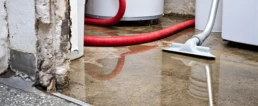
A dripping AC can flood drain pans and ruin drywall within hours. Turn the system off and get help today with our same-day AC repair service across Willow Grove, Hatboro & Horsham.
Why Is Water Dripping from My AC?
Noticing water puddles under your AC this summer? You’re not alone — “AC leaking water” and “air conditioner dripping water” are among the most-searched home cooling emergencies. In Willow Grove, Hatboro, and Horsham, where summer humidity hits hard, a leak isn’t just annoying — it can cause mold, ruined drywall, and system failure.
Air conditioners naturally remove humidity by condensing water on their evaporator coils, then draining it through a condensate line. When that process breaks down, you get a mess — and a clear sign your system needs help before the hottest days arrive.
What Causes an AC to Leak Water?
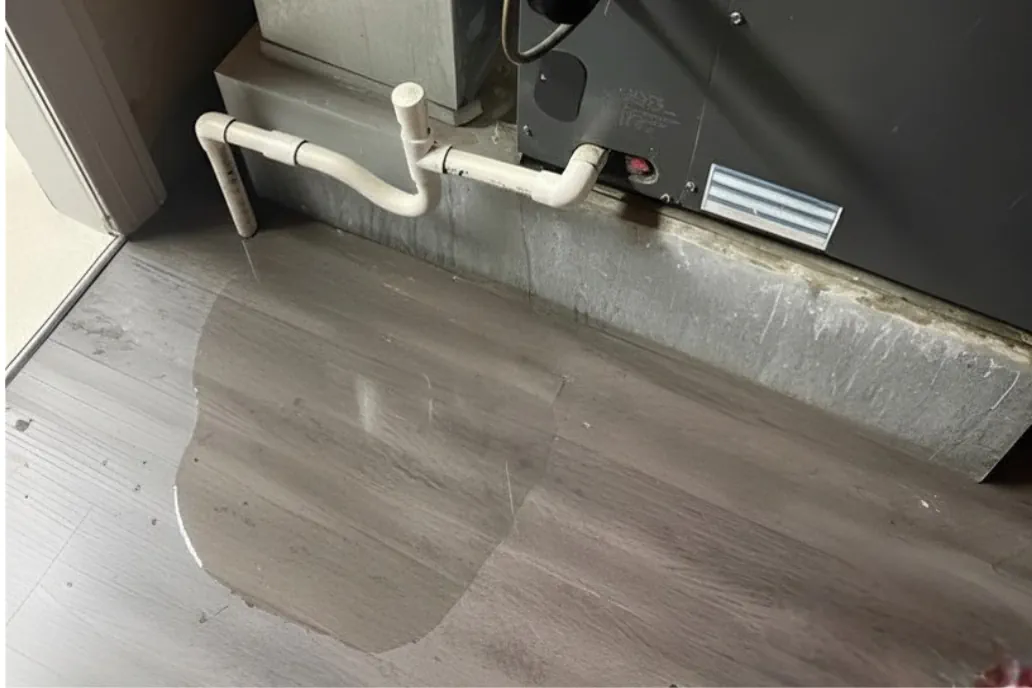
- Clogged drain line – Dust and algae block the exit path for condensation.
- Frozen evaporator coil – Usually from low refrigerant, dirty filters, or poor airflow.
- Damaged drain pan – Old or rusted pans can’t catch the water anymore.
- Low refrigerant – Causes freezing, then dripping when it thaws.
- Improper slope or disconnected drain line – Water backflows into your home.
- Dirty blower motor – Reduces airflow and increases coil moisture.
Call 215-366-1001 or book online for fast AC leak repair in Willow Grove.
We’re based in Willow Grove and proudly serve the surrounding communities—including HVAC customers in Hatboro, Horsham, Abington, Glenside, and Warminster.
Other Reasons Your AC May Leak in Montgomery County
- Broken or clogged condensate pump – Often found in homes with basements.
- Oversized AC unit – Cools too fast, floods the drain system.
- Grimy evaporator coil – Blocks water flow inside the unit.
- Missing or damaged insulation – Causes exterior condensation buildup.
- Running AC in cold weather – Freezes coils, especially in spring.
- Improper installation – Leads to recurring water leaks over time.
To avoid future issues, explore our AC installation and design services.
Check out our 5-star reviews and latest updates on our Google Local Business page to see why Willow Grove and Hatboro homeowners trust EMCO Tech.
How to Prevent AC Water Leaks This Summer
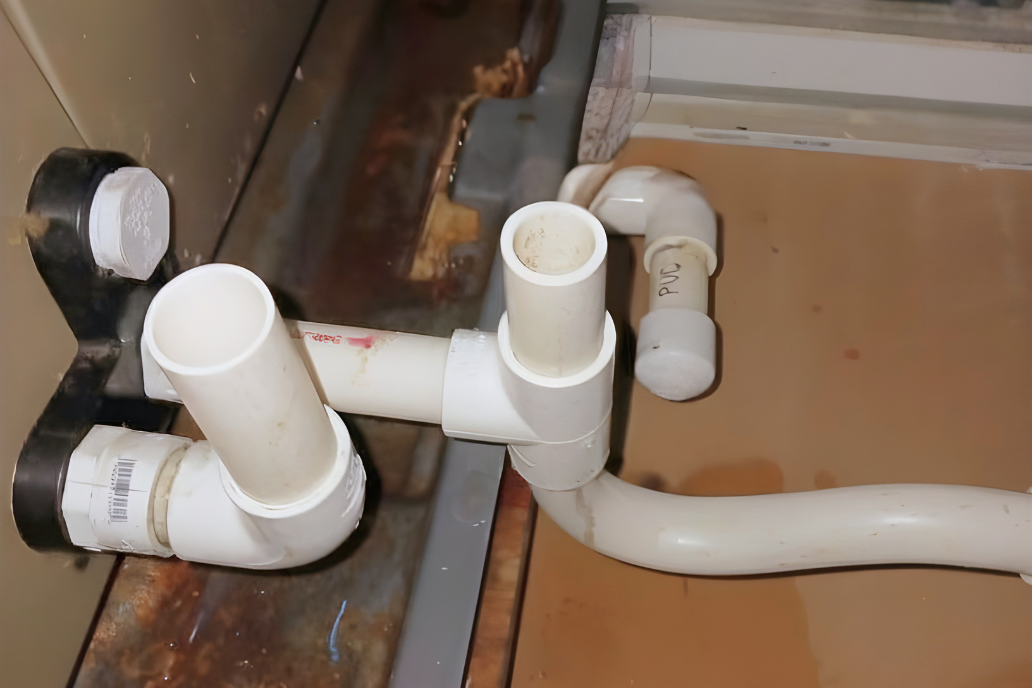 A little maintenance goes a long way during peak cooling season. Replace your air filter every 30–60 days so airflow stays strong and your coils don’t freeze. Have the condensate drain line flushed at least once a year to clear the algae and dust that cause most summer clogs. If you have a condensate pump in the basement, test it before the heat arrives, and keep at least two feet of clearance around your outdoor unit so it can shed heat efficiently.
The single best safeguard is a professional pre-season tune-up. During a visit, our technicians check refrigerant levels, inspect the drain pan and line, clean the evaporator coil, and verify the system is draining the way it should — catching small issues before they flood your floor on the hottest day of the year.
When a Leaking AC Means It’s Time to Repair or Replace
A one-off leak from a clogged drain line is a simple fix. But repeated leaks, ice on the coils, or rising electric bills can signal a system that’s wearing out. As a rule of thumb, if your air conditioner is more than 10–12 years old and repairs are adding up, a high-efficiency replacement often pays for itself in lower summer energy costs.
Not sure which way to go? Our team gives honest, no-pressure assessments for homeowners across Willow Grove, Hatboro, Horsham, Abington, and Glenside. Explore our AC repair and AC installation options, and we’ll help you choose the most cost-effective path.
Stop AC Leaks Before Peak Summer Heat
Most summer AC leaks trace back to a clogged drain line, dirty filter, or low refrigerant — all easy to catch with a seasonal tune-up. A quick checkup keeps your system draining properly and running efficiently through July and August.
If your unit is older or leaking repeatedly, it may be time to weigh a high-efficiency upgrade. Our team serves homeowners across Willow Grove, Hatboro, Horsham, Abington, and Glenside with honest, transparent pricing.
AC Leak Repair in Willow Grove, Hatboro & Horsham
Homeowners dealing with an air conditioner leaking water need fast, trusted HVAC service this summer — and that’s what EMCO Tech delivers. From AC water leaks to full diagnostics, we’re the go-to cooling specialists across Montgomery County, handling everything from clogged drain lines to broken condensate pumps.
Whether you’re in a split-level in Hatboro, a colonial in Abington, or a condo near Glenside, we’re just a call away. EMCO Tech offers same-day AC repair, refrigerant recharges, and full tune-ups. Need a long-term fix? Explore our AC installation services. We also serve Warminster and the surrounding area.
Schedule AC Leak Repair Near Willow Grove
Whether you’re in Hatboro, Horsham, or right in Willow Grove, EMCO Tech Heating & Cooling is your best bet for fast, professional AC water leak service. Call 215-366-1001 or schedule your service online.
#emcotech #emcotechheatingandcooling
FAQ
Summer heat and humidity make your AC work harder, producing more condensation. If the drain line is clogged, the filter is dirty, or refrigerant is low, that water overflows instead of draining — causing leaks. A seasonal tune-up usually prevents it.
Turn off the unit to prevent damage, then clear the condensate drain line, replace dirty filters, and schedule a professional checkup to inspect the coils and refrigerant level. EMCO Tech offers same-day service across Willow Grove, Hatboro, and Horsham.
It’s risky. Continued use can lead to water damage, mold, and further system breakdown — especially during heavy summer use. Turn the unit off and call a licensed technician for fast repair.
The most common causes are a clogged drain line, frozen evaporator coil, or a cracked drain pan. All require professional attention to fix properly and prevent recurring leaks.
Most AC leak repairs in the Willow Grove, Hatboro, and Horsham area range from $150–$600 depending on the cause. Check our current specials for potential summer savings.
Yes. EMCO Tech provides same-day and emergency AC leak repair throughout Hatboro, Horsham, Willow Grove, Abington, and Montgomery County. Call 215-366-1001 to book a fast appointment.
Explore Our AC Services & Service Areas
AC Repair
Fast diagnostics and same-day repair for leaks, low cooling, and breakdowns.
AC Installation
High-efficiency air conditioning system installation and replacement.
Willow Grove, PA
Local AC repair and HVAC service for Willow Grove homeowners.
Hatboro, PA
Trusted air conditioning repair and installation in Hatboro.
Horsham, PA
Same-day cooling service and AC repair for Horsham, PA.
Post Updated: June 2026

Spring Cleaning: Time to Arrange Air Conditioner Maintenance
Cool Breeze Ahead: Spring Cleaning for Your AC – Because Heatwaves Wait for No One!
As winter wraps up and spring knocks on the door like an overeager neighbor, it's time to show your air conditioner some love before it's plunged into the chaos of summer. Forget about waiting for the first heatwave to hit – that's like trying to apply sunscreen after getting sunburned. In this blog post, we'll unravel the comical yet crucial reasons why spring is the VIP season for your AC's maintenance party. From HVAC technicians finally having some breathing room in their schedules to ensuring your AC doesn't surprise you with a meltdown, let's dive into the spring fling that your cooling system deserves. Because, let's face it, a smooth-running AC is the real MVP in the battle against unpredictable weather and rising energy bills!
Embrace Spring, Not Meltdowns: The Perfect Season for AC Maintenance
As winter gracefully exits and spring eagerly awaits its cue on March 19, seize the opportunity to pamper your AC system and outdoor unit. Waiting for the first heatwave is a risky game that could leave you sweating when you should be chilling. Discover why now is the prime moment to show your AC some tender loving care.
Spring: HVAC Technicians’ Happy Hour
Step into the stress-free season for your AC’s check-up! Spring is the golden window when HVAC technicians escape the chaos of constant repairs. Dive into the ease of scheduling your air conditioning inspection and tune-up at a time that suits you. With their calendars free from heating and air conditioning chaos, securing a convenient slot for your AC’s TLC has never been smoother.
Stay Cool, Fix Early: Nipping HVAC Troubles in the Bud
Don’t let your HVAC system surprise you with a meltdown as the mercury climbs. Even before the first 90-degree day hits, take a proactive stance. Discover potential malfunctions before they escalate into major AC dramas. Schedule your HVAC maintenance inspection in Philadelphia with EMCO Tech Heating & Cooling in Philadelphia by calling 215-366-1001. Your future cool and composed self will thank you.
Weather Roulette: Be Prepared with Regular AC Check-ups
Weather’s a wild card, but your AC doesn’t have to be. Unravel the unpredictable nature of weather and learn why proactive maintenance is your shield against sudden scorchers. Get ahead of the game! You can’t predict when you’ll need your AC, but you can ensure it’s ready when you do. Maintenance done before necessity strikes guarantees your HVAC and AC system will be there when you need them most.
Saving Cents, Cooling Smart: The AC Tune-Up Advantage
Don’t let your AC become a budget buster. Similar to neglecting your car leading to more gas guzzling, an unmaintained AC can inflate energy bills. Invest in annual tuning for peak efficiency – your wallet will thank you. Properly inspect and tune up your air conditioning system to ensure it runs at its peak energy efficiency, delivering the best performance for your comfort.
Spring AC maintenance appointments throughout Dresher, PA help homeowners prepare for summer before extreme heat places heavy demand on cooling systems.
Issues You Might Have with Your Electric Furnace
Common Challenges Encountered with Electric Furnaces
Electric furnaces are more dependable than traditional gas furnaces, they also break down less thus require fewer repairs and maintenance than natural gas systems and can last for up to a decade longer.
Even with all of that being said an electric furnace still can malfunction and need to be repaired. We have compiled a listed of the Top 5 most common reasons why an electric furnace may break or be in need of an HVAC tech in Philadelphia
Blower Motor Burn Out
The blower motor is like a fan that sends air through the heating elements and then into the ventilation system. When the motor has too much dirt, dust, or loses lubrication, it can overheat and fuse the wires in its casing. If the fan for your electric furnace stops working entirely, you may need to have a burnt-out motor replaced.
The Sequencer
An electric furnace works by turning on a series of electric heating elements that generate heat through coils. Unfortunately, the heating systems cannot all turn on at once, because this will put too much of a strain on the system and overload the circuit. Thus, the sequencer staggers out turning the elements on and off. A broken sequencer can result in a tripped circuit breaker or a furnace that is not producing enough heating elements to keep you and your family warm during the winter season.
Broken Heating Elements
An electric furnace has many individual heating elements. often, an electric furnace will burn out or stop working because of damaged wiring. If this happens, you’ll probably detect a noticeable decline in the warmth in your home. However, an HVAC technician can replace the broken heating element to restore the furnace’s operation.
Damaged Limit Control
The limit control switch is a mechanism designed to stop the furnace from overheating. A faulty limit control may shut the furnace down immediately when it attempts to come on. Or it may fail to turn the furnace off in case of overheating. Usually, fixing this requires replacing the limit control switch.
Other Electric Wiring Malfunctions
Electric troubles are responsible for most heating system failures, and this includes gas furnaces and heat pumps as well. Loose or corroding wiring and broken relays are among the more common troubles that can cause problems for an electric furnace. The thermostat could lose its connection to the furnace, which can either cause the furnace not to turn on or not to turn off. A repair technician can accurately diagnose the trouble and apply the correct repair.
Warning: All HVAC repair work for any furnace but especially an electric furnace should be performed by a licensed HVAC professional. Don’t be tempt to just let things slide with an electric furnace it can lead to fire and maybe even death if you are experiencing trouble with your furnace please call a licensed HVAC professional today.
For both gas and electric furnace repair in Philadelphia, PA and throughout Philadelphia and the surrounding suburbs call us now at 215-366-1001 We are here to help you with all of your HVAC repair needs.
EMCO Tech Heating & Cooling contractors formerly Emergency Maintenance Company has been providing HVAC Services in Philadelphia area since 2006.
Remember, when it comes to your home’s comfort and safety, trust only the experts!
Electric furnace problems in Ambler, PA often involve heating elements, sequencers, blower motors, or thermostat calibration issues.
Haven't Had Your Heating Maintenance Yet? Here's What to Know
No, it isn’t too late. A furnace, boiler, or heat pump can get its yearly maintenance any time it’s running, including the middle of January. Fall is just the easiest time to get on the schedule. If you’ve skipped a season, the risk isn’t that the visit stops working. It’s that small problems have had longer to grow, and they tend to show up on the coldest night of the year.
If your system is running fine, book the visit now instead of waiting for spring. If it’s already acting up (short cycling, blowing cool air, shutting off), that’s a heating repair call, and the technician will service it while they’re there.
Haven't Scheduled Yours Yet?
Our winter heater tune-up covers gas furnaces, boilers, and heat pumps across Philadelphia and the suburbs, with 10% off any repairs for the rest of the heating season.
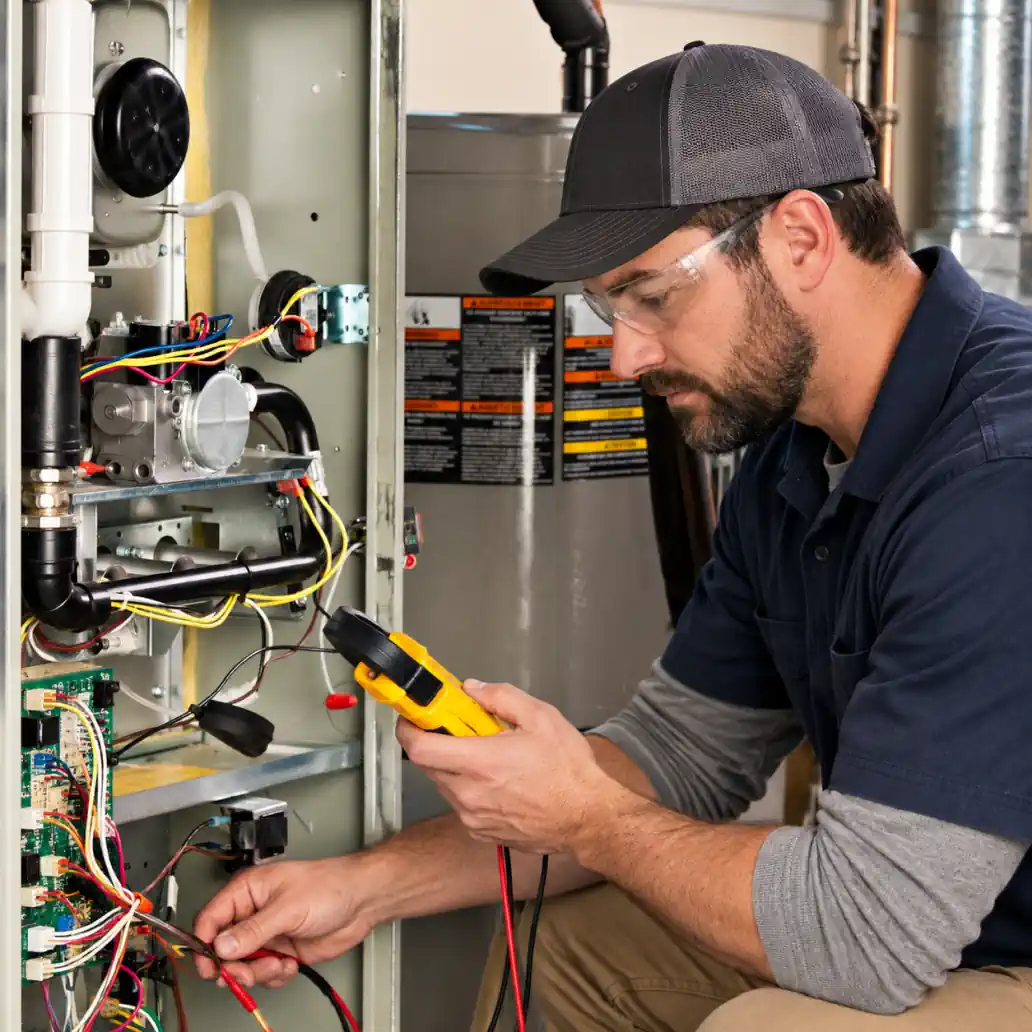
What Happens If You Skip Furnace Maintenance
One missed year rarely ruins a furnace. Two or three usually show up as a no-heat call. Here’s what builds up when a heating system goes without service:
- Dirty flame sensor. The furnace lights, then shuts off a few seconds later, over and over.
- Worn igniter. Igniters crack with age, and they usually fail on a start-up during a cold snap.
- Restricted airflow. A filter that hasn’t been changed and a dusty blower make the furnace overheat and trip its high-limit switch.
- Clogged condensate drain. High-efficiency furnaces shut themselves off when the drain backs up.
- Unchecked safety risks. Cracks in the heat exchanger, loose gas fittings, and blocked venting go unnoticed without a carbon monoxide test and inspection.
- Higher bills and shorter life. Dirty burners and blowers run longer to make the same heat, and parts wear out sooner.
For the full list of what a technician checks and cleans on each visit, see what a furnace tune-up actually does.
Does Skipping Maintenance Affect Your Furnace Warranty?
It can. Many manufacturer warranties don’t cover failures caused by lack of maintenance, dirty equipment, or improper service, and some ask for proof of regular professional maintenance when you file a claim. Two habits protect you:
- Keep the paperwork. Save the dated invoice from every service visit.
- Register new equipment. Most brands require registration within a set window after installation (often 60 to 90 days) to get the longer parts warranty.
A maintenance plan handles both: we schedule each visit, and your service history stays on file in case a warranty claim ever comes up.
What If Your Furnace Has Never Been Serviced?
This comes up a lot with new homeowners, who often have no idea when the furnace was last looked at. Plan on a first visit that takes longer than a routine tune-up. The technician cleans what years of dust left behind, tests for carbon monoxide, inspects the heat exchanger and venting, and checks the safety controls before anything else. From there, you have a baseline, and a yearly visit keeps it on track. Our heating inspection guide explains each safety check.
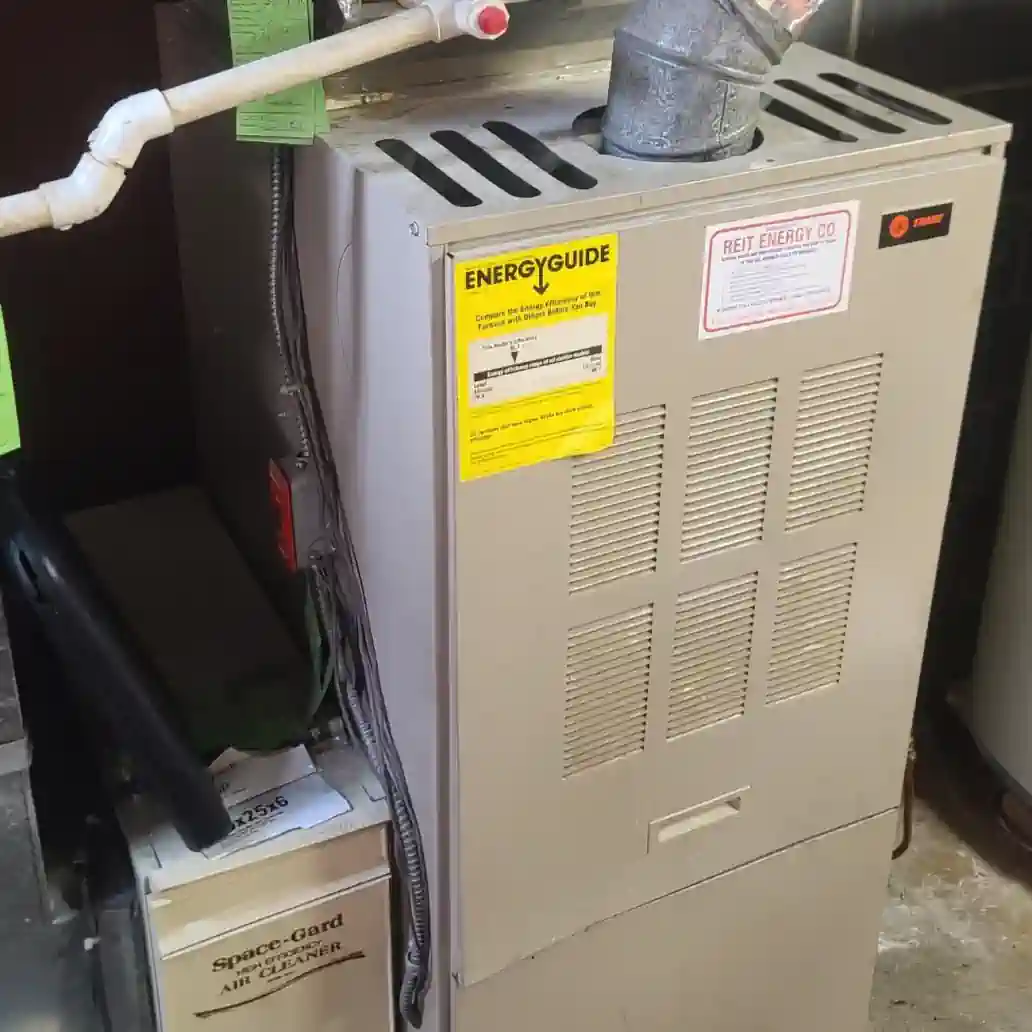
Signs Your Furnace Is Overdue for Service
- It’s been more than a year, or you don’t know when the last visit was
- Heating bills are climbing while the thermostat setting stays the same
- The burner flame looks yellow or lazy instead of steady blue
- More dust than usual, or some rooms feel colder than they used to
- The furnace cycles on and off more often, or runs longer to warm the house
Louder noises, burning smells, or shutdowns are past “overdue.” See the signs your furnace is going out.
Getting Maintenance Done Mid-Season
A winter visit covers the same checklist as a fall one. The main differences are timing and comfort:
- Book before the next cold snap. Schedules fill fast when temperatures drop and no-heat calls come in.
- Your heat is only off briefly. Most of the work happens with the system running or shut down for short stretches, and a standard furnace visit takes about 45 to 90 minutes.
- Repairs can happen the same day. If the technician finds a worn part, you get the price first, and most common parts are on the truck.
Heat pumps run all year, so they need a heat pump tune-up twice a year. Hot water and steam systems have their own checklist, covered by boiler maintenance. For the bigger picture of seasonal service, see our heating maintenance page.
Ready to catch up? Call 215-366-1001 or book your heater tune-up online.
Skipped Heating Maintenance FAQs
No. A furnace can be serviced any time it’s running, and winter visits are common. The checklist is the same as a fall tune-up: cleaning the burners and flame sensor, testing the igniter, checking airflow and the blower, clearing the condensate drain, inspecting the heat exchanger and venting, and testing for carbon monoxide. The only real downside of waiting is scheduling, because calendars fill up quickly during cold snaps. If your furnace is running normally, book now instead of waiting for spring. If it’s already short cycling or blowing cool air, schedule a repair visit and the technician will service it at the same time.
Usually nothing dramatic right away, which is why it’s easy to skip. What builds up is dust on the flame sensor and burners, wear on the igniter, a dirty blower, and a filter that restricts airflow. Those cause most first-cold-night breakdowns: the furnace lights and shuts off, overheats and trips a safety switch, or won’t ignite at all. Skipping also means nobody has tested for carbon monoxide or looked for cracks in the heat exchanger. One missed year is easy to catch up on. Two or three missed years usually turn a tune-up into a repair.
It can affect a claim. Many manufacturer warranties exclude failures caused by lack of maintenance, dirt buildup, or improper service, and some manufacturers ask for proof of regular professional maintenance before approving a parts claim. The details vary by brand and model, so check your warranty paperwork. The simple protection is a dated service invoice every year. If you’re on one of our maintenance plans, we keep your service history on file, so it’s ready if a warranty question ever comes up. New equipment usually also needs to be registered within a set window after installation to get the longer parts warranty.
Many furnaces run for years without service, but you can’t tell from the outside whether yours is safe. The real concerns are carbon monoxide from a cracked heat exchanger or blocked venting, gas leaks at fittings, and safety switches that no longer work. If the furnace is running, keep using it, make sure you have working carbon monoxide alarms near the bedrooms and on every level, and book a visit soon. The first service takes a little longer because there’s more to clean and a full safety check to complete. If your CO alarm sounds or you smell gas, leave the house and call your gas utility from outside.
Only for short stretches. The technician runs the furnace to test ignition, flame, temperature rise, and safety controls, then shuts it down briefly to clean the burners, flame sensor, and blower and to check the electrical parts. A standard gas furnace visit takes about 45 to 90 minutes, and older systems or boilers can take longer depending on access and condition. Most homes barely cool off during the visit. If a part needs replacing, the technician explains it and gives you the price first, and most common parts are on the truck, so heat is usually back the same visit.
We don’t recommend it. The point of heating maintenance is to catch problems before the furnace has to work hardest, and January and February are when it works hardest. A weak igniter, a dirty flame sensor, or a cracked heat exchanger doesn’t announce itself until it fails or becomes a safety issue. Servicing now also gives you a clear picture of the system’s condition before the coldest weeks. Spring is a good time for air conditioning maintenance, and with a maintenance plan, both visits are scheduled for you.
Yes. A new furnace still needs a yearly visit, and the first one matters for the warranty. Manufacturers expect the equipment to be maintained, and a dated service record shows it was. The first-year visit also confirms the installation is performing as it should: gas pressure, temperature rise, venting, condensate drainage on high-efficiency models, and thermostat settings. Make sure the new equipment was registered with the manufacturer, too, since most brands require registration within a set window to get the longer parts warranty.
For most people who keep forgetting, yes. A plan takes the scheduling off your list: we remind you when each visit is due and handle both the heating and the cooling tune-up each year. Plan members get priority scheduling and savings on repairs, and their service history stays on file for warranty purposes. It’s a good fit if you’ve already skipped a year or two, have an older system you want to keep running, or have more than one system in the home. See our service agreements for what’s included.
Heating Maintenance Services
Winter Heater Tune-Up
Seasonal tune-up for gas furnaces, boilers, and heat pumps, plus repair savings all winter.
Heating Maintenance
Seasonal service that keeps your heating system safe, efficient, and reliable.
Maintenance Plans
Scheduled heating and cooling visits, priority service, and repair savings.
Gas Furnace Maintenance
Burner, flame sensor, venting, and safety control service for gas furnaces.
Boiler Maintenance
Annual service for hot water and steam boilers, gas or oil.
Oil Heater Tune-Up
Nozzle, filter, and combustion service for oil furnaces and boilers.
More on Heating Maintenance
Services
Post updated: October 2026
Why Is My Furnace Making Noise?
Why Is My Furnace Making Noise? The Short Answer
Some furnace sounds are normal: a soft click when the cycle starts, a whoosh when the burners light, and the steady hum of the blower. Loud or new sounds usually point to a specific part. A bang or boom at startup means delayed ignition. Squealing or screeching usually means a blower or inducer motor. Rattling means something is loose. Humming or buzzing points to an electrical part. Repeated clicking without heat means an ignition problem. The sound itself tells a technician most of what they need to know, so pay attention to when it happens.
Use the guide below to match the sound, see how urgent it is, and know when to call for same-day heating repair.
Normal Furnace Sounds You Don’t Need to Worry About
A working furnace makes a few predictable sounds every cycle. You’ll hear a click as the thermostat calls for heat, the hum of the small inducer motor clearing the vent, a soft whoosh as the burners light, and then the blower starting about a minute later. Metal ductwork can tick or creak quietly as it warms up and cools down. These sounds should be fairly quiet and consistent. A sound that’s new, louder than it used to be, or that comes with a smell or lack of heat is the one to look into.
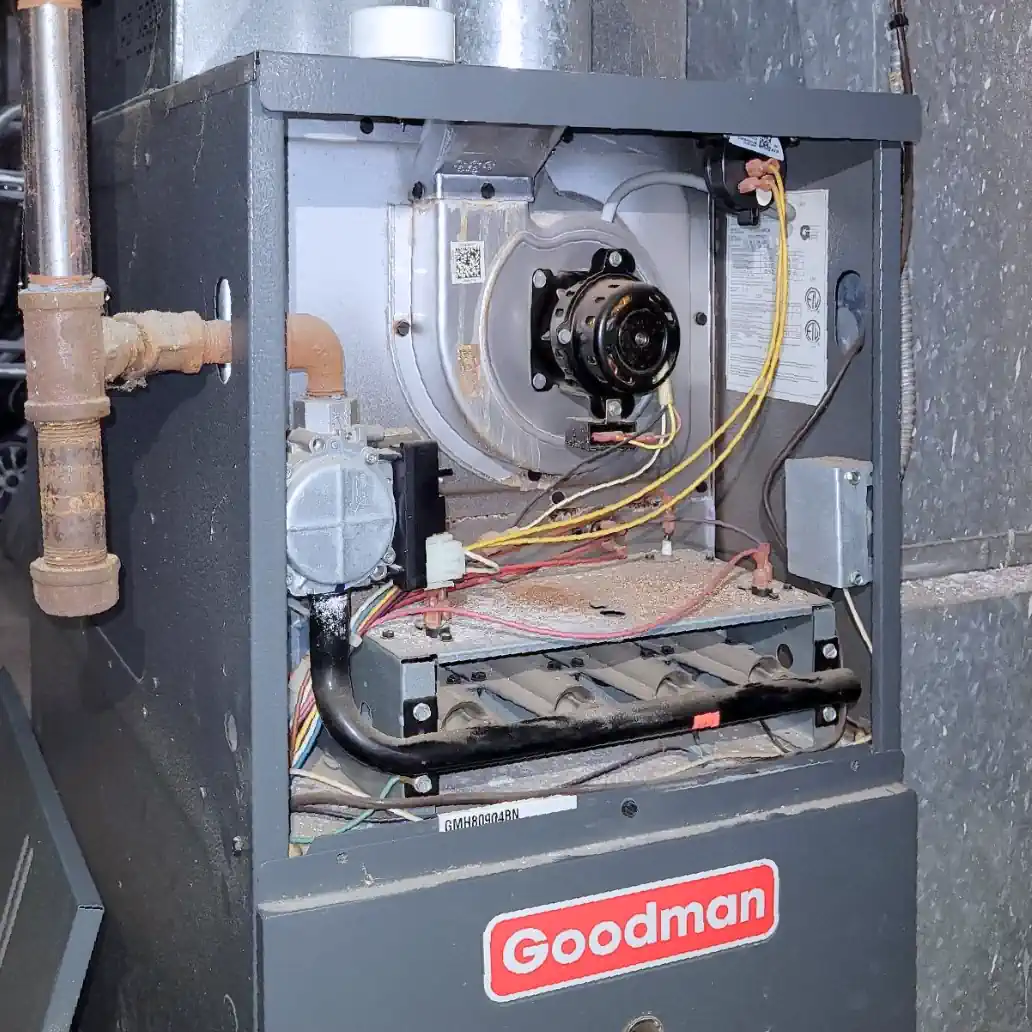
What Each Furnace Noise Means
Loud Bang or Boom When the Furnace Kicks On
A boom from inside the furnace as the burners light is delayed ignition. Gas flows for a moment before it lights, builds up, and ignites all at once. The usual causes are dirty burners, a weak or misaligned ignitor, or incorrect gas pressure. Delayed ignition stresses the heat exchanger and can crack it over time, which creates a carbon monoxide risk. This one shouldn’t wait. Turn the heat down and schedule a repair right away.
Popping or Banging in the Ductwork
A pop or bang that comes from the ducts rather than the furnace, usually right as the blower starts or stops, is metal ductwork flexing under air pressure or expanding as it heats. It’s common in older homes and basements with long, flat duct runs. It isn’t dangerous, but it can mean the ducts are undersized, the filter is clogged, or too many vents are closed. Reinforcing or modifying the ductwork usually quiets it.
Squealing or Screeching
A high-pitched squeal usually comes from a motor. On most furnaces, it’s the blower motor bearings or the inducer motor wearing out. On older belt-drive blowers, it can be a worn or loose belt. Squealing tends to get louder over a few weeks before the motor fails, so catching it early can save you from a no-heat call on the coldest night.
Rattling
Rattling is often something simple, like a loose access panel, screw, or section of ductwork. It can also mean a failing inducer motor or a blower wheel that has come loose. On older furnaces, rattling from the heat exchanger area deserves a closer look, because a cracked heat exchanger can rattle as it expands and contracts.
Humming or Buzzing
A steady, quiet hum while the blower runs is normal. A loud hum or buzz usually points to an electrical part, like a failing run capacitor, a buzzing transformer, a contactor or relay that’s sticking, or a blower motor that’s struggling to start. A hum that continues after the furnace shuts off can mean a relay is stuck, which keeps parts energized when they shouldn’t be.
Clicking Over and Over, but No Heat
A few clicks at startup are normal. Repeated clicking with no flame means the furnace is trying to light and failing, usually because of a cracked hot surface ignitor, a dirty flame sensor, or a gas supply problem. If it lights and then shuts off, see our guide to a furnace that keeps shutting off. If nothing happens at all, see furnace not working.
Scraping or Grinding
Metal-on-metal scraping or grinding is serious. It usually means the blower wheel is rubbing its housing or the motor bearings have failed. Turn the furnace off and call for service. Running it can destroy the blower motor and turn a moderate repair into a much bigger one.
Whistling
A whistle is air squeezing through a small opening. The most common causes are a clogged filter, closed or blocked vents, undersized return ducts, or a gap in the ductwork or around the filter slot. Replacing the filter and opening vents often stops it. If it doesn’t, the return ductwork may be too small for the furnace.
Rumbling After the Furnace Shuts Off
A low rumble that keeps going after the furnace should be off can mean fuel is still burning in the combustion chamber, often from dirty burners or a gas valve that isn’t closing fully. On oil furnaces, rumbling, puffing, or pulsing points to a combustion problem with the nozzle, air setting, or pump. Both need a technician soon, and an oil burner that puffs or rumbles should be checked before the next heating cycle.
Hearing a Bang, Squeal, or Grind?
Catch it before it turns into a no-heat night. Our technicians track down the noise and fix the failing part, with same-day heating repair across Philadelphia and the suburbs.
Furnace Noise Guide: How Urgent Is It?
| Sound | Likely Cause | How Urgent |
|---|---|---|
| Soft click, whoosh, steady hum | Normal startup and blower | Normal |
| Ticking or creaking ducts | Metal expanding and contracting | Normal |
| Bang or boom inside the furnace at startup | Delayed ignition | Call now |
| Popping in the ductwork | Ducts flexing under pressure | Schedule a visit |
| Squealing or screeching | Blower or inducer motor, belt | Schedule soon |
| Rattling | Loose panel or duct, inducer, blower wheel | Schedule soon |
| Loud humming or buzzing | Capacitor, transformer, relay, motor | Schedule soon |
| Repeated clicking, no heat | Ignitor, flame sensor, gas supply | Schedule soon |
| Scraping or grinding | Blower wheel or motor bearings | Turn off, call now |
| Rumbling after shutoff | Fuel still burning, oil combustion problem | Call now |
When a Noisy Furnace Is a Safety Problem
Turn the furnace off and call right away if a noise comes with a gas or rotten egg smell, a burning smell, smoke, soot near the burners, or a carbon monoxide alarm. If you smell gas, leave the house and call your gas utility from outside, PGW in Philadelphia or PECO in most of the suburbs. Booms from delayed ignition and rattling near the heat exchanger can both point to a cracked heat exchanger, which our guide to a cracked heat exchanger explains. A furnace that’s getting louder every season along with other symptoms may be showing the signs your furnace is going out.
Banging Pipes or Radiators? That’s Your Boiler
If the banging comes from radiators or heating pipes rather than a furnace, you have a boiler system. Banging and knocking in steam systems is usually water hammer from trapped water in pipes that have lost their pitch, and gurgling or kettling in hot water boilers points to air or mineral buildup. Our boiler repair team handles both, and if some radiators stay cold, see our guide to no heat from radiators.
Noisy Furnace in the Philadelphia Area? We’ll Find the Sound
EMCO Tech repairs gas, oil, and electric furnaces and ductwork across Philadelphia, Montgomery, Bucks, Chester, and Delaware counties. Many furnaces in Philly rowhomes and older suburban basements have run for decades on the same motors and ductwork, and the noises usually start well before a breakdown. Our technicians track down the sound, replace only the part that’s failing, and give you the price before any work starts. Call 215-366-1001 or book online. A yearly winter heater tune-up catches worn motors and dirty burners before they get loud.
Furnace Noise FAQs
A loud furnace usually has a specific part failing, and the type of sound narrows it down. A bang or boom at startup points to delayed ignition from dirty burners or a weak ignitor. Squealing or screeching usually means the blower or inducer motor bearings are wearing out. Rattling often comes from a loose panel, duct, or blower wheel. Loud humming or buzzing points to a capacitor, transformer, or relay. Scraping or grinding means the blower is damaged and the furnace should be shut off. Note when the sound happens, at startup, while running, or after shutdown, and tell your technician, since timing is often the biggest clue.
A bang or boom from inside the furnace when it turns on is usually delayed ignition. Gas flows into the burners for a moment before the ignitor lights it, so a small amount builds up and ignites all at once. Common causes are dirty or rusted burners, a weak or misaligned hot surface ignitor, and incorrect gas pressure. Delayed ignition puts stress on the heat exchanger and can crack it over time, which can lead to carbon monoxide leaks, so it should be repaired promptly. If the bang comes from the ductwork instead, it’s usually metal ducts flexing under air pressure, which is noisy but not dangerous.
Squealing or screeching usually comes from a motor. On most modern furnaces, the blower motor or the small inducer motor has worn bearings, and the noise gets louder as the bearings fail. On older furnaces with belt-driven blowers, a worn, loose, or misaligned belt can squeal too. A squeal that starts when the furnace kicks on and fades after a minute often points to the inducer. A squeal that lasts the entire cycle usually points to the blower. Either way, it’s a sign the motor is near the end of its life, and replacing it before it seizes prevents a no-heat breakdown during a cold snap.
A soft, steady hum while the blower runs is normal. A loud hum or buzzing usually points to an electrical component. A failing run capacitor can make the blower motor hum without starting, a transformer can buzz as it ages, and a sticking contactor or relay can hum and keep parts powered after the furnace should be off. A loose panel can also amplify a normal hum. If the hum is new, getting louder, or comes with a burning smell or a blower that won’t spin, turn the furnace off and call for service. Electrical problems inside the furnace involve high voltage and should be handled by a technician.
Repeated clicking without heat means the furnace is trying to start its ignition sequence and failing. The click is usually a relay or the gas valve opening. The most common causes are a cracked or worn hot surface ignitor, a dirty flame sensor that shuts the gas off after a few seconds, a pressure switch that won’t close because of a blocked vent or condensate drain, or a gas supply problem. On older furnaces with a standing pilot, it can mean the pilot is out. After several failed tries, most furnaces lock out and flash an error code. Write the code down and call for repair.
Most furnace noises are mechanical problems that need repair but aren’t emergencies. A few are dangerous. A boom at startup from delayed ignition can crack the heat exchanger and lead to carbon monoxide leaks. Scraping or grinding can destroy the blower motor. Rumbling after the furnace shuts off can mean fuel is still burning. Any noise that comes with a gas or rotten egg smell, burning smell, smoke, soot, or a carbon monoxide alarm means you should turn the furnace off and call right away. If you smell gas, leave the house and call your gas utility from outside before calling for repair.
Popping and banging in the ductwork, often called oil canning, happens when thin metal duct walls flex under air pressure as the blower starts or stops, or expand and contract as they heat up and cool down. It’s common with long, flat duct runs in basements and older homes. It isn’t dangerous, but it can mean the ducts are undersized for the furnace, the filter is clogged, or too many registers are closed, which raises the pressure inside the ducts. Opening vents and replacing the filter can help. For a lasting fix, ductwork can be reinforced, resized, or modified so the system runs quieter.
It depends on the source of the noise. Tightening a loose panel or duct section is a small repair, and replacing a capacitor, belt, or ignitor usually lands in the range of a few hundred dollars. Replacing a blower motor, inducer motor, or control board costs more, and cleaning burners or correcting gas pressure to fix delayed ignition depends on what the technician finds. Ductwork modifications vary with the size of the job. EMCO Tech diagnoses the noise first and gives you the price before any work starts. If the furnace is 15 or more years old and needs a major motor, it’s worth comparing repair against replacement.
Explore Our Furnace Repair Services
Heating Repair
Same-day heater repair for furnaces, boilers, and heat pumps across Greater Philadelphia.
Gas Furnace Repair
Blower motors, inducers, ignitors, and burner cleaning for gas furnaces.
Oil Furnace Repair
Rumbling, puffing, and burner combustion problems on oil heat.
Boiler Repair
Banging pipes, water hammer, and cold radiators on steam and hot water boilers.
Ductwork Repair
Popping, whistling, and undersized ducts reinforced or redesigned.
Winter Heater Tune-Up
Worn motors and dirty burners caught before they get loud.
Related Guides
Post Updated: October 2026
Can You Run Your AC in Winter?
Can You Run Your AC in Winter?
Short answer: running a standard central air conditioner in cold weather is not recommended, and most manufacturers advise against it once outdoor temperatures drop below about 60°F. Below that point the refrigerant does not pressurize correctly, the compressor oil thickens, and running the system can damage the compressor. If you only need cooling on an occasional mild fall day, a brief run is usually fine. For steady cold-weather comfort, a heat pump or ductless mini-split is the right tool, since those are built to run efficiently in low temperatures.
So if you are asking whether you can run your AC in winter to cool a warm room, the safer move is to avoid it and use your heating system or a heat pump instead. The rest of this guide covers how to shut your AC down properly and protect it through the cold months.
How to Shut Down Your AC for Winter
Once you have decided to stop running your AC for the season, shutting it down properly protects it through the cold months. It takes about ten minutes.
1. Confirm the system is working before you turn it off
Give your AC one last check before it sits idle all winter. If something is off now, you want to know today, not on the first hot day next spring when you flip it on and nothing happens. Catching a small issue in the fall means it gets fixed on your schedule, not during a heatwave.
2. Cut the power at the outdoor unit
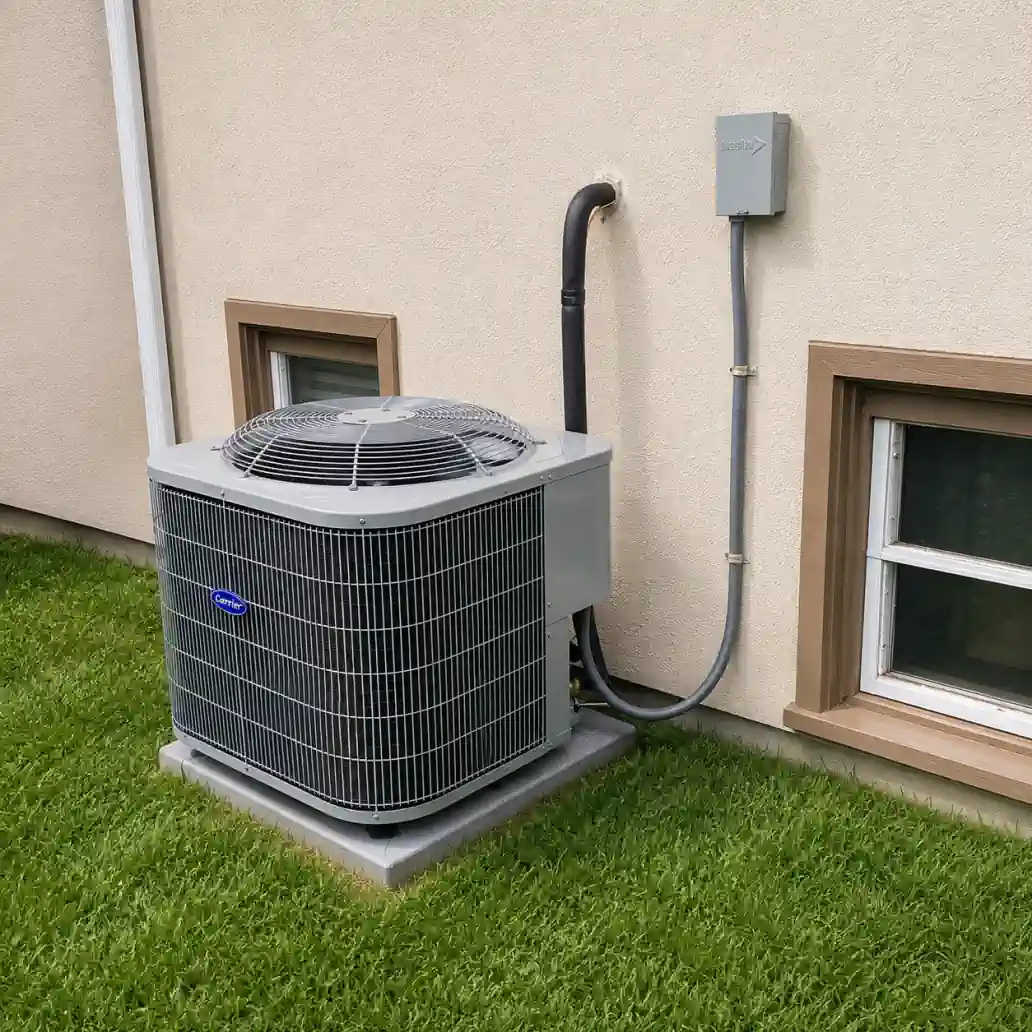
Turning your thermostat to off is not enough. On an unexpectedly warm winter day, the system can try to kick on, and running the compressor in freezing temperatures is exactly what damages it. Find the shutoff switch on the outdoor cabinet, usually under a small plastic cover, and flip it to OFF. This one step prevents the most common cold-weather AC damage.
Clean and Cover the Outdoor Unit
You do not need to be obsessive here, just thorough. Clear leaves, twigs, and debris from around the condenser, and rinse the outside of the unit with a gentle stream of water, avoiding the coils. Make sure nothing can blow into the cabinet over the winter.
If you want to cover it, use a breathable cover made for AC units rather than sealing it in plastic. A fully waterproof wrap traps moisture inside and invites rust and mold. A tarp works in a pinch, but secure it well against winter winds, and never wrap the whole unit airtight.
A Better Option for Winter Comfort
If the reason you were tempted to run your AC in winter is that one room still gets warm, or you want cooling and heating from a single system, a heat pump or ductless mini-split is built for exactly that. Unlike a standard AC, these run safely in cold weather and heat your home efficiently, so you are never stuck choosing between comfort and protecting your equipment.
Let EMCO Tech Handle It
Prefer to skip the ladder and the guesswork? Our technicians will inspect, shut down, and prep your system before the first freeze, and get your heating ready for winter in the same visit. Neglected outdoor units are especially vulnerable to debris, ice, and freezing damage across the Philadelphia area, including Dresher and the surrounding suburbs. Call 215-366-1001 to schedule your seasonal changeover, or contact us online.
Running Your AC in Cold Weather: FAQ
It is generally not recommended to run a standard central air conditioner in winter. Once it is colder than about 60 degrees outside, the refrigerant cannot pressurize properly and the compressor can be damaged. For cold-weather comfort, a heat pump or ductless mini-split is designed to run safely in low temperatures.
Most manufacturers advise against running a central AC when the outdoor temperature is below roughly 60 degrees Fahrenheit. Below that, the oil that lubricates the compressor thickens and refrigerant pressure drops, both of which can cause damage over time.
Yes, running a standard air conditioner in cold weather can harm the compressor and reduce the life of your system. A short run on a mild day is usually harmless, but using it for real cooling in cold temperatures is not worth the risk. Use your heating system or a heat pump instead.
Turn the system off at the thermostat and the outdoor disconnect, clean debris from around the condenser, and if you choose to cover it, use a breathable cover that will not trap moisture. For a full seasonal check, our technicians can inspect and prep your system before the first freeze.
AC Winter Prep Across Greater Philadelphia
We prep and service cooling systems for the cold season throughout the Philadelphia suburbs, including these areas.
Gas Furnace Maintenance: What a Professional Tune-Up Actually Does
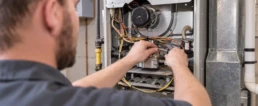
When homeowners across Montgomery and Bucks County book a fall furnace service, most have the same question: what does a tune-up actually include, and is it worth it? This page walks through exactly what a professional gas furnace tune-up covers, what technicians commonly find, and how routine maintenance compares to repair or replacement. If you are mainly wondering when to schedule one, start with our guide on when to get your heater tune-up. Ready to book now? See pricing on our furnace tune-up page.
What Actually Happens During a Professional Gas Furnace Maintenance
Many homeowners want to know exactly what’s included when they schedule service in the fall. We generally break it down into two levels depending on the condition of the system.
Professional Tune-Up
A standard professional tune-up includes:
- Heat exchanger inspection — We carefully examine the heat exchanger for cracks, corrosion, or other signs of wear that could affect safety or performance.
- Safety control testing — All limit switches, rollout switches, and other safety devices are tested to confirm they will shut the furnace down properly if needed.
- Gas pressure verification and adjustment — We check and adjust gas pressure to manufacturer specifications for safe and efficient operation.
- Electrical component inspection — We inspect wiring, connections, capacitors, and relays for signs of wear, looseness, or corrosion.
- Blower motor operation check — We evaluate the blower motor’s performance, amperage draw, and overall function.
- Thermostat calibration and communication test — We verify that your thermostat is accurately reading temperature and properly communicating with the furnace.
- Combustion and efficiency analysis — We measure how efficiently the furnace is burning and check for proper combustion.
- Filter condition assessment — We inspect your air filter and advise on replacement if needed.
- Overall system performance test — The furnace is run through a complete cycle while we measure temperature rise, airflow, and overall operation.
Complete Maintenance – Deep Cleaning and Restoration
- Burner cleaning and vacuuming — Burners are cleaned and vacuumed to remove dust, rust, and debris that can affect flame quality and efficiency.
- Heat exchanger deep cleaning — When accessible and necessary, the heat exchanger is cleaned to remove soot and buildup that can reduce efficiency and airflow.
- Blower wheel and assembly cleaning — The blower wheel and surrounding assembly are cleaned to restore proper airflow and reduce strain on the motor.
- Flue and venting inspection with cleaning (when needed) — The venting system is checked and cleaned if soot or blockages are present.
- Condensate drain cleaning (on high-efficiency models) — Drains are cleared to prevent water backup and potential damage.
The need for cleaning is determined during the checkup. Most of the time routine tune up service is sufficient.
When the visit is finished, technician will explain what they found and whether anything needs attention now or in the near future. This kind of transparency is what separates a professional gas furnace maintenance visit from a filter change.
Noticed Warning Signs on Your Furnace?
Don’t risk a breakdown or safety issue this winter. Our technicians can diagnose problems quickly and recommend the best solution — whether that’s a tune-up or repair. Learn more about our gas furnace repair services.
Maintenance vs Repair vs Replacement: Which One Do You Actually Need?
| Service Type | Best For | What It Usually Means |
|---|---|---|
| Professional Maintenance | Preventive care once a year | Cleaner system, better efficiency, fewer surprises during winter |
| Repair | When something is already broken or not working properly | Fixes the immediate problem, but doesn’t address long-term wear |
| Full Replacement | Older furnaces (usually 15+ years) with repeated issues | Higher upfront cost, but better efficiency, reliability, and often lower operating costs |
Many homeowners aren’t sure which category they fall into. That’s normal. A good technician can help you understand whether maintenance is enough or whether it makes more sense to start planning for a replacement, especially if your furnace is getting older. You can explore replacement options on our gas furnace installation page.
Book Your Fall Furnace Tune-Up
Routine maintenance is the smartest way to avoid expensive winter repairs. See current pricing and grab a preseason slot before the cold-weather rush across Montgomery County, Bucks County, and Greater Philadelphia.
What to Expect During a Professional Tune-Up Visit
When an EMCO Tech technician arrives for your gas furnace maintenance appointment, here’s what typically happens:
First, they will perform a safety inspection of the entire system, including checking for gas leaks and proper venting. Next, they inspect key components and test all safety controls. They will also measure temperature rise and airflow to evaluate how efficiently the furnace is operating. At the end of the visit, the technician will explain any findings and recommend any necessary repairs or future service.
Most standard maintenance appointments take between 30 and 90 minutes.
Common Problems Found During Fall Maintenance
During fall tune-ups, technicians frequently discover issues such as:
- Dirty or clogged air filters that were never changed
- Worn or dirty flame sensors causing ignition problems
- Cracked or damaged heat exchangers (especially on older units)
- Loose electrical connections
- Improper gas pressure
- Worn blower belts or motors
Identifying these problems early allows homeowners to address them before winter arrives.
The Hidden Benefits Most People Don’t Think About
Beyond avoiding breakdowns, regular gas furnace maintenance delivers several benefits that are easy to overlook:
- Better energy efficiency — A clean, properly tuned furnace doesn’t have to work as hard to heat your home. Many homeowners notice a difference in their gas bills after consistent maintenance.
- Longer equipment life — Furnaces that receive regular professional care tend to last longer. Small problems are fixed before they cause bigger damage to other components.
- Improved safety — The heat exchanger inspection and safety control testing help reduce the risk of carbon monoxide issues. This is especially important in older homes.
- More consistent comfort — A well-maintained system distributes heat more evenly and maintains steadier temperatures throughout the house.
- Fewer surprises — When you know the condition of your furnace before winter starts, you can plan and budget instead of reacting to problems.
These benefits add up over time. For many families, annual maintenance becomes one of those small habits that prevents much larger headaches later.
Is Your Furnace Getting Older? Here’s What Changes
Once a gas furnace reaches 12–15 years old, the math starts to change. Parts wear out more frequently. Efficiency usually drops compared to newer models. And the risk of a major repair increases.
This doesn’t mean every older furnace needs to be replaced immediately. Many 15- and even 18-year-old furnaces are still running well with proper care. However, at this age, maintenance becomes even more valuable because it helps you get the most life possible out of the system while giving you time to plan for replacement on your own schedule rather than in the middle of a cold snap.
If your furnace is approaching or past the 15-year mark, it’s worth having a conversation with a technician about its overall condition and whether replacement might eventually make more sense than continued repairs. In some situations, replacing an aging unit with a new high-efficiency gas furnace may be the better long-term decision.
Gas Furnace Maintenance FAQ
Can I do gas furnace maintenance myself?
Basic filter changes are fine for homeowners. A full inspection that involves gas lines, combustion, and safety controls should always be done by a licensed technician, doing it yourself can also void your manufacturer warranty.
Will maintenance really lower my heating bills?
Usually, yes. A clean, properly tuned furnace runs more efficiently and does not have to work as hard, which many homeowners notice on their gas bills over a season.
What happens if my heat exchanger is cracked?
A cracked heat exchanger is a serious safety issue, it can leak carbon monoxide. We will show you the finding and explain your options, which may be a repair in some cases or a full replacement in others. Do not keep running a furnace with a suspected crack.
Related Guides
Post Updated: September 2026
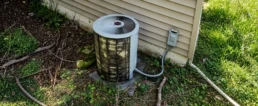
End of Summer AC Repairs You Might Need
The AC Repairs That Show Up at the End of Summer
By late August your air conditioner has run almost nonstop for three months, and the small problems that started back in June are now full breakdowns waiting for the next heat wave. Late summer and early fall are the smartest time to catch them, before the system quits in the last stretch of heat or sits all winter hiding a fault that greets you next spring. Here are the repairs we see most this time of year, what each one feels like, and when it is worth making the call.
Your AC Is Not Cooling As Well As It Did in June
The most common end-of-summer complaint is simple: the house just is not getting as cold as it used to, and the system runs longer to get there. After a full season of use, this usually points to one of three things: low refrigerant from a slow leak, a coil caked in dirt, or a compressor starting to struggle. None of them fix themselves, and all of them get worse and more expensive the longer the system fights against them. If your AC is running constantly and still not keeping up, that is the signal to get it looked at before the last hot stretch. Same-day air conditioning repair is available across Greater Philadelphia.
Weak Airflow From the Vents
If the air coming out of your vents feels weak even when the system is running hard, the causes range from cheap to serious: a clogged filter nobody changed since spring, a dirty blower wheel, a failing blower motor, or a duct problem. Start with the filter, since a filter left in all summer is the number one airflow killer, but if a fresh filter does not fix it, the blower side needs a professional look. Weak airflow makes the whole system work harder and cool less, which is exactly the strain you do not want heading into a September heat wave.
Beat the Last Heat Wave: Get Your AC Checked Before Fall
Catching these repairs now means the last stretch of summer heat does not catch you off guard, and your system goes into winter clean instead of hiding a fault until spring. EMCO Tech's licensed, certified, and fully insured technicians serve homeowners across Greater Philadelphia, Montgomery, Bucks, Chester, and Delaware Counties, with stocked trucks that fix most AC problems in a single same-day visit.
The AC Turns On and Off Too Often (Short Cycling)
An air conditioner that clicks on, runs briefly, shuts off, and repeats is short cycling, and by end of summer it is often a sign of a struggling capacitor, low refrigerant, or an oversized system finally showing its flaws under heavy load. Short cycling wears out the most expensive part of your system, the compressor, faster than almost anything else. If your AC is cycling more than a few times an hour, shut it down and call before the compressor pays the price.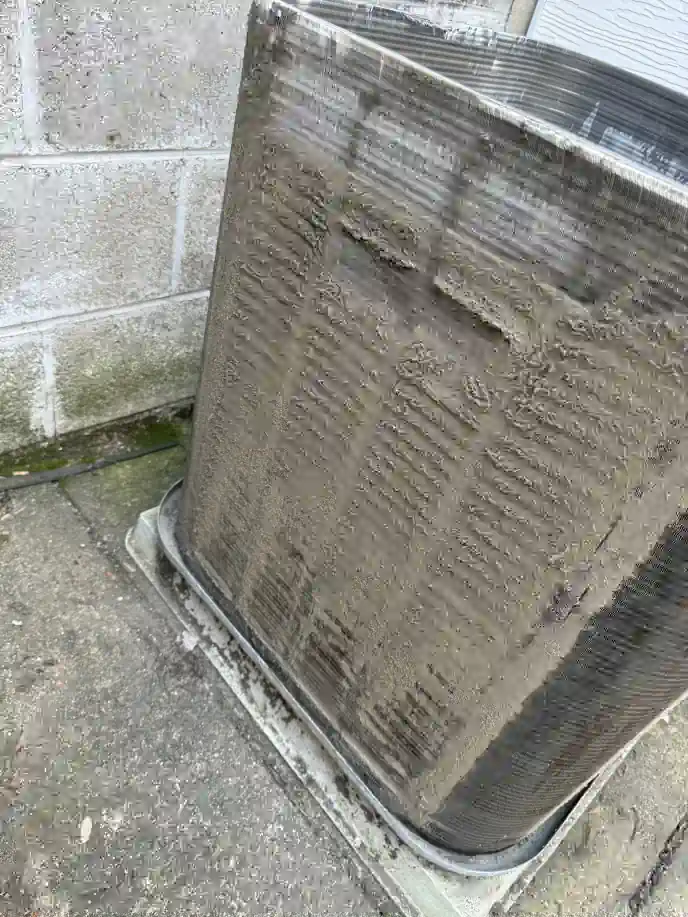
Bad Capacitor: The AC Hums But Will Not Start
Capacitors are the small cylindrical parts that give your compressor and fan motors the jolt they need to start, and heat is their enemy. A full Philadelphia summer of high temperatures is exactly what kills them, which is why capacitor failures spike in August and September. The telltale sign is a system that hums when it should start but the outdoor fan does not spin, or the whole unit simply will not come on. A capacitor is an inexpensive, fast repair when caught early, and one of the most common calls we run at the end of summer.
Refrigerant Leak: Ice on the Lines or Warm Air
If you see ice forming on the copper lines or the indoor coil, hear a faint hissing, or feel warm air blowing when the system is set to cool, you likely have a refrigerant leak. Refrigerant does not get used up, so if the level is low, it is leaking somewhere, and simply topping it off without finding the leak just delays the problem and wastes money. Running an AC low on refrigerant can destroy the compressor, so this is one to address rather than nurse through the last few weeks of heat. We locate the leak, repair it, and recharge the system to spec.
Dirty Condenser Coil and Outdoor Unit
Your outdoor unit spent all summer pulling heat out of your house and dumping it outside, and by now the condenser coil is often coated in dirt, grass clippings, and cottonwood fluff. A dirty coil cannot release heat efficiently, so the system runs hotter, longer, and less effectively, and it shortens the life of the compressor. End of summer is the ideal time to have the coil cleaned and the unit serviced, both to squeeze better performance out of the last hot days and to put the system away clean for winter.
A Dirty Coil Is Costing You Cooling Right Now
A condenser coil this clogged cannot release heat, so your AC runs longer, cools less, and wears out the compressor faster. A seasonal cleaning and tune-up catches it before the last heat wave and puts the system away clean for winter. Ask about our AC tune-up and AC maintenance.
Strange Noises: Buzzing, Grinding, or Rattling
New sounds at the end of summer are the system telling you something worked loose or wore out over the season. Buzzing often points to electrical or capacitor trouble, grinding suggests a motor bearing going bad, and rattling can be anything from a loose panel to a failing fan blade. Sounds rarely resolve on their own, and a small noise now is usually a smaller bill than the breakdown it turns into. If your AC has developed a new voice this summer, it is worth a diagnostic call.
Water Pooling Around the Indoor Unit
A puddle near the indoor air handler usually means a clogged condensate drain line or a failed condensate pump, both of which back up water that should be draining away. Left alone, that water finds your floor, your ceiling below, or the electronics inside the unit. It is a straightforward fix caught early and a much bigger problem once it becomes water damage.
Repair Now or Replace Before Next Summer?
End of summer is also the honest moment to ask whether a system is worth another repair. If your AC is over 12 to 15 years old, has needed multiple repairs this season, or a fix is running more than a third of the cost of a new system, it may make more sense to plan a replacement over the off-season rather than gamble on it surviving another summer. We give you the repair number and the replacement number side by side so you can decide with real figures. See our options for air conditioning installation, or if you want cooling for a room that always struggled, a ductless mini-split.
Get Your End-of-Summer AC Repairs Handled Before Fall
Catching these repairs now means the last heat wave does not catch you off guard, and your system goes into winter clean and fault-free instead of hiding a problem until spring. EMCO Tech has served Philadelphia and the surrounding counties since 2006, with stocked trucks that fix most AC problems in a single visit. Call (215) 366-1001 or schedule an appointment online for same-day and next-day service.
AC Repair Tips for Philadelphia Homeowners
AC Repair Services
Same-day air conditioning repair across Philadelphia and the surrounding counties, most calls fixed in one visit.
Common AC Problems
The AC issues Philadelphia homeowners run into most, from weak airflow to a system that will not cool.
Water Leaking From Your AC
Why your air conditioner leaks water, what a clogged condensate line does, and how to stop the damage early.
Hard Starting AC Issues
What causes hard starting, why it points to a failing capacitor, and how it wears out your compressor.
Seasonal AC Cleaning
Why a seasonal coil and system cleaning keeps central AC and ductless mini-splits running efficiently.
Post modified: July 25, 2026